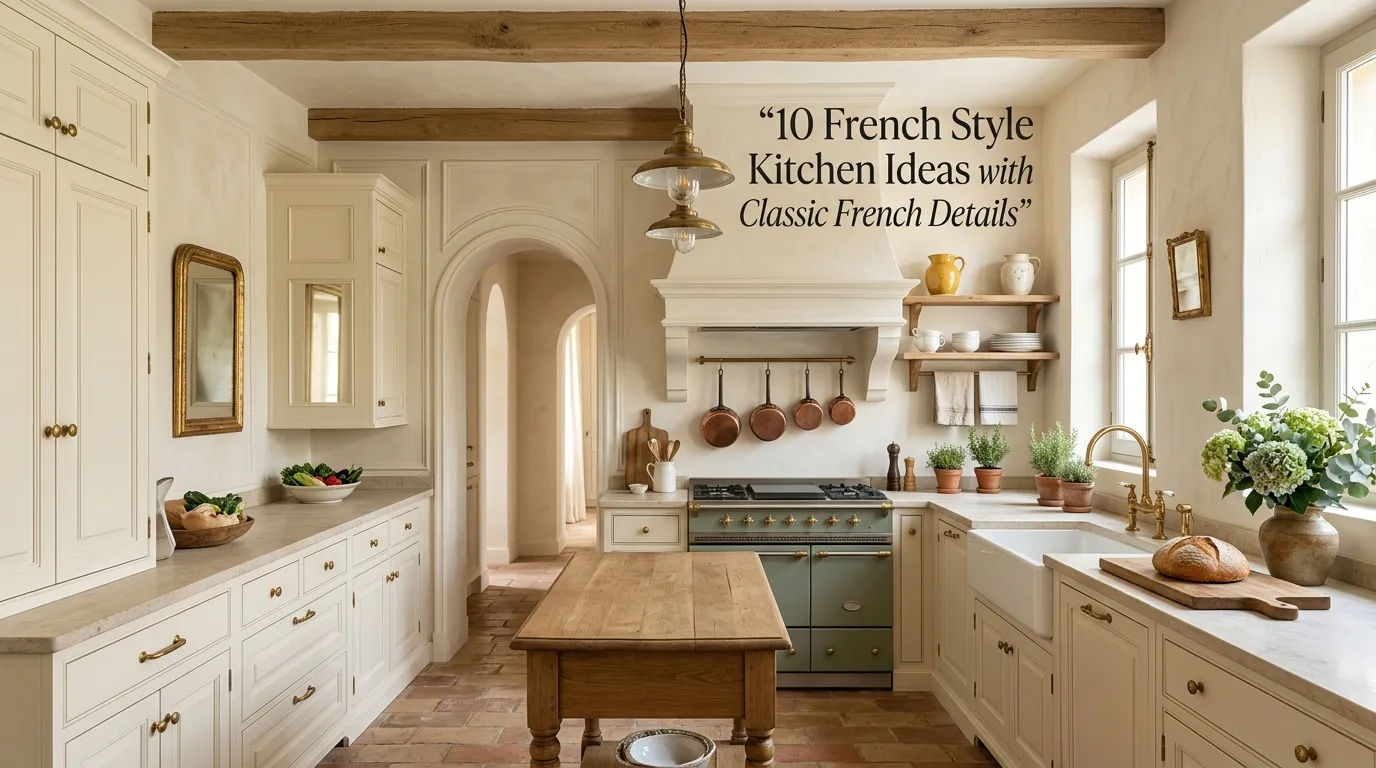
10 French Style Kitchen Ideas with Classic French Details
A French-inspired kitchen has a way of feeling elegant without looking overly decorated. The appeal comes from thoughtful details: painted cabinetry, natural stone, warm wood, aged metals, traditional hardware, and lighting that makes the room feel collected over time.
Unlike a strictly modern kitchen, French-style spaces often embrace small imperfections and layers. A slightly weathered finish, a vintage-inspired pendant, or an old-looking wooden stool can make a kitchen feel more personal. At the same time, the overall design can remain bright, practical, and comfortable for everyday American homes.
The best French-inspired kitchens also balance beauty with function. Cabinet storage remains important. Countertops need to handle daily cooking. Lighting needs to work for meal preparation as well as entertaining. Decorative details matter, but they work best when they support the way the kitchen is actually used.
You do not need a historic home or a massive renovation to bring this look into your kitchen. A few carefully chosen elements can create the same atmosphere. Swapping cabinet hardware, adding a vintage-style runner, introducing natural wood, or choosing a classic backsplash can make a noticeable difference.
In my experience, the easiest way to achieve this style is to focus on materials first and decoration second. When cabinetry, stone, wood, and metal finishes feel connected, even simple accessories can look intentional.
Below are ten French style kitchen ideas that combine timeless character with practical decorating choices. Whether you are planning a renovation or simply refreshing your existing kitchen, these ideas can help you create a space that feels warm, refined, and genuinely lived in.
Table of Contents
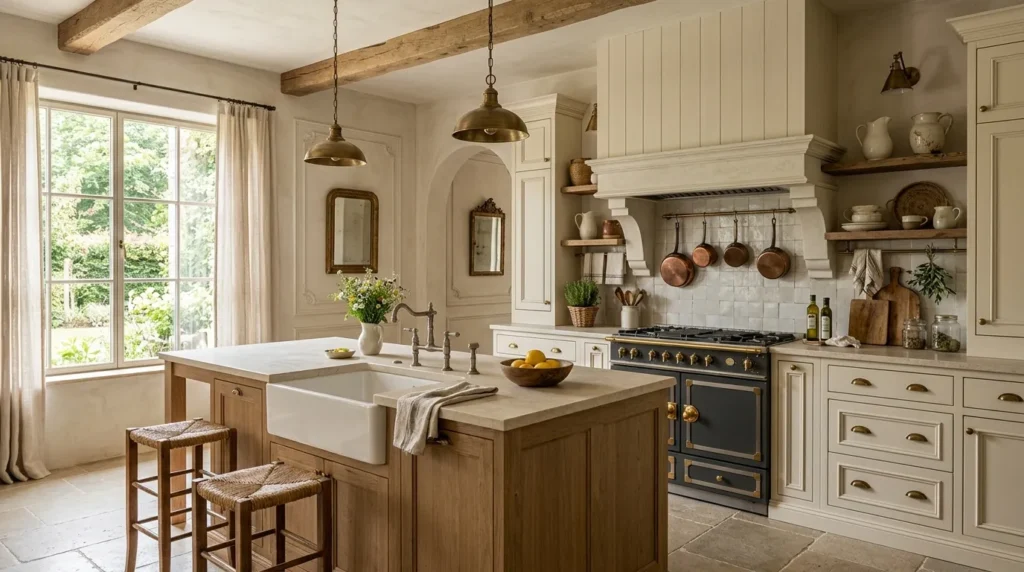
1. Painted Cabinetry
Use softly painted cabinets to establish the traditional French foundation.
2. Natural Stone Counters
Bring timeless texture and understated elegance through stone surfaces.
3. Aged Brass Hardware
Introduce warmth with classic hardware that develops character.
4. Vintage Wood Island
Add a furniture-like island with natural wood and traditional detailing.
5. Classic Tile Backsplash
Create a timeless backdrop with simple, understated tile.
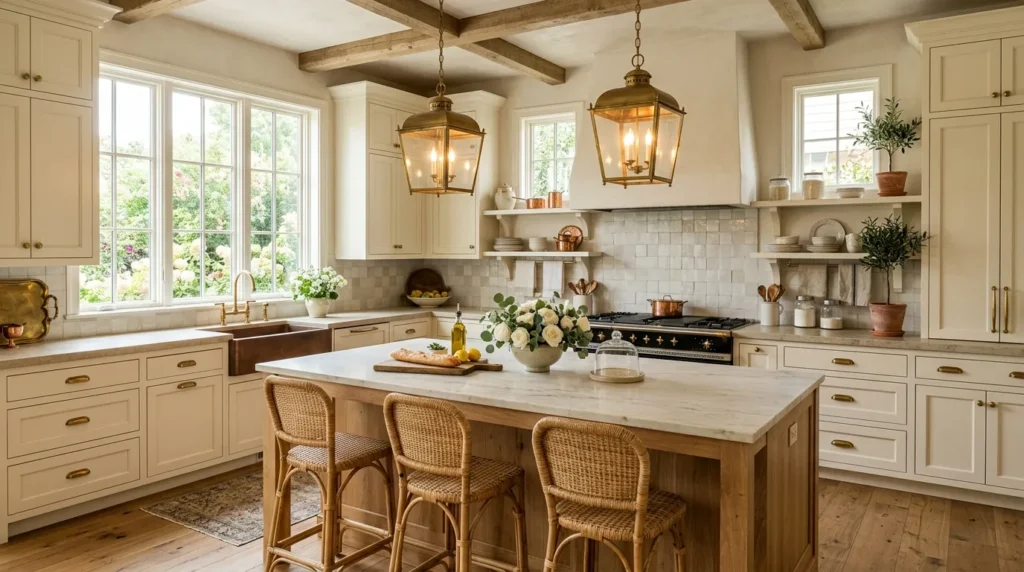
6. French Pendant Lighting
Use decorative lighting to add warmth and architectural character.
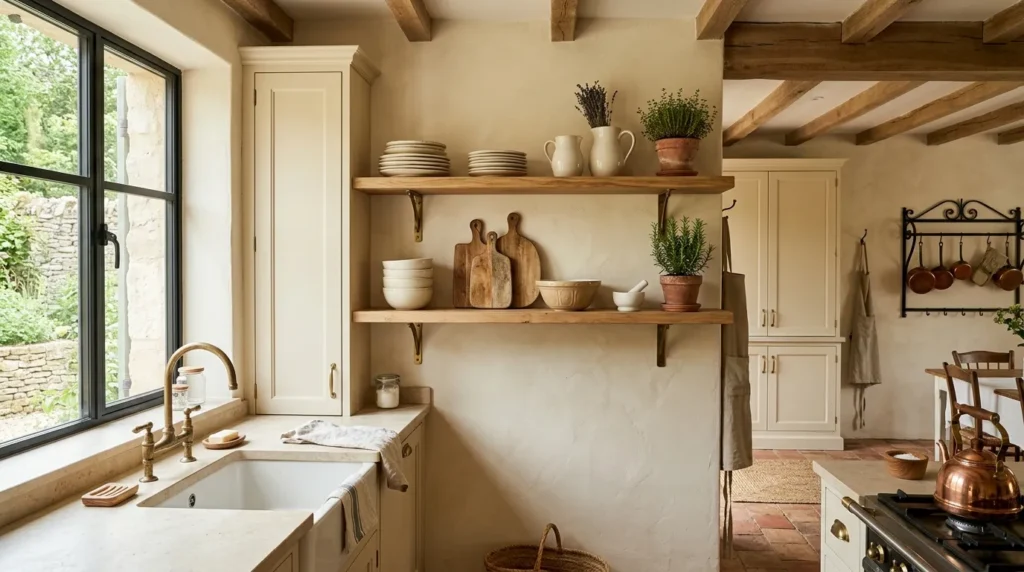
7. Open Plate Shelving
Display everyday ceramics while adding an informal European feel.
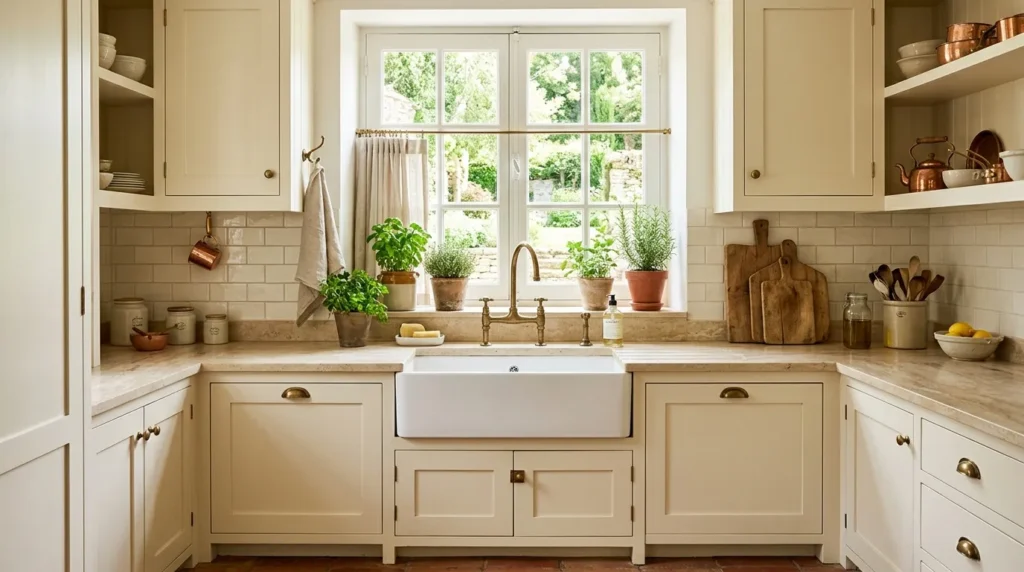
8. Farmhouse Sink
Combine practical function with traditional visual appeal.
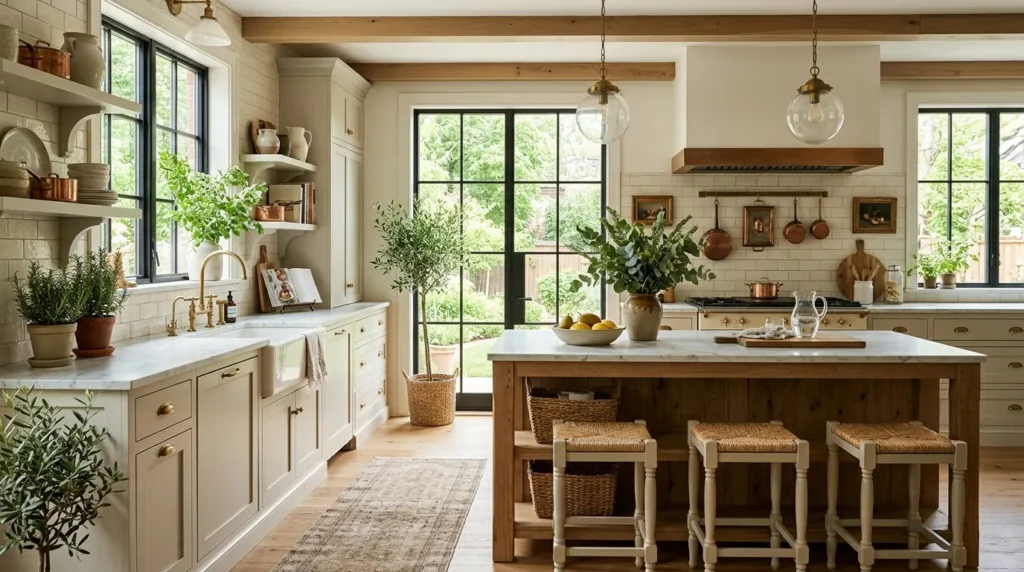
9. Soft Neutral Palette
Build a bright, calming kitchen with warm and restrained colors.
10. Vintage Decorative Details
Finish the room with carefully selected pieces that create a collected atmosphere.
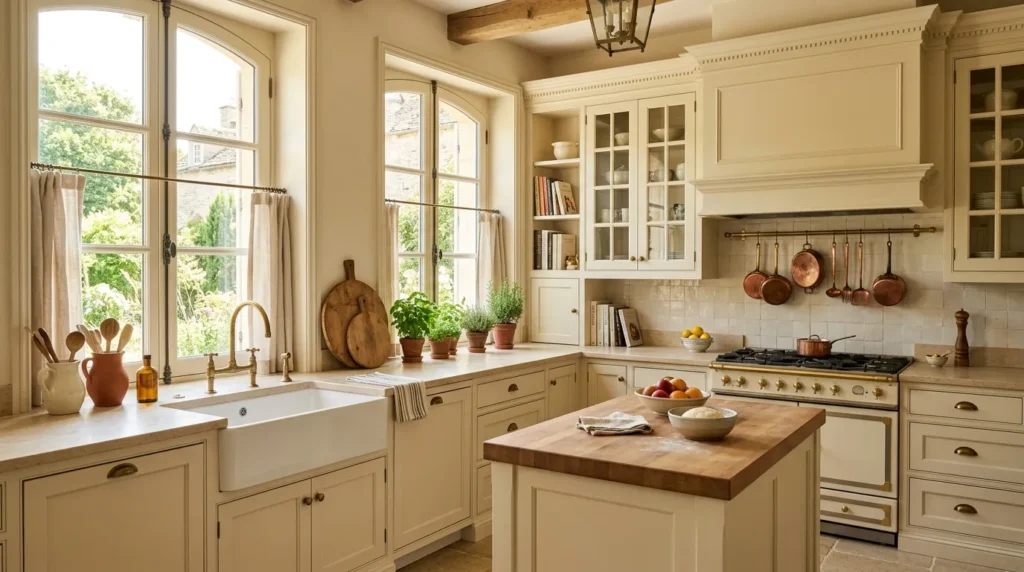
1. Painted Cabinetry
Quick Benefits
- Creates an instantly classic foundation
- Makes the kitchen feel softer
- Works with traditional and modern layouts
- Allows subtle color variation
- Pairs beautifully with natural materials
Why It Works
Painted cabinetry is one of the easiest ways to establish a French-inspired kitchen because it creates a softer alternative to heavily stained or ultra-glossy finishes.
Classic French kitchens often favor colors that feel connected to natural surroundings. Warm white, creamy ivory, pale gray, muted sage, dusty blue, and soft beige can all create an elegant foundation.
The finish matters as much as the color. Extremely glossy cabinets can make the space feel more contemporary, while a low-sheen or subtly aged appearance feels more relaxed.
Shaker-style doors, raised panels, and other traditional profiles can reinforce the look, but the overall design does not have to feel formal.
How To Style It
Start with a cabinet color that works with the existing flooring, countertops, and natural light.
For a bright kitchen, warm white or creamy ivory creates a timeless backdrop. If you prefer more color, muted sage or dusty blue can introduce personality without overwhelming the room.
Pair painted cabinets with simple traditional hardware. Aged brass, antique bronze, or understated pewter can work beautifully.
Avoid using too many different cabinet colors unless the room is large enough to support the contrast.
Keep the upper cabinetry visually light with simple glass-front sections or open shelving where practical.
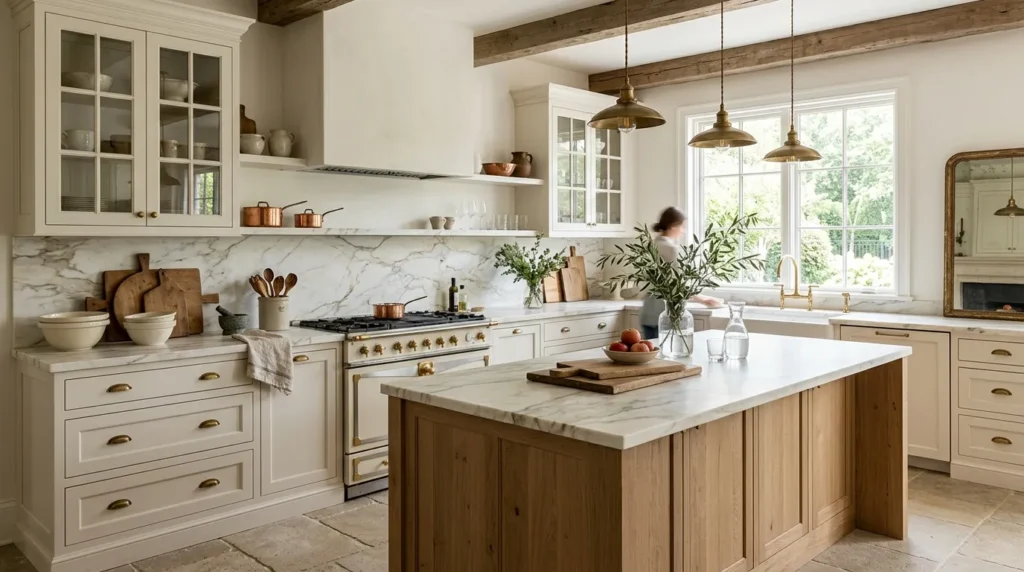
2. Natural Stone Counters
Quick Benefits
- Adds organic texture
- Creates a timeless appearance
- Works beautifully with painted cabinets
- Provides visual depth
- Connects the kitchen to natural materials
Why It Works
Natural stone brings variation that manufactured surfaces often try to imitate. Subtle veining, tonal shifts, and natural texture can give a kitchen a sense of depth and permanence.
French-inspired interiors often benefit from materials that look better with some variation rather than surfaces that appear perfectly uniform.
Stone also provides a useful contrast to painted cabinetry. If the cabinets are soft and matte, the natural movement of the countertop can become a quiet focal point.
The goal is not necessarily dramatic veining. A restrained stone with gentle movement can create a more timeless appearance.
How To Style It
Choose a countertop with colors that connect the cabinetry, backsplash, and flooring.
Creamy stone works well with ivory cabinetry, while gray-beige surfaces can complement muted blue or green cabinets.
If using a visually active countertop, keep the backsplash relatively simple.
A natural stone backsplash can create an especially cohesive appearance when the same or complementary material continues behind the range.
Use wooden cutting boards, ceramic vessels, and woven accessories to soften the stone’s harder surface.
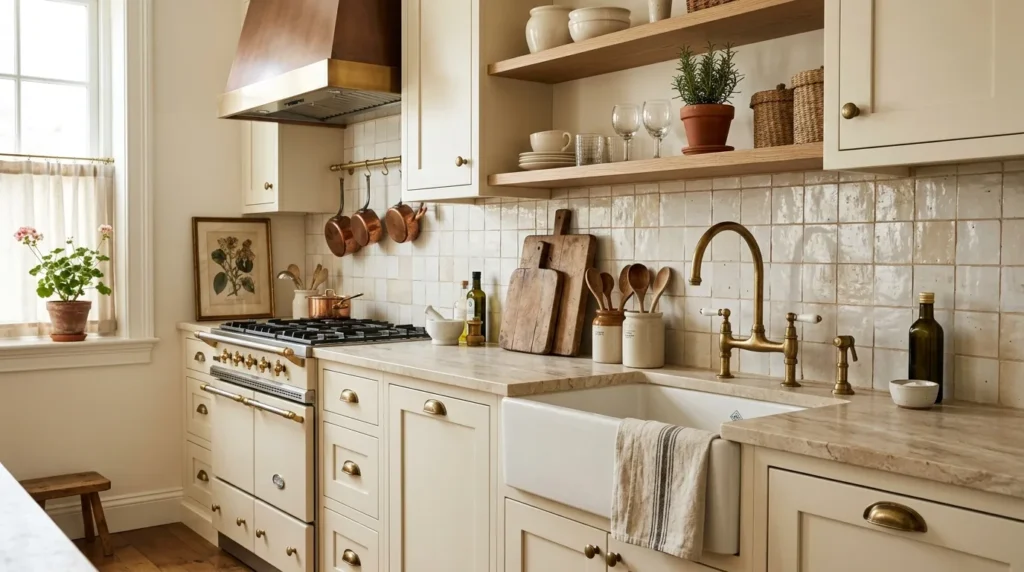
3. Aged Brass Hardware
Quick Benefits
- Adds warmth
- Creates traditional character
- Complements painted cabinets
- Provides subtle contrast
- Can update existing cabinetry easily
Why It Works
Hardware is a small detail, but it can influence the entire personality of a kitchen. Aged brass has a warmth that pairs naturally with creamy cabinets, wood, stone, and traditional architectural elements.
Unlike highly polished gold, aged or unlacquered-looking finishes tend to feel more relaxed and collected.
This makes brass particularly effective when you want a kitchen to feel classic rather than overly formal.
Hardware can also be one of the easier changes when a full renovation is not practical. Replacing knobs and pulls can give existing cabinetry a noticeably different appearance.
How To Style It
Choose one dominant hardware finish and repeat it consistently throughout the kitchen.
Cup pulls can reinforce a traditional appearance on drawers, while simple knobs can keep cabinet doors visually clean.
Pair brass hardware with warm lighting and natural wood.
If your kitchen already contains several metal finishes, avoid introducing another unless the combination feels deliberate.
For a softer look, choose hardware with a slightly aged appearance rather than an extremely shiny finish.
Repeat the finish on cabinet hardware, faucet details, or lighting where appropriate.
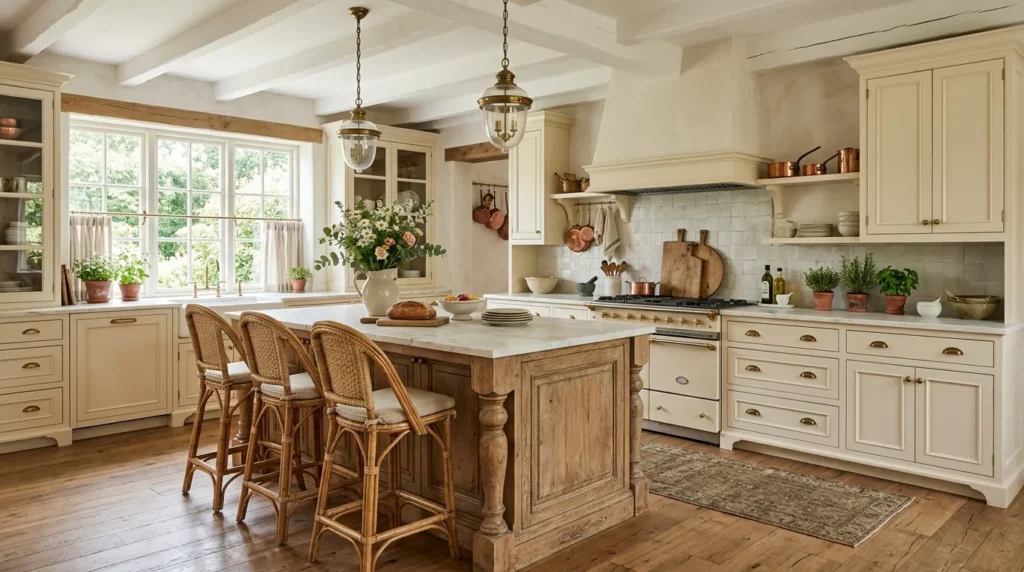
4. Vintage Wood Island
Quick Benefits
- Adds warmth
- Creates a furniture-like focal point
- Breaks up painted cabinetry
- Introduces natural texture
- Works beautifully in large kitchens
Why It Works
A wooden island can make a kitchen feel less like a collection of built-in cabinets and more like a room furnished over time.
This furniture-like quality is especially useful in French-inspired spaces, where warmth and individuality are important.
Natural wood also balances painted cabinetry. If the perimeter cabinets are ivory or muted gray, a wood island can provide the visual contrast needed to keep the room from feeling too uniform.
The island does not have to look genuinely antique. A new piece with traditional proportions and a naturally varied finish can create a similar atmosphere.
How To Style It
Choose an island with simple furniture-inspired details such as turned legs, paneled sides, or a natural wood finish.
For a rustic appearance, allow some variation in the wood grain.
Pair the island with simple counter stools made from wood, woven material, or aged metal.
Keep the countertop relatively uncluttered. A large wooden cutting board, ceramic bowl, or vase with branches can provide enough decoration.
If the kitchen is small, use a compact movable island or kitchen table rather than forcing a large permanent island into the room.
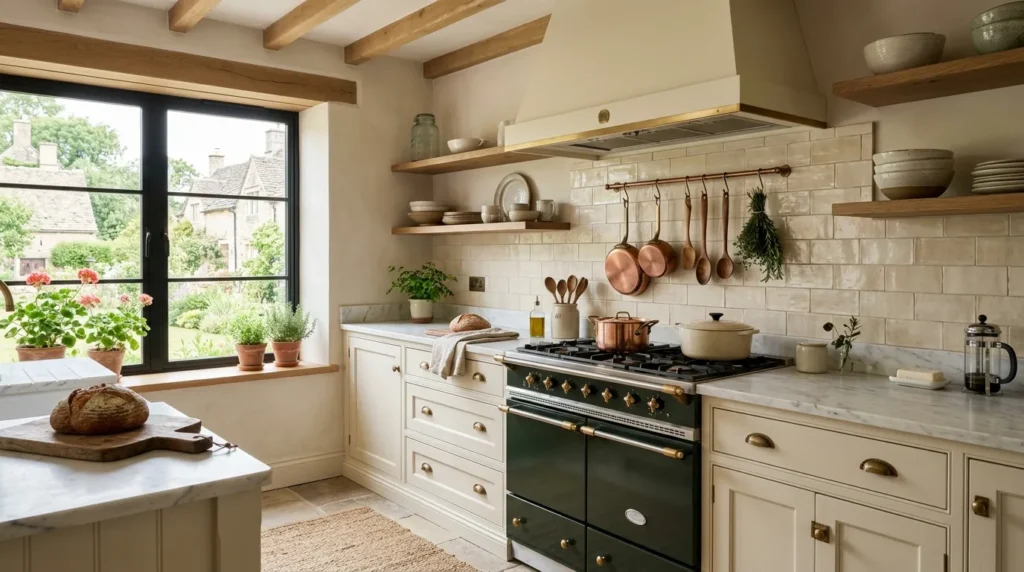
5. Classic Tile Backsplash
Quick Benefits
- Creates a timeless backdrop
- Adds subtle texture
- Protects cooking areas
- Works with many cabinet colors
- Can introduce traditional character
Why It Works
A classic backsplash creates continuity between the cabinetry and countertop while protecting the wall behind cooking and preparation areas.
Simple rectangular tile, handmade-looking ceramic tile, marble-inspired surfaces, and softly textured finishes can all work within a French-inspired kitchen.
The key is choosing a backsplash that supports the rest of the room rather than competing with it.
A backsplash with slight variations in tone or texture can feel more authentic than a perfectly uniform surface.
How To Style It
Choose warm white, cream, soft gray, or another subdued shade that complements the cabinets.
For a traditional look, consider a simple tile layout with understated grout.
If you want more character, use slightly irregular handmade-style tiles.
Continue the backsplash higher behind the range if you want to create a stronger focal area.
Pair a quiet backsplash with more expressive stone countertops, or reverse the approach if the countertop already has strong movement.
Avoid introducing multiple competing patterns in the same sightline.
6. French Pendant Lighting
Quick Benefits
- Adds warmth and personality
- Defines kitchen zones
- Provides practical illumination
- Creates a decorative focal point
- Enhances traditional architecture
Why It Works
Lighting can change how every other material in a kitchen looks. Warm illumination highlights wood grain, stone variation, cabinet color, and metal finishes.
French-inspired kitchens often benefit from fixtures that have a slightly decorative quality without becoming overly ornate.
Glass pendants, aged metal fixtures, lantern-style lights, and simple fabric shades can all create the right atmosphere.
Pendant lighting is especially useful above an island or kitchen table because it visually defines the area while providing useful task illumination.
How To Style It
Choose fixtures in a finish that relates to the hardware and other metal details.
Aged brass lanterns can reinforce a traditional look, while simple black metal can create more contrast.
For a long island, use multiple pendants with consistent spacing.
For a smaller kitchen table, one appropriately scaled fixture may be enough.
Use warm-toned bulbs appropriate for the fixture and task. The goal is comfortable illumination rather than harsh overhead brightness.
Keep fixture proportions appropriate to the room. Oversized lighting can overwhelm a compact kitchen.
7. Open Plate Shelving
Quick Benefits
- Adds casual character
- Makes everyday dishes accessible
- Creates vertical interest
- Breaks up upper cabinetry
- Provides display space
Why It Works
Open shelving can make a kitchen feel less visually heavy. Instead of covering an entire wall with closed cabinets, a few shelves create breathing room and provide a place for attractive everyday pieces.
This approach also supports the collected feeling associated with traditional European kitchens. Plates, bowls, pitchers, cutting boards, and ceramics can become part of the decor.
However, open shelves work best when they remain edited. A shelf packed with miscellaneous objects can quickly look cluttered.
How To Style It
Choose sturdy wood shelves with a finish that connects to the island, flooring, or other natural materials.
Display practical pieces such as white or cream plates, ceramic bowls, wooden cutting boards, and simple pitchers.
Add one or two decorative pieces for variation.
Keep similar objects grouped together instead of spreading everything evenly.
Leave some empty space between items.
If everyday maintenance is a concern, use open shelving selectively rather than replacing all upper cabinets.
8. Farmhouse Sink
Quick Benefits
- Adds traditional character
- Creates a strong focal point
- Works with painted cabinetry
- Provides generous washing space
- Complements natural materials
Why It Works
A farmhouse-style sink can immediately communicate a traditional kitchen aesthetic. Its substantial front apron creates a visual break within a run of cabinetry and works especially well with painted cabinet colors.
The sink can also complement other classic elements such as brass hardware, natural stone, wood accents, and traditional lighting.
While the look is strongly associated with farmhouse kitchens, it can fit comfortably within a more refined French-inspired design when the surrounding finishes are carefully selected.
How To Style It
Choose a sink material based on your kitchen’s practical requirements and overall aesthetic.
White fireclay or ceramic-style finishes create a classic appearance, while other materials can offer different levels of texture and durability.
Pair the sink with a traditional bridge-style or simple curved faucet.
Keep the area around the sink practical. A wooden cutting board, ceramic soap dispenser, and small vase can add warmth without interfering with everyday use.
Coordinate the faucet finish with the cabinet hardware when possible.
9. Soft Neutral Palette
Quick Benefits
- Creates a bright atmosphere
- Makes traditional details feel lighter
- Works with natural materials
- Makes decorating easier
- Creates visual continuity
Why It Works
A restrained color palette allows the materials and architecture to become the main features of the kitchen.
French-inspired design does not have to mean stark white. Warm neutrals such as ivory, cream, beige, taupe, muted gray, and soft sage can create a much more welcoming atmosphere.
The key is layering related shades instead of choosing one exact color for everything.
Different finishes also help prevent a neutral kitchen from looking flat. Matte cabinets, natural stone, aged metal, wood grain, ceramic tile, and woven accessories all create variation.
How To Style It
Begin with two or three dominant colors.
For example, use warm ivory cabinetry, natural wood accents, and soft gray-beige stone.
Add small amounts of muted green or blue through textiles, artwork, ceramics, or plants.
Avoid introducing too many bright accent colors.
Use texture to create contrast instead. Linen, wood, ceramic, stone, woven baskets, and aged metal can all provide interest without adding strong color.
Natural daylight is especially valuable in a neutral kitchen, so avoid unnecessarily blocking windows with heavy treatments.
10. Vintage Decorative Details
Quick Benefits
- Adds personality
- Creates a collected atmosphere
- Softens a newly renovated kitchen
- Introduces visual history
- Makes the space feel less staged
Why It Works
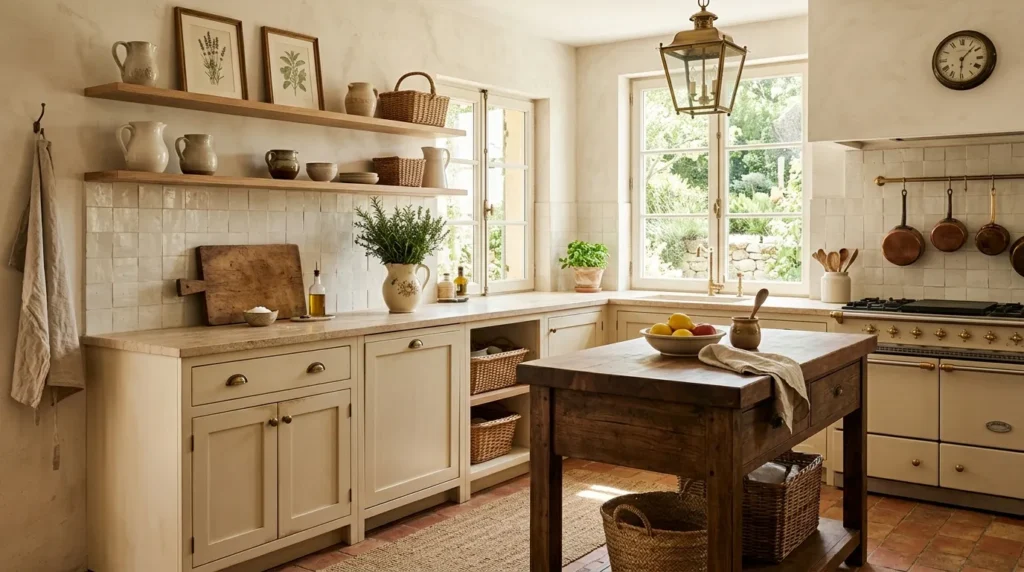
Small decorative details can make a newly designed kitchen feel more personal. Vintage-inspired ceramics, wooden boards, woven baskets, framed artwork, antique-style clocks, and simple pottery can introduce the sense that the kitchen has developed over time.
The important distinction is between collected and cluttered. A few carefully selected objects can create warmth, while too many accessories can make working surfaces difficult to use.
French-inspired kitchens often look most appealing when decoration feels natural rather than overly coordinated.
How To Style It
Start with functional objects that can also serve as decor.
Display a beautiful wooden cutting board against the backsplash. Place a ceramic pitcher on an open shelf. Add a woven basket beneath a counter or beside the island.
Use artwork sparingly. A small botanical print or traditional-inspired illustration can soften a plain wall.
Mix old-looking pieces with newer practical items so the kitchen remains functional.
Keep the countertops relatively open around cooking and preparation areas.
The final result should feel collected, comfortable, and useful rather than like a showroom.
Frequently Asked Questions
What makes a kitchen French style?
French-inspired kitchens typically combine traditional architectural details with natural materials and a warm, relaxed color palette. Painted cabinetry, natural stone, wood, aged metal, classic tile, traditional lighting, and vintage-inspired accessories are common elements. The overall effect tends to feel elegant but lived in rather than extremely formal or perfectly coordinated.
What colors work best in a French-style kitchen?
Warm white, creamy ivory, beige, soft gray, muted sage, dusty blue, and natural wood tones are excellent choices. Instead of relying on one color, combine several related shades and introduce contrast through materials. Stone, wood, ceramic, brass, and woven textures can add depth without requiring bold colors.
How can I make my kitchen look French without renovating?
Start with smaller changes that influence the overall atmosphere. Replace cabinet hardware, add a vintage-inspired pendant, introduce wooden accessories, display simple ceramics, add a classic runner, or use open shelving where appropriate. Painting existing cabinets can also create a major visual change if the cabinetry is suitable for refinishing.
What type of cabinets are best for a French-inspired kitchen?
Painted cabinets with traditional profiles are a versatile choice. Shaker-style, raised-panel, and other subtly detailed doors can all work. Warm white, ivory, muted sage, soft gray, and dusty blue are particularly effective. The finish should generally remain understated rather than extremely glossy.
Can a French-style kitchen be modern?
Absolutely. A modern French-inspired kitchen can combine clean cabinetry and contemporary appliances with classic materials such as natural stone, wood, aged brass, traditional lighting, and handmade-looking tile. The goal is balance. Keeping the decorative details restrained allows traditional elements to feel fresh rather than overly formal.
How do I decorate a French-style kitchen without making it cluttered?
Choose functional objects that are also attractive. Wooden cutting boards, ceramic pitchers, woven baskets, simple artwork, and a few potted herbs can provide character without overwhelming the room. Keep major preparation areas clear and concentrate decorative pieces on shelves, the island, or carefully selected corners.
What countertop looks best with French-style cabinets?
Natural stone with soft, understated variation works particularly well with French-inspired cabinetry. Cream, beige, gray, and gently veined surfaces can complement warm white or muted painted cabinets. The countertop does not have to be dramatic. Subtle natural movement often creates a timeless result.
Conclusion
Creating a French-inspired kitchen is less about copying a specific room and more about combining materials that feel timeless, warm, and naturally connected.
Painted cabinetry establishes the foundation. Natural stone adds organic variation, while aged brass introduces warmth. A wooden island can make the kitchen feel furnished rather than entirely built in. Classic tile, decorative lighting, open shelving, and a farmhouse-style sink add traditional character without requiring every element to look antique.
The most important lesson is balance. A French-inspired kitchen can be elegant without becoming formal and decorative without becoming cluttered. Choose a restrained color palette, introduce natural materials, and allow a few distinctive pieces to stand out.
If you are updating an existing kitchen, start small. New hardware, a warmer light fixture, a wooden cutting board collection, or a few traditional ceramics can shift the atmosphere without a complete renovation.
If you’re planning a larger remodel, focus first on the permanent materials: cabinetry, counters, flooring, backsplash, and lighting. These decisions create the visual foundation that smaller accessories can build upon.
Ultimately, the most inviting French-style kitchens feel useful and lived in. They have beautiful materials, but they also have room for everyday cooking, conversation, morning coffee, and gatherings with family and friends.
Start with the details that feel most natural to your home, then layer the look gradually until the kitchen feels timeless, warm, and distinctly yours.
Related Articles
- 10 Modern Kitchen Ideas with Timeless Design
- 10 Blue Gray Kitchen Cabinet Ideas with Elegant Details
- 10 Farmhouse Kitchen Ideas with Warm Natural Finishes
- 10 Small Kitchen Ideas That Feel Open and Stylish
- 10 Kitchen Counter Decor Ideas for a Clean and Elegant Look