
How to Declutter Your Home Like a Minimalist Family
A cluttered home rarely becomes overwhelming because of one big mess. More often, it happens gradually. A few toys stay on the floor, kitchen drawers collect items that no longer get used, paperwork gathers on the counter, and closets become storage areas for things nobody remembers owning.
For families, decluttering can feel even harder. A home has to support different people, different routines, different ages, and different ideas about what matters. The goal is not to make every room look empty. A practical minimalist home has enough belongings to support everyday life while making it easier to find, clean, use, and enjoy what remains.
The most useful mindset shift is to stop thinking about minimalism as getting rid of everything. Instead, think about creating space for the things your family actually uses and values.
In my experience, the biggest difference comes from making decisions consistently rather than trying to complete an exhausting whole-house purge in one weekend. A drawer, shelf, or closet can become noticeably easier to manage when you remove a handful of items that no longer belong there.
A minimalist family also needs systems that are realistic. Kids need accessible storage. Frequently used kitchen items need convenient homes. Seasonal belongings need defined limits. Sentimental items deserve thoughtful decisions rather than rushed disposal.
This guide walks through a practical approach to decluttering your home with a minimalist mindset. You’ll learn how to decide what stays, organize each major area, involve children, prevent clutter from returning, and create simple household habits that make tidying easier.
The result is not an empty house. It is a home with fewer distractions, clearer surfaces, easier routines, and more room for the people who live there.
Table of Contents

1. Define Your Minimalism
Create a realistic definition of minimalism that fits your family’s actual lifestyle.
2. Start With Visible Clutter
Clear the surfaces and areas that create the biggest visual impact first.
3. Use The Four-Box Method
Sort belongings into simple categories that make decisions easier.
4. Declutter The Kitchen
Reduce duplicate cookware, forgotten food, and unused kitchen accessories.
5. Simplify Family Rooms
Create practical systems for toys, books, games, and everyday belongings.
6. Streamline Closets
Build wardrobes around clothing your family actually wears.
7. Create A Paper System
Prevent paperwork from becoming permanent household clutter.
8. Handle Sentimental Items
Keep meaningful possessions without allowing memories to overwhelm storage.
9. Give Everything A Home
Create simple storage rules that make putting things away easier.
10. Maintain The System
Use small recurring habits to keep clutter from rebuilding.
1. Define Your Minimalism
Quick Benefits
- Creates realistic expectations
- Prevents unnecessary purging
- Gives the family a shared goal
- Makes decisions more consistent
- Keeps minimalism practical
Why It Works
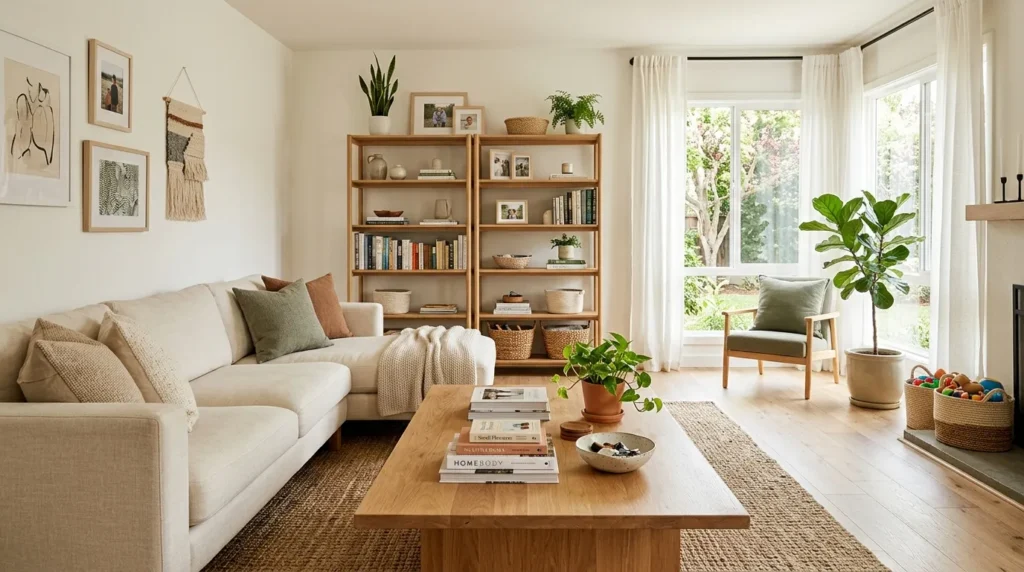
Minimalism looks different from one family to another. A household with young children naturally owns different things from a couple without children or a family that spends most weekends outdoors.
The goal is not to copy another family’s number of possessions. Instead, identify what your household wants its home to support.
Maybe you want clearer kitchen counters, easier mornings, fewer toys underfoot, or closets that close without overflowing. Those priorities become more useful than an arbitrary rule about how many items you can own.
A minimalist mindset asks a straightforward question: Does this possession contribute enough to our daily life to justify the space and attention it requires?
That question can make decluttering less emotional because you are evaluating usefulness, enjoyment, frequency of use, and available space together.
How To Style It
Start with a short family conversation about what feels difficult at home.
Write down three to five practical goals.
For example:
- Keep kitchen counters mostly clear.
- Make children’s toys easy to put away.
- Reduce overflowing closets.
- Create a simple entryway system.
- Keep the dining table available for meals.
Use these goals when making decisions.
If an item supports your family’s lifestyle, there is no reason to remove it simply because it is not visually minimalist.
The best system is one your household can maintain without constant effort.
2. Start With Visible Clutter
Quick Benefits
- Creates an immediate visual improvement
- Builds decluttering momentum
- Makes rooms feel calmer
- Helps identify problem areas
- Provides a motivating first step
Why It Works
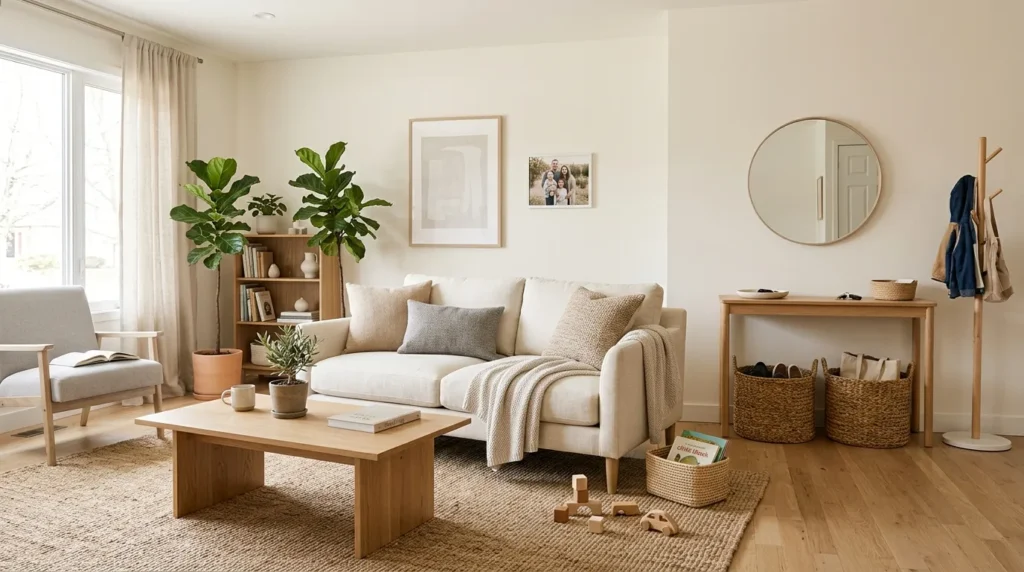
Visible clutter has an outsized effect on how a room feels. A counter covered with mail, appliances, toys, and miscellaneous objects can make the entire space appear untidy even when the rest of the room is organized.
That makes visible surfaces an excellent place to begin.
Instead of opening every closet immediately, focus on countertops, coffee tables, dining tables, bathroom counters, entryway surfaces, and open shelves.
These areas are also easier to evaluate because you can see exactly what has accumulated.
A common mistake is organizing clutter before deciding whether you actually want to keep it. Containers can make belongings look neater, but they do not reduce the number of things that require storage.
How To Style It
Choose one room and walk around it with an empty basket.
Collect anything that does not belong in the room.
Then sort the basket rather than simply moving everything to another surface.
Remove obvious trash and items that are ready to leave the house.
Return useful belongings to their proper locations.
Finally, look at what remains on each surface.
Ask whether the area needs every item currently displayed.
A living room coffee table may only need a tray, lamp, and one decorative object. A kitchen counter may work better with only the appliances used regularly.
Clear surfaces first, then tackle hidden storage.
3. Use The Four-Box Method
Quick Benefits
- Makes sorting straightforward
- Prevents indecision
- Works for every room
- Helps separate temporary items
- Makes family decluttering easier
Why It Works
A simple sorting system reduces the mental effort required to decide what happens to each item.
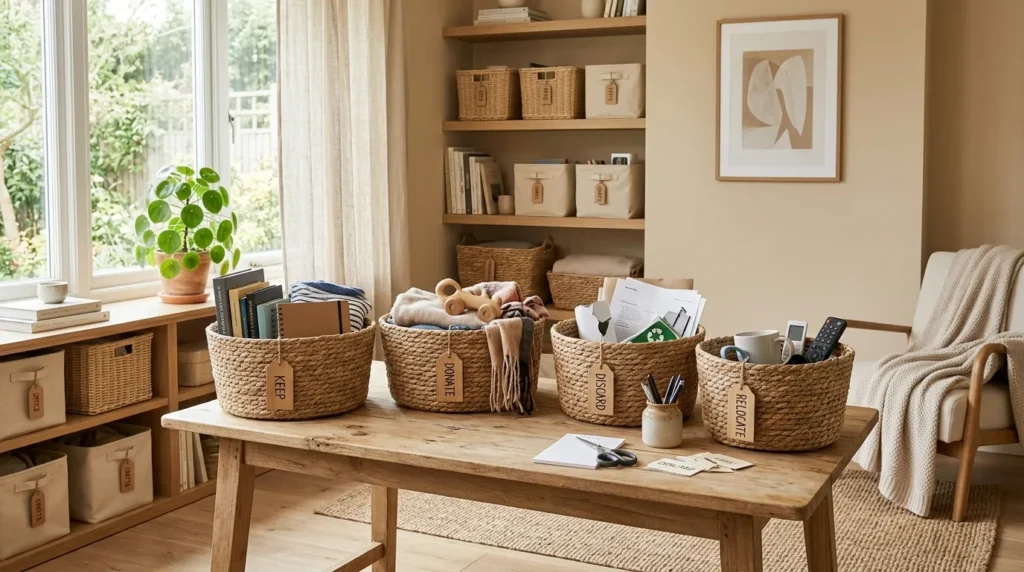
The four basic categories can be:
Keep: Items that belong in your home and are useful or meaningful.
Donate: Good-condition belongings that someone else can use.
Discard: Broken, unusable, expired, or otherwise unsuitable items.
Relocate: Items that belong somewhere else in the house.
The categories are simple enough for adults and older children to understand.
The important part is making a decision before moving to the next item. Otherwise, piles can become new forms of clutter.
You can also adapt the categories when necessary. For example, create a temporary “sell” category for valuable items, but give that category a clear deadline.
How To Style It
Use four clearly labeled boxes, baskets, or designated floor areas.
Work through one small zone at a time.
Pick up an item and decide which category it belongs to.
Avoid creating a huge “maybe” pile. If you genuinely cannot decide, place the item in a small temporary box with a review date.
For items intended for donation, place them near the exit once the sorting session is finished.
For things being discarded, remove them from the living area promptly.
The process works best when every category has a clear next step.
4. Declutter The Kitchen
Quick Benefits
- Creates more usable counter space
- Makes cooking easier
- Reduces duplicate items
- Improves cabinet accessibility
- Simplifies everyday cleanup
Why It Works
The kitchen can accumulate belongings faster than almost any other room because it contains tools, appliances, food storage, serving pieces, cleaning supplies, and reusable containers.
Many families own multiple versions of the same basic item.
Start by looking at duplicates. Several spatulas may be useful, but a drawer containing ten nearly identical ones probably does not require all of them.
Next, examine rarely used appliances and specialty tools.
An item that genuinely supports an occasional tradition can earn its space. The question is whether its usefulness justifies the storage it requires.
Food storage containers deserve special attention because mismatched lids and containers can quickly consume an entire cabinet.
How To Style It
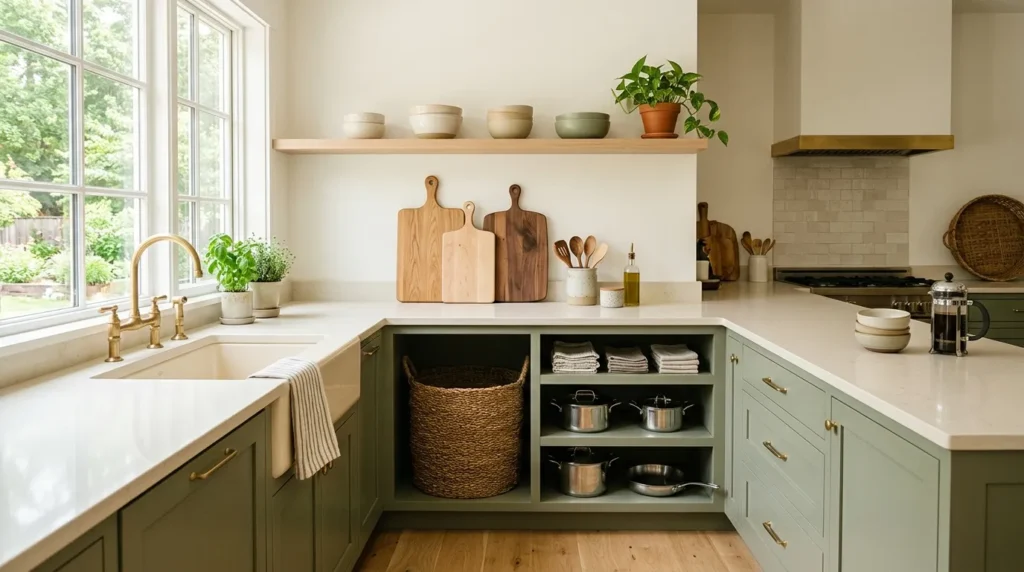
Begin with one kitchen zone rather than emptying every cabinet.
Work through:
- Utensil drawers
- Food containers
- Mugs and glasses
- Pantry shelves
- Small appliances
- Cleaning supplies
Match food containers with their lids and remove damaged pieces.
Group similar items together.
Store frequently used tools where they are easiest to reach.
Move rarely used seasonal or specialty equipment to less accessible storage.
Keep the most convenient storage areas for the things your family uses most often.
5. Simplify Family Rooms
Quick Benefits
- Makes cleanup easier
- Gives children clearer choices
- Reduces toy overflow
- Creates usable floor space
- Makes family rooms calmer
Why It Works
Children’s belongings can quickly dominate a home because toys, books, craft supplies, games, school materials, and collections all compete for limited storage.
The answer is not necessarily eliminating everything children enjoy. Instead, create boundaries.
When there is more available than the storage system can comfortably hold, cleanup becomes frustrating because there is no obvious place for everything.
A smaller, more intentional collection can also make favorite toys easier to find.
Rotation can be useful for families with large toy collections. Some items can be stored temporarily and brought back later.
How To Style It
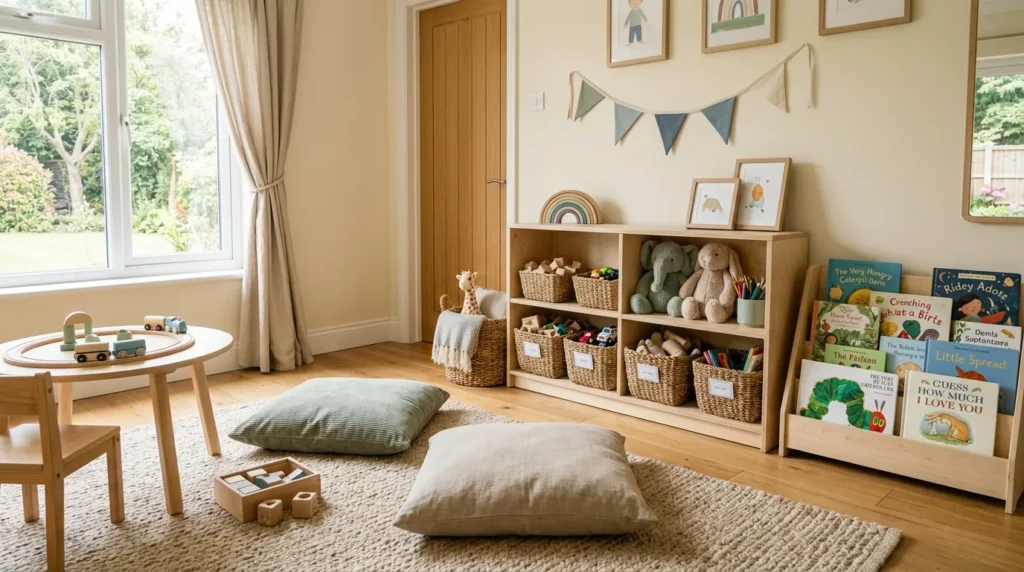
Start by separating toys into broad groups such as:
- Building toys
- Pretend play
- Books
- Arts and crafts
- Puzzles and games
- Outdoor toys
Use open bins or baskets for categories children can recognize.
Keep favorite everyday toys at an accessible height.
Store less frequently used items higher or elsewhere.
For books, use a small shelf or front-facing display for favorites.
When a new toy enters the home, consider whether the family has room for it before adding another storage container.
The goal is an easy reset rather than perfect organization.
6. Streamline Closets
Quick Benefits
- Makes dressing easier
- Reduces overcrowded storage
- Improves visibility
- Makes laundry easier to manage
- Creates space for frequently worn items
Why It Works
A crowded closet can make a person feel as though they have nothing to wear while owning far more clothing than necessary.
The problem is often visibility. When clothes are packed tightly together, forgotten pieces remain hidden while the same favorites get worn repeatedly.
A minimalist wardrobe focuses on actual habits rather than an idealized lifestyle.
If certain clothes consistently remain untouched, they deserve a closer look.
The same principle applies to children’s closets. Clothing that is outgrown, uncomfortable, damaged, or rarely worn can often be removed without affecting daily life.
How To Style It
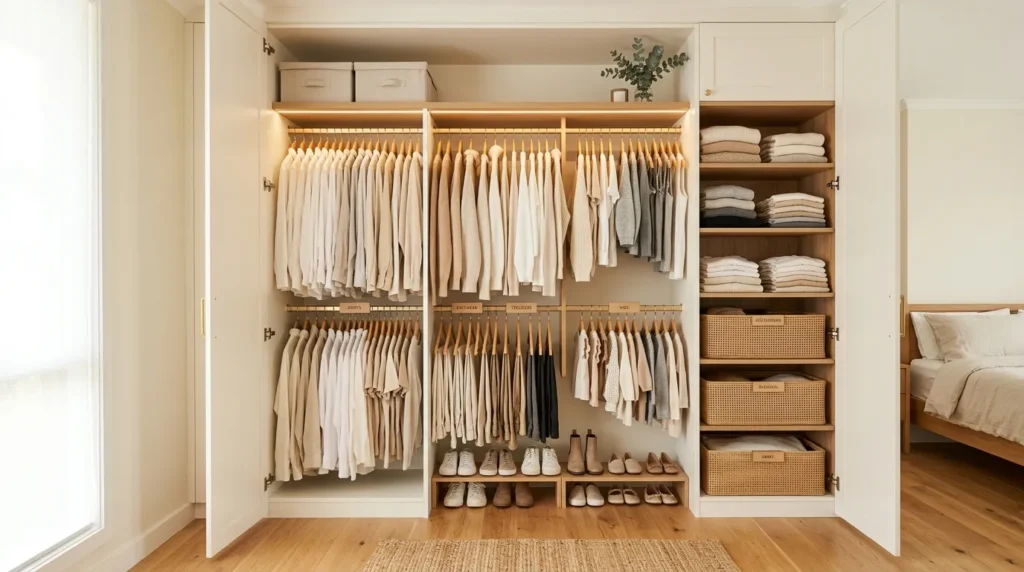
Take clothing out by category rather than emptying the entire closet at once.
Start with:
- Everyday tops
- Pants
- Dresses
- Outerwear
- Shoes
- Accessories
Keep pieces that fit well, feel comfortable, and genuinely get worn.
Create a separate location for clothing that needs repair.
Remove items that no longer fit.
For children’s clothing, keep only a practical amount of each category and rotate seasonal pieces when appropriate.
Arrange remaining clothing so frequently worn pieces are easiest to access.
7. Create A Paper System
Quick Benefits
- Reduces countertop clutter
- Makes important documents easier to find
- Prevents mail piles
- Simplifies household administration
- Creates a calmer entryway
Why It Works
Paper clutter is particularly frustrating because it often contains items that require action. Bills, school notices, receipts, forms, invitations, and documents can remain visible because nobody knows exactly where they belong.
The solution is creating a clear path from arrival to final destination.
Every piece of paper entering the home can be sorted into a small number of categories.
Some require action. Others need filing. Some can be recycled immediately.
The longer paper remains undecided, the more likely it is to become a permanent pile.
How To Style It
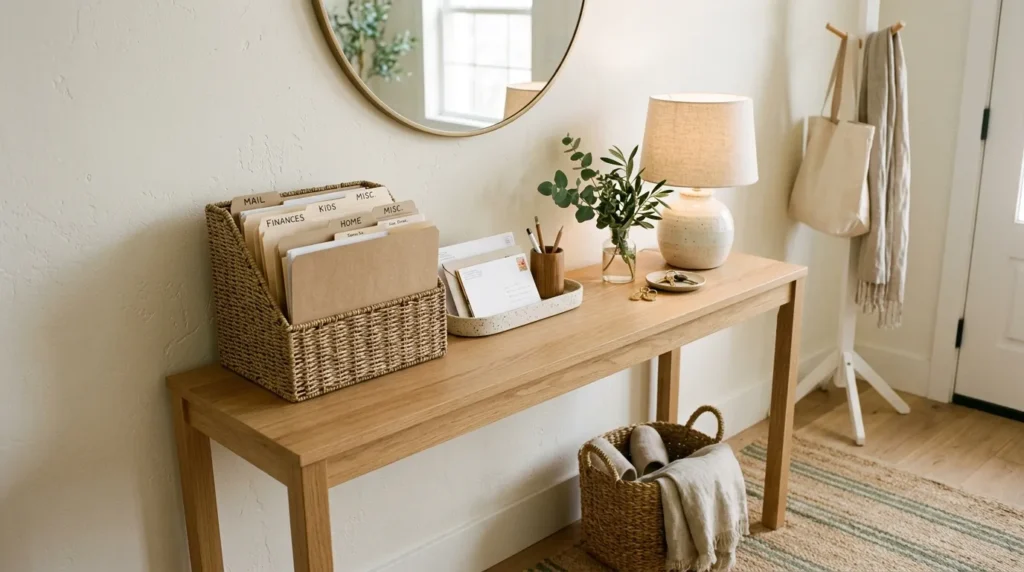
Create one designated paper-processing area.
Use categories such as:
- Action
- File
- Recycle
- Temporary reference
Process incoming mail regularly rather than allowing it to accumulate.
Digitize documents when appropriate and when doing so is secure and suitable for your records.
Keep important physical documents in a clearly labeled filing system.
Avoid storing paperwork in multiple random drawers.
A small desktop file organizer or wall-mounted sorter can work well in an entryway or home office.
8. Handle Sentimental Items
Quick Benefits
- Reduces emotional clutter
- Preserves meaningful memories
- Prevents overflowing storage
- Makes keepsakes easier to appreciate
- Creates intentional memory collections
Why It Works
Sentimental belongings are often the hardest part of decluttering because their value is emotional rather than practical.
A minimalist approach does not require throwing away meaningful memories. Instead, it encourages you to distinguish between the memory and the physical object representing it.
One child’s school project may carry enormous meaning. Keeping hundreds of similar papers can make each one less noticeable.
The same principle can apply to inherited objects, travel souvenirs, childhood belongings, and family photographs.
A smaller collection can make meaningful items easier to see and appreciate.
How To Style It
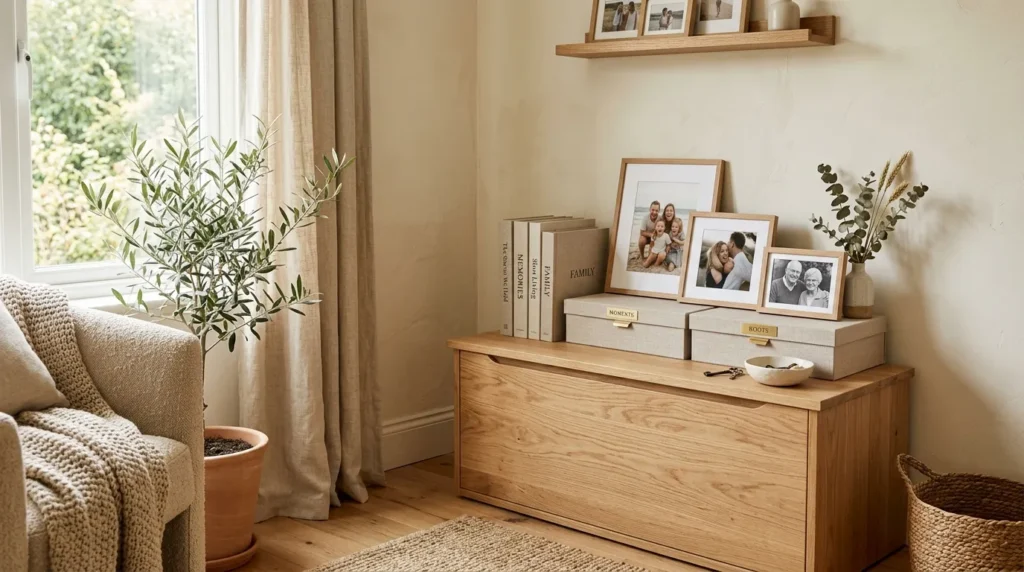
Create a defined memory box or storage container for each family member where appropriate.
Choose favorite items rather than keeping every similar example.
Photograph especially bulky keepsakes before deciding whether the physical item needs to remain.
For children’s artwork, display selected pieces temporarily and archive favorites.
Keep inherited belongings because they genuinely matter, not solely because they feel difficult to release.
Give sentimental items a specific storage location.
When the container is full, review the collection before adding more.
9. Give Everything A Home
Quick Benefits
- Makes tidying faster
- Reduces misplaced items
- Helps children participate
- Prevents surface clutter
- Makes routines more predictable
Why It Works
Decluttering removes excess, but a home also needs a system for what remains.
If an item does not have a clear home, it tends to migrate from one surface to another.
This is particularly noticeable with everyday objects such as shoes, chargers, backpacks, toys, keys, mail, and kitchen tools.
A good storage location is not necessarily hidden. It is simply predictable.
When the correct location is close to where an item is used, putting it away requires less effort.
How To Style It
Think about where each item naturally gets used.
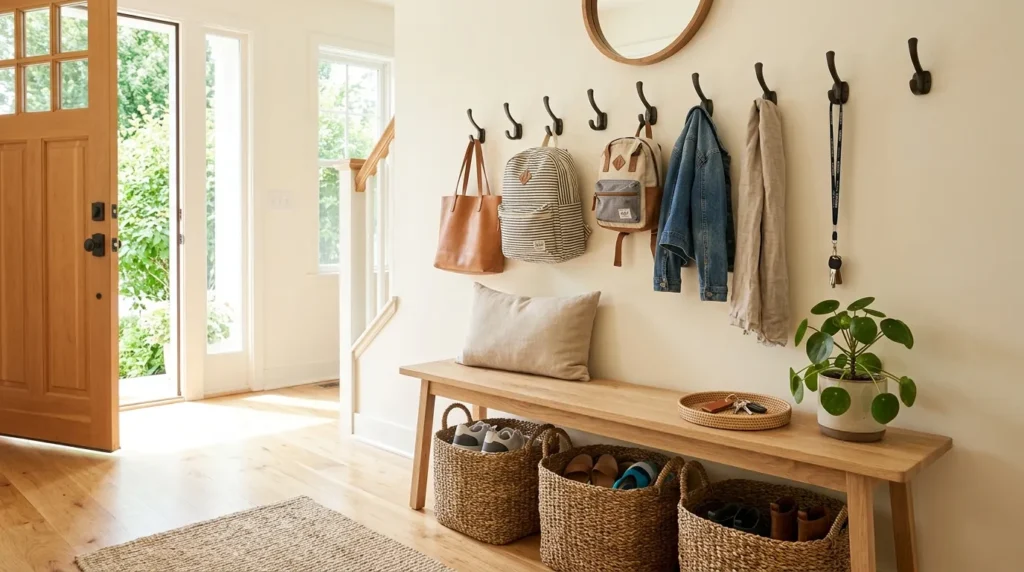
Keep keys near the entry.
Store everyday shoes close to the door.
Place school supplies where children actually do homework.
Keep cooking tools near the areas where they are used.
Use labels for bins when they help the family understand what belongs inside.
Avoid creating complicated systems that require several steps.
The simplest storage solution that consistently works is usually the most sustainable.
10. Maintain The System
Quick Benefits
- Prevents major clutter buildup
- Reduces weekend cleaning sessions
- Keeps storage manageable
- Makes the home easier to reset
- Builds sustainable family habits
Why It Works
Decluttering is not a one-time event. Homes continuously receive groceries, clothing, toys, paperwork, gifts, school supplies, and household items.
Without a maintenance routine, even a beautifully organized home can become crowded again.
The solution is not spending hours every day cleaning. Small recurring habits can stop clutter from reaching the point where it requires a major reset.
A minimalist family focuses on the flow of belongings into and out of the home.
When something new enters, it has a designated place. When something no longer serves the household, it leaves.
How To Style It
Create a short daily reset.
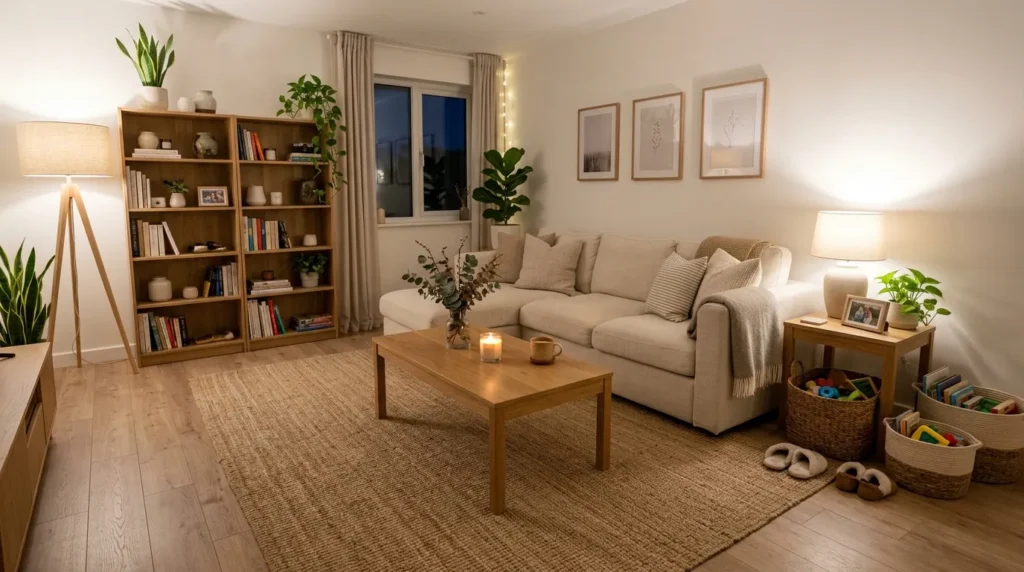
Ten minutes can be enough to return items to their homes, clear surfaces, and prepare the main living areas for the next day.
Once a week, choose one small area for review.
Every few months, check seasonal clothing, children’s belongings, pantry items, and household storage.
Before bringing home something new, consider where it will live.
Use a simple rule: If the home has no comfortable place for something, pause before adding it.
The goal is consistency rather than perfection.
Frequently Asked Questions
How do minimalist families declutter their homes?
Minimalist families generally focus on keeping belongings that support their lifestyle, rather than trying to own as little as possible. They regularly remove unused items, create clear homes for necessities, limit duplicates, and establish simple routines for incoming belongings. The process works best when decluttering becomes an ongoing household habit rather than an occasional extreme cleanout.
What is the easiest room to declutter first?
Start with a room or area where clutter is highly visible and decisions are relatively easy. A bathroom counter, kitchen drawer, entryway, or coffee table can provide a quick improvement. Beginning with a manageable area creates momentum and helps you learn which decluttering methods work best for your household before tackling emotionally difficult categories.
How do you declutter with children?
Give children simple categories and involve them in age-appropriate decisions. Ask which toys they use most, which books they enjoy, and which belongings they have outgrown. Use accessible baskets or bins so children can participate in cleanup. Avoid expecting children to maintain complicated systems. The easier the storage system, the more likely it is to work.
How do minimalist families handle toys?
They create limits around available storage rather than focusing only on the number of toys. Favorite toys remain accessible, while less frequently used items can be rotated. Broken or outgrown toys leave the home. Grouping toys by type also makes cleanup easier. The goal is a manageable collection that children can actually see, use, and put away.
How do you declutter sentimental items?
Begin by identifying the items that genuinely carry strong meaning. Keep the favorites and give them defined storage. Similar items can often be reduced to a representative selection. Photographs can preserve the memory of bulky objects, although the physical item may still be worth keeping when its personal significance is substantial.
How often should a family declutter?
There is no universal schedule. A quick daily reset, a small weekly review, and occasional seasonal decluttering can work well for many households. Focus on areas that regularly become crowded rather than waiting for the entire house to require a major purge. Regular small decisions are easier to manage than infrequent large-scale cleanouts.
What is the biggest mistake people make when decluttering?
One common mistake is organizing before reducing. Buying containers and rearranging belongings can make clutter look better temporarily without addressing the underlying volume. Decide what deserves to remain first. Then create storage around the items that genuinely support your household.
Conclusion
A minimalist family home is not defined by empty shelves or perfectly styled rooms. It is defined by intention.
The goal of decluttering is to create a home that works better for the people living inside it. Fewer unnecessary belongings can make cleaning easier, storage more manageable, and everyday routines less complicated.
Start with your family’s definition of a comfortable home. Clear visible surfaces, sort belongings into simple categories, and work through one area at a time. The kitchen, closets, children’s spaces, paperwork, and sentimental items each require slightly different decisions, but the same principle applies: keep what earns its space.
Give the remaining belongings clear homes. When storage is convenient and predictable, tidying becomes easier for everyone, including children.
Most importantly, do not treat decluttering as a race. A minimalist home develops through hundreds of small decisions. Removing one drawer of unused items today and establishing a simple paper system tomorrow can gradually change the entire way your home functions.
You also do not need to eliminate everything that makes your home feel personal. Books, artwork, photographs, collections, children’s creations, and meaningful objects can all belong in a minimalist home when they have genuine value.
Start with one room, one drawer, or one surface. Make the decisions that feel obvious first. As your home becomes easier to manage, the larger decisions often become clearer.
The result is a home with more breathing room—not because everything has disappeared, but because the things that remain have a purpose.
Related Articles
- How to Organize a Small Bedroom Without Extra Cabinets
- How to Make a Small Bedroom Feel Open with Smart Layouts
- 10 Modern Living Room Ideas That Never Go Out of Style
- 10 Neutral Home Decor Ideas for a Warm and Timeless Look
- 10 DIY Home Organization Ideas for Everyday Spaces