

10 Small Living Room Ideas with Cozy Neutral Interiors
A small living room can be one of the most inviting spaces in a home when the design focuses on comfort, light, and thoughtful proportions. The challenge is that smaller rooms can quickly feel crowded when every available corner is filled with furniture or decor. The right approach is not necessarily to own less, but to choose pieces that work harder and create visual breathing room.
Neutral interiors are especially useful in compact spaces because soft colors can make the room feel calm and connected. Warm whites, beige, oatmeal, taupe, soft gray, natural wood, and creamy fabrics create an easy foundation that works across many decorating styles. Instead of making the room feel plain, layering different textures gives the space depth without adding visual clutter.
I’ve noticed that the most successful small living rooms usually have one thing in common: nothing feels accidental. A slim coffee table leaves enough room to walk around. Curtains are positioned to emphasize the height of the windows. A small rug visually connects the seating area instead of breaking it into separate pieces. Even a simple collection of pillows can make a neutral sofa feel much more finished.
The ideas below focus on practical ways to make a compact living room feel warmer, larger, and more comfortable while keeping the overall look sophisticated. Whether you’re decorating an apartment, updating a rental, or working with a small room in a family home, these approaches can be adapted to different budgets and layouts.
You don’t have to completely redesign the room, either. Sometimes changing the furniture arrangement, introducing warmer lighting, or adding a few natural textures can make a surprisingly noticeable difference.
Table of Contents
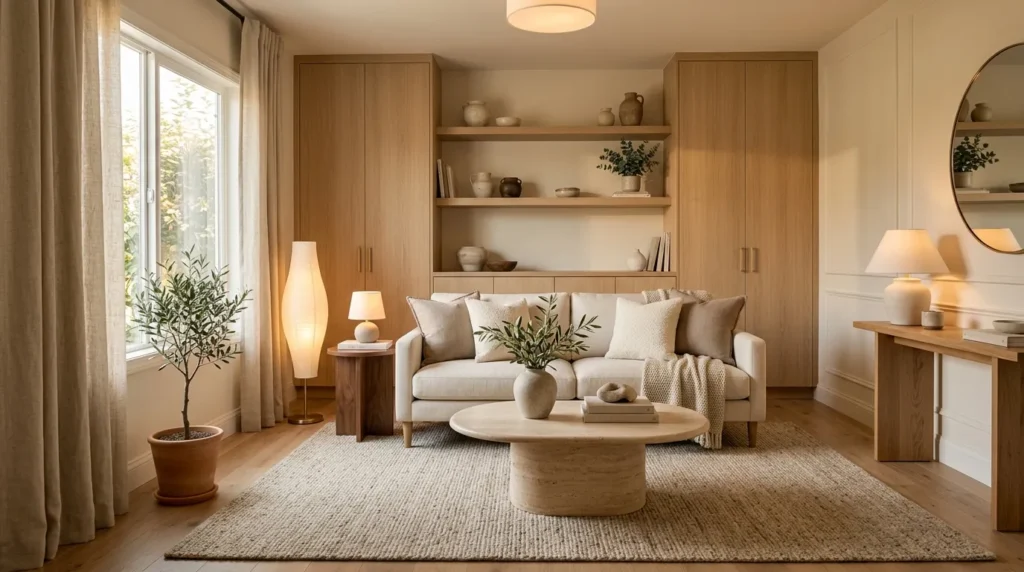
1. Warm Beige Layers
Create a soft neutral foundation by combining beige, cream, oatmeal, and warm white.
2. Compact Furniture
Choose appropriately scaled seating and tables that leave comfortable pathways through the room.
3. Natural Wood Accents
Use wood tones to add warmth, character, and visual contrast to a neutral palette.
4. Soft Textural Layers
Combine rugs, throws, pillows, and upholstery to give a neutral room depth and comfort.
5. Light Airy Curtains
Use full-length, lightweight window treatments to make the room feel taller and brighter.
6. Round Coffee Tables
A curved coffee table can improve circulation while adding a softer visual element.
7. Layered Lighting
Combine ceiling, floor, table, and accent lighting to create a cozy atmosphere throughout the day.
8. Neutral Gallery Walls
Create a curated wall display with understated artwork, photography, and natural frames.
9. Built-In Storage
Use vertical and multifunctional storage to keep everyday items organized without overwhelming the room.
10. Cozy Corner Seating
Turn an unused corner into a useful reading, relaxing, or conversation area.
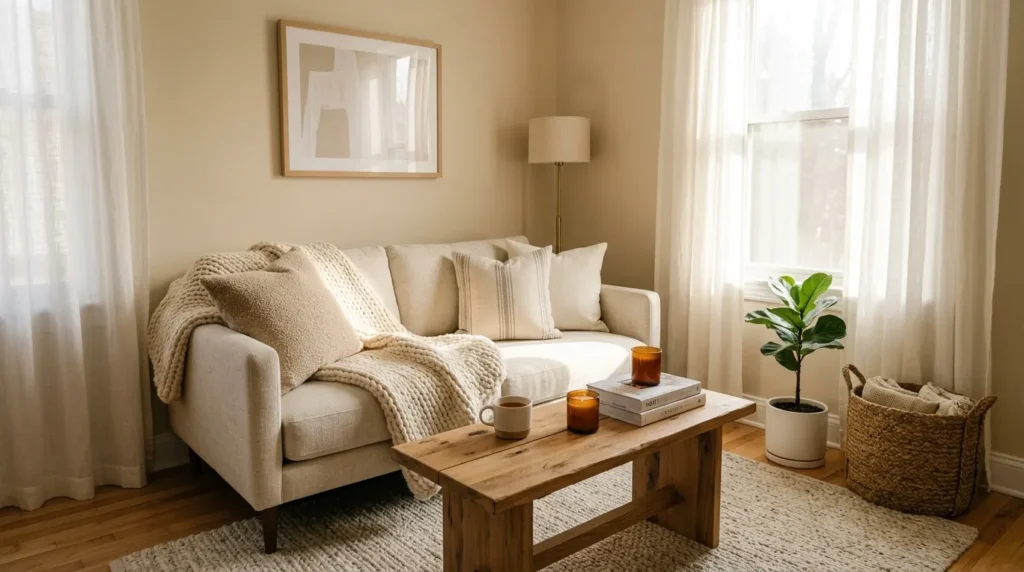
1. Warm Beige Layers
Quick Benefits
- Creates a calm and welcoming atmosphere
- Makes different furnishings feel connected
- Works well with natural materials
- Provides flexibility for seasonal decorating
- Keeps a small room visually cohesive
Why It Works
Warm beige is one of the easiest neutrals to use when you want a living room to feel cozy rather than stark. Unlike cooler whites and grays, beige has a subtle warmth that pairs naturally with wood, woven materials, aged metals, and cream-colored fabrics. In a compact room, keeping the major surfaces within a related color family can also reduce visual interruptions.
The key is to avoid making everything exactly the same shade. A room filled with one flat beige can feel lifeless. Instead, think of neutral decorating as a collection of closely related tones. A creamy sofa can sit against a warm white wall, while a slightly deeper beige rug anchors the seating area.
This approach also makes decorating easier over time. If you later add terracotta pillows, olive green plants, or black picture frames, they can become accents against the quieter foundation.
How To Style It
Start with one dominant neutral for the sofa or largest upholstered piece. From there, add two or three related shades through the rug, curtains, pillows, and throws. For example, pair an oatmeal sofa with an ivory rug, warm white curtains, and taupe cushions.
Introduce contrast through texture rather than strong color. A chunky knit throw, linen pillow, woven basket, and lightly patterned rug can all add interest without disrupting the palette.
If your walls are already white, there is no need to repaint them. Bring warmth through furniture and accessories instead. For renters, this is particularly useful because you can create a softer atmosphere without making permanent changes.
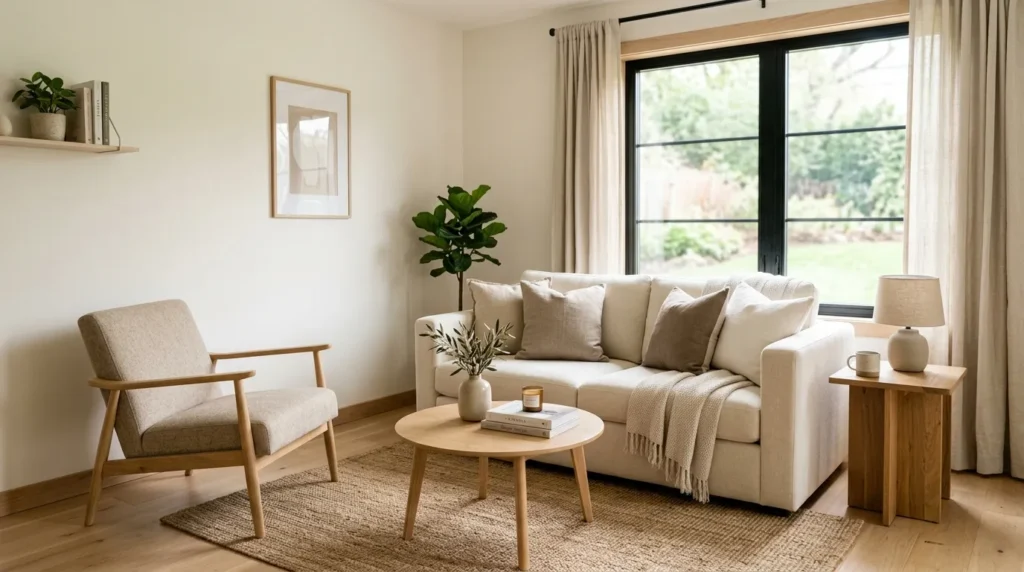
2. Compact Furniture
Quick Benefits
- Improves walking space
- Makes the room easier to use
- Reduces visual heaviness
- Helps furniture feel proportional
- Creates a more open layout
Why It Works
Furniture scale can completely change how a small living room feels. A large sectional may look comfortable in a showroom but overwhelm a compact room when combined with a full-size coffee table, accent chairs, and bulky storage. Choosing furniture with slimmer proportions allows you to maintain comfort while preserving valuable floor space.
One mistake many homeowners make is measuring only the furniture itself. You also need to consider the clearance around each piece. A sofa that technically fits against a wall may still make the room uncomfortable if there is no practical walkway beside it.
Look for sofas with narrower arms, raised legs, and moderate depth. These details allow more floor to remain visible, which can make the entire room appear lighter. The same principle applies to chairs, side tables, consoles, and media furniture.
How To Style It
Begin by measuring the room and marking the main walking paths before purchasing anything. Leave enough clearance for doors, drawers, and everyday movement.
A loveseat can be a smart alternative to a large sofa, particularly when paired with one lightweight accent chair. Another option is a compact sofa with an ottoman that can function as a footrest, extra seat, or temporary coffee table.
Choose furniture that visually occupies less space. Pieces with exposed legs, open bases, and slim frames generally feel lighter than boxy furniture sitting directly on the floor.
For a rental or apartment, movable furniture is especially useful. You can shift an ottoman or chair when guests arrive rather than permanently dedicating an area to one function.
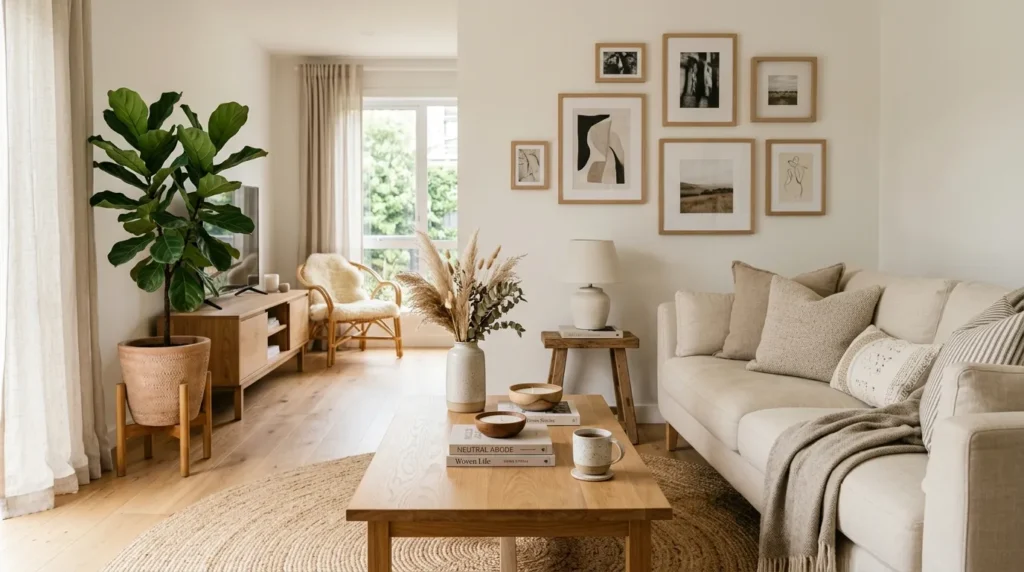
3. Natural Wood Accents
Quick Benefits
- Adds warmth to neutral interiors
- Introduces natural visual texture
- Works with modern and traditional styles
- Creates subtle contrast
- Makes the room feel more grounded
Why It Works
Neutral colors become much more interesting when they are paired with natural materials. Wood is particularly effective because it adds warmth without requiring a strong accent color. The organic grain also creates variation that painted surfaces and solid-colored fabrics cannot provide.
A small living room doesn’t need a lot of wood. One coffee table, a side table, a framed mirror, or a narrow console may be enough to bring the material into the space. Mixing too many wood finishes can make a compact room look busy, so choosing one dominant tone and one supporting tone is usually easier on the eye.
Light oak and medium natural wood work beautifully with creamy neutrals. Darker wood can also work, but it is best used selectively so it becomes an accent rather than making the room feel visually heavy.
How To Style It
Try a light oak coffee table with a cream sofa and woven rug for a relaxed, contemporary look. If you prefer a more traditional interior, consider a medium-toned wood side table with turned legs or a simple vintage cabinet.
Wooden picture frames are another easy option, particularly when wall space is limited. A collection of small frames can add warmth without taking up floor space.
Don’t worry about matching every wood item perfectly. Natural variation can make the room feel more collected. However, repeat similar undertones so the finishes feel intentional.
You can also combine wood with rattan, cane, jute, linen, and ceramic pieces. These materials create a relaxed layered effect that works particularly well in neutral interiors.
4. Soft Textural Layers
Quick Benefits
- Adds depth without strong colors
- Makes seating more comfortable
- Creates visual interest
- Helps neutral spaces feel finished
- Supports a relaxed atmosphere
Why It Works
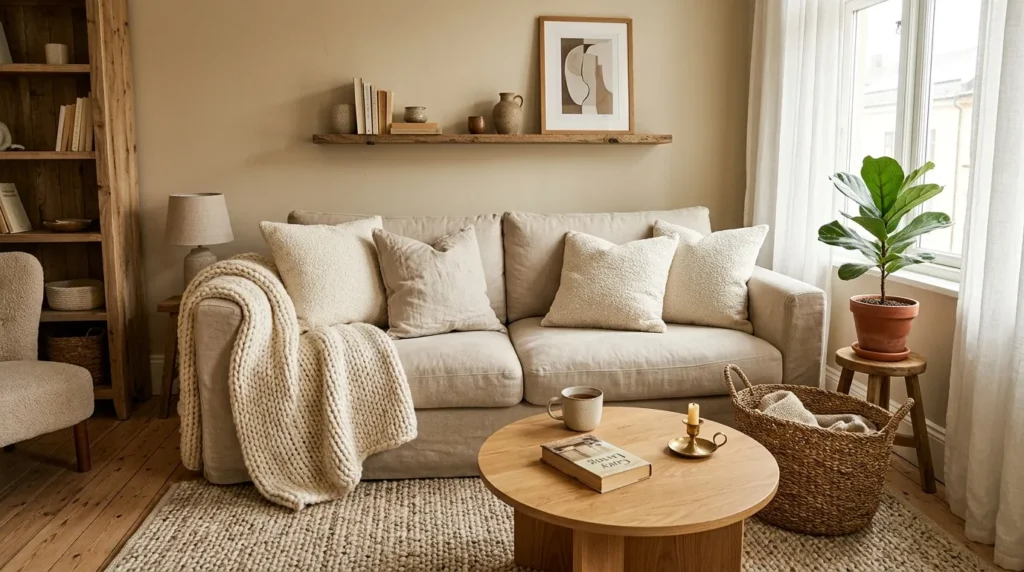
A neutral living room depends heavily on texture. Without it, a palette of cream, beige, and white can appear flat. With the right combination of materials, the same colors can feel rich and inviting.
Think about how different surfaces interact. A smooth cotton pillow looks different beside a nubby boucle cushion. A flat woven rug creates a different feeling from a plush pile rug. Linen curtains filter light differently from heavier upholstery.
This variety is particularly valuable in a small room because adding more color is not always the best way to create interest. Texture gives the eye something to explore while keeping the overall palette quiet.
I’ve seen this idea transform spaces that initially felt unfinished. Sometimes the furniture is perfectly fine; the room simply lacks layers.
How To Style It
Start with the largest texture, usually the rug or sofa upholstery. Then build outward with smaller pieces such as pillows, throws, baskets, and curtains.
Try combining three or four distinct materials rather than using the same fabric everywhere. A linen pillow, knitted throw, woven basket, and wool-look rug can create plenty of depth.
Avoid placing every soft accessory in exactly the same shade. Instead, use subtle tonal variation. Cream, oatmeal, warm gray, and taupe can work together without looking mismatched.
For everyday comfort, choose washable or durable fabrics where possible, especially if the living room receives regular family use. Beautiful materials are more useful when they can handle real life.
5. Light Airy Curtains
Quick Benefits
- Makes windows feel larger
- Emphasizes ceiling height
- Softens natural light
- Adds privacy
- Keeps the room visually light
Why It Works
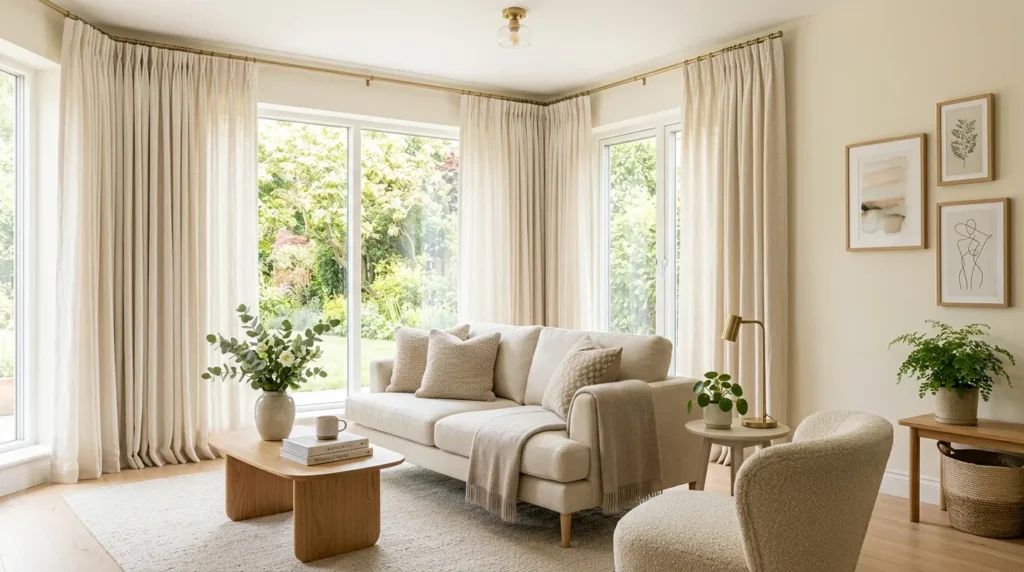
Window treatments can have an outsized effect in a small room. Heavy curtains mounted directly above the window frame can make the windows appear smaller and can visually lower the ceiling. Lightweight curtains mounted higher and wider can create the opposite impression.
The goal is to make the window treatment feel like part of the architecture rather than a separate object placed over the window. Soft white, ivory, natural linen, or warm beige curtains are especially effective in neutral living rooms.
Natural light also matters. When daylight can move freely into the room, pale surfaces reflect more light and the space tends to feel more open. That doesn’t mean every window needs to be completely uncovered. Sheer or lightweight panels can provide softness and privacy while maintaining brightness.
How To Style It
Whenever the room allows, mount the curtain rod several inches above the window and extend it beyond the sides of the frame. Let the panels reach close to the floor for a more elongated appearance.
Choose fabrics with some movement rather than stiff materials. Linen-look curtains, cotton blends, and lightweight woven fabrics can soften the room without becoming visually dominant.
If your windows already have blinds, combine them with simple neutral panels for flexibility. Keep the curtain color close to the wall color if your priority is an airy appearance.
For a cozier look, choose a slightly warmer curtain shade than the wall. This creates subtle layering without introducing a new color family.
6. Round Coffee Tables
Quick Benefits
- Improves movement around furniture
- Reduces sharp visual lines
- Works well with compact sofas
- Creates a softer focal point
- Provides practical surface space
Why It Works
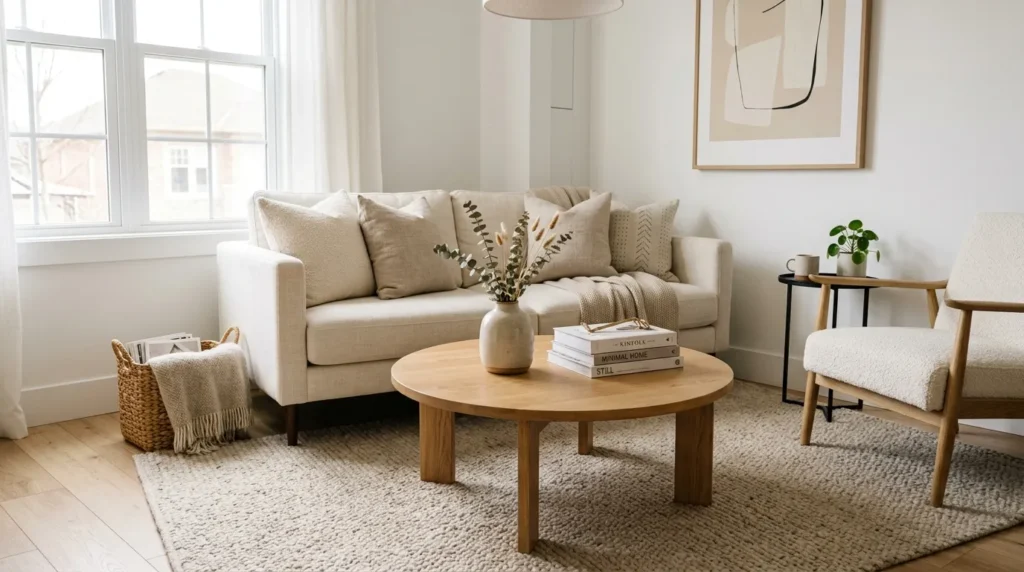
In a compact living room, circulation is just as important as appearance. Square coffee tables can sometimes create awkward corners, particularly when the available walkway is narrow. A round table eliminates those sharp corners and can make movement around the seating area feel more natural.
Curved furniture also introduces softness into rooms that contain many straight architectural lines. Walls, windows, shelving, and media consoles tend to be rectangular, so one rounded piece can provide welcome contrast.
A round coffee table doesn’t have to be tiny. The right size depends on the sofa and available clearance. The goal is to find a table that provides useful surface space without blocking the room’s main pathways.
How To Style It
For a small room, look for a round table with a slim profile or open lower shelf. Wood is a natural choice for warm neutral interiors, while glass can visually disappear and make the floor feel less interrupted.
Place a simple tray, a small stack of books, or a low ceramic vessel on the surface. Avoid filling the entire table because the open space is part of what makes the arrangement feel relaxed.
If you frequently need extra seating, consider a round upholstered ottoman instead. It can serve as a coffee table when topped with a sturdy tray and become additional seating when guests arrive.
Keep enough space between the table and sofa for comfortable movement. The exact clearance depends on your furniture, but ease of movement should always take priority over squeezing in a larger table.
7. Layered Lighting
Quick Benefits
- Creates a warmer evening atmosphere
- Makes the room more functional
- Adds visual depth
- Reduces dependence on one ceiling fixture
- Highlights favorite decor
Why It Works
Lighting is often overlooked when decorating a small living room, yet it can determine how comfortable the space feels after sunset. A single bright overhead fixture tends to create flat illumination and can make a room feel less inviting.
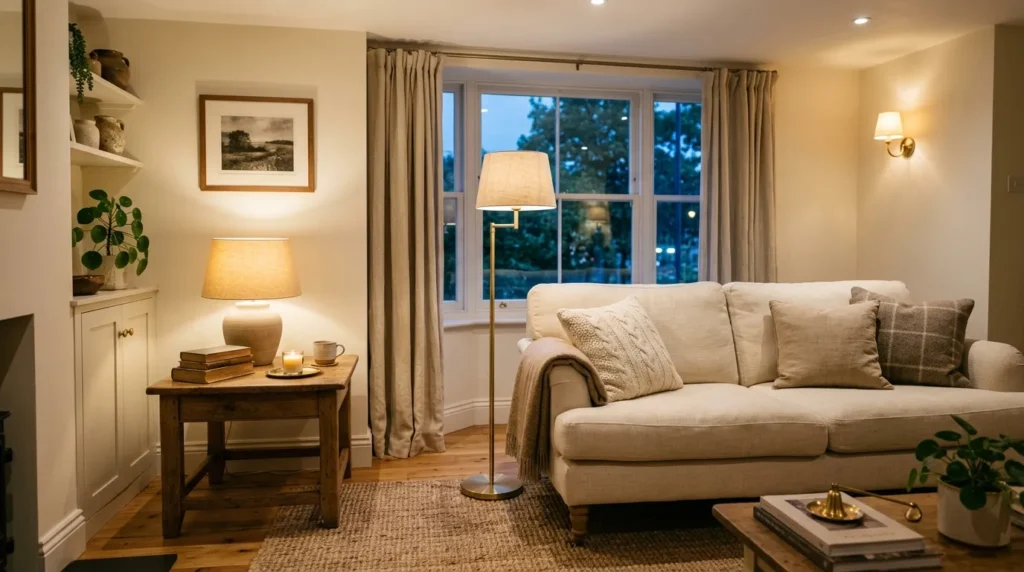
Layered lighting gives you more control. Ambient lighting provides general illumination, task lighting supports reading or other activities, and accent lighting highlights architectural or decorative details.
The beauty of this approach is that the fixtures themselves can also become part of the decor. A slim floor lamp beside a sofa adds height. A small table lamp on a console introduces a warm glow. A wall light can provide illumination without taking up floor space.
That’s why many designers recommend thinking about lighting at several levels rather than treating it as one decision.
How To Style It
Begin with your main ceiling light, then add at least two smaller sources around the room. A floor lamp next to the sofa is useful for reading, while a table lamp on a side table or console can create a softer secondary glow.
Choose warm-toned bulbs appropriate for residential spaces. Dimmable lighting is especially useful because the same room can require different brightness levels throughout the day.
If floor space is limited, consider wall-mounted sconces or plug-in wall lights where appropriate. These can free up valuable surfaces.
Don’t forget decorative lighting. A small lamp on a bookshelf or a softly illuminated artwork can make the room feel more layered without adding physical clutter.
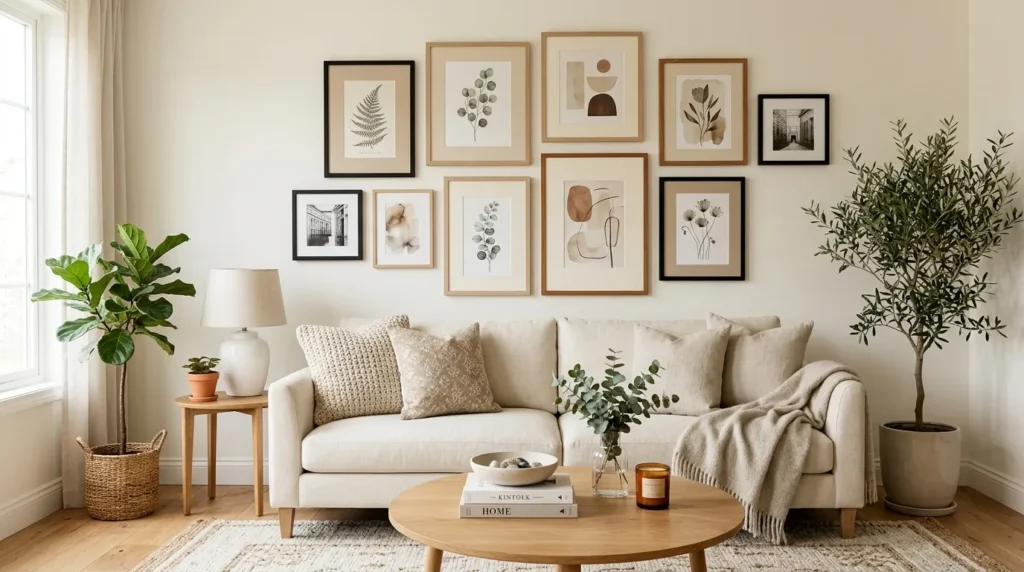
8. Neutral Gallery Walls
Quick Benefits
- Uses vertical space efficiently
- Adds personality without cluttering the floor
- Creates a visual focal point
- Works with neutral furniture
- Can be customized inexpensively
Why It Works
A small living room still needs personality. If every surface is kept completely bare in an attempt to make the room feel larger, the result can become cold and unfinished. A thoughtfully arranged gallery wall lets you introduce character without taking away floor space.
A neutral gallery wall can include photography, botanical prints, abstract artwork, line drawings, or simple personal images. Keeping the frames and artwork within a related color palette makes the arrangement feel cohesive.
The key is editing. Ten small pieces aren’t automatically better than four well-chosen pieces. A compact room benefits from an arrangement that feels intentional rather than crowded.
Vertical wall space is particularly valuable when the floor is already occupied by furniture.
How To Style It
Choose a consistent visual element to connect the artwork. This might be natural wood frames, black frames, cream mats, or artwork containing similar neutral tones.
Before hanging anything, arrange the pieces on the floor. Photograph the arrangement so you can see whether the spacing feels balanced.
For a simpler look, hang one oversized piece above the sofa instead of creating a gallery wall. A large neutral abstract painting or textured artwork can become a strong focal point without introducing visual chaos.
Keep the artwork connected to the furniture below it. A piece that is too small can look disconnected, while one that is appropriately scaled can make the entire seating arrangement feel more complete.
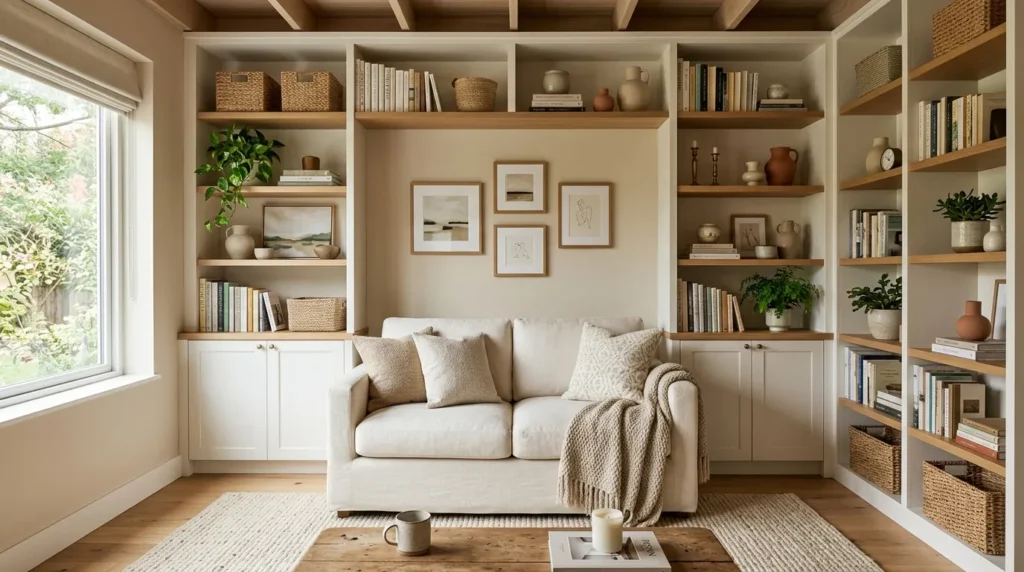
9. Built-In Storage
Quick Benefits
- Keeps everyday clutter contained
- Makes use of vertical space
- Creates a cleaner appearance
- Supports multifunctional living
- Reduces the need for extra furniture
Why It Works
Storage becomes especially important when a living room serves several purposes. Books, blankets, remotes, toys, electronics, paperwork, and everyday items can quickly take over a compact space.
The best storage solutions are those that blend into the room rather than competing with it. Built-in shelves, wall-mounted cabinets, narrow consoles, and storage ottomans can provide useful capacity while keeping the floor relatively open.
Even if you don’t have traditional built-ins, you can create a similar effect by using modular shelving that reaches upward rather than spreading across the floor.
Vertical storage also draws the eye upward, which can help emphasize ceiling height. In a small room, every wall can potentially contribute to organization.
How To Style It
If you have built-in shelving, avoid filling every shelf. Leave some open space between books, baskets, artwork, and decorative objects. This creates visual breathing room.
Use baskets or lidded boxes for items that don’t need to remain visible. Group similar objects together rather than scattering small items across every surface.
For a rental, try a narrow freestanding bookshelf, wall-safe storage where permitted, or an ottoman with hidden storage.
A storage coffee table can also be useful if you have limited space. Choose one that provides a practical function without becoming so large that it interferes with circulation.
The best storage solution is the one that makes everyday cleanup easier. If putting something away takes several steps, it is less likely to happen consistently.
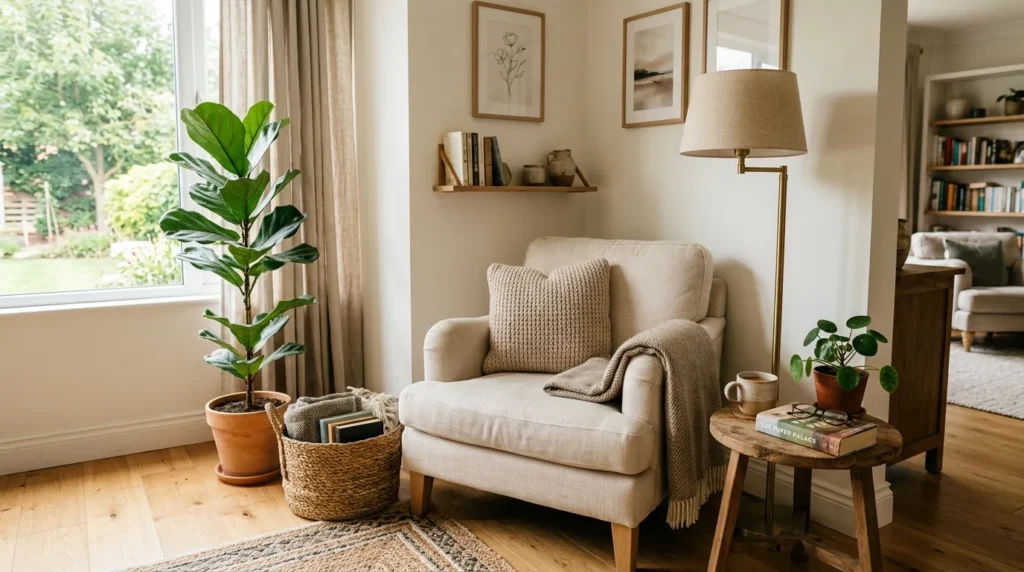
10. Cozy Corner Seating
Quick Benefits
- Makes unused corners useful
- Creates a secondary seating zone
- Adds personality
- Supports reading and relaxing
- Makes the room feel more intentional
Why It Works
Not every small living room needs to function as one large seating arrangement. Sometimes a corner can become a small destination within the room.
A comfortable chair beside a floor lamp can create a reading spot. A petite bench beneath a window can offer casual seating. Even a small upholstered stool beside a plant can make an empty corner feel purposeful.
This approach is especially helpful when the main sofa already occupies most of the room. Instead of adding another large chair that competes for floor space, choose a visually lighter piece.
Creating zones also makes the room more useful. One person can read while another watches television, or a guest can sit comfortably without feeling like they are occupying the main sofa.
How To Style It
Start with the corner’s purpose. If it is a reading space, choose a comfortable chair, a small side table, and a floor lamp. If it is mainly decorative, a narrow bench, plant, and textured cushion may be enough.
Keep the colors connected to the main living area. A cream chair with a taupe cushion can visually belong to the same room without matching the sofa exactly.
Add one natural element, such as a plant, woven basket, or wooden side table. This keeps the corner from feeling like an isolated collection of furniture.
If the room is extremely tight, consider a lightweight accent chair that can be moved when you need additional floor space. Flexibility is often more valuable than having a fixed arrangement.
Making Neutral Decor Feel Warm, Not Bland
Neutral decorating works best when it is treated as a layered design strategy rather than simply a lack of color. If your room contains cream walls, a beige sofa, and one plain rug, it may still feel unfinished. The missing ingredient is often variation.
Start with tone. Warm whites, sand, oatmeal, taupe, mushroom, and soft beige can create a gentle progression from light to dark.
Then consider texture. Linen, wool, cotton, boucle, jute, rattan, wood, ceramic, and aged metal each reflect light differently. That variation gives the eye something to notice.
Finally, add small amounts of contrast. A dark picture frame, aged brass lamp, charcoal cushion, or deeper wood accent can keep a neutral palette from becoming washed out.
A good rule is to let the room have a quiet foundation and then introduce personality through details that can easily be changed.
How To Make a Small Living Room Feel Larger
There are several decorating choices that can improve the visual sense of space without changing the actual dimensions.
Keep pathways open
A beautiful room becomes frustrating when furniture blocks the natural route between doors, windows, and other areas. Prioritize comfortable movement before adding another decorative piece.
Use furniture with visible legs
Raised furniture exposes more flooring and tends to feel lighter than pieces with solid bases.
Repeat colors
When the rug, curtains, upholstery, and walls share related tones, the eye moves more smoothly around the room.
Use mirrors thoughtfully
A mirror opposite or near a source of natural light can reflect brightness and create a greater sense of depth. Choose the position carefully so it reflects something attractive.
Take advantage of vertical space
Tall curtains, artwork, shelves, and lamps can draw attention upward instead of allowing the room to feel visually compressed.
Edit decorative objects
Small rooms don’t necessarily need fewer beautiful things; they need fewer competing focal points. Keep the pieces that contribute to the room’s overall story.
Choosing the Right Neutral Color Palette
If you’re unsure which neutral combination to use, start by identifying the undertone already present in the room.
A warm neutral palette can include:
- Cream
- Warm white
- Beige
- Oatmeal
- Taupe
- Natural wood
A softer cool-neutral palette can include:
- Soft white
- Pale gray
- Greige
- Stone
- Light oak
A more sophisticated contrast palette can include:
- Ivory
- Mushroom
- Medium brown
- Charcoal
- Black accents
For most small living rooms, it is easier to begin with two or three primary neutrals and then introduce supporting tones through accessories.
Don’t feel pressured to make every item match. A room generally feels more natural when materials and shades vary slightly while still sharing an overall undertone.
Common Small Living Room Decorating Mistakes
Buying furniture before measuring
A sofa can look perfectly reasonable online but become overwhelming once placed in a compact room. Measure both the furniture and the pathways around it.
Using only one light source
One overhead fixture rarely creates the warm atmosphere most people want in a living room.
Choosing a rug that is too small
A tiny rug floating beneath the coffee table can visually disconnect the seating arrangement. Choose a size that allows the major furniture pieces to feel connected.
Filling every wall
Blank space is not wasted space. It allows decorative pieces to stand out.
Matching everything too closely
A completely coordinated beige room can feel flat. Add texture, natural materials, and small amounts of contrast.
Ignoring everyday habits
A beautiful room that doesn’t accommodate how you actually live will become frustrating. Think about where you put drinks, blankets, books, electronics, shoes, and other everyday items.
How To Arrange Furniture in a Compact Room
The best arrangement depends on the room’s architecture, but a few principles are widely useful.
First, identify the main focal point. This might be a fireplace, television, large window, artwork, or architectural feature.
Next, position the largest piece of furniture in relation to that focal point. Usually this is the sofa.
Then create a conversation area rather than pushing every piece against a wall. Even a small chair angled slightly toward the sofa can make the arrangement feel more intentional.
Keep the center of the room as open as practical. If a coffee table is necessary, choose one that fits comfortably within the seating area.
Finally, walk through the room as though you’re using it during a normal day. Open doors, sit down, stand up, walk around the table, and reach for the items you use frequently. Practical testing can reveal problems that a floor plan doesn’t show.
Small Details That Make a Big Difference
Sometimes the most effective updates are inexpensive.
A large textured throw can make a plain sofa feel more inviting. A ceramic vase can introduce an organic shape. A woven basket can hide extra blankets. A small lamp can make an otherwise forgotten corner useful.
Plants are another simple way to add life to a neutral room. Choose varieties that suit your available natural light and your willingness to maintain them. A single well-positioned plant can have more impact than several small plants scattered around the room.
Books can also contribute warmth. Stack a few favorite titles on a coffee table or shelf, but avoid using books simply as filler.
The goal is to create a room that looks beautiful while still feeling like someone genuinely lives there.
FAQ
How do you make a small living room feel cozy?
Use warm neutrals, layered lighting, soft textiles, natural wood, and appropriately scaled furniture. Keep the main pathways open and avoid filling every available surface with decor. A combination of different textures can make the room feel comfortable without requiring lots of color or furniture.
What colors make a small living room look bigger?
Soft whites, warm creams, pale beige, light greige, and gentle gray can help a compact living room feel more open when used consistently. The important factor is not simply choosing a light color but creating continuity between walls, furnishings, and larger accessories.
What type of sofa works best in a small living room?
A sofa with a moderate depth, slim arms, and visible legs is often a practical choice. Loveseats can work particularly well when space is limited. The best sofa is one that provides enough seating for your household while leaving comfortable pathways around it.
Should a small living room have a coffee table?
A coffee table can be useful, but it is not essential. If space is tight, consider a small round table, nesting tables, or a storage ottoman. Choose an option that supports everyday use without blocking movement through the room.
How can I decorate a small living room without making it cluttered?
Focus on fewer, more purposeful pieces. Use vertical walls for artwork and storage, select multifunctional furniture, and keep frequently used items organized. Leave some surfaces and shelves intentionally empty so the room has visual breathing space.
Are neutral colors good for small living rooms?
Yes. Neutral colors create a cohesive background that can make a compact space feel calmer and less visually fragmented. To avoid a bland appearance, combine several related shades and introduce contrasting textures such as wood, linen, woven fibers, ceramic, and metal.
How do you add personality to a neutral living room?
Use artwork, books, plants, vintage pieces, meaningful accessories, and small accents that reflect your taste. Personality doesn’t require bright colors. A carefully chosen piece of artwork or an interesting vintage side table can make a neutral room feel distinctly personal.
Conclusion
A small living room doesn’t have to feel limited. With thoughtful furniture proportions, warm neutrals, natural materials, comfortable textures, and layered lighting, even a compact space can feel polished and welcoming.
The most successful rooms usually aren’t the ones with the most furniture or the largest decorating budget. They are the rooms where every element has a purpose. A sofa provides comfortable seating. A round coffee table supports everyday routines without obstructing movement. A basket keeps blankets accessible but contained. A lamp creates a cozy evening atmosphere. Artwork gives the room personality without taking up valuable floor space.
If you’re refreshing your living room, resist the urge to change everything at once. Start with the area that causes the biggest problem. If the room feels cramped, reconsider the furniture arrangement. If it feels cold, add warmer materials and layered lighting. If it feels unfinished, introduce artwork and texture.
The beauty of neutral decorating is that it gives you room to evolve. You can change pillows, throws, artwork, plants, and accessories as your preferences change while keeping the larger foundation intact.
Start with one or two ideas and gradually build a space that feels comfortable, functional, and genuinely yours.
Related Articles
- 10 Cozy Small Living Room Layout Ideas for Comfortable Spaces
- 10 Neutral Living Room Decor Ideas for a Warm and Timeless Home
- 10 Small Bedroom Ideas That Make Every Inch Count
- 10 Modern Farmhouse Living Room Ideas with Cozy Details
- 10 Simple Home Decor Ideas for a More Comfortable Everyday Space