
Screen Tight vs Fast Track: Which Porch Screen System Installs Easier?
Choosing between Screen Tight vs Fast Track represents the most common dilemma for homeowners looking to enclose their outdoor spaces. Both systems rely on a track-based approach to replace traditional wood-frame methods, but they differ significantly in their installation mechanics and long-term maintenance requirements.
Understanding which system installs easier depends largely on your comfort level with power tools and your specific porch architecture. This article provides a clear breakdown of the installation process, material durability, and the specific trade-offs each system offers for your next home improvement project.
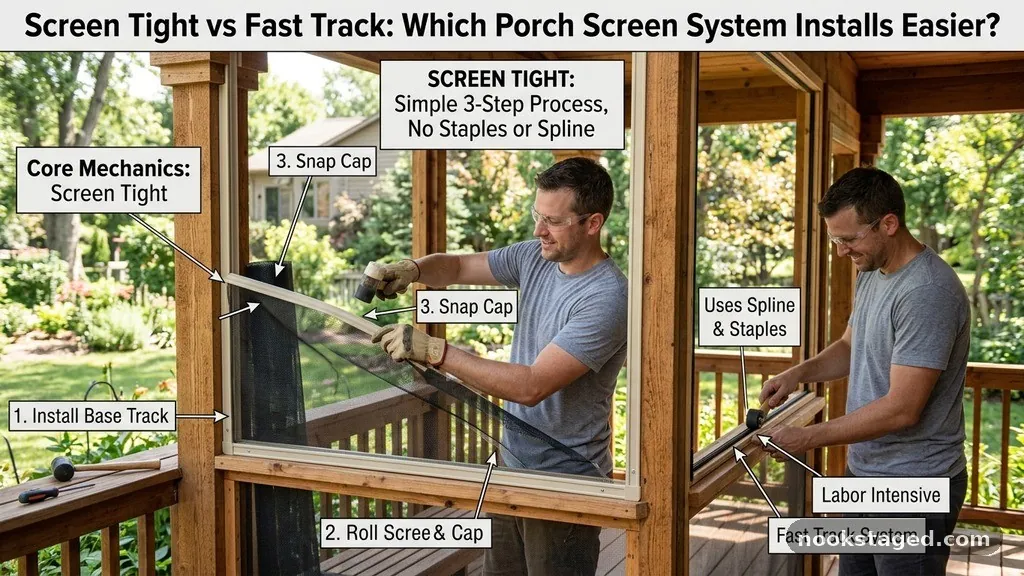
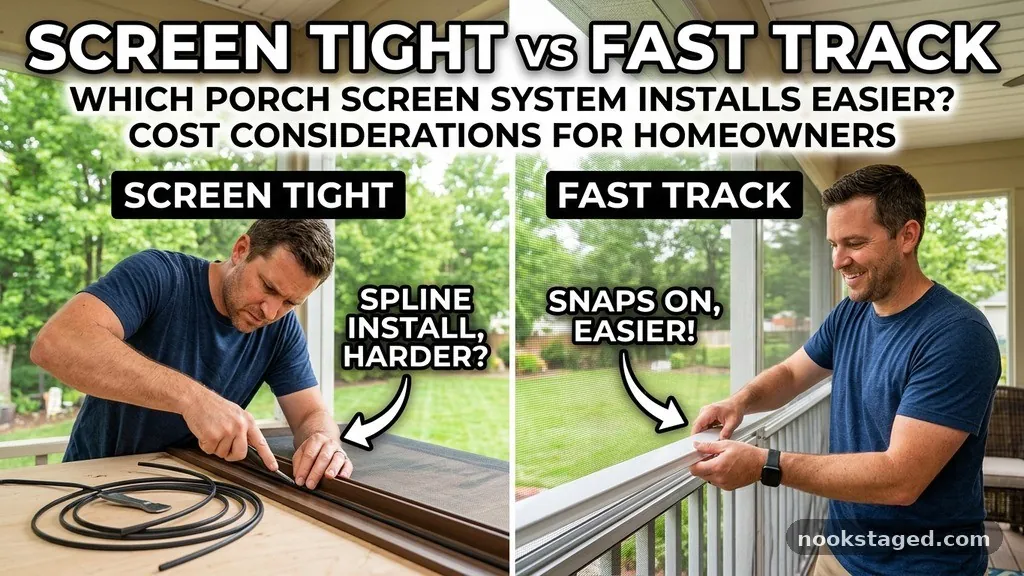
When comparing the ease of installation, the Screen Tight system generally wins for DIY beginners because it relies on a familiar, user-friendly cap-and-base design. Fast Track, while highly durable and professional in appearance, often requires more precise measurements and a higher level of attention to detail during the initial framing phase.
If your priority is a quick, forgiving installation process, Screen Tight is the industry standard for a reason. If you prioritize a sleek, permanent look and have experience with metal framing, Fast Track may be the better choice for your specific porch.
The Core Mechanics of Screen Tight
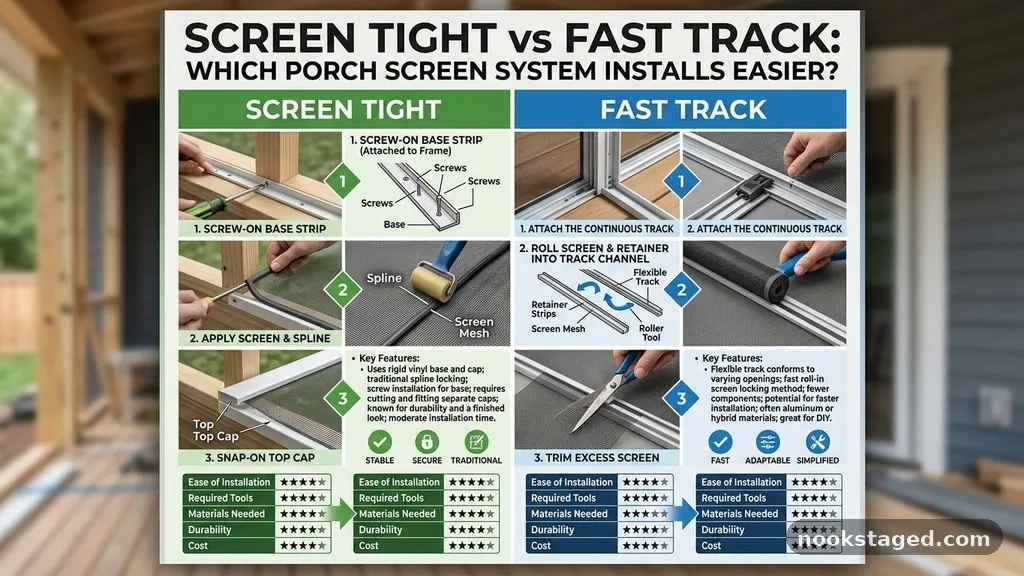
The Screen Tight system functions by using a two-part assembly: a base track that screws into your porch posts and a vinyl cap that snaps over the screen material. This design effectively hides the staples and raw edges of the screen, creating a clean finish without requiring decorative wood trim. Because the base is flexible enough to accommodate slight irregularities in wooden posts, it is much more forgiving than rigid aluminum alternatives.
Installation typically involves attaching the base to the existing wooden frame using exterior-grade screws. Once the base is secured, you roll the screen material over the channels, pushing it into place with a standard spline tool.
The final step involves snapping the vinyl cap into the base, which locks the screen into place and finishes the appearance. This process is highly intuitive and requires only basic hand tools, making it a favorite for weekend warriors.
Understanding the Fast Track Approach
Fast Track systems generally utilize an extruded aluminum frame, which provides a more industrial and rigid structure compared to vinyl options. These tracks are designed to hold the screen material under tension, resulting in a drum-tight finish that is highly resistant to sagging over time. However, the rigidity of the aluminum means that your existing porch structure must be perfectly plumb and level.
If your porch posts have even slight bows or twists, the aluminum track will highlight these imperfections rather than hiding them. Installing these systems often requires trimming the metal tracks to exact lengths with a miter saw or a hacksaw. For many, this adds a layer of complexity that pushes the project from a simple afternoon task into a more involved construction project.
Comparing Installation Difficulty
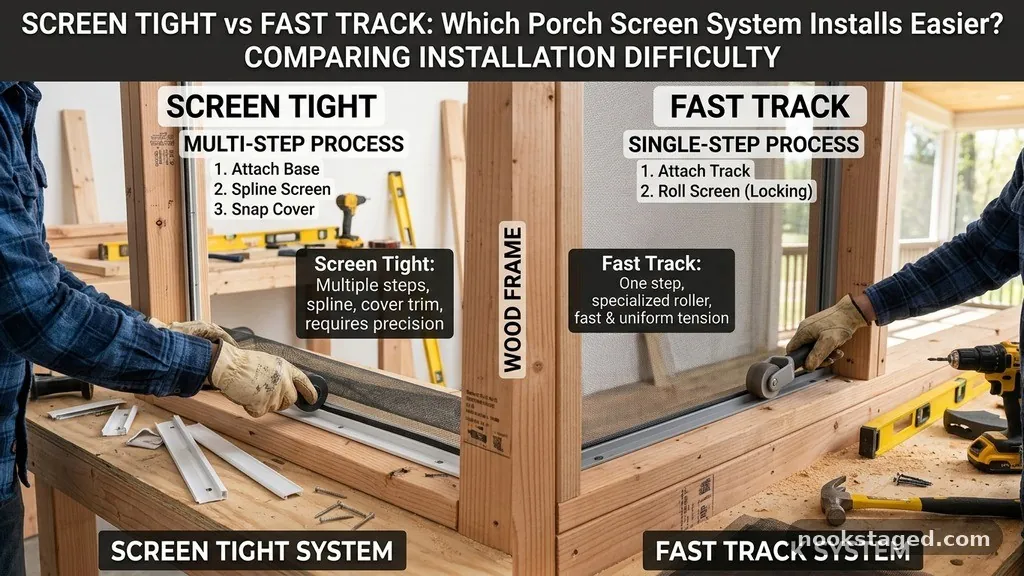
When you evaluate Screen Tight vs Fast Track in terms of raw effort, the difference lies in the margin for error. Screen Tight’s vinyl components possess a level of “give” that allows you to work around minor construction inconsistencies. You can often adjust the position of the base slightly as you go, which is a major advantage for older homes or weathered wooden structures.
Fast Track, by contrast, is unforgiving. If your mounting surface is not perfectly aligned, the aluminum tracks will not meet at the corners correctly, or they will leave gaps that compromise the integrity of the seal.
You must spend more time prepping the workspace, squaring the posts, and measuring twice before making any cuts. While the final result is often considered more permanent and professional, the learning curve is steeper for the average homeowner.
Material Durability and Maintenance
The materials used in each system dictate not only the installation ease but also how they handle the elements over the years. Screen Tight uses high-quality vinyl that is UV-resistant and designed to withstand direct sun exposure without becoming brittle. Because it is a plastic-based product, it will not rust, making it an excellent choice for coastal areas with high salt content in the air.
Fast Track systems, being aluminum, offer exceptional structural integrity and are often used in commercial applications where durability is paramount. Aluminum is inherently stronger than vinyl, providing better resistance to accidental impacts from pets or children. However, you must ensure that the finish on the aluminum is high-quality to prevent oxidation or pitting in humid environments.
| Feature | Screen Tight | Fast Track |
|---|---|---|
| Primary Material | Vinyl | Extruded Aluminum |
| Installation Difficulty | Beginner Friendly | Intermediate/Advanced |
| Forgiveness for Uneven Posts | High | Low |
| Finish Appearance | Smooth, Hidden Staples | Rigid, Industrial |
| Best Application | Residential Porches | Commercial/High-Traffic |
Tools Required for the Project
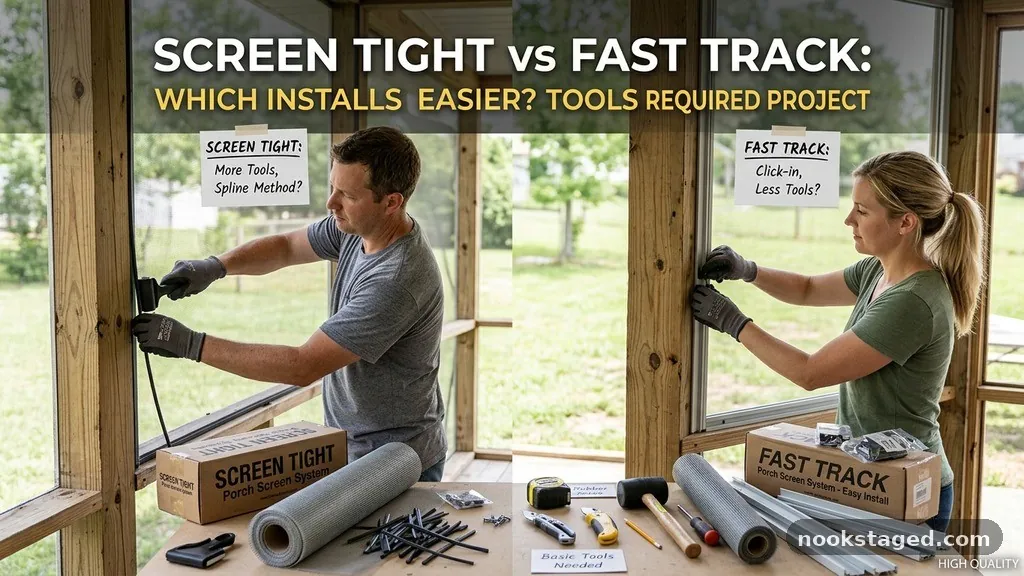
Regardless of which system you choose, having the right tools on hand is essential for a smooth installation. For a Screen Tight installation, you will primarily need a power drill, a tape measure, a utility knife, and a spline roller. You may also need a level to ensure your base tracks are straight, but the vinyl is flexible enough to handle minor deviations.
Fast Track installations require a more robust kit. In addition to the basic measuring and fastening tools, you will need a metal-cutting blade for your saw to ensure clean, burr-free edges on the aluminum channels.
You might also need specific drill bits for tapping into metal if you are mounting to a steel frame. The extra preparation time for these tools is often what separates a successful install from a frustrating one.
The Aesthetic Impact on Your Porch
The visual appeal of your screened porch often depends on how well the system integrates with your existing architecture. Screen Tight provides a clean, white, or wood-grain finish that blends in with most residential siding and trim. It effectively mimics the look of traditional trim, making it a subtle addition that doesn’t scream “industrial” to the viewer.
Fast Track offers a more distinct look, often characterized by crisp, straight lines and a metallic sheen. If your home features modern or contemporary design elements, the aluminum tracks can actually enhance the overall look of the structure. However, if you are working on a classic farmhouse or a colonial-style home, the vinyl options might feel more at home and less out of place.
Cost Considerations for Homeowners
Budgeting for these projects involves looking at more than just the price of the track systems. Screen Tight is generally more affordable upfront, as the materials are lighter and less expensive to manufacture than extruded aluminum. This makes it a popular choice for larger porches where the cost of materials can add up quickly.
Fast Track is typically a bigger investment, reflecting the cost of high-grade aluminum and the precision manufacturing required for the tracks. While it may cost more, many homeowners view it as a one-time expense that adds long-term value to the home. If you plan on staying in your home for many years, the added durability of the aluminum might justify the higher initial price point.
Planning Your Porch Screening Layout
Before you commit to a specific system, you should map out your porch dimensions and identify any tricky areas. Porches with many corners, angles, or non-standard post sizes are better suited for the flexibility of a vinyl-based system. If your porch is a simple rectangle with perfectly square corners, you have the luxury of choosing based on aesthetics rather than just ease of installation.
You should also consider the height of your screen spans. Large, open spans require a system that can maintain tension without buckling.
While both systems can handle standard heights, aluminum tracks often provide a more rigid frame for taller openings. For more guidance on planning your space, you can visit the official Screen Tight resource center to view their technical diagrams and installation guides.
Common Mistakes to Avoid
Many DIYers fail during the installation process by rushing the measurement phase. Whether you choose Screen Tight or Fast Track, the most common error is failing to account for the thickness of the screen material itself. If you cut your tracks too tightly, you will find it nearly impossible to insert the spline later.
Another frequent mistake is using the wrong type of fasteners for the base track. If you are attaching to pressure-treated wood, you must use coated or stainless steel screws to prevent the chemicals in the wood from corroding your fasteners. Failing to use the correct hardware can lead to premature failure of the entire system, regardless of which brand you select.
Addressing Installation FAQ
Is Screen Tight better for a beginner?
Yes, Screen Tight is widely considered the best option for beginners because the vinyl material is forgiving and the installation process is straightforward. It requires only standard household tools and allows for minor adjustments during the mounting phase.
Can I install Fast Track on an existing wooden porch?
You can, but it requires the wooden frame to be perfectly square and level. If your porch has settled over time, you will likely need to shim or replace the posts to ensure the aluminum tracks fit correctly.
How do I replace a screen that has torn in the future?
Both systems are designed for easy maintenance. With Screen Tight, you simply pry off the vinyl cap, remove the spline, and install new screening. With Fast Track, you typically just remove the spline and insert new material, making both systems user-friendly for long-term care.
Does aluminum track rust over time?
High-quality aluminum tracks are powder-coated or anodized to prevent rust. However, you should inspect the finish periodically, especially in coastal environments, to ensure that the protective coating has not been scratched or compromised by debris.
What is the most common reason for screen sag?
Screen sag is usually caused by improper tensioning during the initial installation or by using a screen material that is not rated for the size of the opening. Always follow the manufacturer’s recommendations for the specific mesh type and span height.
Final Thoughts on Choosing Your System
Deciding between Screen Tight vs Fast Track comes down to your personal project goals and your comfort with construction work. Screen Tight offers a forgiving, cost-effective solution that is ideal for most residential porches and DIY enthusiasts who want a clean, classic look. Fast Track provides a rugged, industrial-grade alternative that excels in durability and longevity, provided you have the skills to execute a precise installation.
Both systems are excellent upgrades that will significantly improve the usability of your outdoor space. By carefully measuring your existing porch, assessing the condition of your support posts, and selecting the system that aligns with your skill set, you will ensure a successful result.
Once your porch is properly screened, you’ll be able to enjoy the fresh air without the hassle of insects, adding a new dimension to your home. Take your time during the planning phase, and you will find that a screened-in porch is one of the most rewarding home improvement projects you can undertake.