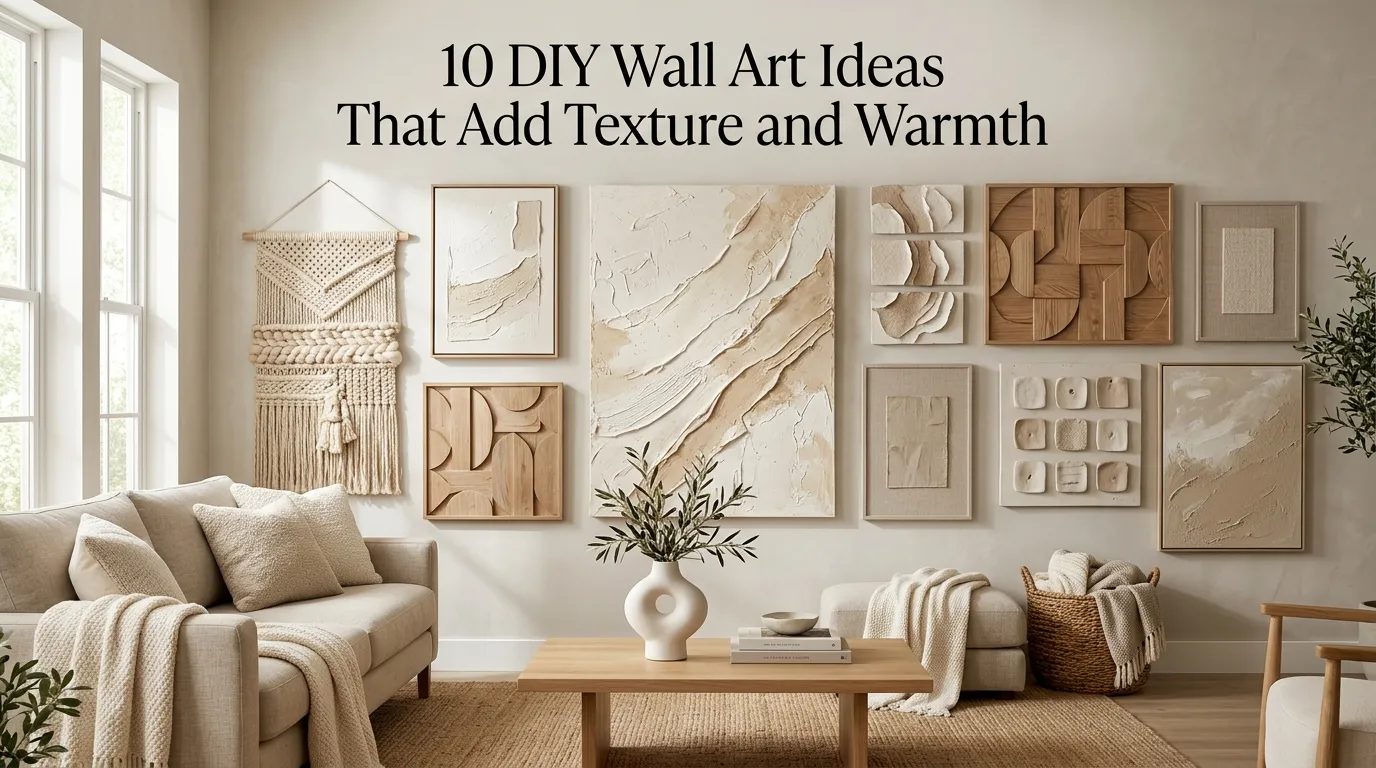
10 DIY Wall Art Ideas That Add Texture and Warmth
Blank walls can make a room feel unfinished, even when the furniture and accessories are carefully chosen. The right wall art adds more than color. It can introduce texture, soften hard surfaces, create a focal point, and make a room feel more personal.
DIY wall art is especially useful when you want something that feels distinctive rather than mass-produced. Simple materials such as wood, fabric, yarn, clay, paint, baskets, and natural fibers can become beautiful decorative pieces with relatively little effort. The finished result can also be tailored to your home’s exact colors, dimensions, and style.
One thing I especially like about textured wall art is how it changes throughout the day. Natural light catches woven fibers, raised patterns, wood grain, and layered materials differently from a flat print. That subtle variation gives the wall more depth and makes the room feel warmer.
You also do not need advanced crafting skills. Some projects involve painting or arranging materials, while others rely on simple cutting, gluing, layering, or assembling. The most important part is choosing a design that works with the scale of your wall and the furniture around it.
These projects can work in living rooms, bedrooms, entryways, dining rooms, home offices, and even hallways. Neutral materials can create a calm modern look, while richer colors and natural wood can bring character to traditional or farmhouse interiors.
Below, you’ll find ten DIY wall art ideas designed to add dimension and warmth without making your home feel cluttered. Each project includes practical styling guidance so the finished piece feels like part of the room rather than an isolated craft project.
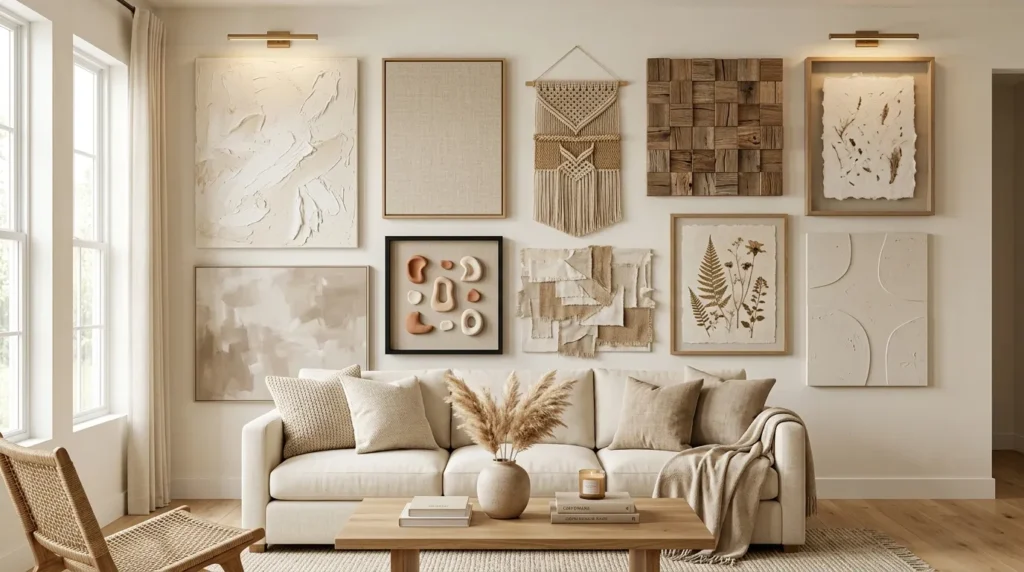
Table of Contents
1. Textured Canvas Art
Create a dimensional artwork piece with paint and simple textured materials.
2. Woven Fiber Art
Bring softness and natural texture to the wall with yarn and woven fibers.
3. Wood Slat Artwork
Use natural wood strips to create a warm, architectural wall feature.
4. Layered Fabric Art
Turn beautiful textiles into soft, tactile wall decoration.
5. Raised Plaster Art
Create an understated sculptural piece with dimensional plaster textures.
6. DIY Basket Display
Arrange baskets into an organic wall composition with plenty of warmth.
7. Painted Botanical Panels
Add handmade botanical artwork through simple painted shapes and earthy colors.
8. Clay Wall Sculptures
Create small sculptural pieces that bring handmade character to empty walls.
9. Framed Textile Art
Showcase woven or patterned fabric inside a simple frame.
10. Rustic Wood Collage
Combine reclaimed-looking wood pieces into a warm, layered composition.
1. Textured Canvas Art
Quick Benefits
- Adds dimension to plain walls
- Works with neutral interiors
- Can be customized to any color palette
- Creates a substantial focal point
- Requires relatively simple materials
Why It Works
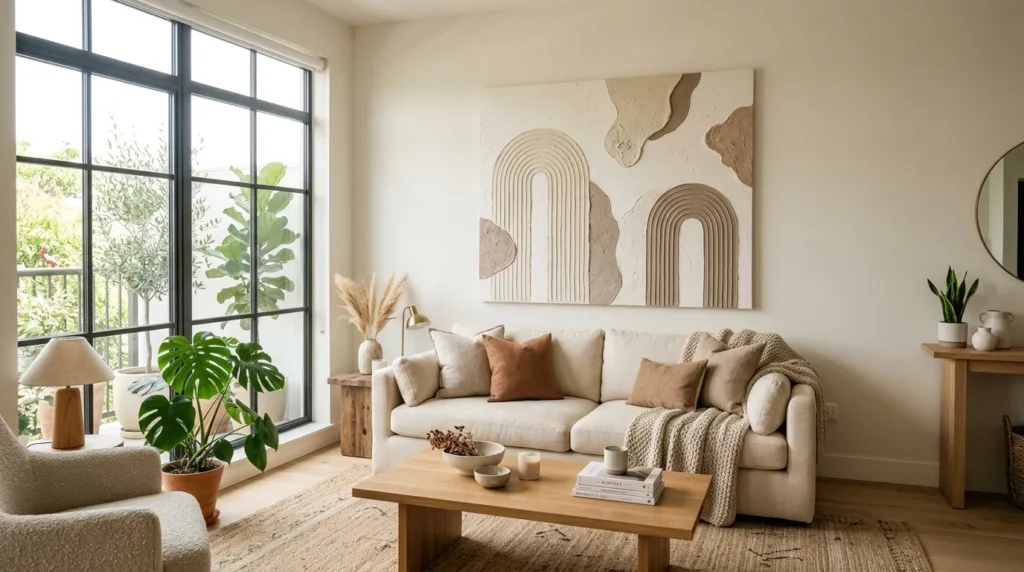
A flat painted canvas can look beautiful, but adding texture gives the artwork another level of visual interest. Raised patterns catch natural light and create subtle shadows that change throughout the day.
Textured canvas art is particularly effective in modern and neutral rooms because it adds depth without requiring strong colors. A creamy monochromatic design can feel sophisticated and understated, while warmer beige, taupe, terracotta, or muted green can introduce more personality.
The project is also highly adaptable. You can create a large statement canvas for above a sofa or bed, or make several smaller pieces for a hallway or gallery wall.
The trick is to think about texture before decoration. A simple composition with one or two raised elements often looks more refined than a canvas covered with numerous patterns.
How To Style It
Start with a stretched canvas in a size appropriate for the wall and furniture beneath it. A large canvas works particularly well above a sofa, console, or bed.
Apply a base coat in a warm neutral such as ivory, cream, beige, or soft gray. Once dry, use an appropriate textured medium to create arches, waves, ridges, abstract shapes, or other simple patterns.
Keep the palette restrained if the rest of the room already contains several colors.
For a warmer appearance, introduce subtle shades of tan or muted terracotta.
Hang the finished canvas where natural or directional lighting can emphasize the raised surface.
A simple wooden frame can add another layer of warmth, although an unframed canvas can create a cleaner contemporary appearance.
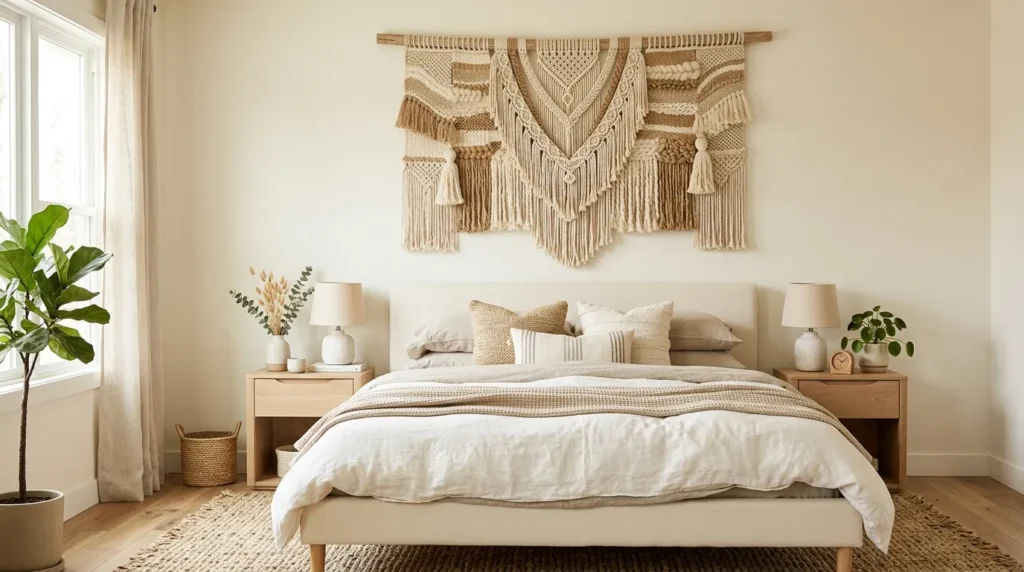
2. Woven Fiber Art
Quick Benefits
- Introduces soft natural texture
- Creates warmth without heavy color
- Works beautifully with neutral rooms
- Adds handmade character
- Can be customized in size and shape
Why It Works
Woven wall art has a softness that painted artwork cannot easily replicate. Fibers create shadows, movement, and tactile variation, making the wall feel more inviting.
Materials such as cotton cord, wool yarn, jute, rope, and other suitable fibers can create different visual effects. Thick fibers produce a substantial appearance, while finer strands create a lighter, more delicate design.
This type of artwork works especially well in bedrooms, living rooms, reading corners, and entryways where comfort is part of the design.
Natural fibers also complement wood, linen, rattan, ceramic, and other organic materials. That makes them an easy addition to a warm neutral interior.
How To Style It
Choose a wooden dowel or simple branch as the top support. Use cream, oatmeal, beige, tan, or muted brown fibers for a calm natural palette.
Create variation by using different lengths rather than cutting every strand to exactly the same size.
For a modern look, keep the silhouette simple and symmetrical. For a relaxed style, allow the fibers to create an irregular shape.
Hang one large piece above a console or bed, or create a small group of complementary pieces.
Avoid placing too many woven accessories around it. The texture of the wall art already provides plenty of visual interest.
For a more colorful room, incorporate one muted accent shade that repeats elsewhere in the space.
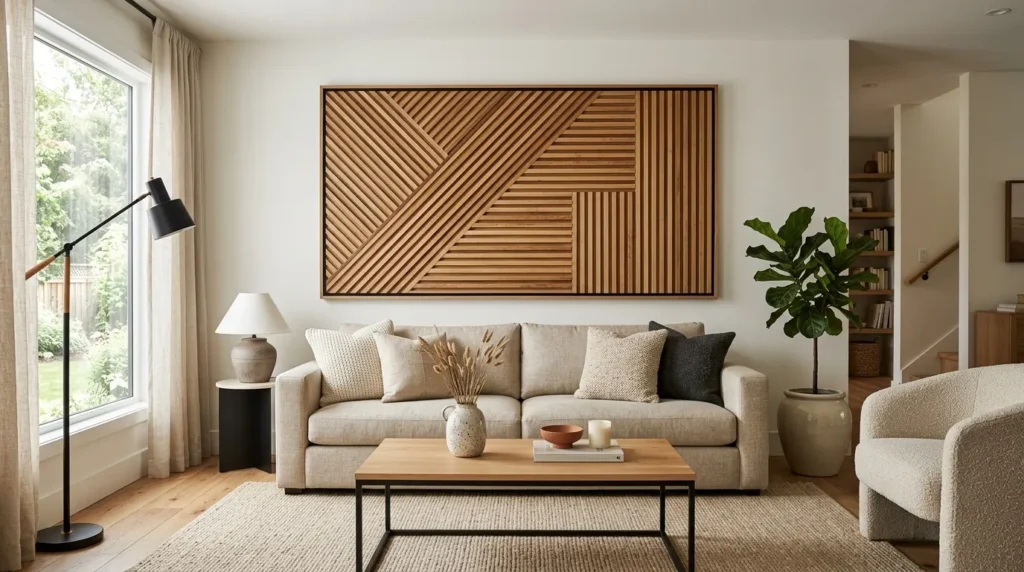
3. Wood Slat Artwork
Quick Benefits
- Adds warmth through natural wood
- Creates architectural texture
- Works with modern interiors
- Provides strong visual structure
- Can be customized to different wall sizes
Why It Works
Wood naturally adds warmth to a room, and narrow wood strips can transform that warmth into a graphic piece of wall art.
The repetition of the slats creates rhythm while the natural grain prevents the design from looking flat. This makes wood artwork particularly useful in modern interiors that rely on clean lines and simple furniture.
You can create a symmetrical pattern, stagger the strips, arrange them diagonally, or combine different wood tones.
The project can also be scaled easily. A small arrangement can fill an empty section beside a doorway, while a larger composition can become the main focal point above a sofa.
How To Style It
Choose lightweight wood strips or trim pieces that are consistent in thickness.
Sand the surfaces carefully before applying a suitable stain, paint, or protective finish.
For a natural Scandinavian-inspired appearance, leave the wood relatively light. A medium warm stain can create a richer traditional look.
Arrange the pieces on a backing board if you want a portable artwork panel. This also makes installation easier.
Keep the surrounding wall decor minimal.
Pair the finished piece with upholstered furniture, linen textiles, ceramic accessories, or greenery to balance the harder wood surface.
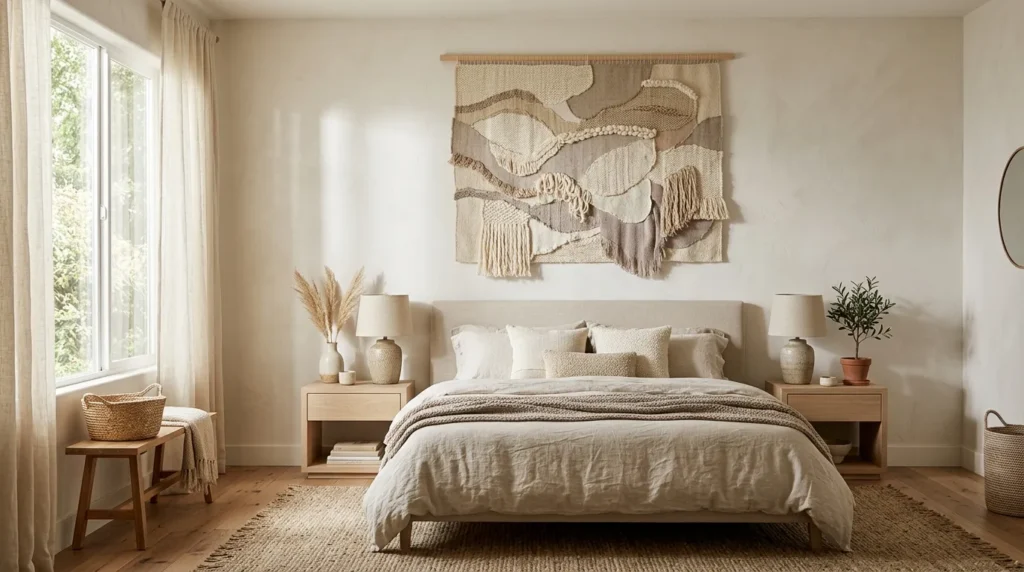
4. Layered Fabric Art
Quick Benefits
- Adds softness to hard walls
- Reuses beautiful fabric
- Offers endless color options
- Works well in bedrooms
- Creates a custom appearance
Why It Works
Fabric is an overlooked wall-art material. A beautiful textile can become a large decorative feature when stretched over a frame or layered into an artistic composition.
Unlike printed artwork, fabric introduces both color and physical texture. Linen, cotton, woven textiles, quilted material, and patterned cloth can each create a different atmosphere.
This is also a practical way to use fabric that has sentimental value or an attractive pattern that does not have an obvious purpose elsewhere in the home.
Large textile art can soften rooms with lots of hard surfaces such as wood flooring, cabinets, and metal furniture.
How To Style It
Choose fabric that complements the existing room rather than trying to match every color exactly.
For a warm neutral bedroom, consider linen, woven cotton, or a subtle geometric textile in cream, beige, taupe, or muted brown.
Stretch the fabric over a lightweight frame or mount it securely to create a clean rectangular composition.
For a more relaxed appearance, allow the fabric to hang naturally from a wooden rod.
Use one large textile above a sofa or bed instead of several small pieces if you want a calmer effect.
Repeat one color from the textile in pillows, a rug, or nearby accessories to connect the artwork with the rest of the room.
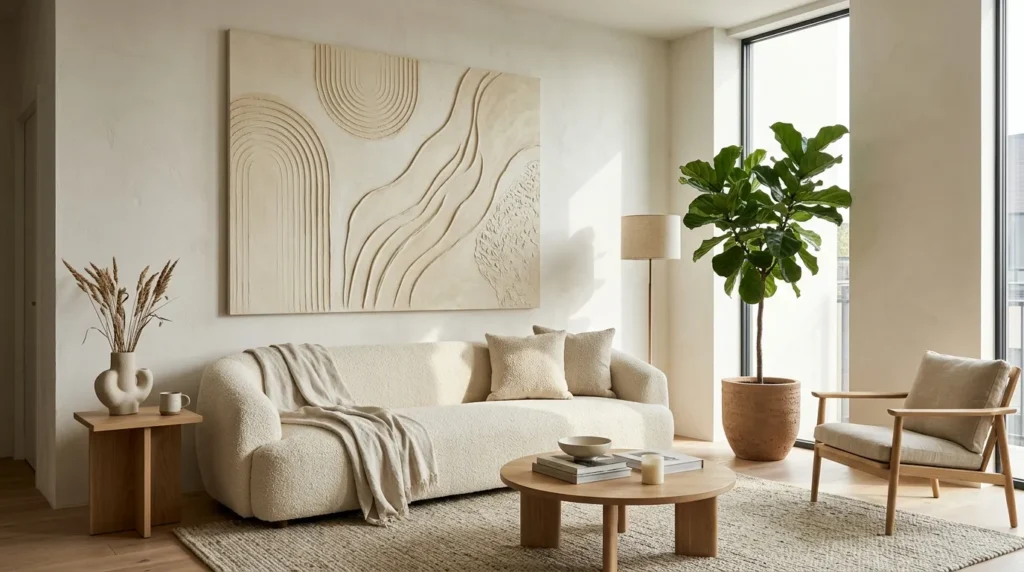
5. Raised Plaster Art
Quick Benefits
- Creates sculptural dimension
- Works with monochromatic palettes
- Looks sophisticated and understated
- Adds subtle shadows
- Can be customized into abstract designs
Why It Works
Raised plaster artwork creates a sculptural surface without relying on bold color. The dimensional shapes catch light and create soft shadows, giving a simple wall an architectural quality.
This style is especially popular in modern, minimalist, organic, and contemporary interiors because the artwork can remain almost monochromatic while still feeling visually rich.
Simple arches, curved lines, overlapping forms, waves, and organic shapes can all work beautifully.
The most important consideration is restraint. A small number of well-proportioned shapes generally looks more intentional than a surface filled with random marks.
How To Style It
Use a sturdy canvas or appropriate rigid surface designed to support the chosen material.
Create a base layer in warm white, ivory, beige, or another color that complements the room.
Apply an appropriate modeling or plaster medium and shape it into simple raised forms.
Allow the piece to dry completely according to the material’s instructions before moving or painting it.
For a soft organic appearance, keep the artwork monochromatic.
Place it in a location where side lighting can reveal the texture.
A natural wood frame can add warmth, while a thin neutral frame keeps the piece more contemporary.
6. DIY Basket Display
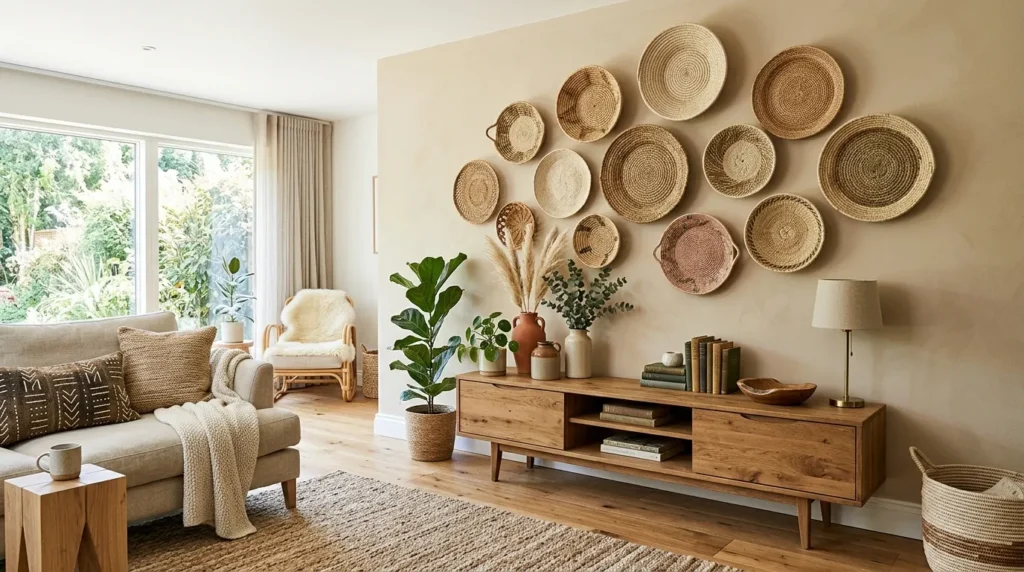
Quick Benefits
- Adds organic texture
- Creates a relaxed focal point
- Works well with neutral colors
- Can reuse decorative baskets
- Offers flexible arrangement options
Why It Works
A collection of baskets can become surprisingly effective wall art. Their woven surfaces introduce natural texture while their circular, oval, or irregular shapes create visual movement.
This approach works particularly well in casual, farmhouse, coastal, bohemian, and organic modern interiors.
The beauty is in the variation. Baskets do not need to match exactly. Different weaving patterns and natural shades can make the arrangement feel collected over time.
However, the overall composition still benefits from some structure. Repeating a few colors or shapes keeps the display from looking random.
How To Style It
Choose baskets with different sizes but related materials or colors.
Before attaching anything to the wall, arrange the collection on the floor. Start with the largest basket and build the composition around it.
Try a loose cluster for a relaxed appearance or a more symmetrical arrangement for a polished room.
Keep the colors mostly within natural tones such as tan, beige, cream, brown, and muted gray.
Hang the arrangement above a console, sofa, dining table, or bench.
If the baskets are shallow and lightweight, use an appropriate mounting method for their weight and wall type.
7. Painted Botanical Panels
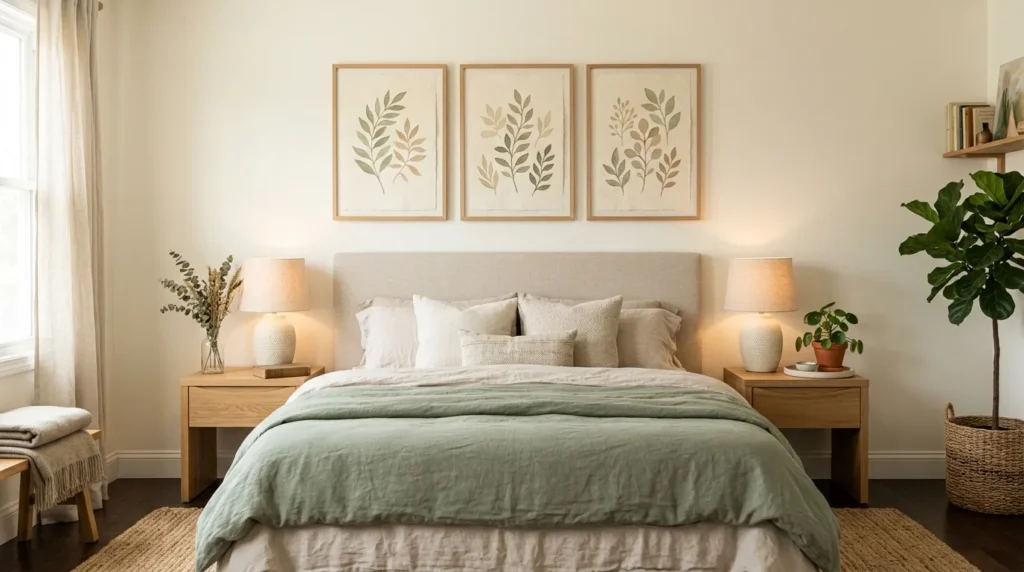
Quick Benefits
- Brings nature indoors
- Adds color without overwhelming the room
- Works with many decorating styles
- Can be painted by beginners
- Creates coordinated artwork
Why It Works
Botanical artwork has an enduring appeal because organic shapes naturally soften interiors. Leaves, branches, stems, and flowers can add visual movement without requiring complicated artistic techniques.
You do not need to create realistic botanical paintings. Simple silhouettes and abstract leaf forms can produce an elegant result.
Painting your own botanical panels also allows you to choose colors that directly connect to the room.
This makes the project especially useful when you have a specific palette in mind and cannot find ready-made artwork that fits it perfectly.
How To Style It
Use two or three small canvases or panels rather than trying to create one complicated painting.
Choose a background color that relates to the wall. Warm white, beige, pale sage, and muted gray are versatile choices.
Paint simple leaves or branches using one or two darker shades.
For a more contemporary appearance, use oversized abstract leaves with plenty of negative space.
Hang multiple panels with consistent spacing.
Repeat one botanical color in nearby cushions, curtains, or plants.
Keep the surrounding wall relatively quiet so the organic forms remain easy to appreciate.
8. Clay Wall Sculptures
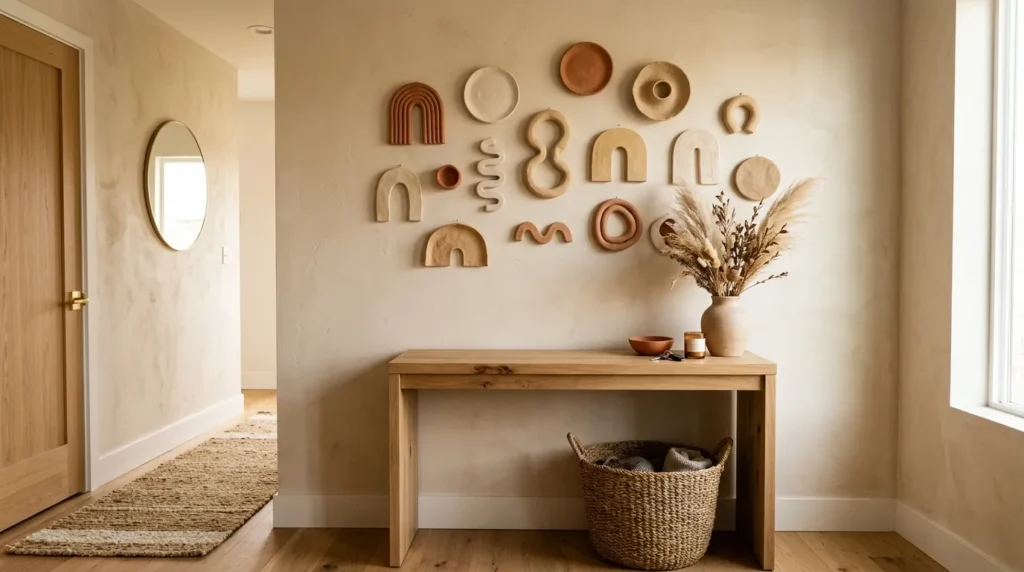
Quick Benefits
- Adds genuine three-dimensional detail
- Creates handmade character
- Works with neutral palettes
- Can form small or large collections
- Adds an artistic focal point
Why It Works
Clay wall sculptures bring an unmistakable handmade quality to an interior. Even simple abstract forms can make a blank wall feel more interesting because the pieces project outward rather than sitting completely flat.
Small sculptural pieces are particularly useful when a large artwork would feel overwhelming. Several related pieces can create a gallery-like arrangement while remaining relatively subtle.
Natural clay tones also pair beautifully with warm neutral interiors.
If using a clay material, choose one appropriate for the intended project and follow its curing or finishing requirements carefully.
How To Style It
Create simple forms such as arches, discs, waves, leaves, or abstract geometric shapes.
Keep the palette natural with terracotta, ivory, sand, beige, or soft brown.
For a contemporary arrangement, use several pieces with similar shapes in different sizes.
For a more organic appearance, vary the forms slightly.
Mount or display the pieces securely according to their weight and the wall surface.
Place them above a console or on a large empty wall where their shadows can become part of the composition.
Avoid combining too many other statement decorations nearby.
9. Framed Textile Art
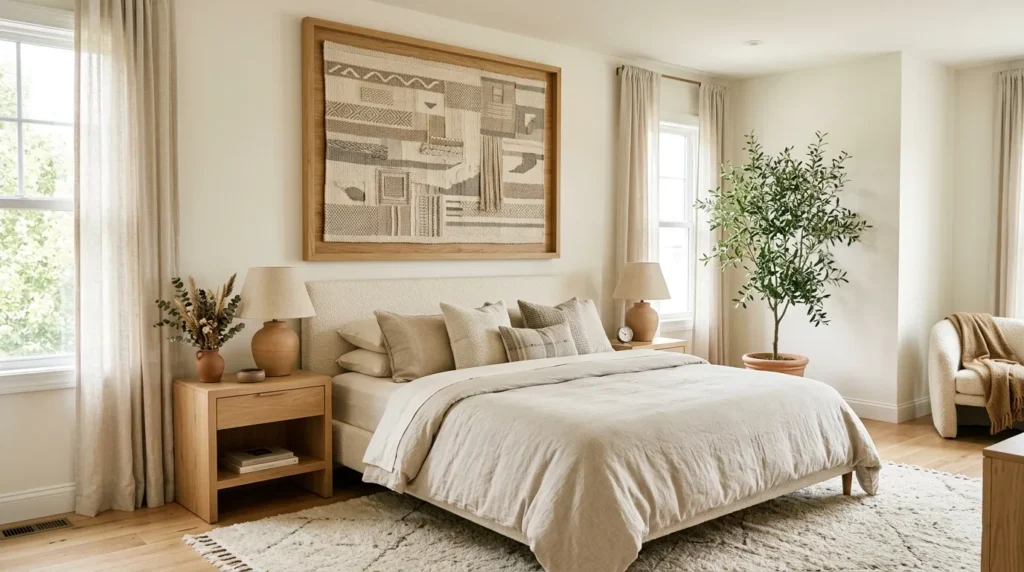
Quick Benefits
- Combines art and fabric texture
- Creates a polished presentation
- Protects delicate textiles
- Works in traditional and modern rooms
- Makes small fabric pieces useful
Why It Works
Framing a textile turns a soft material into structured artwork. This can be especially effective when you have a beautiful woven piece, embroidery, patterned fabric, or handmade textile that deserves to be displayed.
The frame creates clean boundaries while the textile provides the texture.
This balance makes framed textile art easy to incorporate into more refined interiors. A simple neutral frame can make even a rustic textile feel polished.
It is also a useful way to display meaningful fabric rather than storing it away.
How To Style It
Choose a textile with colors that relate to the room.
For a modern interior, look for simple geometric patterns, woven neutrals, or abstract textures.
For a traditional room, embroidered or patterned textiles can create more visual character.
Use a frame with enough depth to accommodate the material without compressing it unnecessarily.
A natural wood frame adds warmth, while a thin black frame creates stronger contrast.
Hang one large piece or arrange several smaller framed textiles in a balanced grid.
Leave sufficient wall space around the artwork so the texture remains visible.
10. Rustic Wood Collage
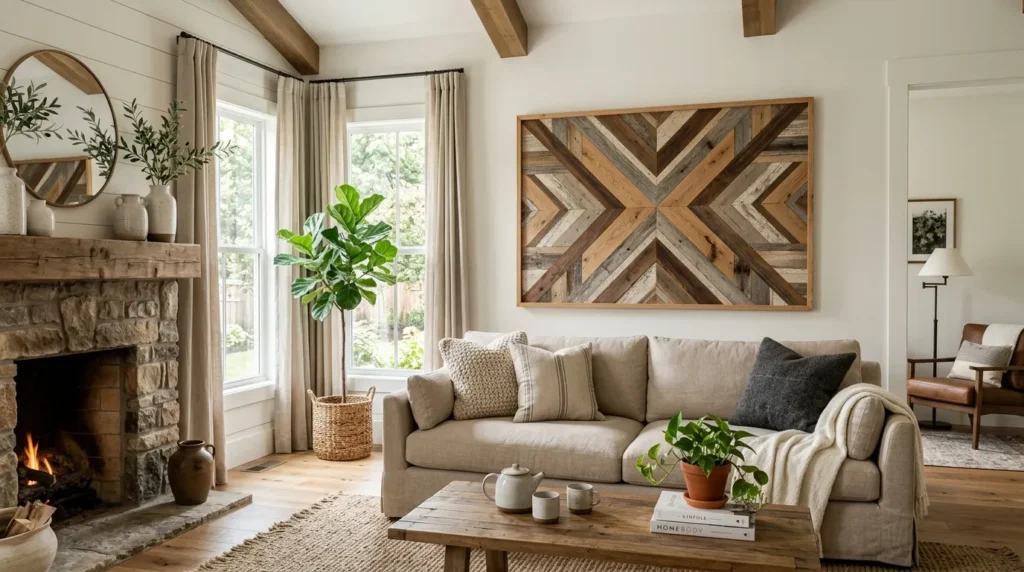
Quick Benefits
- Brings natural warmth to the room
- Reuses wood pieces
- Creates strong texture
- Works with farmhouse and modern styles
- Makes a substantial focal point
Why It Works
Wood collage art can make a room feel warmer almost immediately. Combining pieces with slightly different tones, grains, or widths creates a layered surface that feels handmade rather than mass-produced.
This type of artwork is especially useful in rooms with neutral walls and simple furniture. The wood becomes the visual texture that gives the space character.
You can create a very rustic design using weathered-looking pieces, or a cleaner contemporary composition using evenly cut boards.
The finished piece can also be customized to almost any size.
How To Style It
Choose lightweight wood pieces and sand rough edges carefully.
Arrange them into a simple pattern on a secure backing surface. Horizontal strips create a calm appearance, while staggered or geometric arrangements feel more contemporary.
Use natural wood tones for a layered organic look, or paint a few pieces in muted shades to introduce subtle contrast.
Mount the finished panel securely, especially if it is large or heavy.
Pair the artwork with linen, woven baskets, ceramic pieces, and greenery.
A large wood collage works particularly well above a sofa, fireplace, dining table, or bedroom dresser.
Frequently Asked Questions
What materials are best for DIY textured wall art?
Wood, canvas, fabric, yarn, natural fibers, clay, plaster-style modeling materials, and baskets are all useful options. Choose materials based on the room’s existing finishes and the amount of texture you want. For example, wood adds warmth and structure, while fabric and woven fibers create softness. Always follow the manufacturer’s instructions for adhesives, finishes, and specialty materials.
How do I make DIY wall art look expensive?
Focus on scale, restraint, and materials rather than adding lots of decoration. A large, simple piece can look more sophisticated than a collection of small crafts. Keep the color palette coordinated with the room, use clean edges and careful finishing, and choose a frame or mounting method that complements the artwork. Natural wood and high-quality textiles can also add a polished appearance.
What DIY wall art works best for a neutral room?
Textured canvas, woven fiber art, wood panels, plaster-style artwork, framed textiles, and natural basket arrangements work particularly well. Neutral wall art does not have to mean boring. Layering cream, beige, taupe, warm white, natural wood, and soft brown creates visual depth while maintaining a calm palette.
How do I choose the right size for wall art?
Consider the furniture below the artwork first. A piece that is too small can look disconnected, while one that is excessively large can overwhelm the room. For a sofa, bed, or console, choose artwork that visually relates to the width of the furniture. When creating a gallery arrangement, treat the entire collection as one composition rather than judging each piece separately.
Can DIY wall art work in a modern home?
Yes. Modern interiors often benefit from handmade texture because it prevents clean lines and neutral finishes from feeling too sterile. Choose simple shapes, restrained colors, natural wood, sculptural forms, or monochromatic artwork. Keep the composition uncluttered and focus on one strong material or texture.
How can I add warmth to a blank wall without using bright colors?
Use texture instead of strong color. Natural wood, woven fibers, linen, baskets, clay, plaster-style artwork, and warm neutral fabrics can all make a wall feel more inviting. Layering cream, beige, tan, soft brown, and natural materials creates warmth while maintaining a quiet and sophisticated appearance.
How do I display multiple DIY wall art pieces together?
Create a visual connection through color, material, shape, or framing. You can arrange pieces symmetrically for a polished appearance or use varied spacing for a more relaxed gallery wall. Lay everything out on the floor first to test the composition. Keep the overall arrangement centered around the furniture or architectural feature below it.
Conclusion
DIY wall art offers a simple way to make a home feel warmer, more personal, and more visually interesting. You do not need expensive materials or advanced artistic skills to create something that changes the atmosphere of a room.
Texture is often the secret ingredient. Woven fibers add softness, wood brings natural warmth, plaster creates subtle dimension, and fabric introduces tactile comfort. Even simple painted botanical shapes can give a blank wall much more personality.
The most successful projects also consider the room around them. A large wood panel can warm up a minimalist living room, while delicate woven art can make a bedroom feel softer. A basket arrangement can complement a relaxed farmhouse interior, while monochromatic textured canvas can fit naturally into a contemporary space.
Start with the wall that feels most unfinished. Look at the furniture beneath it, consider the colors already present, and choose one material that adds something the room currently lacks.
You can also begin with a small project before committing to a large statement piece. Once you see how texture changes the wall throughout the day, it becomes easier to decide where more dimension would be useful.
The goal is not to make every wall a focal point. A thoughtfully crafted piece, surrounded by enough breathing room, can have far more impact than a crowded collection.
Choose a material you enjoy working with, keep the design intentional, and create something that feels like it belongs specifically in your home.
Related Articles
- 10 Bedroom Wall Decor Ideas That Instantly Upgrade Your Room
- 10 DIY Garden Projects That Make Your Home Stand Out
- 10 Modern Living Room Ideas That Never Go Out of Style
- 10 DIY Coffee Tables for Modern Living Rooms
- 10 Neutral Home Decor Ideas for a Warm and Timeless Look