

How to Decorate a Bedroom Like a Pinterest Designer
A bedroom that looks beautiful on Pinterest usually isn’t beautiful because it contains the most expensive furniture or the trendiest accessories. The rooms that stand out tend to have something more practical in common: the colors, textures, furniture, lighting, and small details all work together.
That is good news if your own bedroom feels unfinished. You don’t need to start over or replace everything you own. A few thoughtful changes can make the room feel more cohesive and intentional.
Pinterest-style bedrooms often look effortless, but there is usually a design strategy behind that effortless appearance. The bed becomes a natural focal point. Bedding is layered rather than perfectly flat. Nightstands are styled without becoming cluttered. Curtains frame the windows, lighting creates warmth, and decorative objects are repeated throughout the room so everything feels connected.
I’ve noticed that one of the biggest differences between an ordinary bedroom and a polished one is editing. A Pinterest designer doesn’t necessarily add more. Instead, they choose pieces carefully and give each element enough space to be appreciated.
The good news is that these principles work across many decorating styles. You can create a warm neutral bedroom, modern retreat, cozy farmhouse space, minimalist room, or relaxed traditional interior using the same basic design approach.
Below, you’ll find practical ways to decorate your bedroom with that curated, Pinterest-worthy feeling while keeping it comfortable enough for everyday life. From choosing a cohesive color palette to styling the final bedside detail, each idea focuses on creating a room that looks beautiful without feeling staged or impractical.
Table of Contents
1. Choose a Cohesive Palette
Build the room around a small group of complementary colors.
2. Create a Layered Bed
Use bedding, pillows, and throws to make the bed feel inviting.
3. Balance the Nightstands
Style both sides of the bed with practical and decorative elements.
4. Add Statement Lighting
Use lighting as both a functional feature and a design element.
5. Frame the Windows
Use curtains and shades to soften the room and emphasize its proportions.
6. Layer Natural Textures
Combine wood, linen, woven materials, and soft fabrics for depth.
7. Style the Walls
Use artwork, mirrors, or other vertical details to give the room personality.
8. Add Oversized Elements
Use appropriately scaled pieces to create a polished designer appearance.
9. Edit the Clutter
Remove unnecessary items so the room feels calm and intentional.
10. Finish With Personal Details
Add meaningful objects that make the bedroom feel genuinely yours.
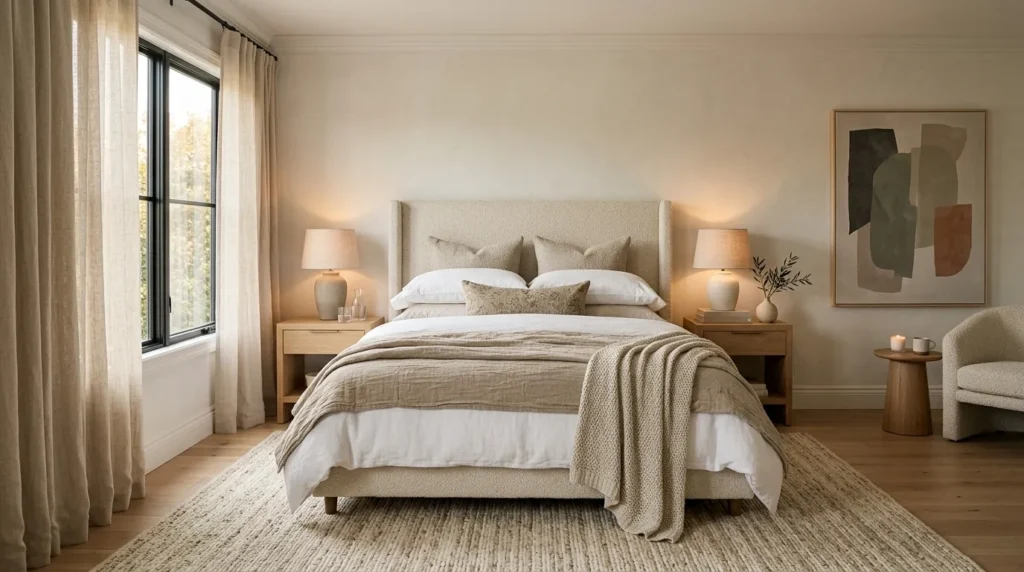
1. Choose a Cohesive Palette
Quick Benefits
- Creates visual harmony
- Makes decorating decisions easier
- Helps furniture feel connected
- Makes the bedroom look more polished
- Allows accessories to work together
Why It Works
A cohesive color palette is one of the easiest ways to make a bedroom look professionally decorated. Pinterest bedrooms often appear effortless because the colors have already been edited down to a manageable group.
That doesn’t mean everything needs to be beige or white. A designer-inspired bedroom can use navy, green, terracotta, dusty pink, charcoal, cream, or almost any other color. The difference is that the colors are repeated intentionally.
Start with a dominant color, then select one or two supporting shades and a neutral foundation. This creates consistency without making the room feel overly matched.
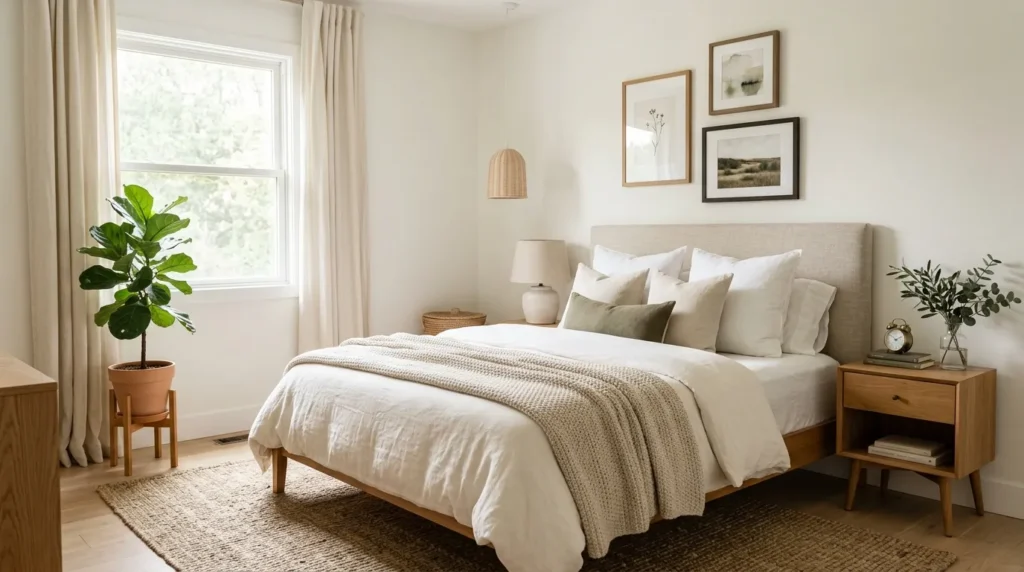
For example, a warm bedroom might combine creamy white walls, oatmeal bedding, medium wood furniture, muted olive accents, and small touches of black. Each color has a role, and none competes for attention.
How To Style It
Look at the colors that already exist in your bedroom before buying anything. Flooring, curtains, furniture, bedding, and wall colors all contribute to the palette.
Choose one main neutral, one supporting color, and one accent. Repeat each color in at least two places when practical. A muted green pillow can connect with artwork or a plant, while wood furniture can be repeated through a frame or bench.
Avoid introducing a new color every time you buy an accessory. Before purchasing something, ask whether it belongs to the existing palette.
If your bedroom already feels visually busy, remove a few competing colors before adding anything new. Sometimes editing creates more improvement than shopping.
2. Create a Layered Bed
Quick Benefits
- Creates an inviting focal point
- Adds softness and depth
- Makes the room feel comfortable
- Gives the bed a finished appearance
- Allows easy seasonal updates
Why It Works
The bed usually occupies the largest visual area in a bedroom, which means it naturally becomes the focal point. A beautifully layered bed can make the entire room feel more polished even when the rest of the decor is relatively simple.
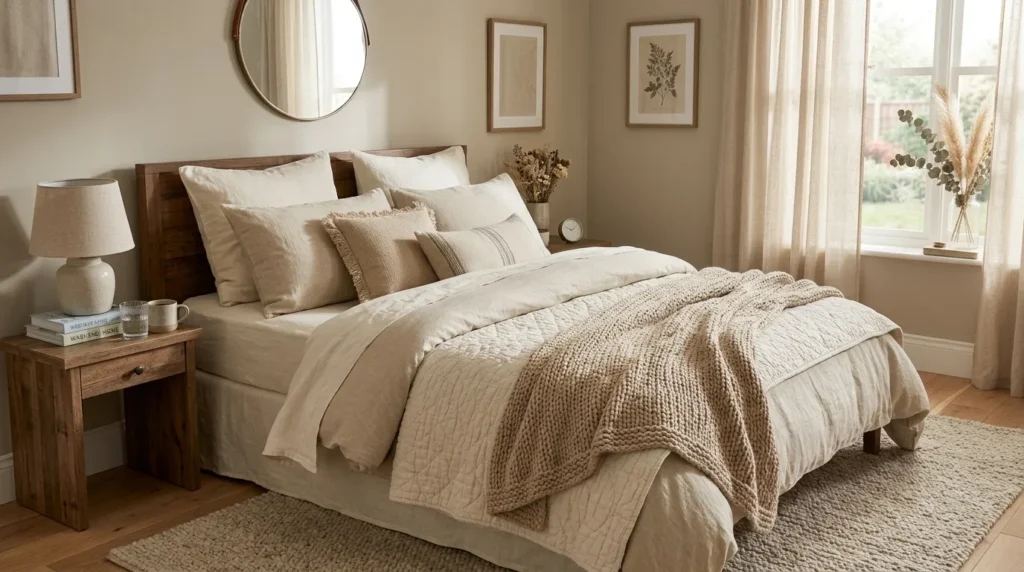
Pinterest-worthy bedding rarely looks perfectly flat. Instead, it combines several layers with slightly different textures and tones. Sheets provide the base, followed by a duvet or quilt, pillows, and a throw.
The secret is variation. If every layer is the same fabric and color, the bed can look flat. If every layer has a different pattern, it can become chaotic.
A designer approach usually combines simple colors with contrasting textures. Linen beside cotton, a knitted throw against smooth bedding, or velvet pillows against a matte duvet can create visual interest without excessive pattern.
How To Style It
Begin with quality-looking sheets in a neutral or coordinating color. Add a duvet, quilt, or coverlet, then fold the top layer slightly toward the foot of the bed.
Use sleeping pillows at the back, followed by larger decorative pillows and one or two smaller accent pillows. Keep the arrangement comfortable enough that you don’t dread removing everything at bedtime.
Finish with a throw casually placed across the lower third of the bed. Avoid making it look perfectly symmetrical.
For a more relaxed appearance, allow some bedding to drape naturally rather than tucking every edge tightly. A slightly imperfect finish often looks more inviting than a hotel-style arrangement.
3. Balance the Nightstands
Quick Benefits
- Creates visual symmetry
- Makes the bed feel grounded
- Keeps essentials accessible
- Adds personality without clutter
- Makes the room look intentionally styled
Why It Works
Nightstands may be small, but they have a major influence on the appearance of the bed area. When both sides are cluttered or completely mismatched, the bedroom can feel visually unbalanced.
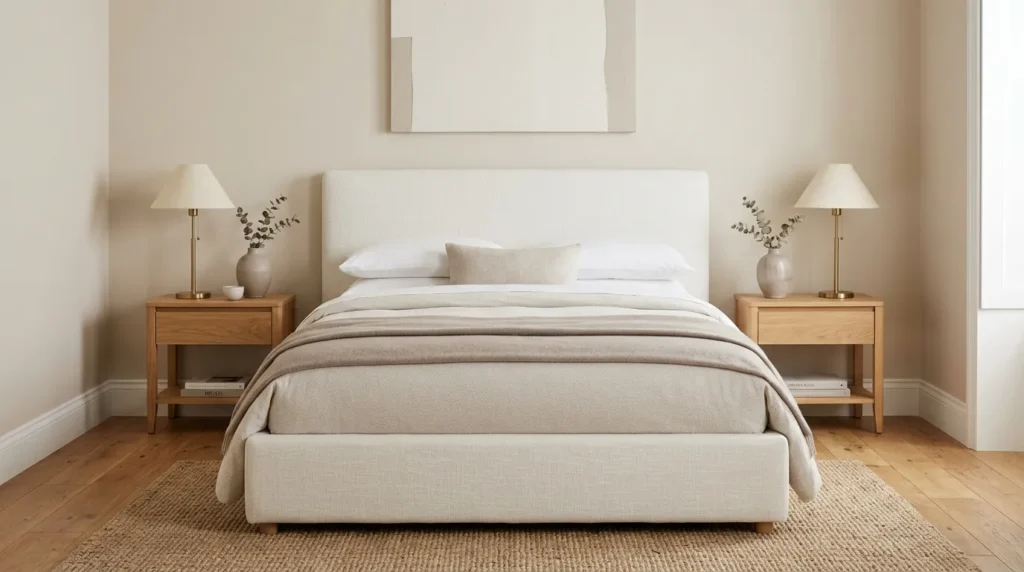
Symmetry is an easy design tool because the bed itself is usually symmetrical. Matching nightstands can reinforce that structure, but they aren’t required.
The goal is balance rather than identical styling. A lamp on one side and a plant on the other can work if their visual weight feels similar. Likewise, different objects can be connected through color, material, or height.
A common mistake is treating the nightstand as a storage dump. Phones, water bottles, skincare products, books, chargers, and miscellaneous items can quickly overwhelm the surface.
How To Style It
Start with the practical essentials. Each nightstand may need a lamp, charging access, and space for a book or glass of water.
Then add one decorative element. A small vase, framed photo, ceramic object, or plant can be enough.
Keep the number of visible objects limited. If your nightstand has a drawer, use it for smaller items that would otherwise create visual clutter.
Matching lamps are an easy way to create instant symmetry. If you prefer a more collected look, use different lamps with similar proportions and finishes.
Leave some empty surface visible. That negative space helps the arrangement feel calm rather than crowded.
4. Add Statement Lighting
Quick Benefits
- Creates a focal point
- Improves nighttime atmosphere
- Adds personality
- Provides practical illumination
- Makes the bedroom feel more sophisticated
Why It Works
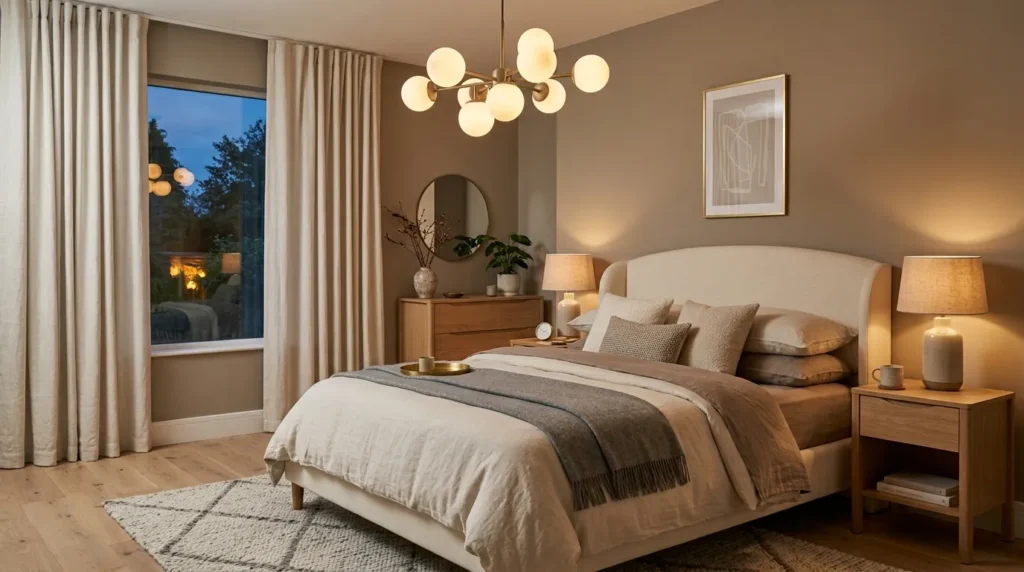
Lighting is one of the easiest ways to make a bedroom feel more expensive and thoughtfully designed. Instead of treating lights as purely functional, use them as part of the room’s visual composition.
A statement pendant, sculptural chandelier, oversized bedside lamp, or pair of wall sconces can become a defining feature. The fixture doesn’t necessarily need to be dramatic. Even a simple linen-shaded lamp can look sophisticated when its proportions are right.
Layered lighting is particularly important. One ceiling fixture rarely provides the cozy atmosphere most people want in a bedroom.
Combining overhead lighting with bedside lamps, sconces, or accent lighting gives you control over brightness and mood.
How To Style It
Begin with the main ceiling fixture. If the bedroom has a standard flush-mount light, consider whether a more decorative fixture would suit the room’s proportions.
Then add bedside lighting. Lamps should be appropriately scaled to the nightstands and bed. If space is limited, wall-mounted sconces can free up valuable surface area.
Choose bulbs that create a comfortable residential atmosphere while providing enough light for reading and getting ready.
If you’re installing or replacing hardwired fixtures, make sure the installation is appropriate for the electrical system and completed safely.
5. Frame the Windows
Quick Benefits
- Makes windows appear larger
- Adds softness
- Emphasizes ceiling height
- Improves privacy
- Creates a finished appearance
Why It Works
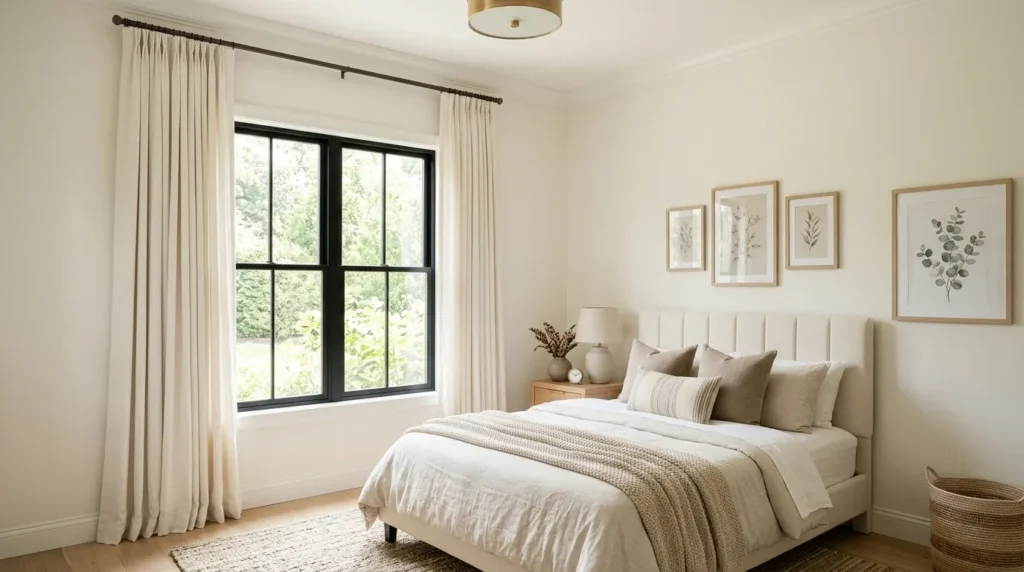
Windows are architectural features, so the way you dress them can change the entire feeling of a bedroom. Curtains that are too short or mounted directly above the window can make the room feel visually compressed.
Longer panels mounted higher can emphasize vertical space and create a more elegant appearance. This technique is particularly useful in bedrooms with standard-height windows.
Soft curtains also introduce another layer of texture. Linen-look, cotton, and lightweight woven fabrics can make the room feel more relaxed.
The goal isn’t necessarily to make the curtains the focal point. They should support the overall palette and frame the window naturally.
How To Style It
When practical, mount the curtain rod several inches above the window frame and extend it beyond the sides. This allows the panels to sit outside the glass when open, preserving as much natural light as possible.
Choose curtains that reach close to the floor. Slightly pooling fabric can create a romantic look, while a cleaner finish works well in modern rooms.
For a neutral bedroom, ivory, oatmeal, soft beige, or warm white curtains are versatile choices.
If privacy is important, combine decorative panels with blinds or shades so you can control both light and visibility.
6. Layer Natural Textures
Quick Benefits
- Adds warmth
- Creates visual depth
- Prevents neutral rooms from feeling flat
- Makes the bedroom feel more comfortable
- Works across many decorating styles
Why It Works
Texture is one of the secrets behind photographs that feel rich and inviting. Two objects can have the same color but look completely different when their surfaces vary.
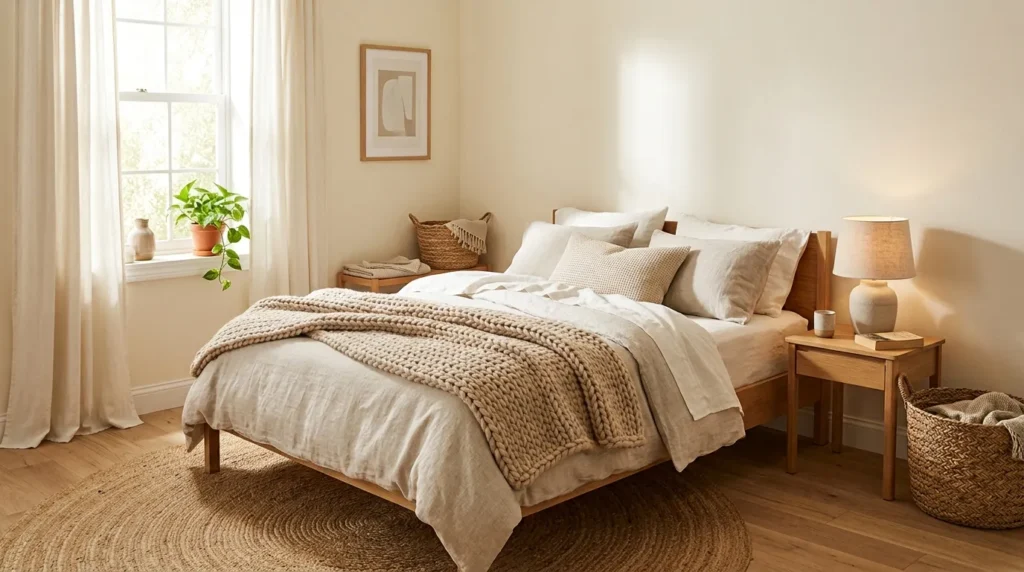
Think about the combination of smooth painted walls, natural wood, linen bedding, woven baskets, knitted throws, ceramic accessories, and soft rugs. Each material reflects light differently and gives the room another visual layer.
Natural textures are particularly effective in neutral bedrooms because they add interest without introducing strong colors.
A bedroom with cream walls and beige bedding can look sophisticated when paired with oak furniture, a jute-style rug, linen curtains, and a chunky throw.
How To Style It
Choose three or four materials and repeat them around the room. For example, use light wood on furniture, woven fibers through baskets, linen on bedding, and ceramic for accessories.
Don’t try to make every texture equally prominent. One large textured element, such as a rug or upholstered headboard, can serve as the foundation.
Then add smaller details through pillows, throws, lamps, and decorative objects.
If you already have a lot of smooth surfaces, focus on adding softness. If the room contains many textiles, introduce wood or ceramic for contrast.
7. Style the Walls
Quick Benefits
- Adds personality
- Uses vertical space
- Creates focal points
- Makes furniture feel more connected
- Helps the room look finished
Why It Works
Bare walls can make even an attractive bedroom feel incomplete. Wall decor gives the eye another layer to explore and allows you to express personal style without adding more furniture.
The best Pinterest-style bedrooms usually have one or two strong wall moments rather than artwork scattered randomly across every available surface.
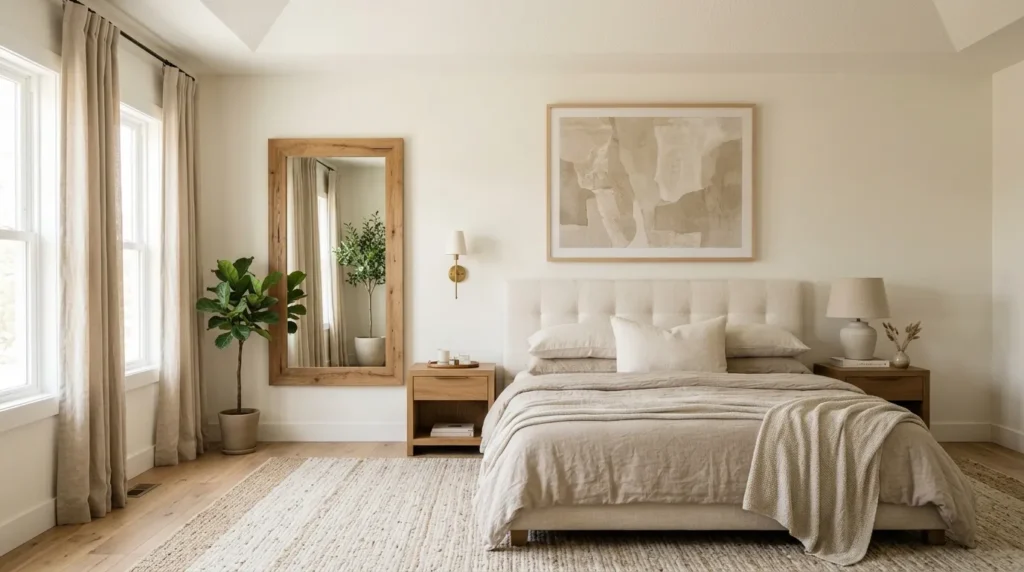
A large piece above the bed can create a focal point. A gallery arrangement can add personality to a blank side wall. A large mirror can provide both decoration and function.
The scale of the artwork matters. A tiny print above a large bed often looks disconnected. A larger piece or grouped arrangement tends to feel more intentional.
How To Style It
Choose artwork that connects with the existing palette. Abstract prints, botanical artwork, photography, vintage-inspired pieces, and simple line drawings can all work beautifully.
If you want a gallery wall, repeat a frame finish or color to keep the collection cohesive.
For a simpler approach, place one oversized piece above the headboard. Keep the colors relatively quiet if your bedding already contains pattern.
A large mirror can work particularly well opposite a window because it can reflect natural light and create a greater sense of depth.
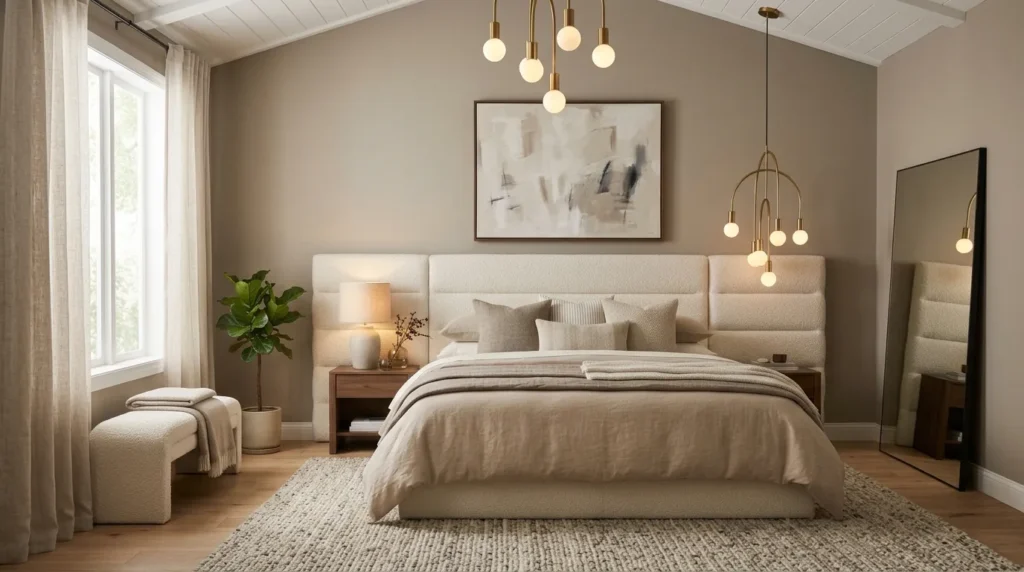
8. Add Oversized Elements
Quick Benefits
- Creates visual impact
- Makes the room feel more intentional
- Reduces the need for many small decorations
- Adds designer-like scale
- Creates stronger focal points
Why It Works
One surprisingly effective design principle is using fewer pieces at a more appropriate scale. Small rooms and bedrooms often become cluttered when homeowners try to decorate every surface with tiny objects.
An oversized mirror, large artwork, substantial headboard, generous rug, or dramatic light fixture can create more impact than a collection of small accessories.
This doesn’t mean buying the largest possible item. The piece still needs to fit the room and leave comfortable pathways.
The idea is to create visual confidence. A large, well-proportioned object can make a room feel designed rather than gradually filled with decorations.
How To Style It
Choose one area for a larger statement element. The wall above the bed is often a natural choice.
A tall upholstered headboard can add height and softness. A large framed artwork can create a strong focal point. A generously sized rug can connect the bed and surrounding furniture.
Balance the large element with simpler pieces elsewhere. If you choose an oversized pendant, keep the nightstand styling relatively restrained.
Measure before purchasing. An oversized item should feel intentional, not cramped.
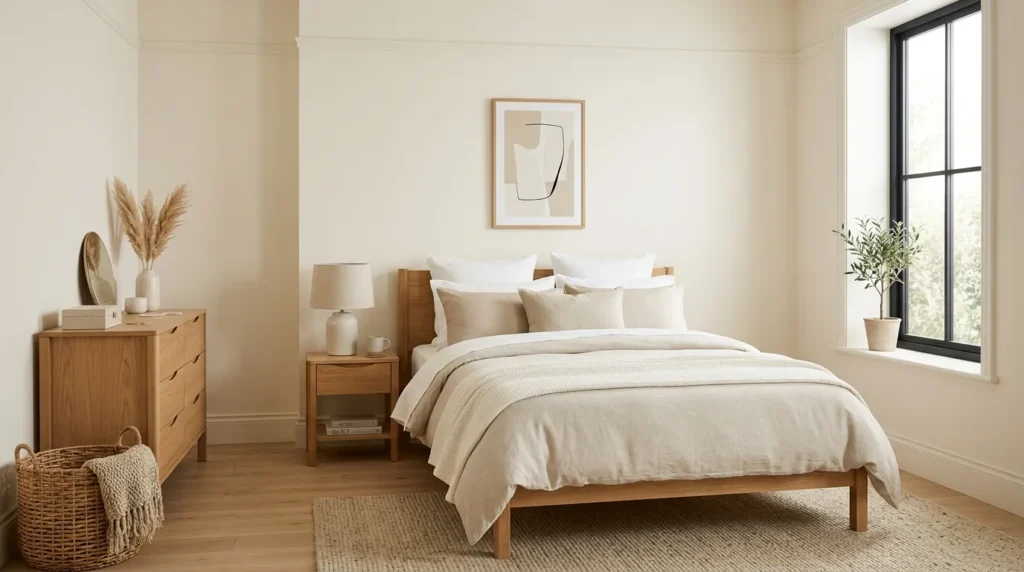
9. Edit the Clutter
Quick Benefits
- Creates a calmer atmosphere
- Makes decorative pieces more noticeable
- Improves organization
- Makes cleaning easier
- Helps the room feel more spacious
Why It Works
A bedroom is meant to support rest, so visual clutter can work against the atmosphere you’re trying to create. Even beautiful objects can become distracting when there are too many of them.
Pinterest photographs often look calm because unnecessary items have been removed. That doesn’t mean real bedrooms need to look empty. It simply means every visible item has a reason to be there.
Look at your surfaces with fresh eyes. Does the dresser hold things you use every day? Are there decorative objects that no longer fit your style? Are clothes accumulating on a chair because the storage system isn’t working?
These questions reveal whether the issue is decoration or organization.
How To Style It
Start with the most visible surfaces: nightstands, dresser tops, shelves, and the floor.
Remove everything and return only the pieces that are useful or meaningful. Group similar items together instead of scattering them around the room.
Use baskets, boxes, drawers, and closet organizers to contain everyday necessities.
Don’t feel obligated to fill empty shelves. Negative space is an important part of good design.
One simple trick I always suggest is taking a photo of the room after styling it. The camera often reveals visual clutter that you don’t notice when standing inside the space.
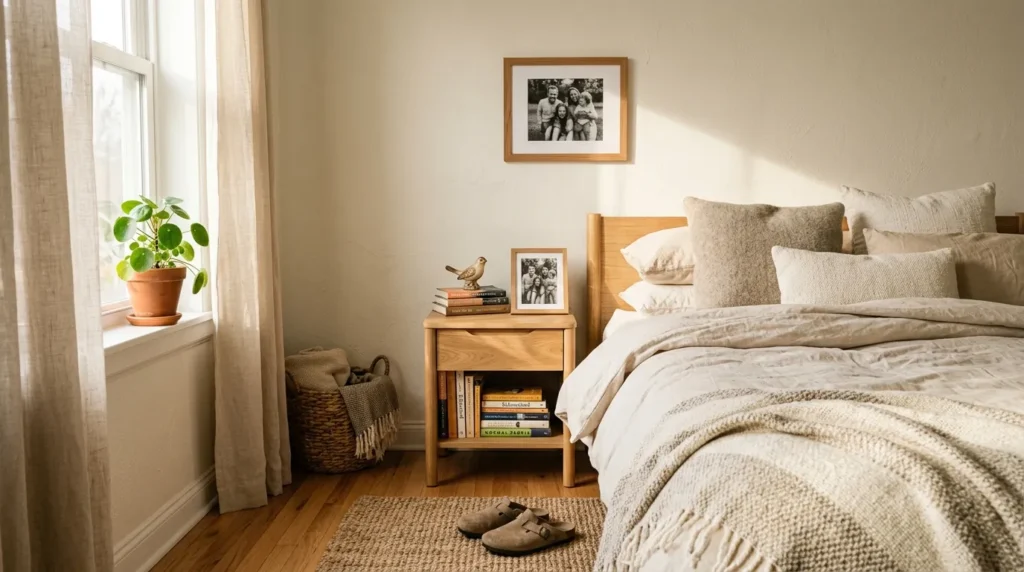
10. Finish With Personal Details
Quick Benefits
- Makes the room feel authentic
- Adds emotional character
- Prevents the design from feeling generic
- Reflects your personality
- Creates a lived-in atmosphere
Why It Works
A bedroom can be beautifully styled and still feel impersonal. The final step is adding details that tell the story of the person who lives there.
This might be a favorite photograph, a vintage piece inherited from family, a collection of books, artwork from a local artist, or a travel souvenir.
Personal objects also help prevent the room from looking like a showroom. They introduce variation and meaning that can’t be replicated by buying an entire matching decor collection.
The key is to choose selectively. Displaying every sentimental object at once can create clutter, while a few meaningful pieces can have much greater impact.
How To Style It
Choose several objects that genuinely matter to you and give them intentional places.
A framed photograph can sit on a nightstand. A favorite book can be displayed on a coffee table or shelf. A small collection can be grouped on a dresser rather than spread throughout the room.
Mix personal objects with more neutral decorative pieces so the room remains visually balanced.
If you’re decorating for Pinterest photography, don’t remove everything personal. Instead, edit the display so the objects enhance the overall composition.
The best bedroom is not one that looks like everyone else’s. It’s one where the design principles support your own personality and daily routine.
How To Make Your Bedroom Look More Expensive
A designer-inspired bedroom doesn’t have to depend on an expensive shopping list. Proportion, consistency, and presentation often have more influence than price.
Invest in the bed area
Because the bed is usually the focal point, quality-looking bedding and a well-proportioned headboard can have a strong visual effect.
Repeat materials
If you use wood, repeat it through at least one or two smaller elements. The repetition makes the design feel intentional.
Choose fewer accessories
Instead of buying ten inexpensive decorations, consider selecting two or three pieces with more visual presence.
Upgrade the lighting
A beautiful bedside lamp can make an ordinary nightstand feel much more sophisticated.
Use larger artwork
A properly scaled piece often looks more polished than several tiny prints.
Keep surfaces clean
A tidy dresser and nightstand instantly make a room feel more considered.
Pay attention to curtains
Full-length curtains with a generous width can make the room feel taller and more finished.
How To Choose Bedroom Decor Like a Designer
Before buying anything, look at the bedroom as a whole.
Ask yourself:
What is the focal point?
Usually the bed, but artwork, a fireplace, or architectural feature can also serve as one.
What colors repeat?
Identify the dominant neutral and supporting shades.
What textures are missing?
If everything is smooth, add woven or soft materials.
Where does the eye stop?
Strong focal points should be balanced rather than competing.
What feels unnecessary?
Removing something can improve the room just as much as adding something.
Does it work in real life?
A bedroom should remain comfortable and practical after the photos are taken.
This process prevents random purchases and makes decorating feel much more manageable.
Pinterest Bedroom Styling Tricks That Actually Work
There are several simple visual tricks that can help a bedroom photograph beautifully.
Create layers
Layer bedding, rugs, curtains, and lighting instead of relying on one decorative element.
Use repetition
Repeat a color, material, shape, or finish throughout the room.
Leave breathing room
Don’t fill every shelf, wall, or tabletop.
Mix old and new
Vintage pieces can give a modern bedroom warmth and personality.
Vary heights
Combine tall lamps, medium artwork, and low accessories to create visual rhythm.
Keep the bed inviting
Fluffy bedding and relaxed throws immediately communicate comfort.
Photograph at natural light levels
Soft morning or afternoon daylight often produces a more welcoming interior image than harsh overhead lighting.
Common Bedroom Decorating Mistakes
Buying everything from one collection
Matching furniture sets can make the room feel flat. Mixing complementary pieces creates more character.
Choosing decor before furniture
Large furniture determines the room’s proportions. Select the main pieces first, then add accessories.
Using too many patterns
One or two controlled patterns can add interest. Too many competing prints can overwhelm a bedroom.
Ignoring rug size
A rug that is too small can make the bed feel disconnected from the rest of the room.
Hanging artwork too high
Wall art should relate visually to the furniture beneath it rather than floating near the ceiling.
Making the bed too symmetrical
Symmetry is useful, but slight variation in pillows, throws, and accessories can make the room feel more relaxed.
Decorating without measuring
Always measure walls, furniture, windows, and pathways before buying larger pieces.
FAQ
How do I make my bedroom look like a Pinterest bedroom?
Focus on a cohesive color palette, layered bedding, balanced furniture, attractive lighting, natural textures, appropriately scaled artwork, and limited clutter. The key is consistency rather than buying lots of trendy decor. Choose a few elements that work together and leave enough empty space for the room to feel calm.
What makes a bedroom look professionally decorated?
Professional-looking bedrooms usually have good proportions, a consistent palette, layered lighting, varied textures, and intentional styling. Furniture is appropriately scaled, artwork relates to the surrounding pieces, and accessories are edited rather than scattered randomly. These principles can create a polished appearance regardless of the decorating budget.
How many pillows should I put on my bed?
There is no required number. A practical arrangement might include sleeping pillows, one or two larger decorative pillows, and a smaller accent pillow. The goal is to create layers without making the bed difficult to use. If you dislike removing many pillows every night, keep the arrangement simple.
Should bedroom nightstands match?
Matching nightstands can create symmetry and make the bed area feel organized, but they are not necessary. Different nightstands can work when they have similar visual weight or share colors, materials, or proportions. Matching lamps are an easy way to create balance even when the furniture itself differs.
How do I decorate a bedroom without making it cluttered?
Start by choosing a limited color palette and identifying a few focal points. Keep frequently used items organized and leave some surfaces intentionally empty. Instead of adding many small accessories, choose a few larger or more meaningful pieces. Storage baskets, drawers, and closed cabinets can help keep everyday necessities out of sight.
What colors make a bedroom feel luxurious?
Soft neutrals such as cream, ivory, taupe, beige, warm gray, and mushroom can create a sophisticated foundation. Deep green, navy, chocolate brown, or charcoal can be added as controlled accents. Luxury comes more from the combination of color, texture, proportion, and lighting than from one specific shade.
How can I make my bedroom look expensive on a budget?
Prioritize the most visible areas. Layer the bed with coordinated textiles, improve bedside lighting, use full-length curtains, display appropriately scaled artwork, and remove unnecessary clutter. Rearranging existing furniture and repeating colors or materials can also make the room feel more intentional without requiring a major shopping trip.
Conclusion
Decorating a bedroom like a Pinterest designer is less about copying one particular photograph and more about understanding why certain rooms look so inviting.
Start with a cohesive palette that makes the room feel connected. Build the bed into a comfortable focal point with layers of bedding and texture. Balance the nightstands, choose lighting that creates warmth, and use curtains to frame the windows and emphasize the room’s proportions.
From there, bring in natural materials, artwork, and a few appropriately scaled statement pieces. Most importantly, edit what doesn’t contribute to the room. A beautiful bedroom needs breathing space just as much as it needs decoration.
Then add the details that make the space yours. Personal photographs, favorite books, meaningful artwork, and collected objects can turn a polished bedroom into a place that actually feels like home.
You don’t need to change everything in one weekend. Start with the bed, lighting, or cluttered surfaces, then build gradually. The best results often come from a series of thoughtful improvements rather than one expensive makeover.
Create a bedroom that photographs beautifully, but more importantly, create one that feels wonderful when you close the door at the end of the day.
Related Articles
- 10 Cozy Bedroom Ideas That Make Your Space Feel More Relaxing
- 10 Aesthetic Bedroom Ideas for a Beautiful and Comfortable Home
- 10 Bedroom Wall Decor Ideas That Transform Empty Walls
- 10 Neutral Bedroom Ideas for a Calm and Timeless Look
- 10 Small Bedroom Ideas That Make the Most of Limited Space