Solar Screen vs Insect Screen: How Much Heat Reduction Can You Expect?
Deciding between solar screens and standard insect mesh involves balancing your need for interior comfort against your desire for a clear view and natural ventilation. While both products install on your windows, they perform vastly different functions regarding thermal regulation and light filtration. Understanding the difference between a solar screen vs insect screen helps you decide which material will actually lower your cooling bills and improve your home’s comfort.
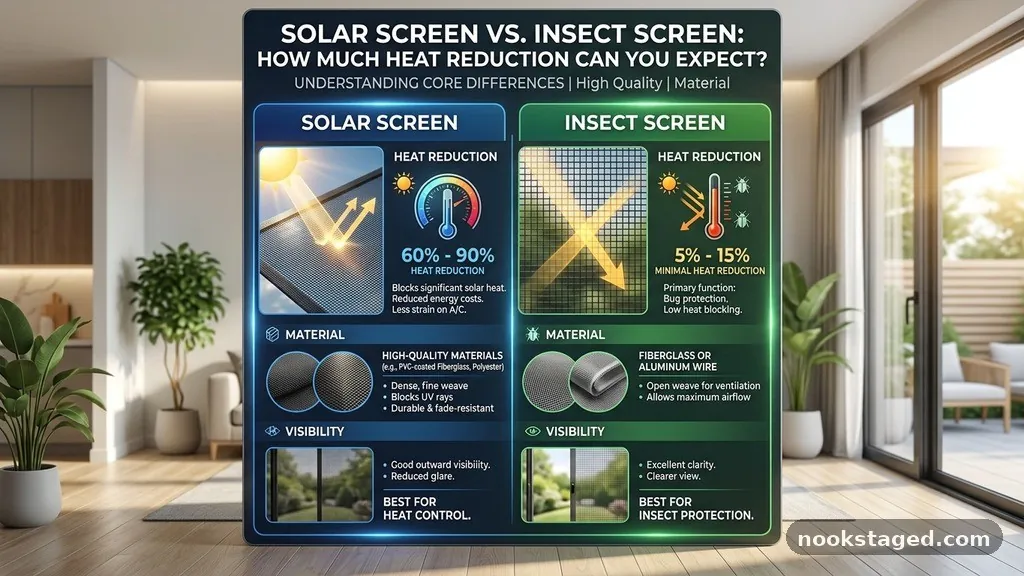
If you are looking for specific numbers, you can expect a high-quality solar screen to block between 70% and 90% of solar heat gain before it touches your glass. In contrast, standard fiberglass insect screens offer negligible heat reduction, typically blocking less than 5% to 10% of solar energy.
Because solar screens act as an exterior barrier, they prevent the greenhouse effect that occurs when sunlight hits your windows directly. If your primary goal is reducing indoor temperatures during peak summer, the performance gap between these two options is significant.
Understanding the Core Differences in Material
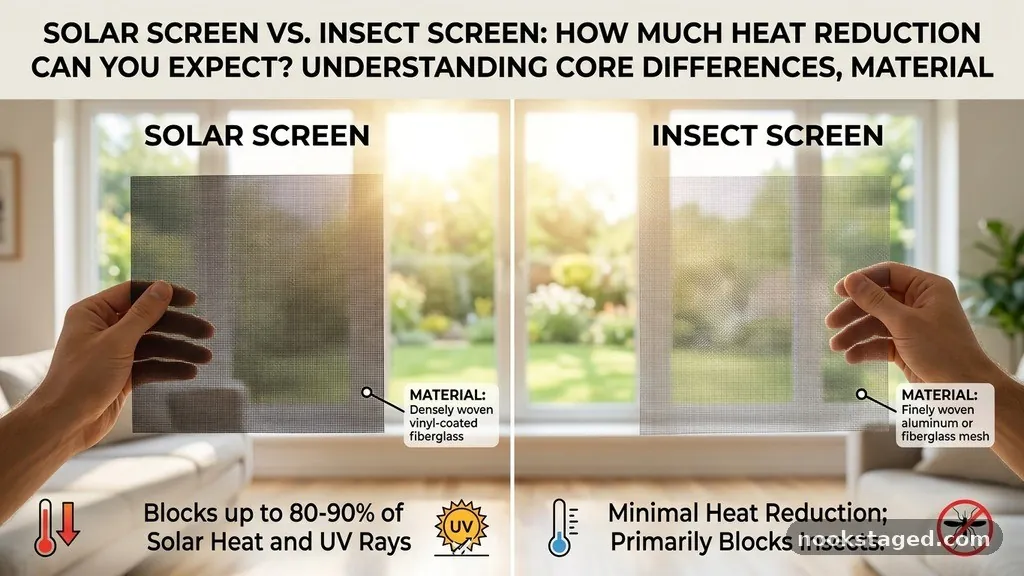
The fundamental distinction lies in the density and composition of the mesh weave. Insect screens are designed with a loose, thin weave intended primarily to keep pests out while maximizing airflow and visibility.
They use fine fiberglass or aluminum strands that allow almost all sunlight to pass directly through into your living space. This design is perfect for mild climates where you want to keep the windows open, but it offers zero thermal insulation for your home.
Solar screens, however, utilize a much tighter, thicker weave often made from vinyl-coated polyester. This material is specifically engineered to absorb or deflect solar radiation rather than letting it penetrate the glass.
By creating a physical barrier on the exterior of the window, these screens stop the sun’s energy before it has a chance to heat the air trapped between the screen and the window pane. This process is the key to their effectiveness in reducing overall solar heat gain.
How Heat Gain Actually Works
Solar heat gain occurs when short-wave infrared radiation from the sun enters your home through transparent glass. Once this energy hits interior surfaces like furniture, floors, or walls, it converts into long-wave heat.
This heat becomes trapped inside the room, forcing your air conditioning system to work significantly harder to maintain a comfortable temperature. Standard screens fail here because they are essentially invisible to these infrared waves.
When you install a solar screen, you are essentially creating an external shade device for your building envelope. By blocking the radiation before it reaches the window, the glass itself stays cooler, which in turn keeps the interior air temperature lower.
This is a passive cooling strategy that works every minute the sun is hitting your windows. It is one of the most effective ways to manage a home’s cooling load without upgrading to expensive low-emissivity glass.
The Role of SHGC in Window Performance
The Solar Heat Gain Coefficient, or SHGC, is the industry standard metric used to measure how much solar radiation a window allows to enter a home. A lower SHGC number means the window blocks more heat.
While most residential windows have a fixed SHGC rating based on the glass type, adding an exterior screen effectively lowers the overall SHGC of the entire assembly. For those interested in the technical standards of window performance, the National Fenestration Rating Council provides detailed data on how various components impact thermal efficiency.
Standard insect screens generally have no impact on the SHGC rating of a window. A solar screen, however, can drop the SHGC of a standard single-pane window by as much as 0.40 or more, depending on the fabric density.
If your home has large, west-facing windows that bake in the afternoon sun, this reduction is substantial. It is the difference between a room that feels like a furnace and one that remains relatively neutral throughout the day.
Balancing Airflow and Ventilation
One common misconception is that solar screens block all air movement because they are denser than insect mesh. While it is true that a tighter weave reduces the volume of air passing through, most solar screens still provide adequate ventilation.
You will notice a slight reduction in the breeze compared to a standard screen, but the trade-off is usually worth it for the thermal benefits. If you live in a very humid area, you might opt for a lower-density solar screen to maintain better airflow.
Insect screens offer the maximum possible airflow, which is ideal if you live in a climate where you rely on cross-ventilation to cool your home at night. However, if your home is air-conditioned, the heat gain prevented by solar screens usually outweighs the benefit of extra airflow.
You are essentially trading a slight loss in ventilation speed for a massive gain in cooling efficiency. Most homeowners find this a very favorable trade during the hottest months of the year.
Impact on Interior Glare and Light
Beyond heat, glare is a major issue for homeowners with many windows. Sunlight reflecting off screens or interior surfaces can make it difficult to watch television or work on a computer.
Insect screens do nothing to mitigate this, as they are essentially transparent to light. Solar screens, however, act like a pair of sunglasses for your house.
By diffusing the incoming light, these screens significantly reduce the harshness of the sun. This protects your flooring, artwork, and furniture from UV fading while making the room much more pleasant to be in during the day.
You will still have a clear view of the outdoors, but the light entering the room will be softer and more consistent. This creates a more comfortable environment that feels less like a greenhouse and more like a shaded patio.
Comparing Performance Metrics
To help you visualize the difference in performance, the following table breaks down the typical characteristics of these two screen types across key metrics.
| Feature | Insect Screen | Solar Screen |
|---|---|---|
| Heat Blockage | 5-10% | 70-90% |
| UV Protection | Minimal | 80-95% |
| Airflow | High | Moderate |
| Glare Reduction | None | High |
| Visibility | Excellent | Good |
Choosing the Right Fabric Density
Solar screen fabrics come in various “openness” factors, usually designated by percentages. An 80% screen blocks 80% of the sun’s energy, while a 90% screen blocks 90%.
It seems logical to always choose the 90% version, but there are trade-offs to consider. A 90% screen will block more heat, but it will also make your interior rooms darker and slightly more obstructed in terms of view.
For windows that receive direct, intense sun, the 90% density is usually the best choice for maximum energy savings. For windows that get indirect or morning sun, an 80% screen is often sufficient to cut the glare without making the room feel like a cave.
You can even mix and match these densities around your home to optimize comfort in different rooms. It is a highly customizable solution that lets you target your problem areas specifically.
Durability and Maintenance Considerations
Standard insect screens are prone to tearing and can become brittle after a few years of sun exposure. They are a low-cost, consumable item that often requires replacement every few years.
Solar screens are built to last much longer. The vinyl-coated polyester is resistant to fading, sagging, and tearing, making it a much more durable investment for your property.
Cleaning both types of screens is relatively straightforward. You can remove them from the window frame and spray them down with a garden hose and mild soap.
Solar screens may require a bit more attention because they attract more dust due to their denser weave, but they handle the pressure of a spray nozzle much better than delicate insect netting. With proper care, a high-quality solar screen can provide ten or more years of service.
Cost Analysis and Energy Savings
The initial cost of installing solar screens is higher than simply replacing standard insect mesh. However, this should be viewed as an energy-efficiency upgrade rather than a simple window repair.
By reducing the load on your HVAC system, many homeowners report noticeable drops in their monthly electricity bills during the summer months. The return on investment is often achieved within two to three cooling seasons.
When calculating the cost, consider the longevity of the materials. You will likely replace your standard insect screens three times in the span that a single set of high-quality solar screens remains functional.
Factor in the labor of installation or the cost of professional services to get a true picture of the long-term expense. When you look at the total cost of ownership, the upgrade to solar-blocking technology is rarely as expensive as it first appears.
Common Installation Methods
Installing these screens requires a bit of planning regarding your window type. Most screens are mounted using clips, springs, or a frame that slides into the window track.
If you have older double-hung windows, you can often attach solar screens directly to the exterior frame. For newer windows, you might need to work with a professional to ensure the screen doesn’t interfere with the operation of the window or the drainage of the frame.
* Exterior mounting: Best for maximum heat rejection as it stops heat before it reaches the glass.
* Interior mounting: Occasionally used for high-rise buildings where exterior access is impossible, though less effective.
* Full-frame screens: Provide the most secure fit and prevent any gaps where insects could enter.
* Retractable systems: Allow you to roll the screen up when you want full sun or a completely unobstructed view.
Frequently Asked Questions
Does a solar screen make the house too dark?
While they do reduce the amount of light entering a room, most people find the effect to be similar to wearing sunglasses. Your home will feel shaded and comfortable rather than dark or gloomy. If you are worried, start by installing them on your most intense, sun-facing windows to see how the light quality changes before covering the entire house.
Can I see through a solar screen during the day?
Yes, you can see through them quite clearly from the inside. In fact, because they reduce glare, the view is often more comfortable for your eyes than looking through clear glass. From the outside, the dark mesh provides a level of daytime privacy, making it difficult for people to see into your home while you can easily see out.
Will solar screens help in the winter?
They are primarily designed for summer heat reduction, but they can provide a very minor amount of insulation during the winter. However, their main benefit is strictly thermal management during hot months. You should not expect them to significantly lower your heating bills, as the sun’s warmth is actually desirable during the winter months.
Are solar screens effective against bugs?
Yes, they are highly effective at keeping insects out. Because they are a dense, woven material, they act as a very tight barrier that is even better at excluding small gnats and no-see-ums than standard insect screens. You get the dual benefit of heat reduction and pest protection in one product.
Do I need professional installation for solar screens?
While you can measure and install them yourself, professional installation is recommended if you have large windows or difficult-to-reach areas. Professionals can ensure the tension is correct, which prevents the screen from sagging over time. Properly installed screens also look much more integrated into the architecture of your home.
Final Thoughts on Thermal Control
Choosing between these two options comes down to identifying your home’s specific needs. If you are struggling with high energy bills, intense glare, or rooms that become uncomfortably hot during the afternoon, solar screens are a practical and effective solution. They provide a significant reduction in solar heat gain while still allowing for adequate ventilation and a clear view of your surroundings.
While standard insect screens are sufficient for basic pest control, they simply cannot compete with the thermal performance of solar-rated materials. By upgrading to a high-density mesh, you gain control over your indoor environment and take a major step toward better energy efficiency.
If you are ready to improve your home’s comfort, consider replacing your existing screens on your most exposed windows first. You will likely find that the difference is immediate and well worth the investment.