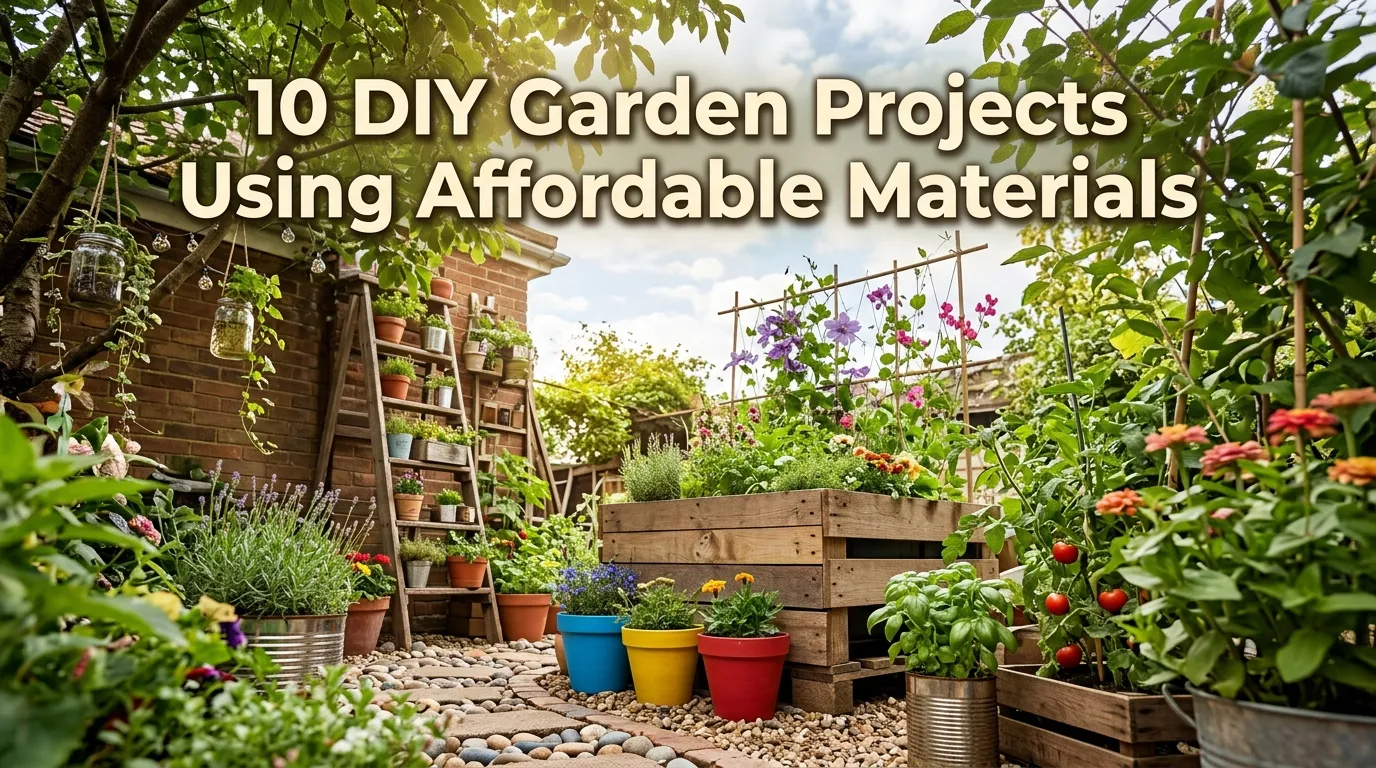
10 DIY Garden Projects Using Affordable Materials
A beautiful garden does not always require expensive landscaping, custom features, or a long shopping list. Some of the most charming outdoor spaces come together through simple projects made from materials that are inexpensive, easy to find, or already sitting around the house.
DIY garden projects are especially useful when you want to improve your outdoor space gradually. A few painted containers can brighten a dull corner. A simple trellis can give climbing plants somewhere to grow. Reclaimed wood can become a rustic planter, while leftover stones can create an attractive garden border.
The key is choosing projects that add both beauty and function. A decorative piece becomes more worthwhile when it also helps organize plants, define a pathway, create privacy, or make gardening easier.
In my experience, the best budget-friendly projects are not necessarily the most complicated. They are the ones that use ordinary materials in thoughtful ways. A basic wooden box can become a planter with the right proportions and finish. An unused container can become a colorful focal point. Even small changes can make a patio, balcony, or backyard feel more finished.
Before starting, consider what your garden actually lacks. Does an empty wall need greenery? Would a seating area benefit from more privacy? Is a garden bed missing a defined edge? Or does a plain patio need more color?
These ten ideas offer practical ways to add character without turning a garden project into a major expense. Each one can be adapted to different garden sizes, styles, climates, and available materials.
Table of Contents
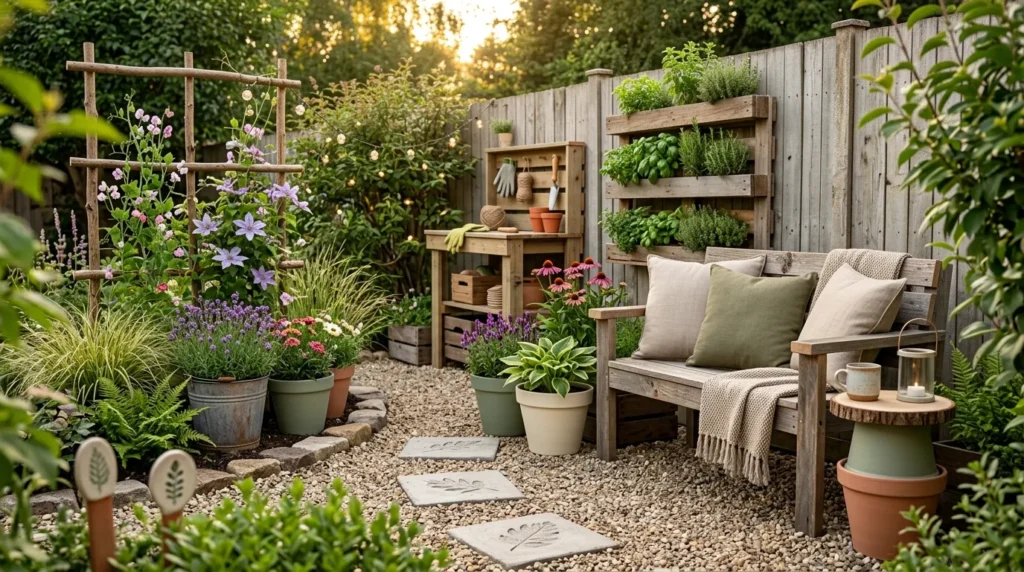
1. Reclaimed Wood Planters
Turn leftover wood into simple containers for flowers, herbs, or greenery.
2. Painted Container Garden
Give inexpensive containers a coordinated look with simple paint.
3. DIY Garden Trellis
Create affordable vertical support for climbing plants and vines.
4. Stone Garden Edging
Use affordable stones to create clean boundaries around planting areas.
5. Upcycled Hanging Planters
Transform everyday containers into attractive vertical garden displays.
6. Simple Herb Garden
Create a compact herb-growing area with inexpensive containers.
7. DIY Garden Path
Build a charming walkway using affordable materials and thoughtful spacing.
8. Rustic Plant Markers
Make useful plant labels from leftover household materials.
9. Homemade Compost Station
Create a practical composting area using simple materials.
10. Cozy Garden Seating
Build a simple outdoor sitting area with budget-friendly materials.
1. Reclaimed Wood Planters
Quick Benefits
- Uses inexpensive materials
- Adds natural warmth
- Works with many garden styles
- Creates custom planting space
- Gives leftover wood a purpose
Why It Works
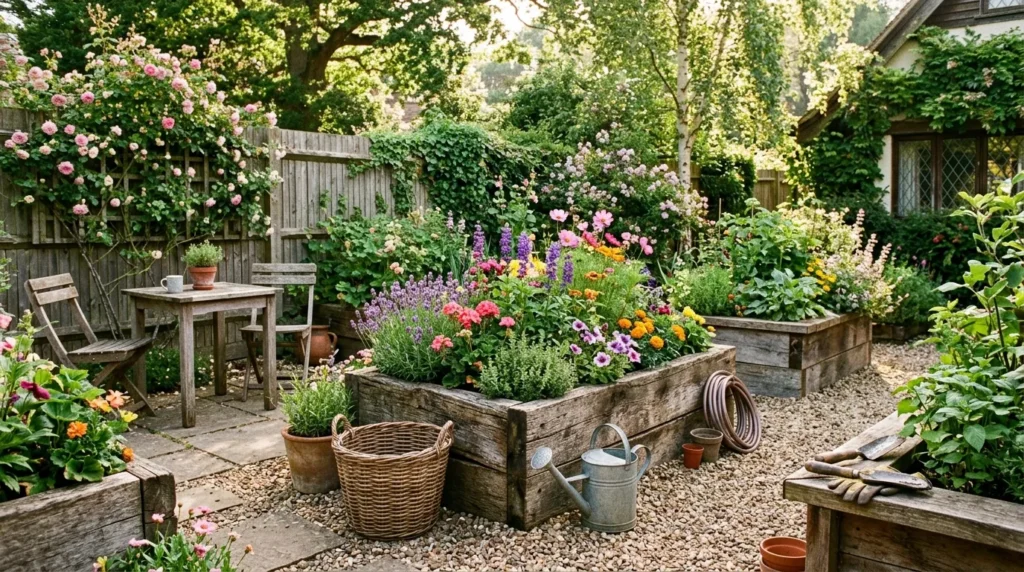
Wood planters bring warmth and structure to outdoor spaces while providing a practical way to display flowers, herbs, and small vegetables.
Reclaimed or leftover lumber can be particularly useful for DIY projects because the weathered surface already has character. Small imperfections often make the finished planter feel more natural rather than less polished.
The proportions matter more than complicated construction. A long rectangular planter can define a patio edge, while smaller boxes work well on steps or beside an entryway.
Use untreated materials that are appropriate for outdoor use, and make sure the finished planter has adequate drainage. A planter that holds water continuously can create problems for both the container and the plants.
How To Style It
Build a simple rectangular box using appropriately sized exterior-rated boards.
Sand rough edges and check for protruding screws or nails.
Create drainage openings in the base.
You can leave suitable wood unfinished for a rustic appearance or use an exterior-rated finish appropriate for garden furniture and containers.
Fill the planter with quality potting mix rather than ordinary garden soil when using it as a container.
Plant herbs, seasonal flowers, ornamental grasses, or compact vegetables.
For a cohesive look, make several boxes in similar dimensions and arrange them along a patio, fence, or garden border.
2. Painted Container Garden
Quick Benefits
- Refreshes inexpensive containers
- Adds color quickly
- Works in small gardens
- Easy to customize
- Creates visual cohesion
Why It Works
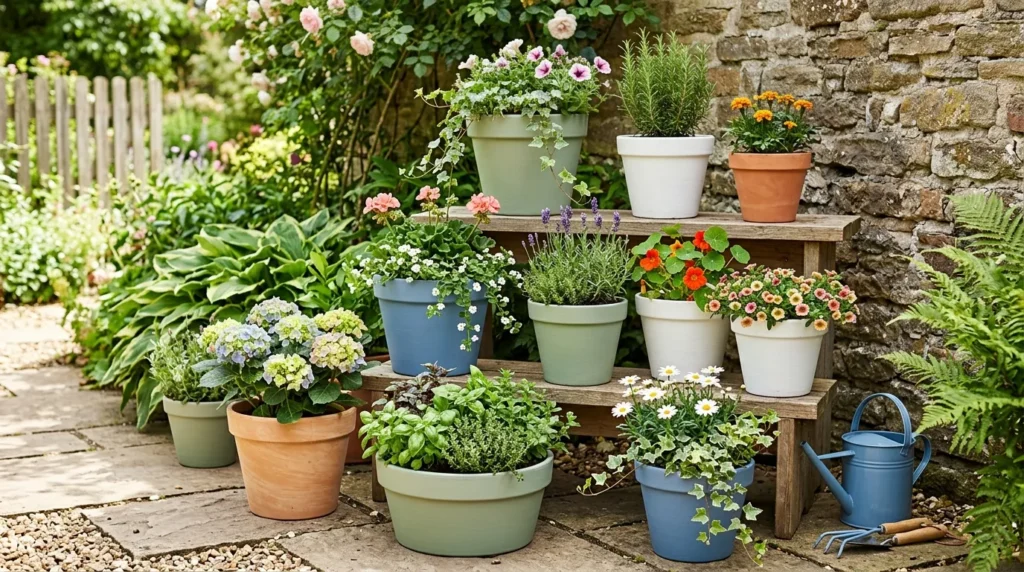
Containers do not have to match perfectly to create a coordinated garden. A consistent color can make different pots feel like part of the same collection.
This is a particularly useful project when you already own mismatched plastic, terracotta, or metal containers.
Instead of replacing everything, choose a simple palette and refresh selected pots.
Neutral colors such as warm white, charcoal, sage, muted blue, or earthy terracotta can complement greenery beautifully.
Paint also gives you a way to connect the garden to the colors used around your home’s exterior.
How To Style It
Clean each container thoroughly and allow it to dry.
Use paint and primer appropriate for the container’s material and outdoor conditions.
Choose one main color or a small coordinated palette.
Paint the exterior surfaces while keeping drainage openings clear.
Group containers in different sizes rather than lining them up at identical heights.
Use tall plants in larger pots, trailing plants in elevated containers, and smaller flowers in compact pots.
Place the finished collection near a patio, porch, garden entrance, or bare wall.
3. DIY Garden Trellis
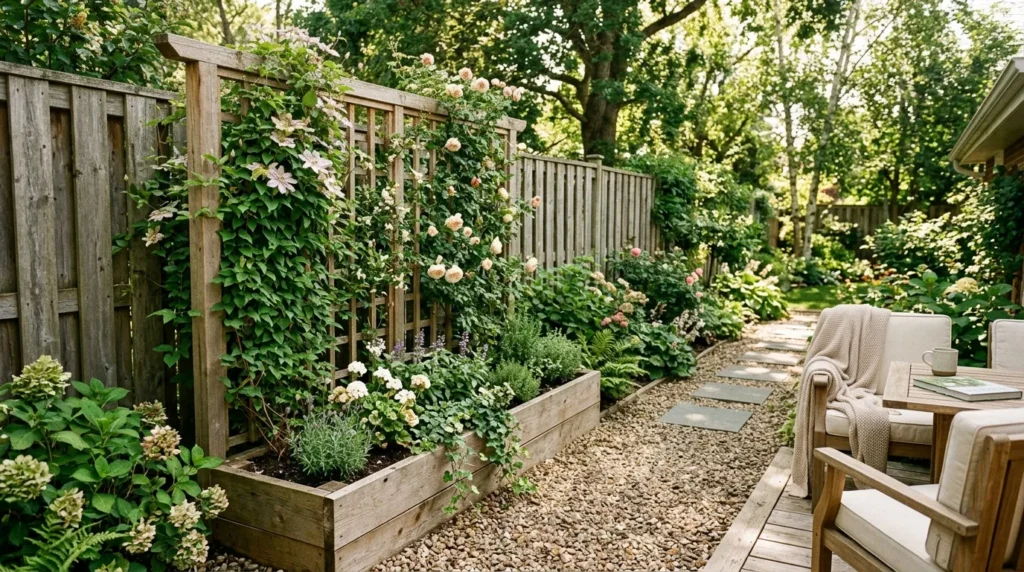
Quick Benefits
- Adds vertical interest
- Supports climbing plants
- Uses limited floor space
- Creates garden structure
- Can improve privacy
Why It Works
Vertical gardening makes use of space that often goes completely unused.
A simple trellis can support climbing flowers, vines, beans, cucumbers, or other suitable plants while turning a plain wall or fence into a living feature.
The structure does not need to be elaborate. A few properly positioned wooden strips or sturdy garden supports can create an attractive geometric pattern.
Placement is important. A trellis must be strong enough for the mature plant and securely anchored so wind and plant weight do not cause it to fall.
How To Style It
Use exterior-rated wood, bamboo, or another suitable outdoor material.
Create a simple grid, diagonal pattern, or ladder-style frame.
Secure the joints firmly.
Attach the trellis to a wall or fence where appropriate, or anchor it independently into the ground.
Choose plants based on the available sunlight and mature size.
Flowering vines can create a romantic appearance, while edible climbers add practical value.
Paint or stain the structure to coordinate with existing outdoor furniture, fencing, or planters.
4. Stone Garden Edging
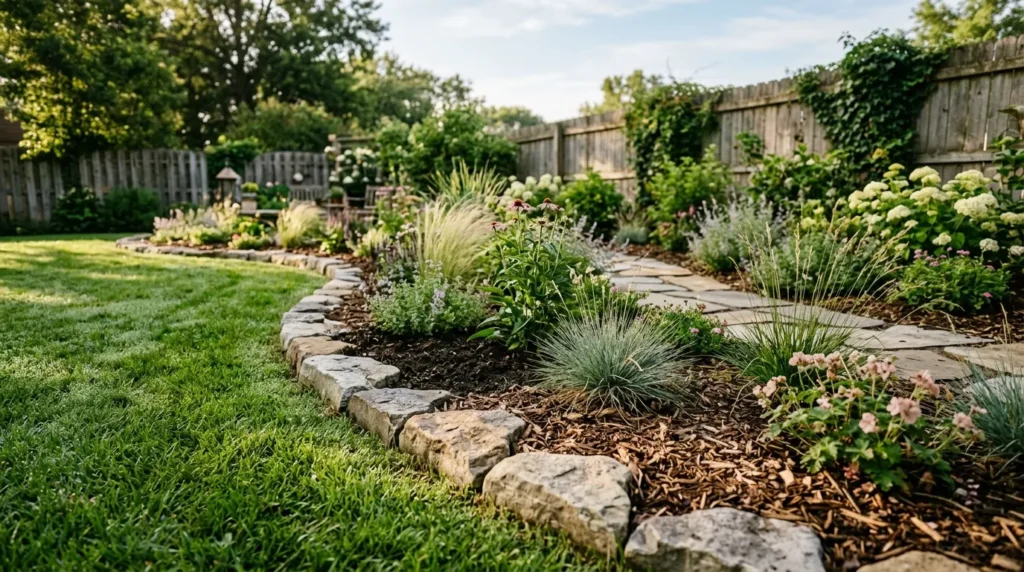
Quick Benefits
- Defines planting areas
- Creates a finished appearance
- Helps separate lawn and beds
- Uses simple materials
- Works with natural garden styles
Why It Works
Garden borders can make an outdoor space look more intentional without requiring expensive landscaping materials.
Small stones, larger natural rocks, bricks, or other suitable landscape materials can define the edge between grass, pathways, flower beds, and ground cover.
The most attractive borders usually follow the natural shape of the garden instead of forcing everything into rigid straight lines.
Stone edging also provides visual separation between different areas, making the garden easier to read from a distance.
How To Style It
Mark the desired border with garden string or landscape marking paint.
Remove grass and loose debris from the edge.
Create a shallow trench where appropriate.
Place stones or other suitable edging materials securely along the boundary.
Keep the height relatively consistent unless you want a deliberately informal appearance.
Use similar stones throughout the garden for continuity.
Pair the border with low-growing flowers, ornamental grasses, mulch, or ground cover.
For a relaxed cottage-style garden, allow the edge to curve gently around planting areas.
5. Upcycled Hanging Planters
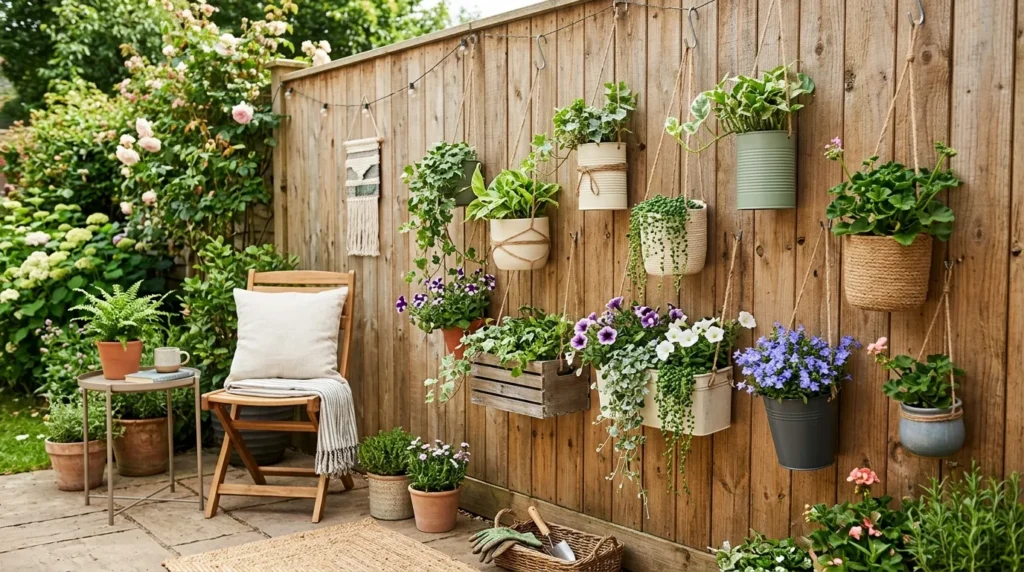
Quick Benefits
- Adds vertical greenery
- Uses existing containers
- Saves floor space
- Creates visual interest
- Works on patios and balconies
Why It Works
Vertical displays can make a small outdoor space feel considerably more layered.
Hanging planters are particularly useful when the floor has limited room for pots. They can bring greenery to fences, walls, railings, covered patios, or other suitable structures.
Repurposed containers can work beautifully when they have adequate drainage and can safely support both the plant and growing medium.
The important consideration is structural safety. Anything suspended overhead must be attached to a suitable support using hardware appropriate for its weight and location.
How To Style It
Look around the home for suitable containers that can safely be converted into planters.
Clean them thoroughly.
Add drainage openings where appropriate.
Use weather-resistant hanging hardware.
Choose lightweight potting mix and plants suited to containers.
Trailing flowers and foliage create a cascading effect.
For a coordinated display, use containers with similar finishes or paint mismatched pieces in one color.
Hang several at different heights when the structure allows it, leaving enough space for plants to grow.
6. Simple Herb Garden
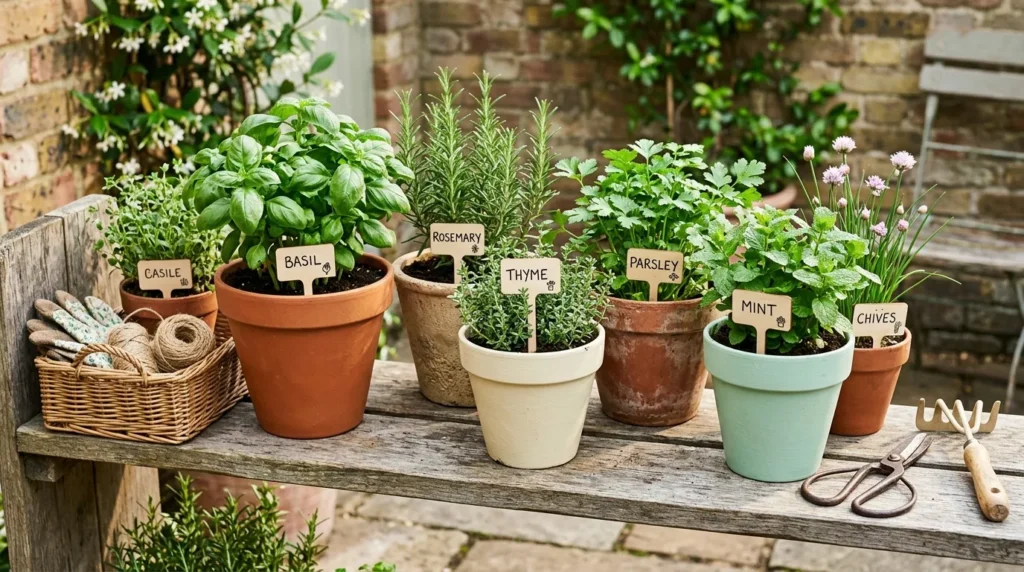
Quick Benefits
- Adds useful greenery
- Works in small spaces
- Makes cooking ingredients accessible
- Can use inexpensive containers
- Creates an attractive garden feature
Why It Works
An herb garden combines decoration with everyday usefulness.
You do not need a large raised bed. Many culinary herbs can grow successfully in appropriately sized containers when their light, soil, water, and spacing requirements are met.
A small collection of herbs can also make an empty patio corner or sunny windowside outdoor area more productive.
Grouping herbs together makes watering and harvesting easier, although individual plant requirements still matter.
How To Style It
Choose containers with good drainage.
Group herbs according to their growing requirements.
Consider rosemary, thyme, basil, mint, parsley, chives, or other herbs suitable for your local conditions.
Remember that some herbs, such as mint, can spread aggressively when planted directly in garden beds, making containers useful for keeping them contained.
Use simple wooden or stone plant labels.
Place the herb containers close to the kitchen when the location provides suitable growing conditions.
Arrange pots at different heights to create a layered display.
7. DIY Garden Path
Quick Benefits
- Improves garden flow
- Defines walking areas
- Adds structure
- Can use affordable materials
- Makes planting beds easier to access
Why It Works
A garden path does more than provide somewhere to walk. It helps organize the entire outdoor space.
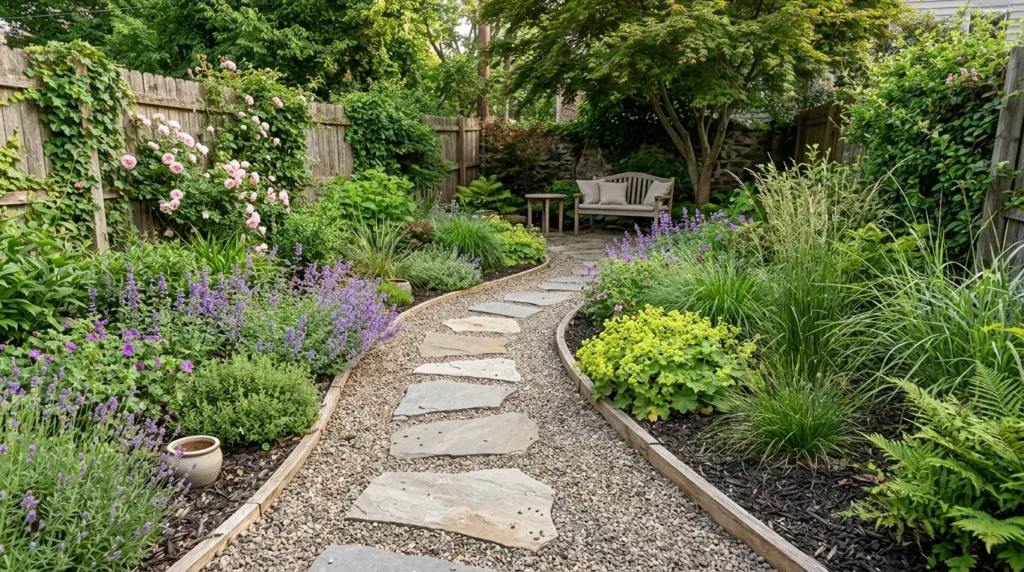
A simple path can connect a patio to a garden bed, lead toward a seating area, or create access through a larger planting area.
Affordable materials can include gravel, stepping stones, reclaimed bricks, wood rounds where appropriate, or other suitable landscape materials.
The most important consideration is creating a stable walking surface that suits the garden’s drainage and weather conditions.
How To Style It
First determine the natural route people already use.
Mark the path before installing anything.
For stepping stones, space them according to a comfortable walking stride.
For gravel paths, create an appropriate base and use edging to help contain the material.
Choose materials that complement existing stone, brick, fencing, and home exterior finishes.
Soften the edges with low-growing plants.
A slightly curved path can create a sense of discovery, while a straight path gives a more formal appearance.
8. Rustic Plant Markers
Quick Benefits
- Makes plants easier to identify
- Adds personality
- Uses inexpensive materials
- Works in herb gardens
- Provides a handmade detail
Why It Works
Plant markers are one of the easiest ways to add a personal DIY detail to a garden.
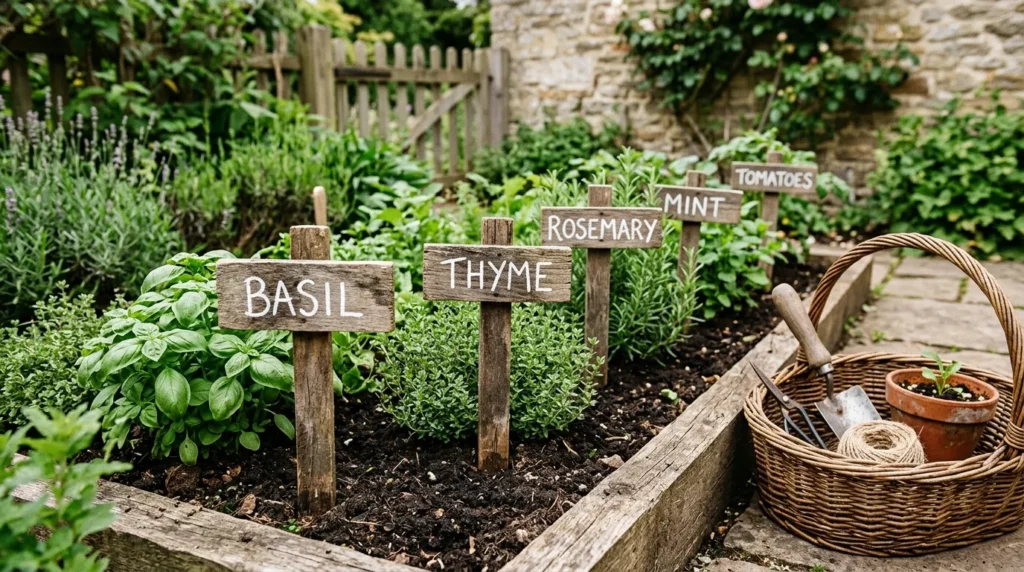
They can be made from small pieces of wood, smooth stones, recycled materials, or other weather-resistant items.
The best markers are easy to read and sturdy enough for outdoor conditions.
They are particularly useful in herb and vegetable gardens where multiple plants may look similar when young.
Because the project is small, it also provides an easy opportunity for children to participate in gardening.
How To Style It
Cut small wooden pieces into simple marker shapes or select smooth stones.
Write or paint plant names using an outdoor-suitable method.
Keep the lettering clear rather than overly decorative.
For a rustic garden, leave wood natural or lightly weathered.
For a modern garden, use simple white lettering on dark markers.
Place markers near the base of each plant without blocking growth.
Group the markers with matching containers or garden edging for a coordinated appearance.
9. Homemade Compost Station
Quick Benefits
- Supports garden maintenance
- Uses household organic material
- Reduces some household waste
- Creates a dedicated garden system
- Can be built simply
Why It Works
Composting turns suitable organic materials into a useful soil amendment while creating a designated place for garden and kitchen scraps.
A simple compost area does not need to be visually complicated.
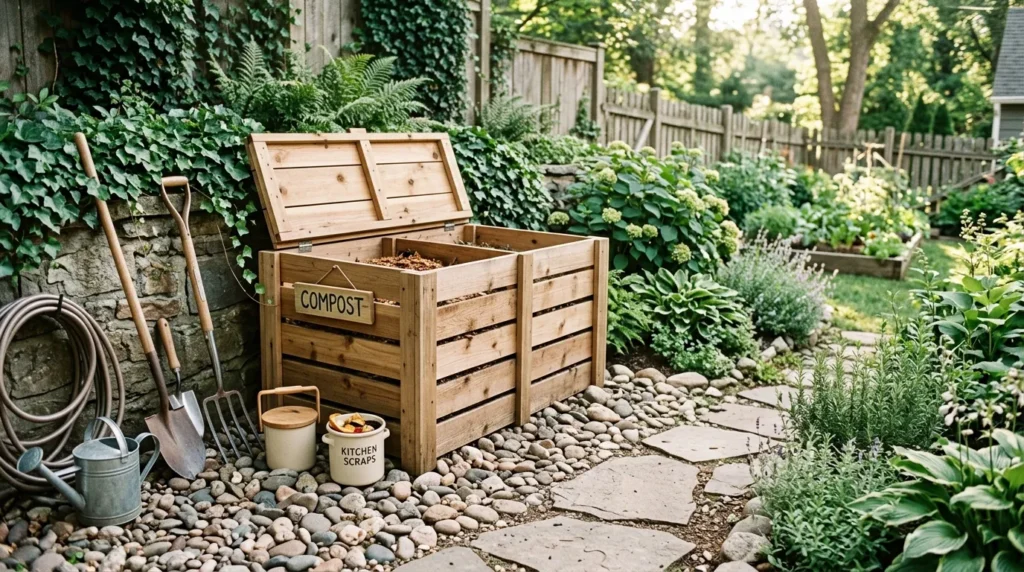
Depending on your available space, a compost bin can be made from appropriate untreated materials, purchased as a basic unit, or created using a simple enclosed design.
The important part is maintaining appropriate airflow, moisture, material balance, and local requirements.
Not every household waste item belongs in a compost system, so follow guidance appropriate to your composting method.
How To Style It
Choose a shaded or partially shaded location that is convenient to access.
Create or install a compost structure with adequate airflow.
Add appropriate green and brown materials according to your chosen composting method.
Keep the compost reasonably moist without making it waterlogged.
Turn or aerate the pile when appropriate.
Keep the area tidy by storing a small dedicated container nearby for collecting suitable kitchen scraps.
Surround the compost station with simple plants or screening if you want it to blend into the garden.
10. Cozy Garden Seating
Quick Benefits
- Creates a destination outdoors
- Makes the garden more usable
- Adds personality
- Encourages relaxation
- Can be built around existing furniture
Why It Works
A garden becomes more enjoyable when it includes a comfortable place to stop and appreciate it.
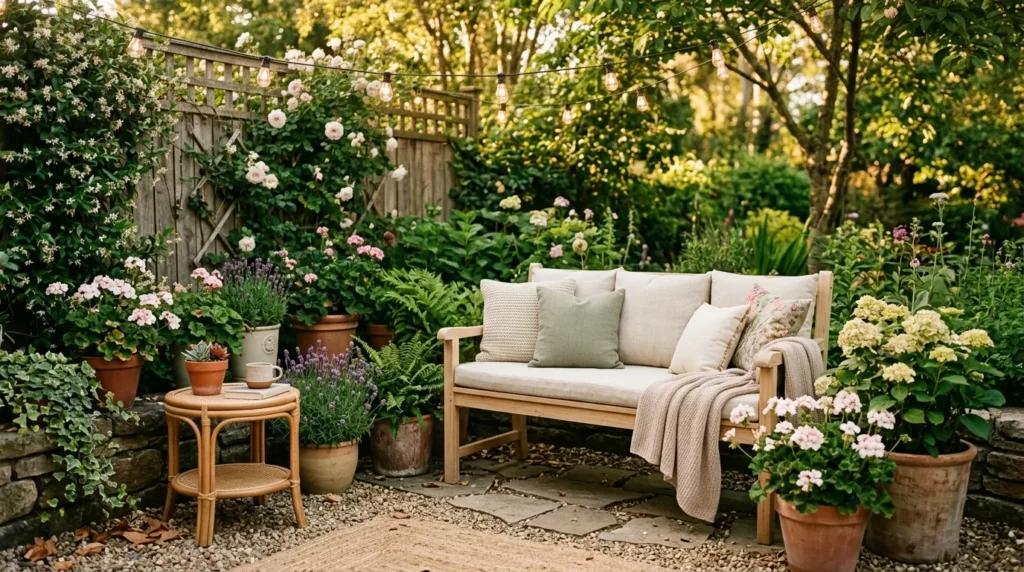
You do not necessarily need a complete outdoor furniture set. A simple bench, sturdy chair, reclaimed wood seating, or existing patio furniture can become the foundation of a cozy garden corner.
The surrounding environment makes just as much difference as the seating itself.
Plants, containers, outdoor textiles, shade, and lighting can turn an ordinary corner into a destination.
How To Style It
Choose a stable seating option suitable for outdoor conditions.
Position it where you can enjoy a garden view rather than simply placing it against the nearest wall.
Add weather-appropriate cushions if suitable.
Use a small outdoor table for drinks, books, or gardening tools.
Surround the area with potted plants or a simple garden border.
Add appropriate outdoor lighting for evening use.
A small bench beneath a tree or beside a flowering bed can create a beautiful focal point without requiring a major landscaping project.
Frequently Asked Questions
What are the easiest DIY garden projects for beginners?
Simple container projects, plant markers, painted pots, basic garden edging, and small herb gardens are approachable starting points. These projects require fewer construction skills than larger structures and can usually be completed in a limited amount of time. Start with a project that solves a specific garden problem rather than choosing something solely because it looks attractive.
How can I make my garden look expensive on a budget?
Focus on repetition, structure, and a coordinated color palette. Group containers instead of scattering them randomly, define garden beds with consistent edging, and repeat materials such as wood, stone, or metal. Keeping weeds and clutter under control also makes a garden look more polished. A few well-placed focal points often create more impact than many inexpensive decorations.
What materials can I reuse for DIY garden projects?
Suitable reclaimed wood, old containers, unused baskets, smooth stones, leftover bricks, sturdy metal containers, and other weather-resistant materials can sometimes be repurposed. Always consider the material’s condition, drainage requirements, outdoor durability, and whether it is appropriate for contact with soil or edible plants.
How can I create a DIY garden on a very small budget?
Start with projects that use materials you already have. Repurpose containers, propagate suitable plants, create simple plant markers, define a small garden border, or build a compact herb garden. Concentrate on one area rather than trying to transform the entire yard at once. A well-designed small corner can have more impact than scattered improvements throughout the garden.
What are the best DIY projects for a small garden?
Vertical projects work especially well because they use wall and fence space instead of valuable floor area. A trellis, hanging planters, narrow containers, wall-mounted displays, or compact herb garden can add greenery without taking up much ground space. Choose plants based on available sunlight and mature size so the space remains manageable.
How do I make DIY garden projects last longer?
Use materials suitable for outdoor exposure and follow appropriate preparation and maintenance methods. Exterior-rated wood, weather-resistant finishes, suitable hardware, proper drainage, and stable installation can all improve longevity. Inspect projects periodically for rot, rust, loose connections, or other damage and repair them before small problems become larger ones.
Can DIY garden projects increase curb appeal?
Yes. Projects that improve structure and visual organization can make an exterior feel more finished. Defined planting beds, coordinated containers, attractive pathways, tidy garden borders, and a welcoming seating or entry area can all contribute to the overall appearance of a property. The strongest results usually come from repeating a few materials and colors rather than using many unrelated decorations.
Conclusion
Creating a beautiful garden does not require a large budget. The right DIY projects can turn ordinary materials into practical features that add personality, structure, and comfort to your outdoor space.
Start by identifying what your garden is missing. If you need more planting space, try reclaimed wood planters or an inexpensive container garden. If the garden lacks vertical interest, build a simple trellis or add hanging planters. For a more organized appearance, define beds with stone edging or create a simple path.
Projects that combine function and beauty are especially valuable. An herb garden provides fresh greenery and useful ingredients. Plant markers add charm while making plants easier to identify. A compost station supports garden maintenance, while a simple seating area gives you a reason to spend more time outdoors.
You also do not need to complete everything at once. Choose one weekend project, gather the materials you already have, and build from there.
The most inviting gardens often develop gradually. A planter leads to a trellis, the trellis creates a greener wall, and eventually a simple chair turns that corner into a favorite place to sit.
With thoughtful material choices and a little creativity, affordable supplies can become garden features that feel personal, useful, and beautifully connected to your outdoor space.
Related Articles
- 10 DIY Garden Projects That Increase Curb Appeal
- 10 Garden Decor Ideas That Feel Like a Luxury Retreat
- 10 Small Garden Ideas for Beautiful Outdoor Spaces
- 10 Backyard Landscape Design Ideas with Beautiful Greenery
- 10 DIY Fire Pit Ideas for Backyard Gatherings