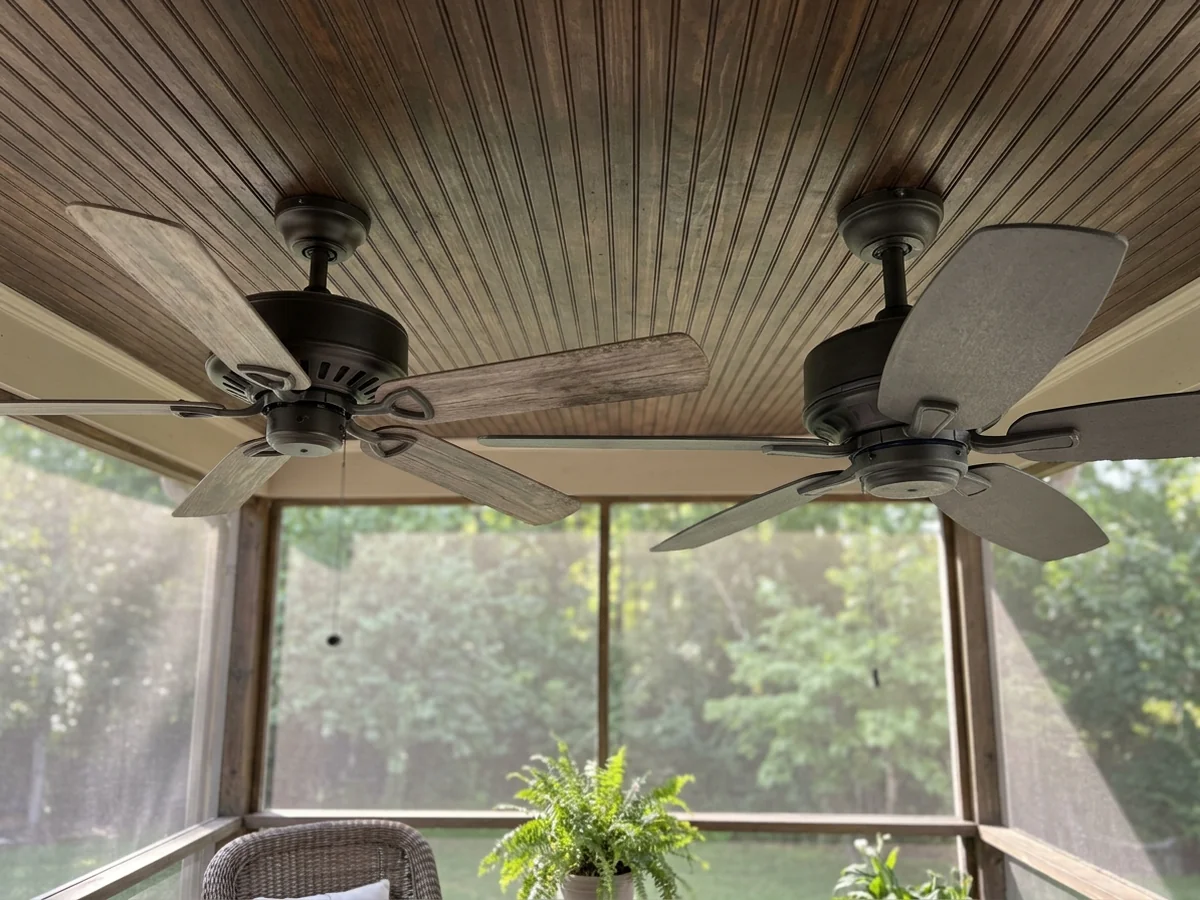
Best Outdoor Damp-Rated vs Wet-Rated Ceiling Fans for Low Screen Ceilings
Introduction
Selecting the right damp vs wet rated ceiling fans for screen porch installations requires understanding whether your space experiences direct water exposure. You should choose damp vs wet rated ceiling fans for screen porch areas by evaluating if rain or moisture can realistically reach the fixture through your screen panels.
This article covers the technical differences between these moisture ratings and how they apply to your specific outdoor environment. You will learn how to identify if your screened-in space meets the criteria for specific fan ratings, along with guidance on selecting appropriate motor and blade materials for longevity. We also address installation considerations for low ceilings, ensuring you maintain necessary safety clearances while choosing a cooling solution that withstands the elements in your local climate.
Damp vs Wet Rated Explained
The core distinction between these two classifications lies in the level of moisture exposure the fixture is engineered to endure. A damp rating indicates the fan can handle humid or moisture-heavy environments, while a wet rating confirms the unit is capable of withstanding direct contact with water, such as rain or spray.
Determining which category suits a screened-in living area requires careful assessment of your porch layout. Many homeowners find the distinction confusing because screens provide a physical barrier, but they do not always prevent precipitation from reaching the ceiling fan.
When selecting between damp vs wet rated ceiling fans for screen porch applications, you must evaluate the potential for water ingress. If your porch design features a solid roof and walls that fully block wind-driven rain, a damp-rated model might suffice. However, if the area is open enough that wind can blow rain through the screens, or if water is likely to splash onto the fixture, a wet-rated model is the safer choice to prevent electrical issues.
The National Electrical Code provides the framework for outdoor fan installation safety codes. While these codes establish general requirements for electrical fixtures, local building inspectors often have the final say on how a specific porch enclosure is classified. It is common practice to treat areas with significant exposure to the elements as wet locations. These units are built to manage moisture through specific construction techniques, such as sealed motor housings, which protect internal components from the environment.
Consider the following factors when deciding on the appropriate rating for your space:
- The distance from the edge of the roof to the fan location.
- The presence of prevailing winds that frequently drive rain into your outdoor living space.
- The frequency of cleaning, as some homeowners use hoses to wash down their porch furniture and surrounding structures.
- The local climate, specifically regarding humidity levels and the regularity of storms.
Regardless of the rating chosen, the longevity of your fixture relies on the quality of its materials. Using stainless steel hardware is a standard recommendation for outdoor installations to minimize the risk of corrosion. This is especially vital in coastal areas where salt air can degrade standard components quickly. Always check that the fan you select meets the relevant safety standards to ensure reliable performance throughout the seasons.
Understanding UL Rating Classifications

The UL 507 standard defines safety requirements for electric fans, including specific testing protocols for those intended for outdoor use. These ratings provide a standardized way to determine if a fan is engineered to handle moisture ingress, which is vital for maintaining electrical safety and hardware integrity in outdoor living spaces.
When selecting a fixture, you must distinguish between damp and wet location testing. A damp-rated designation indicates that the fan has undergone testing to confirm it can operate safely in areas protected from direct precipitation but subject to high humidity or non-direct moisture. These environments often include covered patios or enclosed rooms where condensation may accumulate.
Conversely, a wet-rated designation signifies that the fan has passed more rigorous testing involving direct exposure to water. These models are built to resist water ingress from sources like rain, snow, or direct spray. The testing process for these units ensures that moisture does not reach internal electrical components, which helps prevent short circuits and long-term corrosion.
These ratings dictate exposure limits based on how much moisture the fan is expected to encounter. The UL damp vs wet rating for fans serves as a primary guide for safety, ensuring the motor housing and electrical connections are sufficiently protected for the installation environment. Using an incorrectly rated fan can lead to premature failure or safety hazards, particularly when the fixture is placed near screen openings where wind-driven rain can enter.
- Damp-rated fans are generally tested for performance in high-humidity areas shielded from direct water contact.
- Wet-rated fans are tested to ensure internal components remain dry even when subjected to direct water exposure.
- Proper selection depends on the specific exposure levels of your screened-in space, including its proximity to roof edges and prevailing wind patterns.
Local building codes often align with these standards to ensure compliance with general electrical safety practices. When planning your installation, consider not just the roof coverage, but the potential for moisture to drift through screens during heavy storms. Choosing the appropriate rating based on these environmental factors is the most effective way to ensure the longevity of your ceiling fan.
Assessing Your Screen Porch Environment
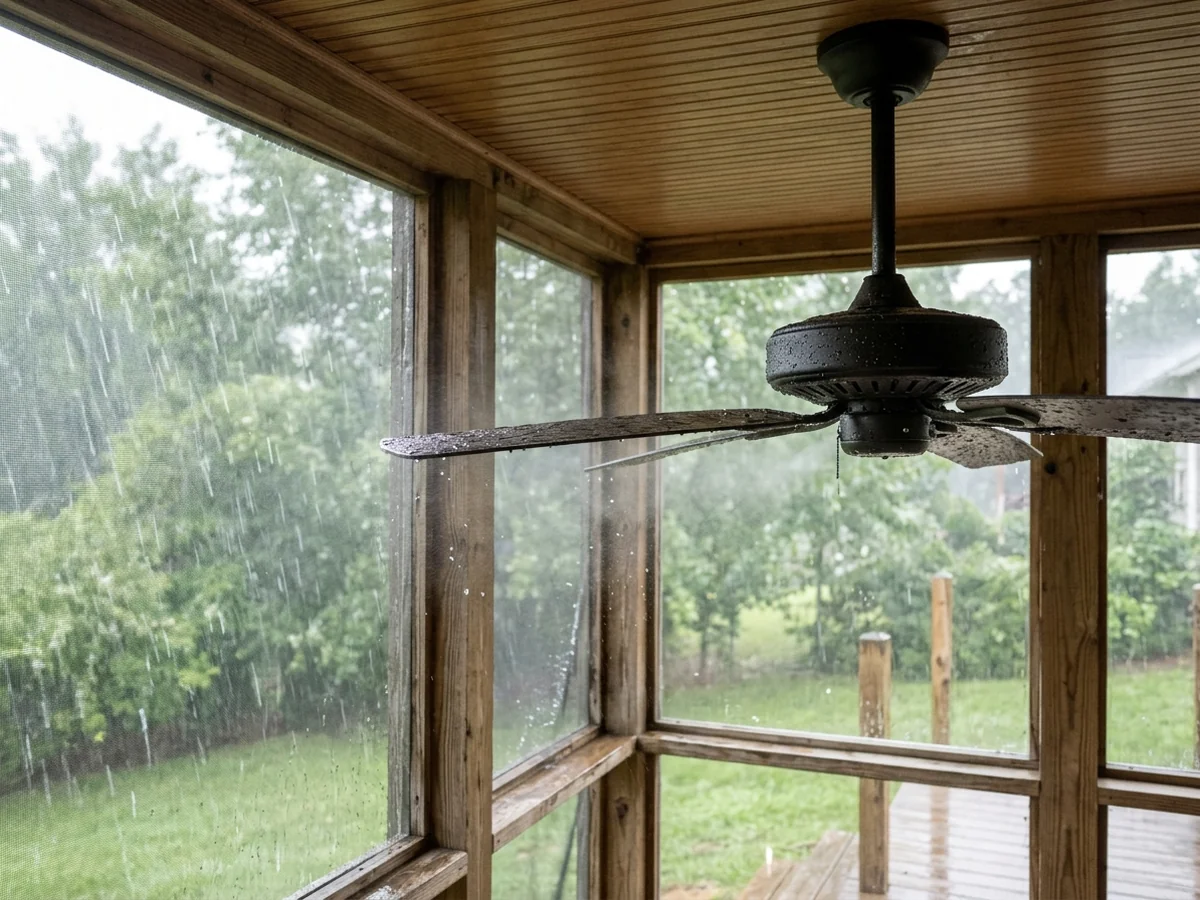
Choosing the correct fan rating starts with observing how weather interacts with your specific porch architecture. If your porch layout allows wind-blown rain to reach the area where the fan is mounted, you need a fixture designed for direct water exposure. A porch that stays completely dry during heavy storms may only require a moisture-resistant fixture, but caution is necessary when the structure is open to the elements.
Screen density significantly influences how much moisture penetrates your living space. Fine-mesh screens provide a slight buffer against mist, but they rarely block heavy, wind-driven rain. If your screens are thin or have wide gaps, the interior of your porch is effectively exposed to the same environmental conditions as an open patio. Relying on screens alone to protect electrical components from driving rain is often insufficient for long-term durability.
To determine if your space classifies as damp or wet, consider the likelihood of direct water contact. You should categorize your porch as a wet location if the ceiling area could experience rain spray, melting snow, or cleaning with a hose. Even with a solid roof, high winds can push precipitation deep into the porch interior. If the ceiling area remains entirely protected from all forms of water ingress, it may qualify as a damp location.
- Inspect your ceiling for signs of water stains or debris that indicate rain has blown inside.
- Observe your porch during a storm to see if moisture reaches the center where the ceiling fan is located.
- Check the orientation of your porch relative to prevailing wind patterns to gauge potential exposure.
- Review your local building codes, as they may have specific requirements for outdoor fan installation safety codes in your region.
When selecting the best ceiling fan for screened-in porch areas, prioritize components that resist rust. Stainless steel hardware is a smart choice regardless of the moisture rating, especially in coastal zones where salt air accelerates corrosion. If your porch has a low roofline, remember that keeping a safe distance from the floor is a priority, which often makes low profile outdoor ceiling fans a practical solution for maintaining comfort without sacrificing safety.
Comparing Fan Construction and Materials
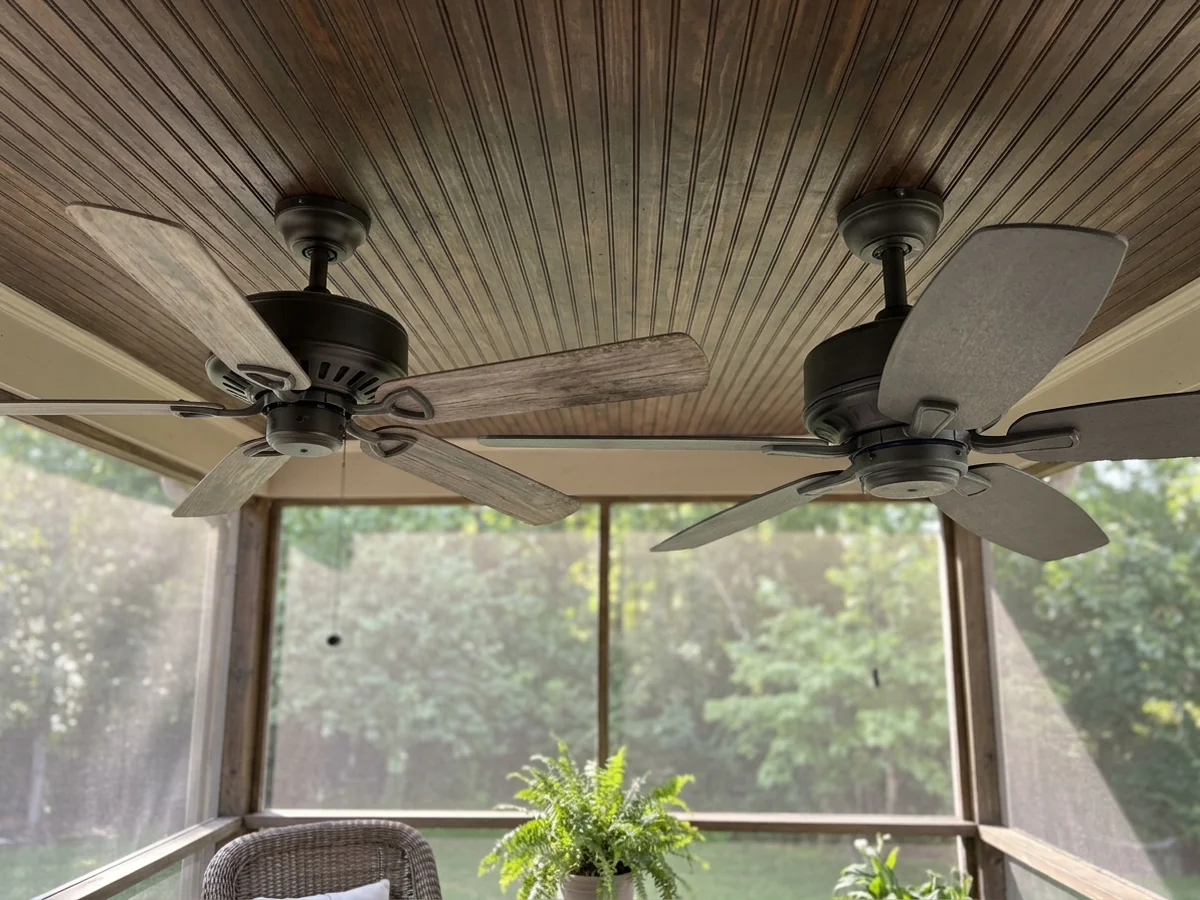
Outdoor ceiling fans rely on specific engineering features to prevent water damage and ensure long term operation in humid environments. The primary differences in construction involve how the motor housing manages moisture and how the fan blades resist warping or degradation over time.
Wet rated models are engineered to handle direct water exposure, often incorporating drainage holes within the motor housing. These openings allow any water that enters the unit to escape rather than pooling around internal electrical components. Conversely, units designed for damp locations typically focus on sealing the motor housing to prevent ambient moisture and humidity from penetrating the core, though they lack the specialized drainage paths found in wet rated counterparts.
Blade selection also impacts longevity. Fans intended for outdoor use often feature materials like ABS plastic, which resists swelling and warping when exposed to moisture. While treated wood or metal blades are common in indoor settings, they may struggle in outdoor environments unless they receive specialized moisture-resistant finishes. Regardless of the material, using stainless steel hardware remains the best practice for outdoor fan installation to promote corrosion resistance.
| Feature | Damp Rated Fan | Wet Rated Fan |
|---|---|---|
| Motor Housing | Sealed design | Sealed with internal drainage |
| Blade Material | ABS plastic or treated wood | ABS plastic or metal |
| Hardware | Corrosion resistant | Stainless steel |
| Water Exposure | Ambient humidity only | Direct rain or spray |
Selecting the right construction ensures the fan remains functional even when local conditions fluctuate. Always confirm that the chosen materials align with the specific moisture levels of your space to maintain safety and performance.
Safety Requirements by Rating
Choosing between damp or wet rated units for an outdoor area depends on your specific exposure to moisture, as defined by safety standards such as those found in NEC Article 422. This code governs the electrical requirements for appliances to ensure safe operation in varied environments, including the potential for moisture contact in outdoor living spaces.
Proper grounding is a critical component of outdoor fan installation safety codes. Because outdoor spaces are susceptible to humidity and temperature fluctuations, an effective ground path prevents electrical hazards by safely redirecting current in the event of a fault. Always ensure your junction box is appropriately rated for the weight and movement of a ceiling fan, particularly in exterior settings where structural components may be subject to different stress levels than interior rooms.
Adhering to screen porch ceiling clearance requirements is essential for both performance and personal safety. Most electrical guidelines suggest maintaining a minimum distance between the fan blades and the floor to prevent accidental contact. In spaces with limited vertical height, you must balance the need for air circulation with these height restrictions to maintain a secure environment.
When planning your installation, consider the following safety protocols to protect your home and the longevity of the fixture:
- Consult local building authorities to determine if your specific porch layout is classified as a damp or wet location under current electrical codes.
- Install the fan at least seven feet above the finished floor to ensure adequate clearance and prevent physical contact with moving parts.
- Use only hardware and fasteners made from stainless steel to resist corrosion and structural degradation in humid outdoor air.
- Verify that the electrical supply circuit is properly grounded to mitigate risks associated with moisture and potential system faults.
- Select hugger or low profile outdoor ceiling fans if your ceiling height is under eight feet to maximize the distance between the blades and the floor.
- Ensure all electrical connections are housed within a moisture-resistant junction box designed for exterior use to prevent water ingress.
Evaluating the environment of your porch is the final step in confirming your rating choice. If your local climate or the design of your screens allows wind-driven rain or direct water spray to reach the fixture, a model designed for wet locations is necessary. In contrast, if the space remains protected from direct water but encounters humidity, a damp-rated model may suffice according to standard safety practices.
Choosing Ratings for Low Ceilings
When selecting fans for porches with low vertical clearance, you must prioritize the model’s physical profile alongside its environmental rating. Choosing a compact design ensures you meet safety guidelines while maintaining the necessary airflow in an enclosed space.
Screened enclosures often feature limited height, which makes standard downrod mounts impractical. Low profile outdoor ceiling fans, frequently referred to as hugger ceiling fans, attach directly to the ceiling canopy. This design eliminates the gap between the motor housing and the ceiling, providing essential extra clearance for walking paths below.
Before choosing between a damp-rated or wet-rated model, evaluate the specific exposure level of your screened-in area. If your porch has a solid roof and walls that prevent direct rain from reaching the fixture, a damp-rated unit may suit your needs. However, if your screens allow wind-driven rain or water spray to reach the fan, you should opt for a wet-rated version regardless of the ceiling height.
Maintaining effective airflow in tight spaces requires careful consideration of blade pitch and speed. In low-ceiling environments, the proximity of the blades to the ceiling can restrict air intake. To maximize efficiency:
- Select a fan with a blade pitch optimized for lower speeds to reduce air turbulence near the ceiling surface.
- Ensure the fan blades are positioned at least seven feet above the floor to maintain standard safety clearances.
- Use stainless steel hardware to prevent corrosion, as moisture trapped in small, semi-enclosed spaces can accelerate rust even on protected fixtures.
- Clean the blades and motor housing regularly to prevent dust accumulation, which can create drag and decrease the fan’s performance in restricted airflow conditions.
Always verify your local building codes or consult with a qualified electrician to confirm your specific installation meets the requirements for safe outdoor placement. These regulations often dictate minimum distances between the floor and the lowest point of the fan blades. By combining a low-profile design with the appropriate moisture resistance, you can ensure your outdoor cooling solution remains both safe and durable throughout the changing seasons.
Maintenance for Damp vs Wet Fans
Regular maintenance for fans on a screened porch involves consistent cleaning of exterior surfaces and frequent inspections for signs of environmental degradation. Whether your fan carries a damp or wet designation, keeping it free of debris and moisture buildup is essential for performance and safety.
Establishing a routine helps prevent long-term damage from humidity and coastal air. Follow these steps to keep your fixture in good condition:
- Wipe down fan blades and the motor housing every few months using a soft, damp cloth to remove accumulated dust and salt residue.
- Check all blade screws and canopy hardware for signs of rust, replacing any standard metal components with stainless steel hardware if corrosion appears.
- Inspect the motor housing for small drainage holes and ensure they remain clear of spider webs, leaves, or other blockages that could trap internal moisture.
- Examine the electrical canopy connection to ensure the moisture-resistant seal remains tight against the ceiling surface.
- Test the fan for any unusual humming or wobbling during operation, as these can indicate that moisture has breached the internal housing or damaged the motor bearings.
In coastal regions, salt air significantly accelerates corrosion on metallic finishes and exposed parts. You should conduct monthly visual inspections to look for bubbling paint, white powdery deposits, or orange rust streaks, which often appear first on screws and joints. If you notice these signs, clean the affected area immediately and consider applying a clear, corrosion-resistant spray to protect the finish.
Preventing moisture damage to electrical components requires focus on the environment surrounding the fixture. Ensure your screen porch remains well-ventilated to reduce static humidity levels around the fan housing. While these fixtures are engineered for exterior use, they are not impervious to extreme conditions. If your porch experiences severe blowing rain, verify that the fan remains shielded from direct water contact, as persistent exposure can eventually overwhelm standard protective coatings. Always disconnect power at the breaker before performing any deep cleaning or hardware replacements to maintain outdoor fan installation safety standards.
FAQ
Can I use a damp rated fan on a screened porch?
Whether you should use a damp rated fan depends on the specific level of rain exposure your screen porch experiences. If the porch has a roof and walls that prevent direct rain from reaching the fixture, a damp rated fan might be sufficient, but you should always check local building codes for site specific requirements.
What is the difference between UL damp and wet ratings?
The primary distinction between these ratings involves the level of direct water contact a ceiling fan can safely handle. A wet rating indicates the fan can withstand direct exposure to rain or water spray, whereas a damp rating is intended for areas where moisture is present in the air but direct water contact is unlikely.
How much clearance do I need for a low ceiling porch?
Safety standards generally dictate that the blades of a ceiling fan must be at least 7 feet above the floor. For porches with ceilings under 8 feet, choosing low profile or hugger ceiling fans helps maintain this required clearance while providing adequate air circulation.
Do screen porches protect fans from rain?
While screens provide a barrier, they do not offer complete protection against windblown rain or water spray during severe weather. Depending on the orientation and size of your screen openings, a fan may still be subjected to moisture or direct water, which influences whether you need a wet rated model.
What materials are best for outdoor ceiling fans?
Durable materials that resist moisture and corrosion are essential for any outdoor fan installation. You should prioritize models with moisture resistant finishes and consider using stainless steel hardware to prevent rust, especially if your property is located in a coastal environment with high salt air content.
Conclusion
The primary decision point when choosing between damp vs wet rated ceiling fans for screen porch environments is the potential for direct water contact. You should consult your local building department to determine if your specific porch layout meets the criteria for a damp or wet location under the National Electrical Code. Once you have confirmed the required rating, select a model that prioritizes moisture-resistant finishes and, if necessary, corrosion-resistant hardware. Ensuring your fan is rated correctly for the specific exposure levels of your porch will prevent premature damage and help maintain essential safety standards.
You might also like: Bottom Screen Guard Rails: Preventing Dogs from Pushing Through Porch