10 DIY Fire Pit Ideas with Easy Weekend Builds
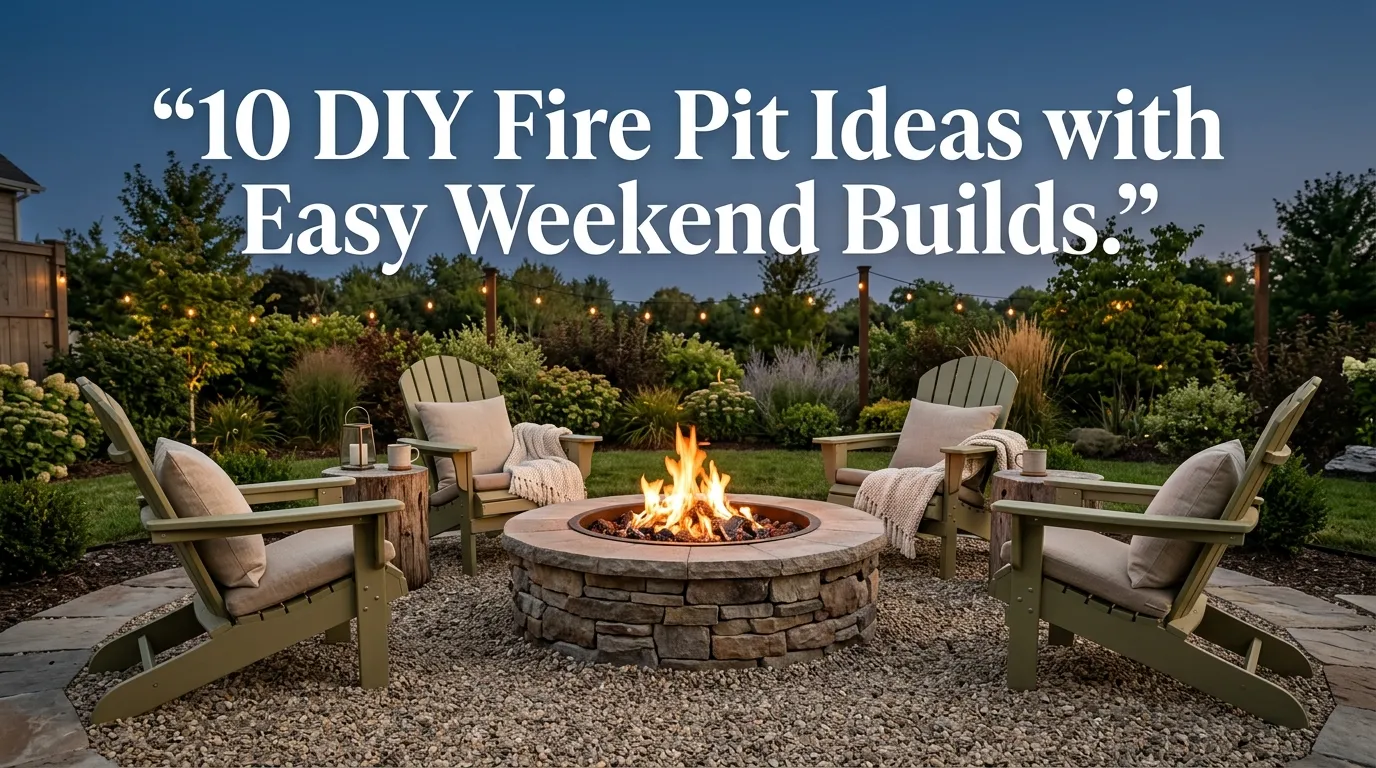
A backyard fire pit can completely change the way an outdoor space feels. On a cool evening, a simple fire creates a natural gathering point for conversation, outdoor meals, or a quiet cup of coffee. And while professionally built fire features can be beautiful, there are plenty of approachable DIY concepts that can give a backyard a finished look without turning the project into a major renovation.
The trick is choosing a design that matches your space, comfort level, and local requirements. Some ideas use simple landscaping materials and straightforward assembly, while others are better suited to experienced DIYers who are comfortable working with masonry or outdoor construction.
I’ve found that the most successful weekend projects are the ones that start with a realistic plan. Before buying materials, decide where the fire pit will go, how many people you want to seat around it, what type of fuel is appropriate, and how the surrounding area will be used. A beautiful fire pit isn’t much use if it blocks a walkway or leaves everyone sitting too close together.
It’s also worth remembering that fire features aren’t just decorative. Heat, smoke, sparks, fuel, and local regulations all matter. Always follow the manufacturer’s instructions for purchased components, use fire-rated materials where required, and check local rules before building or using a fire pit.
With that foundation in place, the ideas below can help you create a comfortable backyard focal point that feels intentional rather than improvised. From simple circular designs to rustic stone seating areas, these projects offer inspiration for a range of outdoor styles.
Table of Contents
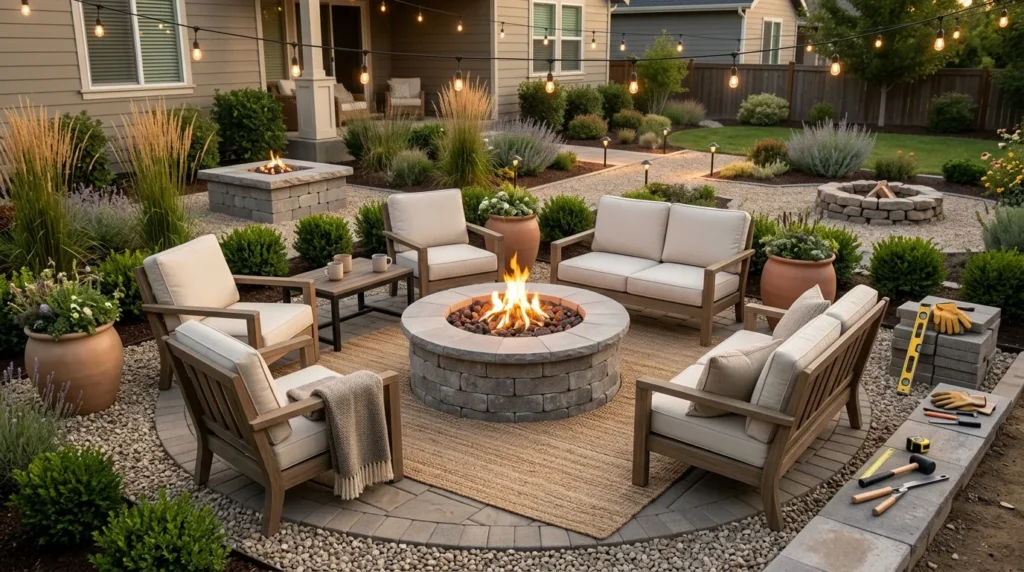
1. Gravel Ring Fire Pit
Create a simple gathering area using a defined gravel base and fire-rated ring.
2. Paver Block Fire Pit
Build a classic circular feature using suitable landscape blocks.
3. Stone Garden Fire Pit
Blend a rustic fire feature naturally into surrounding landscaping.
4. Square Patio Fire Pit
Give a modern backyard a clean-lined focal point with a square design.
5. Brick Ring Fire Pit
Use brick for a traditional look that complements many backyard styles.
6. Sunken Fire Pit Area
Create a dedicated gathering zone with carefully planned seating and hardscape.
7. Fire Pit With Benches
Combine the fire feature with simple built-in-style seating for entertaining.
8. Rustic Woodland Fire Pit
Create a natural retreat using stone, gravel, wood, and relaxed planting.
9. Compact Corner Fire Pit
Use an underutilized backyard corner for a smaller outdoor gathering spot.
10. Modern Fire Pit Lounge
Pair a streamlined fire feature with comfortable furniture for an outdoor living room.
1. Gravel Ring Fire Pit
Quick Benefits
- Simple visual design
- Relatively straightforward layout
- Works with rustic and casual yards
- Creates a defined gathering area
- Gravel helps visually separate the fire zone
Why It Works
A gravel fire pit area is one of the easiest ways to make a backyard feel more intentional without constructing an elaborate patio. The gravel creates a visual boundary between the fire feature and the surrounding lawn while also providing a practical surface for chairs.
The important distinction is that gravel itself is not a substitute for appropriate fire-safe construction. The fire pit and its immediate surroundings should use materials and clearances appropriate for the type of fire feature being installed.
The overall design works particularly well in casual backyards because it doesn’t need to look perfectly formal. A simple circular arrangement can feel relaxed and natural while still looking finished.
How To Style It
Choose a level area away from structures, low branches, fences, and other combustible materials, following local requirements and the fire pit manufacturer’s clearance instructions.
Define a broad circular area and prepare the ground appropriately before adding the selected gravel. Place a properly designed fire pit or fire-rated ring in the center.
Arrange several weather-resistant chairs around the perimeter, leaving comfortable access between seats.
For a softer look, surround the outer edge with low-maintenance planting that is appropriately separated from the heat source. Keep flammable mulch, dry vegetation, and decorative materials away from the fire area.
2. Paver Block Fire Pit
Quick Benefits
- Classic backyard appearance
- Easy to customize visually
- Creates a substantial focal point
- Pairs well with patios
- Can complement many home styles
Why It Works
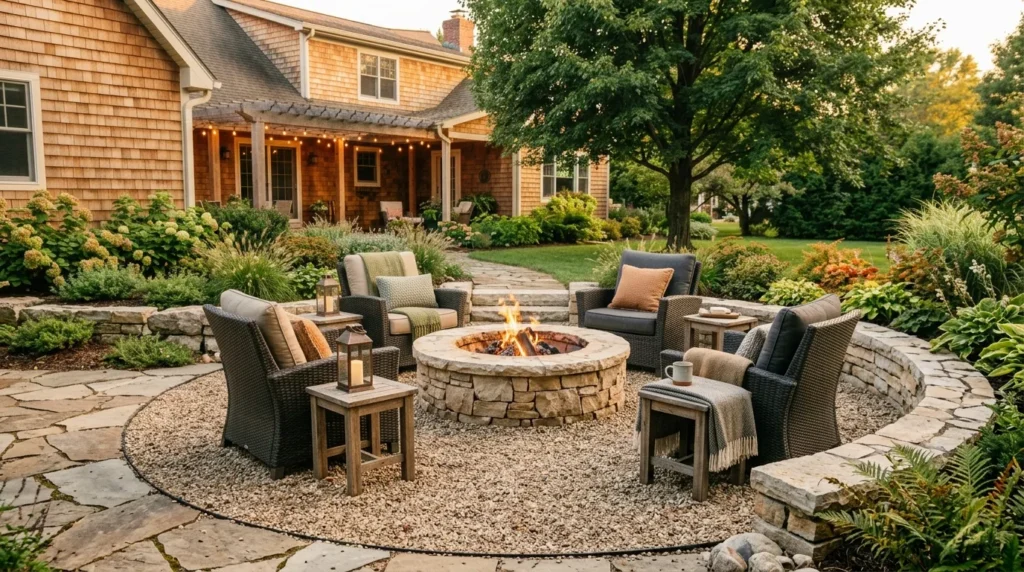
Landscape pavers or suitable fire-rated masonry units can create a traditional circular fire pit with a strong architectural presence. The repeating blocks give the project a finished appearance and allow the fire pit to coordinate with nearby patios, retaining walls, or pathways.
This type of project is especially appealing when you already have hardscape materials elsewhere in the yard. Repeating similar textures helps the fire feature feel like part of the overall landscape.
However, not every landscape block is automatically suitable for direct exposure to high heat. Product specifications matter. Use only materials and components intended for the application.
How To Style It
Start with a carefully prepared, level foundation suitable for the construction method and local conditions.
Dry-lay the first course to check the diameter and overall shape before committing to the final arrangement. Keep the courses aligned and stable.
Once the structure is complete according to the selected product’s instructions, add suitable seating around the outside.
A neutral outdoor rug can visually connect the chairs, while nearby potted plants can soften the hardscape.
Keep decorative cushions, blankets, and other combustible accessories well away from the active fire area.
3. Stone Garden Fire Pit
Quick Benefits
- Blends naturally with landscaping
- Adds rustic character
- Works well with gardens
- Creates a strong focal point
- Can complement natural materials
Why It Works
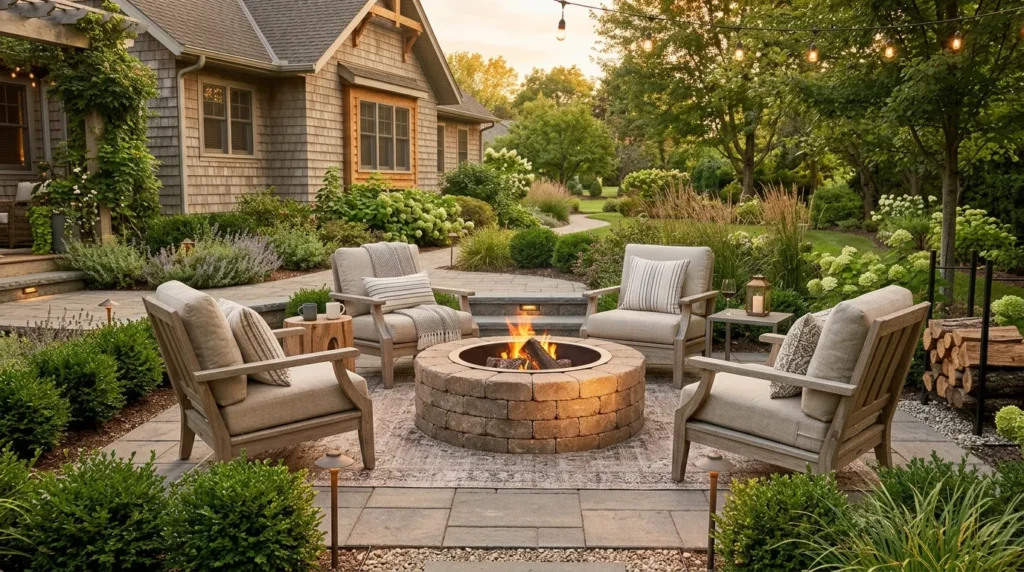
Natural-looking stone can make a fire pit feel as though it belongs in the landscape rather than being added afterward. Irregular shapes, earthy tones, and surrounding greenery create a relaxed outdoor atmosphere.
This style works especially well in gardens with mature trees, stone pathways, natural wood furniture, or informal planting beds.
The key is choosing materials appropriate for the fire pit itself. Decorative landscaping stone and masonry products aren’t automatically safe for high-temperature applications. A fire-rated liner or professionally specified construction may be necessary depending on the design.
How To Style It
Choose a location where the fire pit can become a focal point without interfering with garden maintenance or circulation.
Use natural-looking stone around the fire feature while keeping combustible landscaping materials at a safe distance.
Pair the fire pit with simple Adirondack-style chairs, woven seating, or weather-resistant benches.
Planting can surround the wider gathering zone, but keep dry leaves, grasses, mulch, and other combustible vegetation away from the fire.
For a cohesive garden look, repeat the stone finish somewhere else, such as a pathway, retaining wall, or edging.
4. Square Patio Fire Pit
Quick Benefits
- Fits contemporary landscapes
- Creates clean geometry
- Works well with rectangular patios
- Provides a strong focal point
- Looks polished with modern furniture
Why It Works
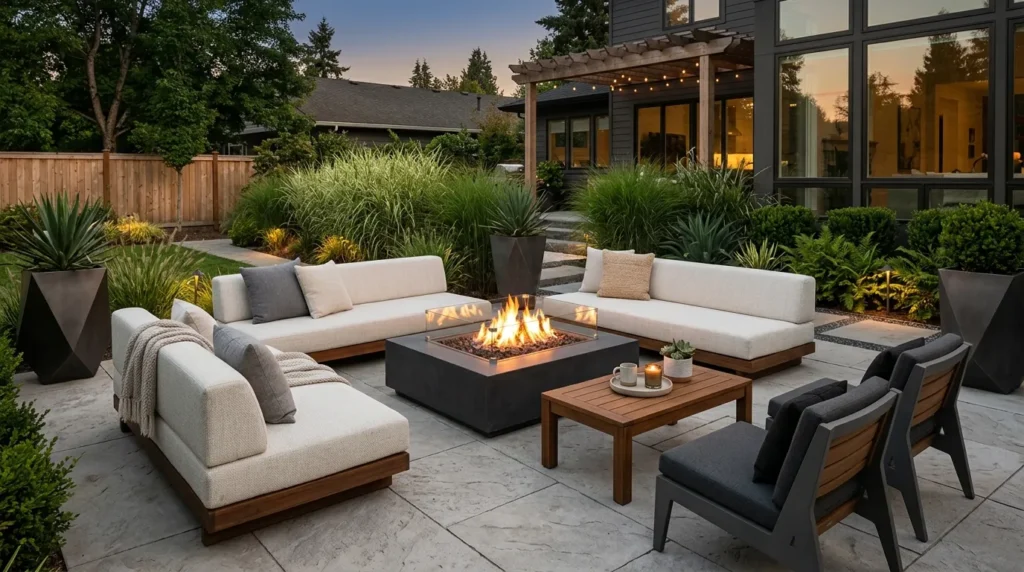
Not every fire pit needs to be round. A square or rectangular design can work beautifully with modern patios, especially when the surrounding architecture already features straight lines.
The geometry creates a sense of order and makes it easier to arrange furniture around the fire feature.
For a contemporary backyard, the fire pit can serve as the center of an outdoor living room. Seating faces inward, while planting and lighting define the edges.
Commercially manufactured fire tables are another option for homeowners who prefer a more finished appearance. They can combine a fire feature with a usable tabletop surface, depending on the design.
How To Style It
Use a square or rectangular fire-rated structure appropriate for the chosen fuel system.
Position it centrally within a defined patio or seating zone. Leave adequate clearance around the feature based on manufacturer and local requirements.
Pair the fire pit with streamlined outdoor sofas or lounge chairs.
Choose neutral cushions and repeat the patio’s materials through the coffee table, planters, or surrounding hardscape.
Keep the surrounding decor simple. One strong fire feature usually has more impact than several competing focal points.
5. Brick Ring Fire Pit
Quick Benefits
- Traditional appearance
- Complements brick homes
- Creates visual texture
- Works well with classic landscapes
- Can look established from the start
Why It Works
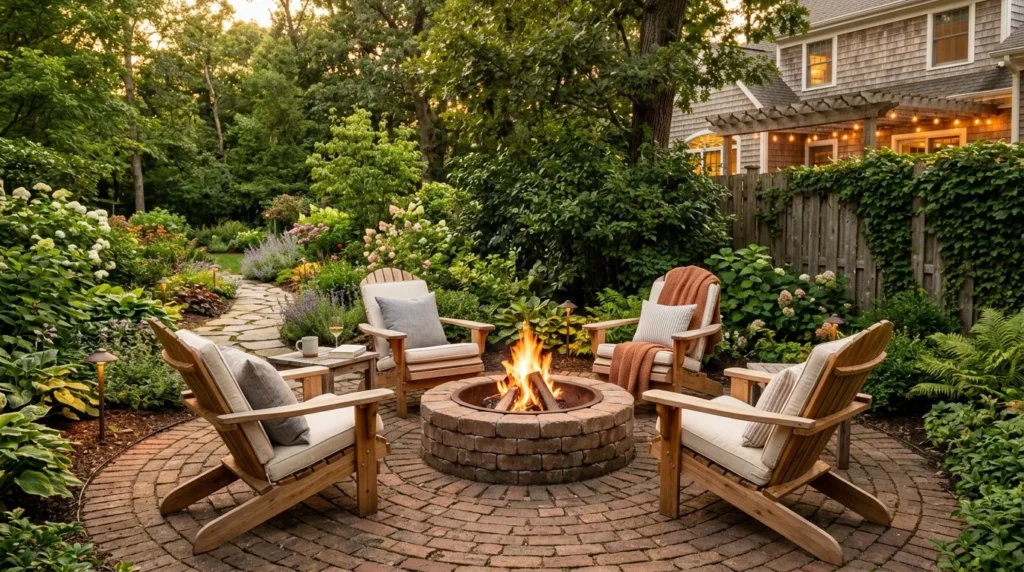
Brick brings warmth and traditional character to a backyard. A circular brick fire pit can coordinate particularly well with brick patios, pathways, garden walls, and traditional homes.
The repeating pattern gives the feature a handcrafted appearance while still maintaining a clear geometric shape.
As with other masonry projects, the materials need to be selected specifically for the intended heat exposure. Standard decorative bricks or pavers may not be appropriate for every part of a fire pit.
How To Style It
Choose a brick tone that complements your home’s exterior rather than trying to match every surface exactly.
Create a comfortable seating zone around the fire feature using wooden or metal chairs with outdoor cushions.
A nearby small table can hold drinks and accessories while keeping the main fire area clear.
Add low landscape lighting along the approach to the seating area.
For a more traditional look, surround the wider patio with clipped shrubs or simple perennial beds.
6. Sunken Fire Pit Area
Quick Benefits
- Creates a dedicated gathering zone
- Feels intimate and enclosed
- Separates the seating area visually
- Can become a backyard focal point
- Works well for entertaining
Why It Works
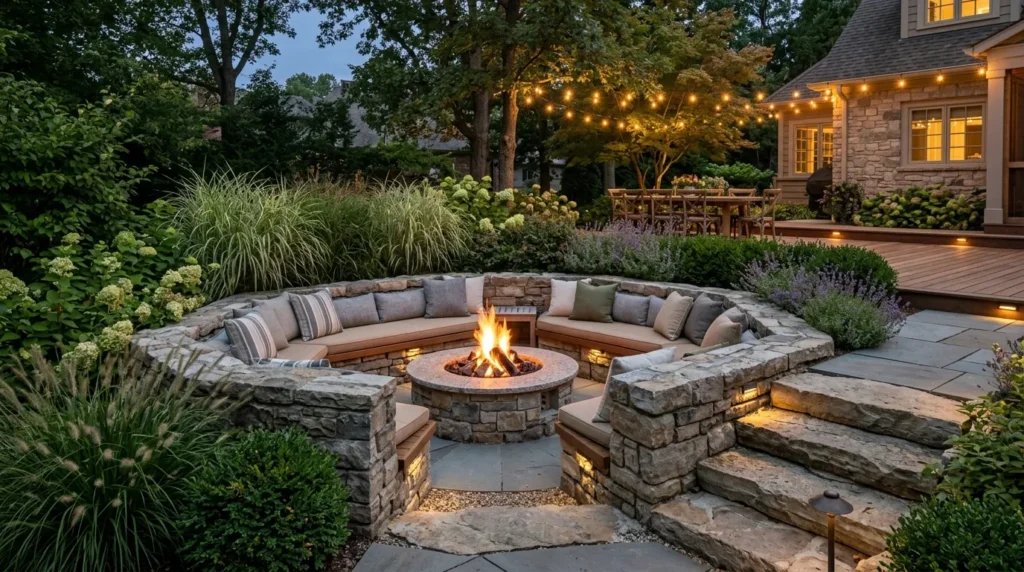
A sunken seating area can make a fire pit feel like a destination. Instead of simply placing chairs around a fire feature, the change in elevation visually separates the lounge from the rest of the yard.
This approach can be particularly effective on properties with natural slopes or existing terraces.
However, excavation, drainage, retaining walls, steps, and structural stability make this a more involved project than the simpler ideas on this list. A weekend may be enough for planning or small-scale work, but substantial excavation or structural construction may require professional help.
How To Style It
Start by assessing drainage and the existing grade. Water management is especially important in a lowered area.
Use stable retaining structures and properly constructed steps where required.
Position the fire feature at the center or slightly offset from the seating arrangement, depending on the available space.
Built-in benches can maximize seating while reinforcing the architectural feeling.
Use cushions in weather-resistant fabrics and keep all combustible materials at appropriate distances from the fire.
7. Fire Pit With Benches
Quick Benefits
- Provides generous seating
- Encourages conversation
- Works well for groups
- Creates a cohesive layout
- Can make efficient use of space
Why It Works
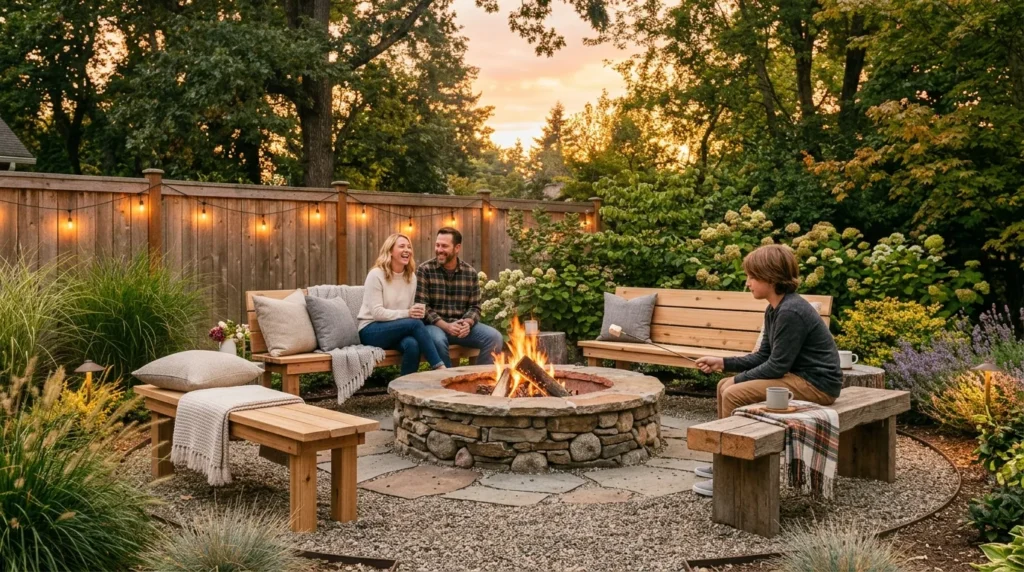
Benches are a practical choice when you expect several people to gather around the fire. Unlike individual chairs, a bench can accommodate multiple people while keeping the overall arrangement visually simple.
The seating can be freestanding or incorporated into a larger landscape design.
Wood, composite materials, stone, and metal can all work outdoors when selected and installed appropriately. The key is creating enough distance between seating materials and the fire feature.
How To Style It
Arrange two or more benches opposite each other or create a partial circle around the fire.
Add weather-resistant cushions if you want more comfort, but make sure they can be moved away from the fire when necessary.
A gravel or stone surface can help visually define the gathering zone.
Use simple planting around the perimeter to soften the hardscape without placing combustible vegetation close to the fire.
For a larger backyard, connect the fire pit area to the main patio with a clearly defined walkway.
8. Rustic Woodland Fire Pit
Quick Benefits
- Creates a relaxed atmosphere
- Works with natural landscapes
- Uses earthy materials
- Feels informal and comfortable
- Can complement mature trees
Why It Works
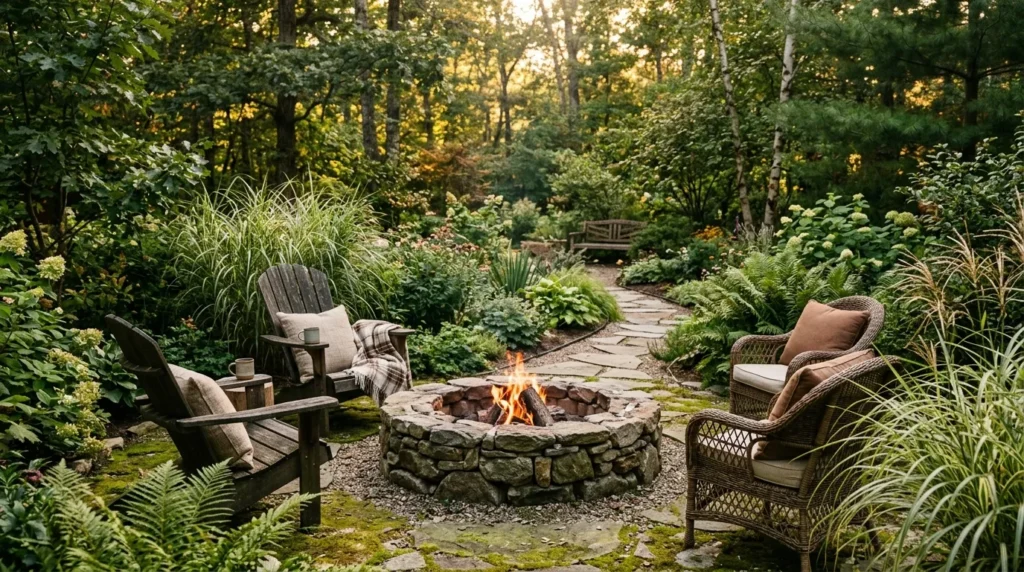
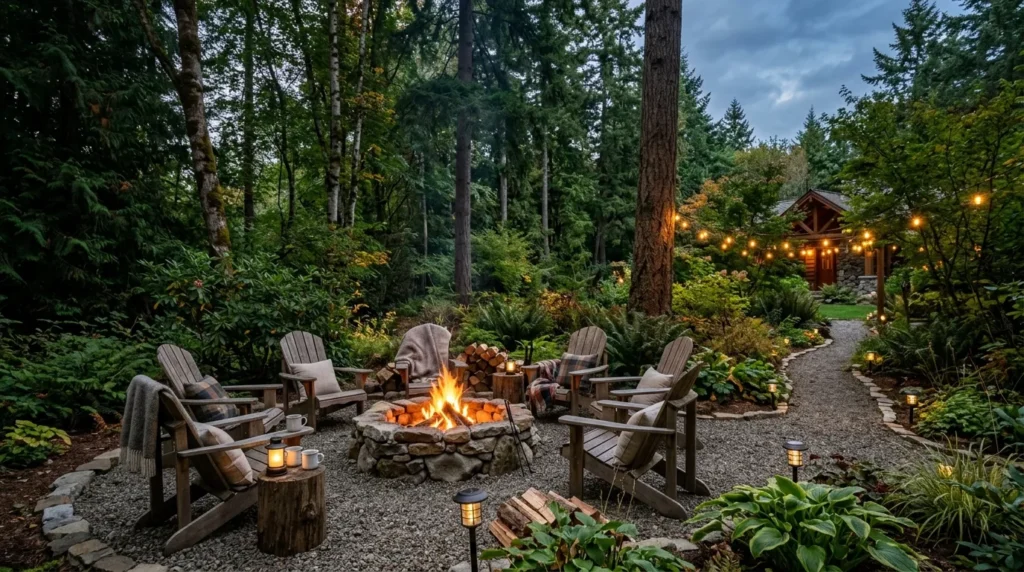
A woodland-inspired fire pit can turn a quiet part of the backyard into a retreat. Instead of a highly finished patio, the design emphasizes natural textures such as stone, gravel, wood, and carefully selected greenery.
This style works particularly well on larger properties where a fire pit can sit slightly away from the house.
The biggest consideration is fire safety. A wooded setting contains potentially combustible leaves, branches, mulch, and dry vegetation. Clearances and local regulations become especially important.
How To Style It
Choose a suitable open location with adequate clearance from trees and structures.
Create a defined noncombustible area around the fire feature using appropriate materials.
Use simple wooden or metal chairs rather than heavily upholstered furniture.
Keep the planting natural-looking but carefully maintained. Remove dry leaves and dead vegetation from the surrounding area.
A pathway of stone or gravel can connect the fire pit to the house while reinforcing the woodland aesthetic.
9. Compact Corner Fire Pit
Quick Benefits
- Makes use of underutilized space
- Works in smaller yards
- Creates a private atmosphere
- Requires less furniture
- Can complement existing patios
Why It Works
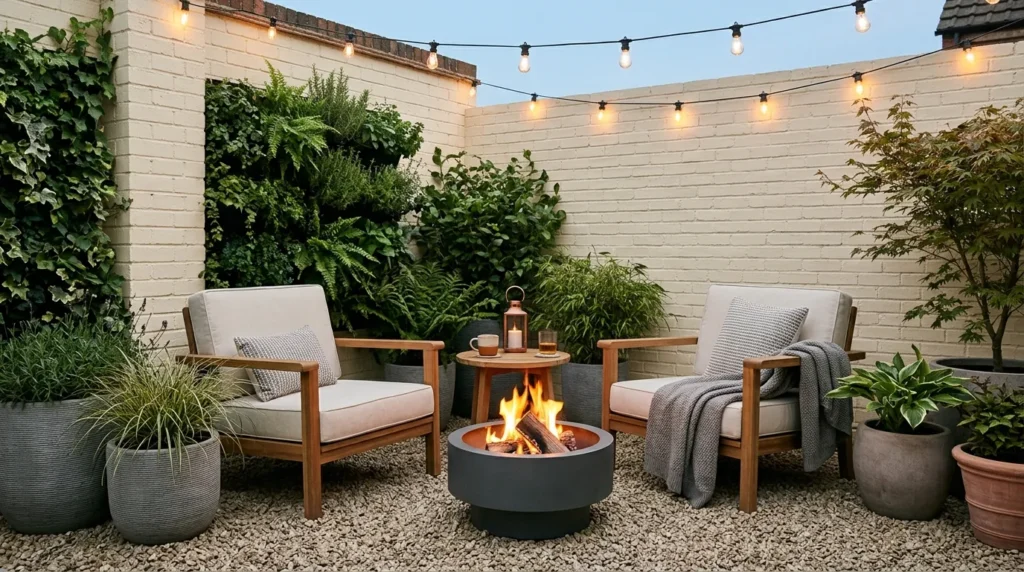
A backyard corner often becomes wasted space, especially when the main patio occupies the center of the yard. Turning that corner into a small gathering area can add another useful destination without redesigning the entire landscape.
The most important consideration is scale. A large fire feature can quickly overwhelm a compact space.
A smaller professionally designed fire bowl or appropriate compact fire feature may be more practical than a large masonry structure.
How To Style It
Start by measuring the available area and identifying all nearby structures, fences, vegetation, and property boundaries.
Choose a compact fire feature designed for the available space and fuel type.
Use two or three comfortable chairs rather than trying to squeeze in a full seating arrangement.
Add a small side table and a few larger planters placed at safe distances.
A simple gravel, stone, or patio surface can define the zone without requiring a large construction project.
10. Modern Fire Pit Lounge
Quick Benefits
- Creates an outdoor living room
- Looks polished and contemporary
- Works well for entertaining
- Combines comfort and function
- Can extend outdoor use into cooler evenings
Why It Works
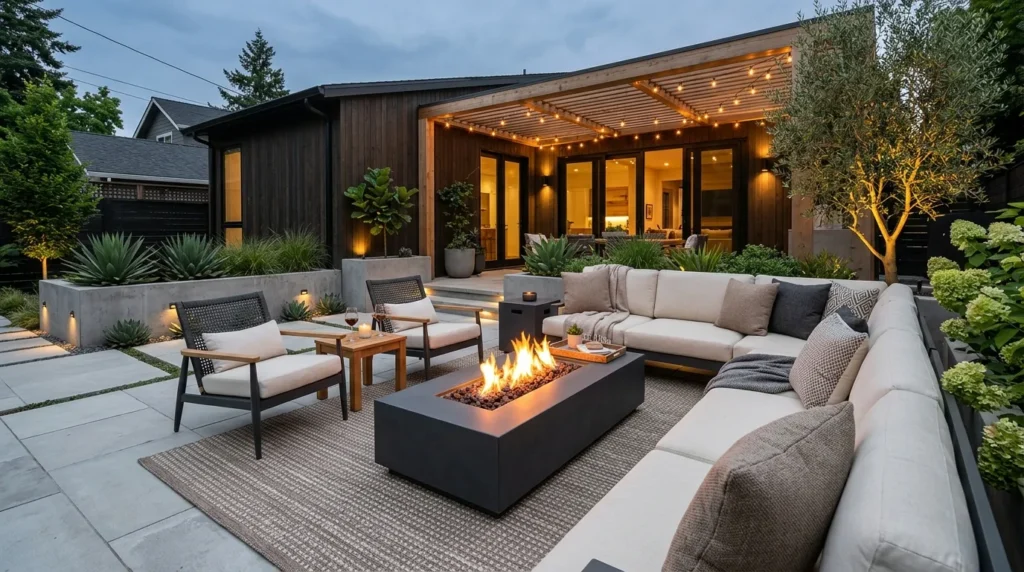
For homeowners who want more than a traditional campfire atmosphere, a modern fire pit lounge combines a fire feature with comfortable outdoor furniture.
The design often uses clean lines, neutral colors, large-format paving, architectural planting, and layered lighting.
Instead of treating the fire pit as a separate backyard feature, it becomes part of a complete outdoor room.
This approach works especially well near a patio, deck, pool, or covered outdoor structure.
How To Style It
Choose a streamlined fire table, fire bowl, or other suitable manufactured feature according to your preferred fuel type and local requirements.
Arrange an outdoor sofa and lounge chairs around it while maintaining the manufacturer’s required clearances.
Use an outdoor rug to visually connect the seating.
Add large planters with simple architectural plants to frame the lounge.
Finish with warm, appropriately rated outdoor lighting and a small number of decorative accessories.
How To Make a DIY Fire Pit Safer
A DIY fire pit should begin with safety rather than decoration.
Before building or using one, consider:
- Local fire restrictions and permit requirements
- Required distance from buildings and property boundaries
- Overhead branches and structures
- Wind conditions
- Nearby combustible materials
- Drainage and ground stability
- The type of fuel being used
- Manufacturer instructions for purchased components
- Appropriate fire-rated construction materials
- Safe extinguishing methods
A fire pit should never be treated like ordinary backyard decor. If the project involves gas lines, electrical components, structural retaining walls, extensive excavation, or other specialized work, consult the appropriate qualified professional.
For wood-burning designs, keep a suitable means of extinguishing the fire readily available and never leave an active fire unattended.
Choosing a Fire Pit Location
The location can make or break the project.
Look for level ground
A stable, level surface makes the surrounding seating safer and more comfortable.
Consider wind
Strong or unpredictable wind can carry smoke and embers toward structures, vegetation, or neighboring properties.
Keep clearances in mind
Follow the manufacturer’s instructions and applicable local requirements rather than relying on a generic distance.
Think about traffic
Don’t place a fire feature directly along a primary path between the house and yard.
Consider smoke
Think about where smoke could travel under common wind conditions, particularly if neighboring homes are nearby.
Plan seating
Leave enough room for people to move comfortably around the fire pit without getting too close to the heat source.
Best Materials for a Backyard Fire Pit
Material choice depends on the specific fire pit design.
Fire-rated masonry can be appropriate for certain permanent structures.
Natural stone can provide a beautiful landscape appearance, but not every stone product is suitable for direct high heat.
Concrete products can work in some applications when specifically designed and installed appropriately.
Metal is common in manufactured fire bowls and fire pits, with different metals offering different durability and maintenance characteristics.
Gravel and pavers are often useful for surrounding areas, but the materials immediately exposed to high heat still need to be appropriate for the application.
Always check the specifications for the exact product you are using.
Weekend DIY Fire Pit Planning Checklist
Before starting your project, gather:
- Measuring tape
- Level
- Appropriate landscape or fire-rated materials
- Base material specified for your construction method
- Outdoor seating
- Basic landscaping tools
- Protective equipment
- Manufacturer instructions
- Local requirements and restrictions
- A plan for extinguishing the fire
Then mark the proposed location and measure the entire seating area—not just the fire pit itself.
This simple step can prevent one of the most common DIY mistakes: creating a fire feature that technically fits but leaves insufficient room for comfortable seating and circulation.
FAQ
Can I build a DIY fire pit in one weekend?
Some simple fire pit projects can be completed over a weekend, particularly those involving a straightforward prepared area and a suitable manufactured fire feature. More substantial masonry, excavation, retaining walls, or gas installations can take longer and may require professional work. Always plan around local requirements and the complexity of the specific design.
What is the easiest DIY fire pit idea?
A simple gravel seating area combined with an appropriately designed manufactured fire pit or fire-rated ring is generally easier than a substantial masonry installation. The amount of preparation depends on the existing ground conditions. Even simple projects require attention to clearance, material suitability, fire safety, and local regulations.
What should I put around a fire pit?
Use suitable noncombustible or fire-appropriate materials around the immediate fire area, such as properly selected stone, masonry, or other materials specified for the application. Gravel or pavers can help define the broader seating area. Avoid placing dry mulch, leaves, fabric, or other combustible materials close to the fire.
How far should a fire pit be from a house?
There is no single distance that applies to every fire pit. Requirements can vary by location, fire pit type, fuel, manufacturer instructions, and local regulations. Check the exact requirements that apply to your property before installation rather than relying on a generic online measurement.
Are regular bricks safe for a fire pit?
Not necessarily. Standard decorative bricks are not automatically suitable for direct exposure to high temperatures. The appropriate material depends on the construction method and fire pit design. Use products specifically rated for the application and follow the manufacturer’s instructions.
What is the best surface for a fire pit area?
A properly prepared noncombustible or fire-appropriate surface is generally preferable near a fire feature. Stone, suitable pavers, concrete, or other appropriate materials may work depending on the design. The surface should also be stable, level, and suitable for the local drainage conditions.
Can I put a fire pit on grass?
A temporary manufactured fire pit may have specific surface requirements provided by its manufacturer, but placing a fire feature directly on grass can create safety and lawn-damage concerns. A properly prepared, stable area is generally more suitable. Always follow the product instructions and local regulations.
Conclusion
A backyard fire pit can become one of the most enjoyable features in an outdoor space, but the best DIY projects begin with careful planning rather than rushing to stack materials.
A simple gravel fire pit can create a relaxed weekend project, while pavers, brick, or natural stone can produce a more substantial landscape feature. Smaller yards may benefit from a compact corner arrangement, while larger properties can accommodate a dedicated fire pit lounge with benches, landscaping, and pathways.
Whatever style you choose, keep the practical details in mind. Location, clearance, materials, drainage, seating, wind, and local requirements all matter. A fire pit should look beautiful, but it also needs to function safely.
You don’t have to build the most elaborate design to make an impact. Start with a comfortable gathering area, choose materials that complement your home, and let the surrounding landscape provide the atmosphere.
A thoughtfully planned fire pit can turn an ordinary backyard into a place that feels welcoming long after the sun goes down.
Related Articles
- 10 Backyard Landscape Design Ideas with Cozy Outdoor Lounge Spaces
- 10 Small Backyard Ideas That Make Every Inch Count
- 10 Outdoor Living Room Ideas for Comfortable Entertaining
- 10 Backyard Patio Ideas for Summer Gatherings
- 10 Outdoor Lighting Ideas for a Cozy Backyard