

10 Modern Bedroom Ideas with Soft Luxury Style
A bedroom can feel luxurious without looking overly formal or filled with expensive-looking accessories. The most inviting modern bedrooms often use a quieter approach: soft fabrics, warm neutrals, balanced proportions, thoughtful lighting, and a few beautiful details that make the room feel finished.
Soft luxury is especially appealing because it combines the clean lines of modern design with the comfort people naturally want in a bedroom. Instead of relying on ornate furniture or excessive decoration, this style focuses on atmosphere. A plush upholstered headboard, layered bedding, warm wood, gentle lighting, and carefully chosen artwork can completely change how a bedroom feels.
In my experience, the biggest difference often comes from the details people notice only after spending time in the room. Bedding that feels substantial, curtains that soften the windows, bedside lighting at the right height, and a consistent color palette can make an ordinary bedroom feel much more intentional.
The good news is that creating this look does not require replacing everything. A bedroom can gain a softer, more elevated appearance through a combination of small updates and better styling decisions. Start with the foundation, then add texture and warmth gradually.
The ideas below focus on creating a bedroom that looks polished while remaining comfortable enough for everyday life. Whether you are decorating a primary bedroom, guest room, apartment bedroom, or smaller space, these approaches can be adapted to your existing layout and budget.
Table of Contents
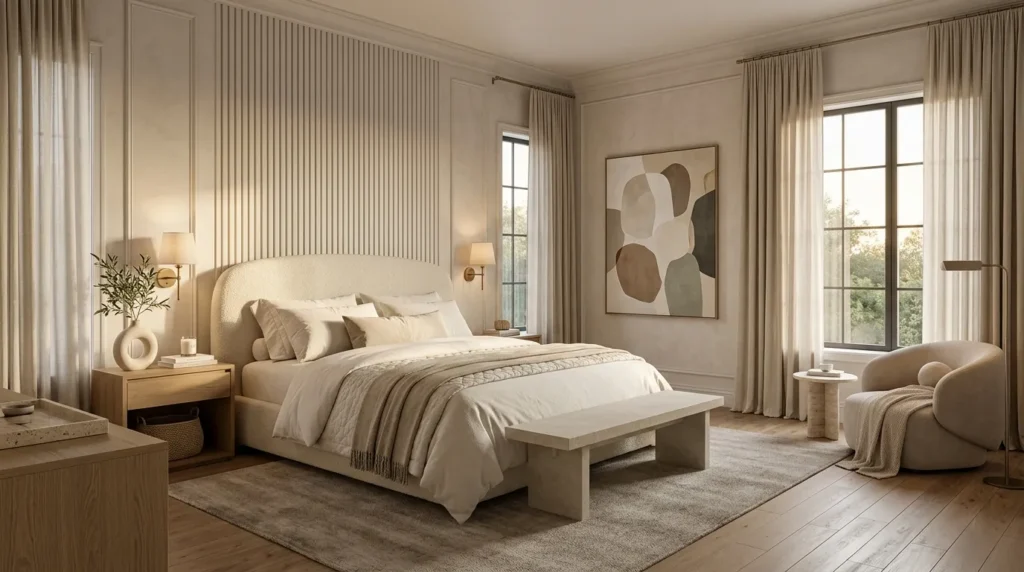
1. Layered Neutral Bedding
Create a refined foundation with soft bedding in complementary neutral shades.
2. Upholstered Headboard
Add softness and visual height with a generously proportioned upholstered headboard.
3. Warm Wood Details
Balance pale fabrics with natural wood for warmth and depth.
4. Soft Ambient Lighting
Use layered lighting to create a calm, intimate bedroom atmosphere.
5. Floor-to-Ceiling Curtains
Give the room a taller, more finished appearance with generously sized window treatments.
6. Textured Accent Wall
Add subtle architectural interest through plaster, paneling, or tonal wall texture.
7. Plush Area Rug
Introduce softness underfoot while visually grounding the bed.
8. Refined Bedside Styling
Create polished nightstands with useful pieces and restrained decorative accents.
9. Elegant Accent Seating
Add a comfortable chair or bench that provides function without crowding the room.
10. Minimal Art Layers
Finish the room with artwork that adds personality while preserving a peaceful aesthetic.
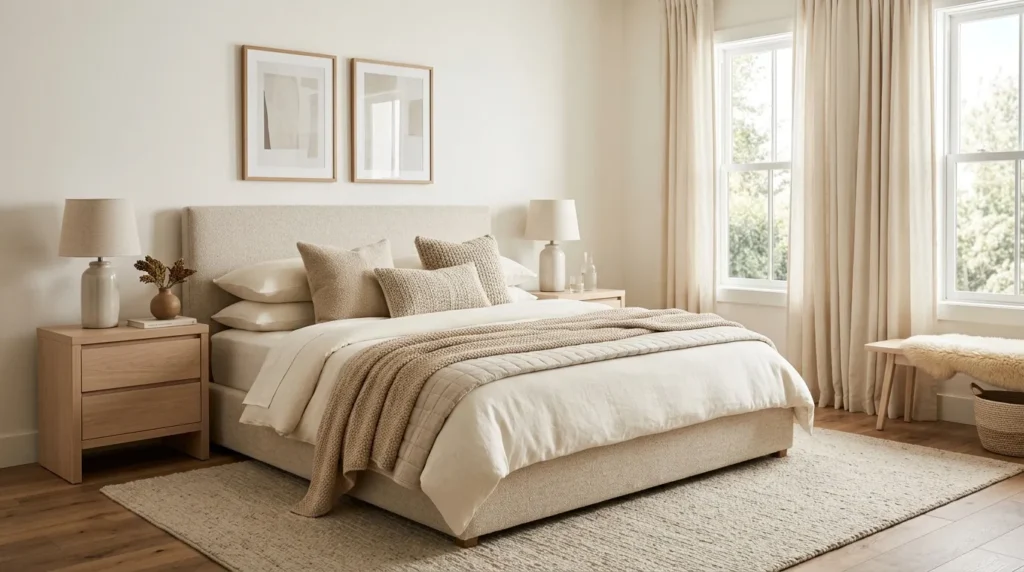
1. Layered Neutral Bedding
Quick Benefits
- Creates an immediately polished appearance
- Makes the bed feel inviting
- Adds depth without strong colors
- Works with many decorating styles
- Makes seasonal updates simple
Why It Works
The bed is usually the visual centerpiece of a bedroom, so bedding has an enormous effect on the overall atmosphere. A layered neutral palette creates a soft luxury feeling because it allows texture and proportion to become the main sources of interest.
Instead of matching every piece exactly, combine several related shades such as ivory, cream, warm beige, oatmeal, taupe, or soft greige. The subtle variation makes the bed look thoughtfully assembled rather than purchased as one matching set.
Texture matters just as much as color. Smooth sheets beside a quilted coverlet and a heavier throw create dimension that a single flat comforter cannot provide.
I’ve noticed that the most comfortable-looking bedrooms rarely have a perfectly uniform bed. A little variation in layers makes the room feel more relaxed and lived-in while still looking elegant.
How To Style It
Begin with high-quality-looking basics in neutral shades. Use ivory or cream sheets as the foundation, then add a duvet or quilt in a slightly different tone.
Fold a coverlet or lightweight blanket toward the lower third of the bed. Add two or three sleeping pillows, followed by larger decorative pillows and one smaller lumbar cushion.
Keep the colors within the same family. For example, combine cream, oatmeal, and warm taupe instead of introducing several unrelated shades.
For additional texture, choose linen-look fabric, quilted cotton, woven textiles, or subtle ribbed materials.
A single throw placed casually across the foot of the bed can add warmth without making the arrangement look overly styled.
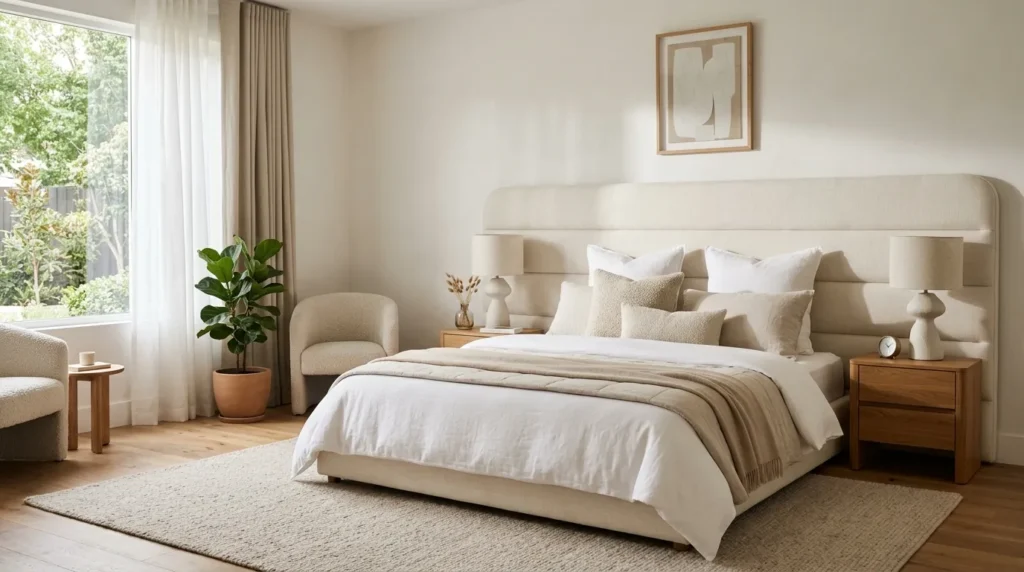
2. Upholstered Headboard
Quick Benefits
- Adds softness behind the bed
- Creates a strong focal point
- Makes the bedroom feel more finished
- Provides visual height
- Works beautifully with neutral palettes
Why It Works
An upholstered headboard immediately introduces softness to a modern bedroom. Its fabric surface contrasts with harder materials such as wood, glass, metal, and stone, creating the balance that makes a room feel comfortable rather than clinical.
For a soft luxury aesthetic, the proportions are important. A headboard that extends noticeably above the pillows creates a stronger visual presence and gives the bed a more substantial appearance.
Boucle-inspired fabrics, linen-look upholstery, velvet, and textured woven materials can all work. The best choice depends on the rest of the room and the level of maintenance you prefer.
A mistake many homeowners make is choosing a headboard that is too small for the bed wall. When the headboard is undersized, the bed can look disconnected from the surrounding furniture.
How To Style It
Choose a headboard that complements the room rather than competing with the bedding. Cream, warm beige, taupe, and soft gray are versatile choices.
For a modern appearance, look for simple rectangular silhouettes with subtle curves or clean vertical details. Avoid excessive ornamentation if the goal is contemporary luxury.
Pair the headboard with matching or complementary bedside tables. If the headboard has a strong texture, keep the surrounding furniture relatively simple.
For a more dramatic effect, extend the upholstered element wider than the mattress. This creates a built-in appearance and gives the wall greater visual presence.
Keep artwork either above the headboard or on an adjacent wall rather than adding too many competing focal points.
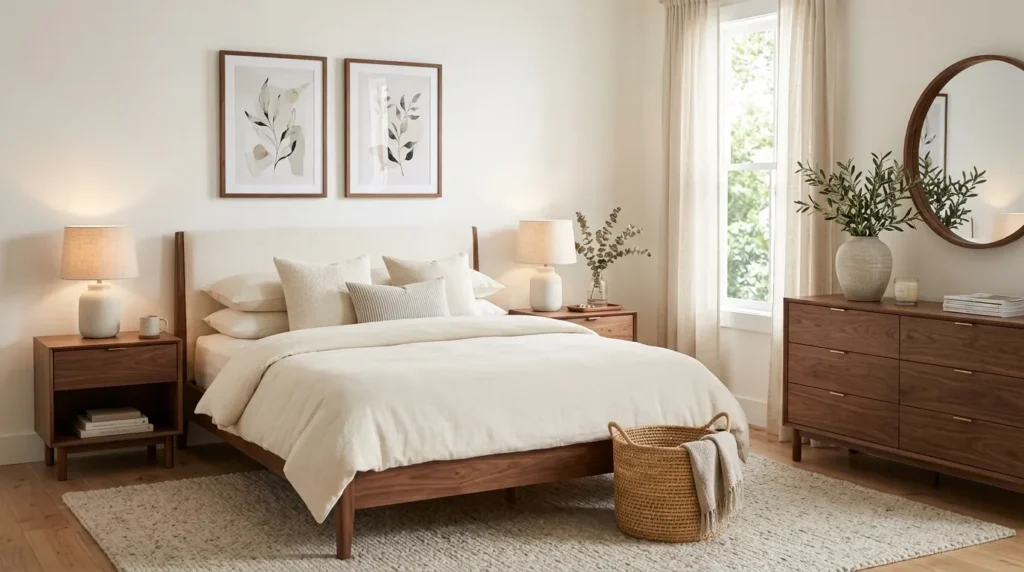
3. Warm Wood Details
Quick Benefits
- Adds natural warmth
- Balances soft fabrics
- Creates visual contrast
- Gives neutral rooms more character
- Connects the bedroom to organic materials
Why It Works
Soft luxury can become overly pale if every element is cream, white, and beige. Natural wood introduces warmth without disrupting the peaceful character of the room.
Pale oak, walnut, ash, and medium-toned wood can all work, although the best finish depends on the existing color palette. Lighter wood creates an airy Scandinavian-inspired feeling, while walnut provides richer contrast and a more sophisticated atmosphere.
Wood also brings natural variation through its grain. This prevents a modern bedroom from feeling too smooth or manufactured.
The most successful approach is usually repetition. If you introduce wood through the nightstands, repeat the material in a bench, dresser, picture frame, or small decorative tray.
How To Style It
Start with one substantial wood element, such as a pair of bedside tables or a low dresser.
For a bright bedroom, pale oak works beautifully with ivory bedding and warm white walls. For a moodier soft-luxury room, walnut can create contrast against cream upholstery and beige textiles.
Keep the wood finish consistent when possible. If you mix finishes, make sure there is a deliberate relationship between them.
Add small natural details through woven baskets, wooden trays, or sculptural objects.
Balance substantial wood furniture with soft textiles so the room does not feel too heavy. A plush rug and upholstered bed can soften darker wood considerably.
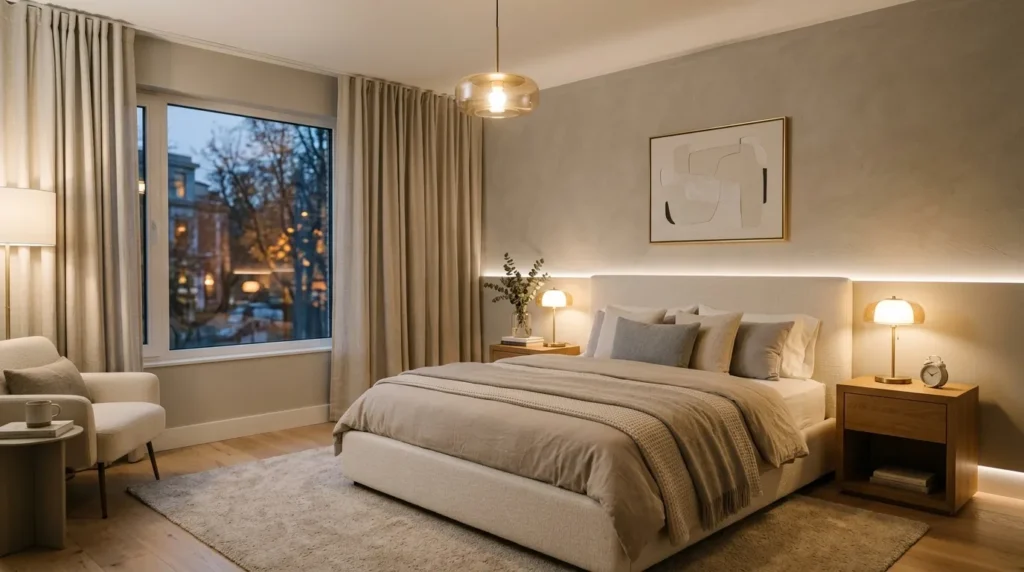
4. Soft Ambient Lighting
Quick Benefits
- Creates a relaxing evening atmosphere
- Adds visual warmth
- Improves bedside functionality
- Creates multiple layers of illumination
- Highlights architectural and decorative details
Why It Works
Lighting can completely change a bedroom once the sun goes down. A single bright ceiling fixture tends to flatten the room and can make even beautiful decor feel harsh.
Soft luxury benefits from layered lighting at different heights. Bedside lamps provide practical illumination, a ceiling fixture adds general light, and accent lighting can highlight artwork or architectural features.
Warm lighting generally complements neutral fabrics and natural wood particularly well. The result feels calmer and more intimate without requiring additional decoration.
One simple trick I always suggest is to think about what you do in the bedroom after dark. Reading, getting dressed, relaxing, and moving around the room all require different types of illumination.
How To Style It
Begin with bedside lamps that are proportional to the nightstands and headboard. Fabric shades can diffuse the light and create a softer glow.
A sculptural pendant or simple modern chandelier can provide overhead lighting while functioning as a decorative focal point.
For additional ambiance, use discreet accent lighting around a dresser, artwork, or architectural wall.
Choose fixtures with finishes that repeat elsewhere in the room. A brushed metal lamp can connect with cabinet hardware, while dark metal can echo picture frames or furniture legs.
Whenever practical, use dimmable fixtures or bulbs. Adjustable brightness allows the same bedroom to transition from practical morning use to a quieter evening setting.
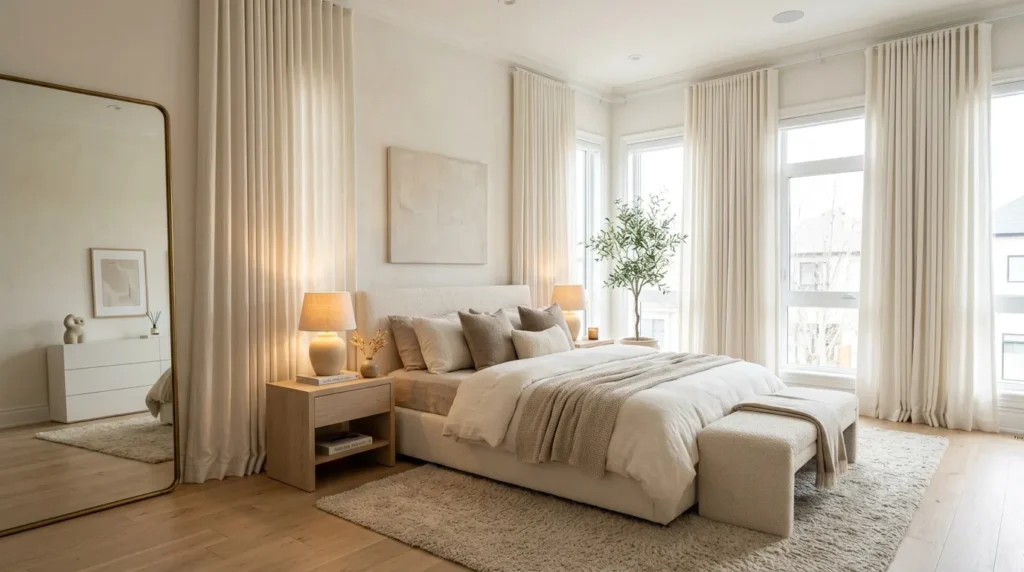
5. Floor-to-Ceiling Curtains
Quick Benefits
- Makes ceilings appear taller
- Softens hard window lines
- Adds fabric and texture
- Creates a more finished appearance
- Helps control natural light and privacy
Why It Works
Window treatments can make a surprising difference in bedroom design. Curtains that begin close to the ceiling and extend toward the floor create a long vertical line, which can make the room appear taller and more elegant.
For soft luxury, lightweight fabrics in ivory, cream, warm beige, or soft taupe work particularly well. Linen-look curtains add relaxed texture, while fuller fabrics create a more substantial appearance.
The goal is not to hide the window. During the day, curtains can frame the glass and remain open, allowing natural light into the bedroom while still contributing to the room’s overall composition.
This approach works especially well when the bedroom has ordinary or visually small windows that need a little more architectural presence.
How To Style It
Mount the curtain rod higher than the top of the window when the room’s structure allows it. Extend the rod beyond the window frame so the panels can sit beside the glass when open.
Choose curtains long enough to reach the floor. Avoid excessively short panels because they can make the room look less polished.
For a bright room, use ivory or warm white curtains. In a beige or taupe bedroom, slightly darker panels can add depth.
Layer sheer curtains with heavier panels when privacy and light control are both priorities.
Keep the rest of the window area relatively simple. Let the long fabric panels become part of the room’s vertical architecture.
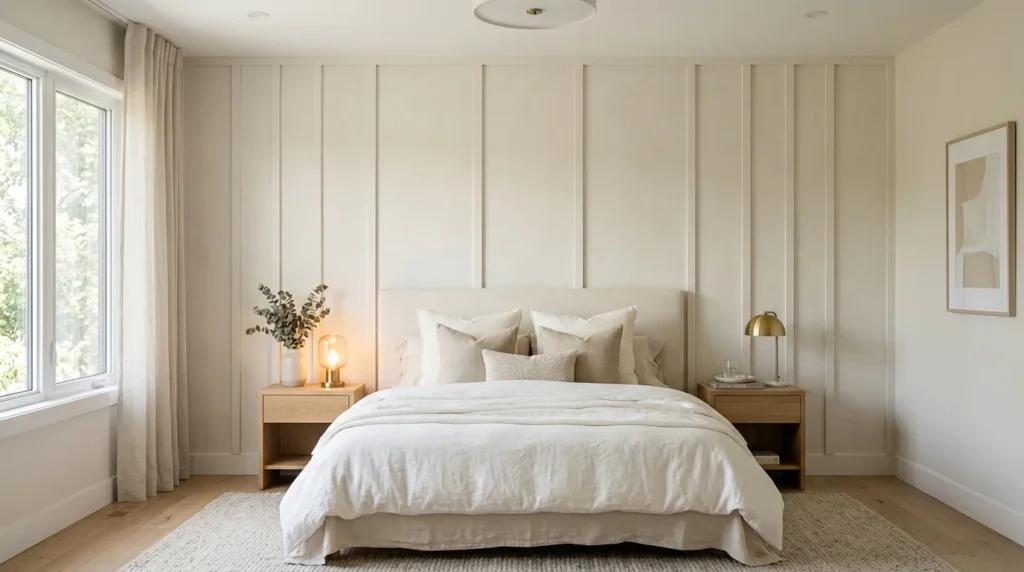
6. Textured Accent Wall
Quick Benefits
- Creates a sophisticated focal point
- Adds architectural interest
- Makes a simple bedroom feel custom
- Provides depth without bold colors
- Works beautifully behind the bed
Why It Works
A textured wall can give a bedroom the visual character of a more customized interior without requiring bright paint or complicated decoration.
The texture can come from vertical wall panels, subtle molding, limewash-inspired finishes, plaster-like surfaces, or even carefully applied wallpaper. The best choice depends on the home and how permanent the update needs to be.
For soft luxury, subtle texture usually works better than a highly dramatic pattern. The goal is to create depth that becomes noticeable as light moves across the surface.
A textured wall behind the bed also naturally establishes a focal point. This can reduce the need for excessive artwork or decorative objects.
How To Style It
Keep the color restrained. Warm white, ivory, beige, taupe, and soft greige allow the texture to become the main feature.
Vertical paneling can emphasize ceiling height, while broad horizontal details can make a wall feel wider.
If you rent, removable textured wallpaper can provide a temporary alternative. Choose a design that resembles plaster, linen, or subtle architectural paneling.
Keep the bed and nightstands relatively simple if the wall has strong visual texture.
Use soft directional lighting to emphasize the surface. Wall sconces or bedside lamps can create gentle shadows that make the texture more visible at night.
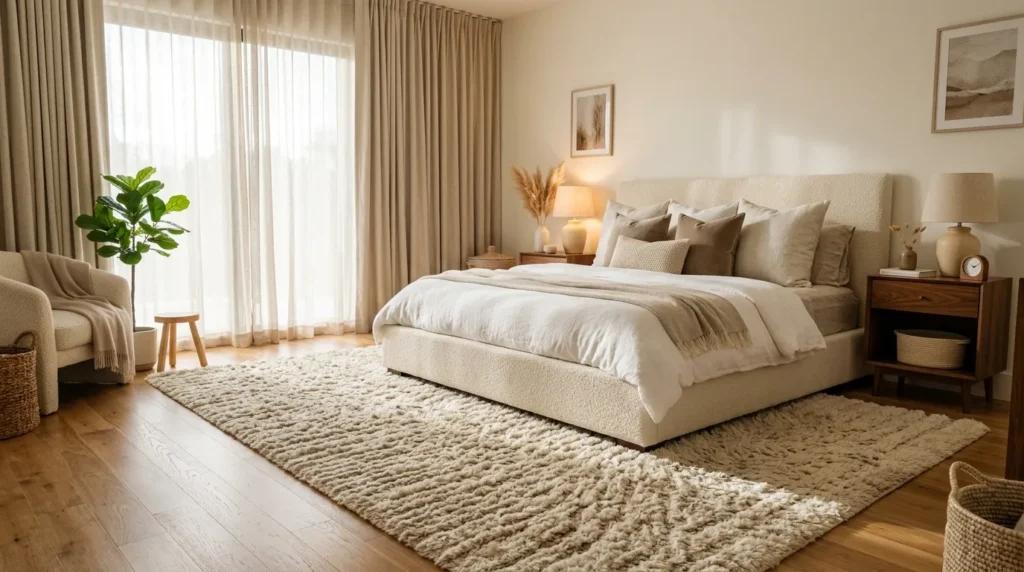
7. Plush Area Rug
Quick Benefits
- Adds comfort underfoot
- Softens the room visually
- Anchors the bed
- Adds texture and warmth
- Helps connect furniture pieces
Why It Works
A bedroom can contain beautiful furniture and still feel incomplete if the floor lacks softness. An area rug adds another tactile layer while helping define the sleeping zone.
For a soft luxury aesthetic, the rug does not need a bold pattern. A plush neutral rug with subtle texture can provide enough visual interest while keeping the atmosphere peaceful.
Scale matters. A rug that is too small can make the bed appear disconnected from the rest of the room. A properly sized rug helps the bed, nightstands, and surrounding furniture feel like part of one composition.
In smaller bedrooms, the rug can also extend beyond the sides and foot of the bed to make the room feel more cohesive.
How To Style It
Choose a rug large enough to extend beyond the bed on both sides. In larger bedrooms, allow it to extend farther into the surrounding furniture arrangement.
Cream, oatmeal, beige, taupe, and soft gray are versatile options. If the bedding is very plain, a subtle geometric or tonal pattern can introduce additional interest.
Consider the room’s maintenance needs. A very plush rug looks beautiful but may require more care than a low-pile textured design.
Place the rug so it feels connected to the bed rather than floating in an unrelated part of the room.
For added comfort, a small soft runner can be placed on either side of the bed when a large rug is not practical.
8. Refined Bedside Styling
Quick Benefits
- Keeps essential items organized
- Creates symmetry
- Adds polished decorative details
- Improves everyday functionality
- Completes the bed wall
Why It Works
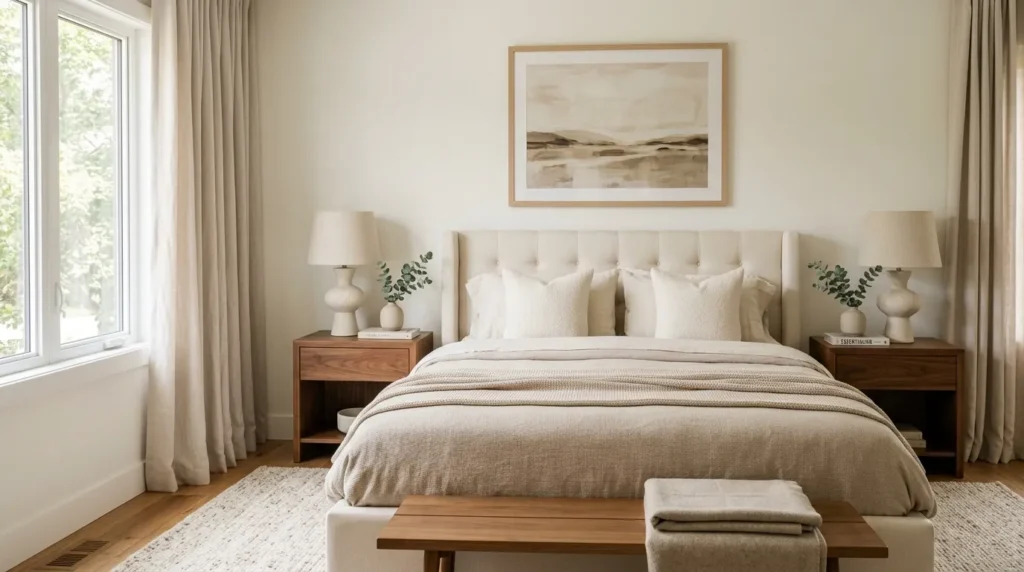
Nightstands are small compared with the bed, but they have a major visual role. Because they sit directly beside the main focal point, cluttered or mismatched surfaces can make an otherwise elegant bedroom feel unfinished.
Soft luxury relies on restraint. The goal is to include useful items while leaving enough empty space for the arrangement to breathe.
A simple combination of lighting, a small decorative object, a book, and perhaps a vase can be enough.
Symmetry can make a bedroom feel particularly polished. Matching bedside tables and lamps create visual balance, although perfectly matching pieces are not mandatory.
How To Style It
Begin with a lamp on each side if the room layout allows. Choose lamps that complement the scale of the headboard and nightstands.
Keep only the essentials within easy reach. A small tray can organize jewelry, glasses, or other everyday items.
Add one decorative element such as a ceramic vase, small framed photograph, or sculptural object.
Avoid covering the entire nightstand surface. Leaving some open space is part of the luxurious appearance.
If you prefer an asymmetrical look, keep the visual weight balanced. For example, a taller lamp on one side can be paired with a slightly larger decorative object on the other.
9. Elegant Accent Seating
Quick Benefits
- Adds function to unused space
- Creates a comfortable reading area
- Makes the bedroom feel more complete
- Introduces another layer of texture
- Supports a more sophisticated layout
Why It Works
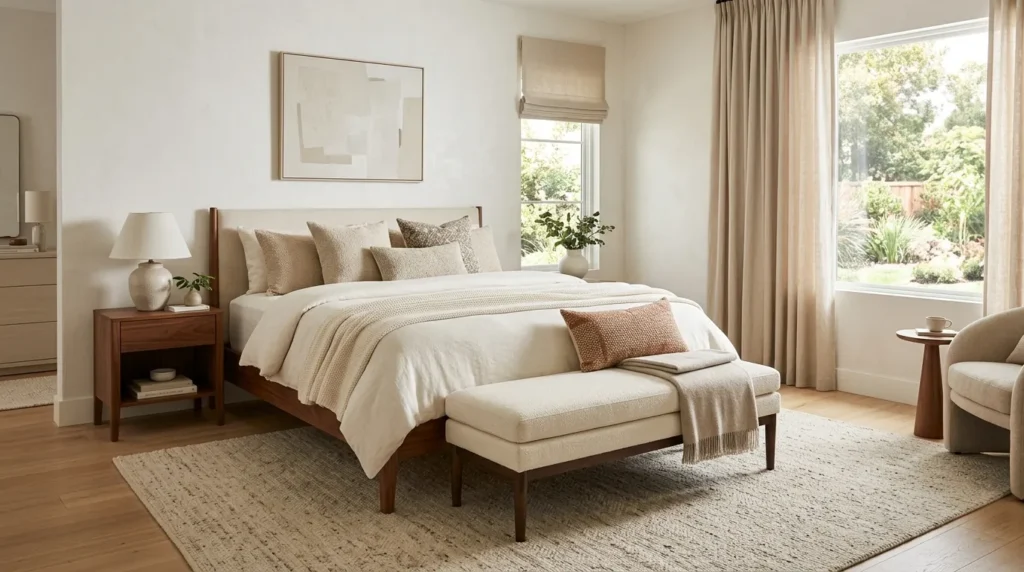
A bedroom can feel more luxurious when it provides a place to sit beyond the bed. An upholstered bench at the foot of the bed, a sculptural chair in the corner, or a small reading nook can make the space feel intentionally designed.
The key is choosing seating that fits the room. Adding a large chair to a small bedroom can create more visual clutter than comfort.
A simple upholstered bench is often the easiest choice because it provides useful seating without consuming much vertical space.
Accent seating can also introduce a new texture or shape. A curved chair can soften a room dominated by straight lines, while a woven bench can reinforce natural materials.
How To Style It
At the foot of the bed, choose a bench that is slightly narrower than the mattress. Upholstered benches in cream, beige, or muted taupe fit naturally into soft-luxury interiors.
For a corner chair, select a comfortable silhouette and pair it with a small side table and floor lamp if space permits.
Avoid turning the seating area into another major focal point. The bed generally remains the star.
Use one throw or cushion to connect the seating fabric with the bedding.
If the room is compact, choose an ottoman or small stool that can move easily when the floor needs to be cleared.
10. Minimal Art Layers
Quick Benefits
- Adds personality
- Creates visual balance
- Complements neutral colors
- Keeps the bedroom feeling personal
- Provides a finished look without clutter
Why It Works
A soft-luxury bedroom should feel like a real home rather than a hotel showroom. Artwork is one of the easiest ways to introduce personality while maintaining a calm visual atmosphere.
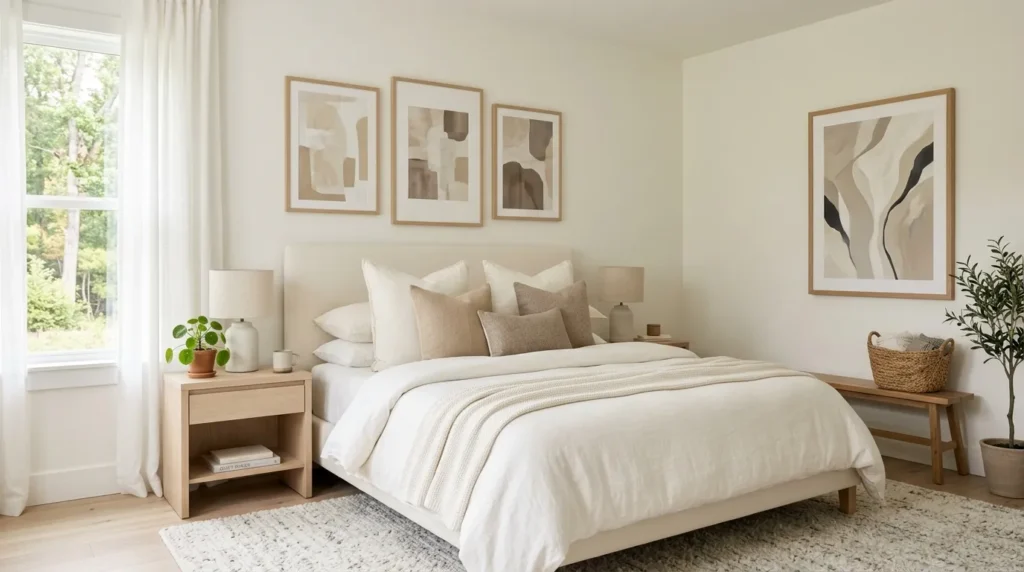
The most effective pieces do not necessarily need to be expensive or dramatic. Abstract prints, soft landscapes, black-and-white photography, botanical drawings, and simple line art can all work beautifully.
Scale is more important than price. A larger piece above a dresser or on an empty wall can have more impact than several tiny decorations scattered throughout the room.
Artwork also gives you an opportunity to connect colors across the bedroom. A print containing beige, cream, muted brown, and soft gray can quietly tie together bedding, wood, and upholstery.
How To Style It
Choose one main artwork for the wall opposite or beside the bed, or create a small coordinated arrangement.
Keep frames simple. Natural wood, warm white, black, or muted metallic finishes can all complement a modern bedroom.
If placing art above the bed, make sure the scale relates to the width of the headboard. A piece that is too small can appear disconnected.
Lean framed artwork against a dresser or shelf for a more relaxed approach.
Avoid covering every empty wall. A few intentionally chosen pieces create a more peaceful atmosphere than a room filled with decoration.
Frequently Asked Questions
What makes a bedroom look luxurious and modern?
A modern luxury bedroom typically combines clean-lined furniture with soft textures, balanced proportions, layered lighting, and a restrained color palette. Upholstered beds, quality-looking bedding, natural wood, large rugs, elegant curtains, and carefully edited accessories can create the effect without excessive ornamentation. The overall room feels polished because every major element has a clear purpose.
What colors create a soft luxury bedroom?
Warm white, ivory, cream, beige, oatmeal, taupe, soft greige, and muted earthy tones work especially well. These shades create a calm backdrop while allowing texture and material variation to become more noticeable. Soft colors also make it easier to introduce natural wood, brushed metal, greenery, and artwork without creating a visually busy room.
How can I make my bedroom look expensive on a budget?
Focus on the elements that occupy the most visual space. Layer neutral bedding, hang curtains at an appropriate height, add a large rug, improve bedside lighting, and reduce visible clutter. Natural-looking materials and consistent colors can also make a room feel more cohesive. A few larger, thoughtfully chosen pieces often create a more elevated appearance than many inexpensive decorations.
How do I make a small bedroom feel luxurious?
Use appropriately scaled furniture and keep the palette light. A tall upholstered headboard can create visual height, while floor-to-ceiling curtains emphasize the room’s vertical lines. Choose multifunctional furniture where possible and maintain clear floor space. A large mirror, soft lighting, layered bedding, and a well-sized rug can also add sophistication without overwhelming the room.
What type of lighting works best in a luxury bedroom?
Layered lighting works best because it serves different functions. Combine a ceiling fixture with bedside lamps and optional accent lighting. Warm, adjustable illumination can create a softer evening atmosphere. Bedside lights should also provide enough practical brightness for reading or other nighttime activities without flooding the entire room with harsh light.
Should bedroom furniture match?
Furniture does not have to be an identical set to look cohesive. Matching nightstands can provide symmetry, while a dresser, bench, and other pieces can use complementary materials and finishes. Repeating one or two elements, such as warm wood or brushed metal, helps different furniture pieces feel connected without making the room look overly coordinated.
How do I make a neutral bedroom feel less boring?
Use texture rather than adding many colors. Combine smooth bedding with woven blankets, upholstered furniture, natural wood, plush rugs, textured curtains, and ceramic accessories. Artwork and greenery can provide additional personality. Slight differences between cream, beige, oatmeal, taupe, and warm white also create depth while maintaining the peaceful neutral palette.
Conclusion
Soft luxury is ultimately about creating a bedroom that feels considered without becoming overly formal. The most effective rooms balance clean modern lines with materials that invite touch: soft bedding, upholstered furniture, natural wood, plush rugs, flowing curtains, and warm lighting.
You do not need to transform every part of the room at once. Start with the bed because it is usually the strongest visual anchor. Layer neutral bedding, add a substantial headboard, and create softness underfoot with a properly sized rug. From there, introduce warm wood, better lighting, elegant curtains, and a few carefully chosen accessories.
The biggest improvement often comes from editing. Remove pieces that create visual noise and give your favorite elements more room to stand out. A beautiful lamp becomes more noticeable when the nightstand is not crowded. Artwork feels more intentional when nearby walls are not overloaded. Soft textures feel richer when the color palette remains controlled.
Whether you are refreshing a primary bedroom or giving a guest room a more polished appearance, choose materials and colors that make the space comfortable as well as beautiful.
Start with one or two changes, then build the room gradually. The result can be a modern bedroom that feels warm, refined, peaceful, and genuinely easy to live in.