
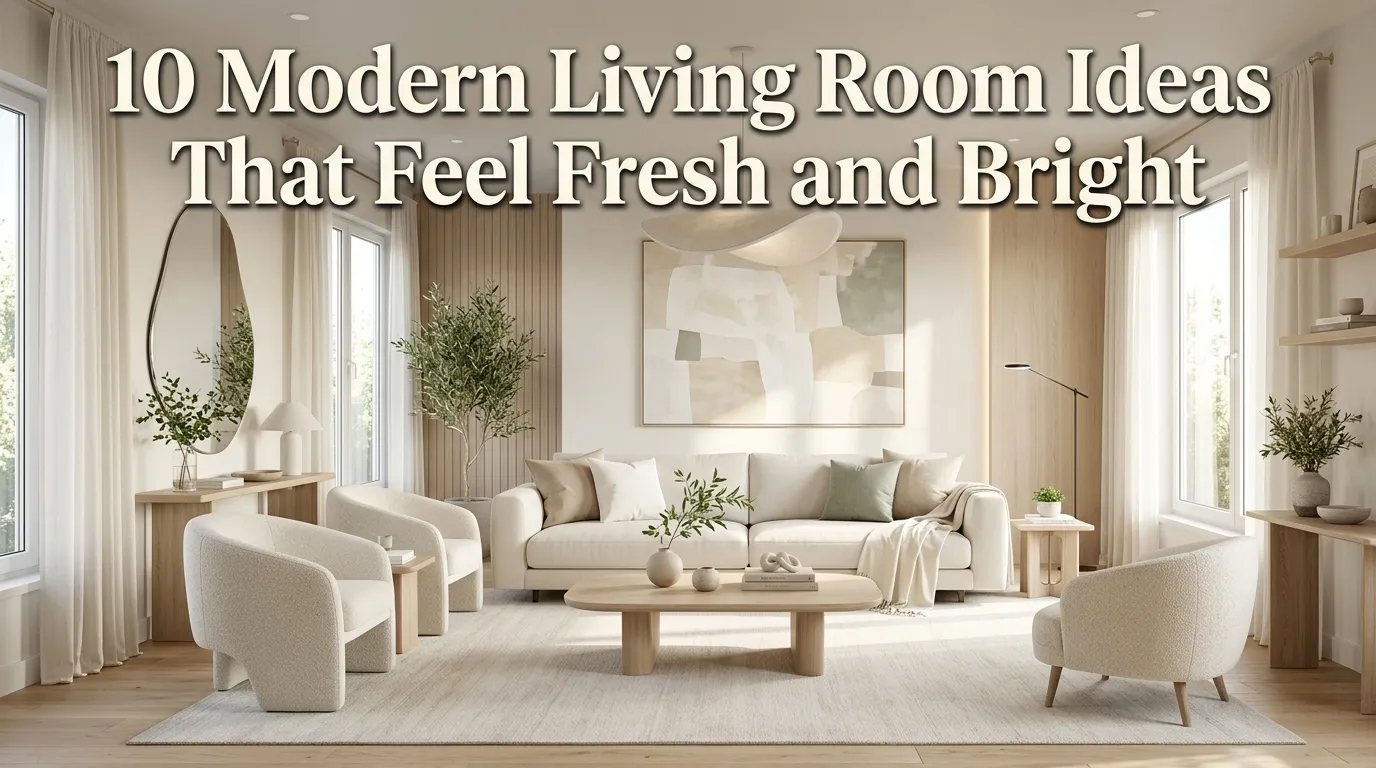
10 Modern Living Room Ideas That Feel Fresh and Bright
A living room can look modern without feeling cold, overly polished, or difficult to live in. The difference often comes down to how light, color, furniture, texture, and open space work together. A room with beautiful furniture can still feel gloomy if the windows are blocked, the colors are too heavy, or every surface is visually crowded. On the other hand, even a modest living room can feel fresh when the design has breathing room and a thoughtful mix of materials.
Bright modern interiors are especially appealing because they combine a clean look with everyday comfort. Think soft whites, warm neutrals, natural wood, airy curtains, streamlined furniture, subtle greenery, and carefully chosen accents. These elements create a room that feels welcoming during the day and cozy in the evening.
In my experience, one of the easiest ways to refresh a living room is to stop treating brightness as simply a matter of adding white. Light comes from several sources: windows, wall color, reflective surfaces, furniture placement, lamps, and even the amount of open floor space. When these details work together, the entire room can appear lighter.
The ideas below focus on practical ways to create that effect without making your home feel staged. Some work especially well in small spaces, while others are ideal for larger family rooms. You can use one idea as a starting point or combine several for a layered modern look.
Table of Contents
1. Soft Neutral Base
Create an airy foundation with warm whites, creams, and gentle beige tones.
2. Natural Light Flow
Use furniture, window treatments, and reflective details to make daylight travel through the room.
3. Light Wood Accents
Bring warmth into a bright interior with pale oak and other natural wood finishes.
4. Airy Furniture
Choose streamlined pieces that maintain visual openness without sacrificing comfort.
5. Layered Textures
Combine soft fabrics and natural materials to keep a bright room from feeling flat.
6. Greenery Moments
Add plants and organic shapes for a fresh connection with nature.
7. Soft Color Accents
Introduce restrained color through pillows, artwork, rugs, and decorative accessories.
8. Modern Lighting
Build a layered lighting plan that keeps the room inviting after sunset.
9. Open Floor Space
Arrange furniture intentionally so the room feels spacious and easy to move through.
10. Minimal Gallery Walls
Use curated artwork to add personality without visually overwhelming the room.
1. Soft Neutral Base
Quick Benefits
- Makes the room feel lighter and more open
- Creates a versatile backdrop for changing decor
- Works well with natural and artificial light
- Helps furniture and artwork stand out
- Makes small rooms feel visually calmer
Why It Works
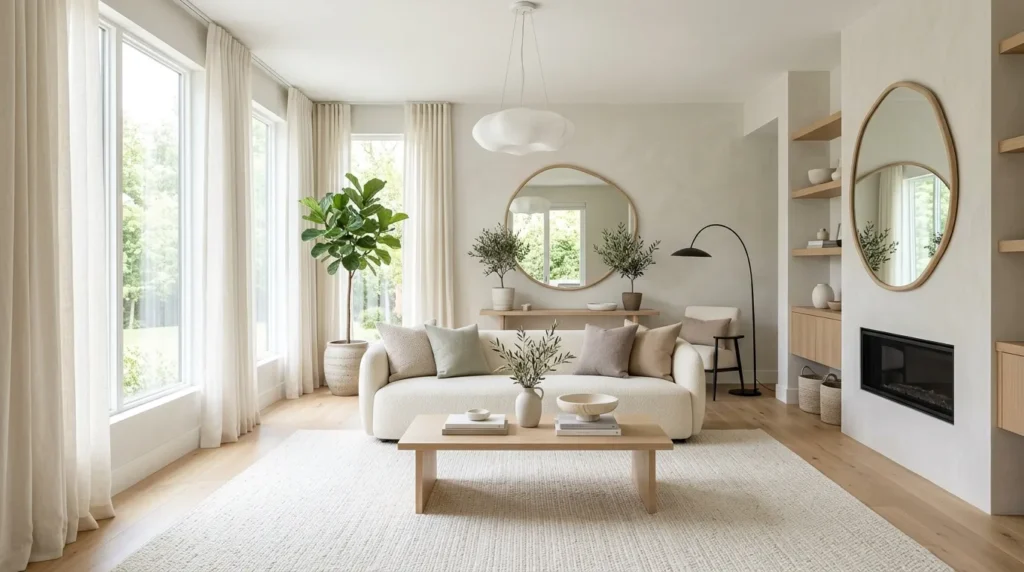
A soft neutral palette is one of the most reliable foundations for a bright modern living room because it reflects light without making the space feel stark. Instead of relying on pure white from floor to ceiling, consider a combination of warm white, ivory, oatmeal, beige, or pale greige. These shades create subtle variation while keeping the overall atmosphere light.
The key is choosing undertones that work with the natural light in your room. A north-facing room can benefit from warmer neutrals because cooler daylight can make pale colors appear gray. Rooms with abundant southern or western light can often handle slightly cooler whites and softer taupes.
A neutral base also gives you flexibility. If you decide to change your accent pillows, artwork, rug, or seasonal accessories later, you do not have to redesign the entire room. The background continues to work.
How To Style It
Start with the largest surfaces. A warm white or pale greige wall can establish the foundation, while a cream sofa and light neutral rug reinforce the palette. Add small tonal differences rather than matching every piece exactly.
For example, pair an ivory sofa with oatmeal pillows, a beige textured throw, and a pale wood coffee table. A subtle pattern in the rug can prevent the room from looking too uniform.
If the space feels overly monochromatic, introduce black or dark bronze in small doses through a lamp, picture frame, or table base. The contrast adds definition without taking away from the brightness.
For renters, the same effect can come from removable textiles. A light area rug, cream curtains, and neutral slipcovers can dramatically change the visual weight of the room without painting the walls.
2. Natural Light Flow
Quick Benefits
- Maximizes existing daylight
- Helps the room appear larger
- Creates a brighter daytime atmosphere
- Highlights furniture and textures
- Reduces the need for heavy daytime lighting
Why It Works
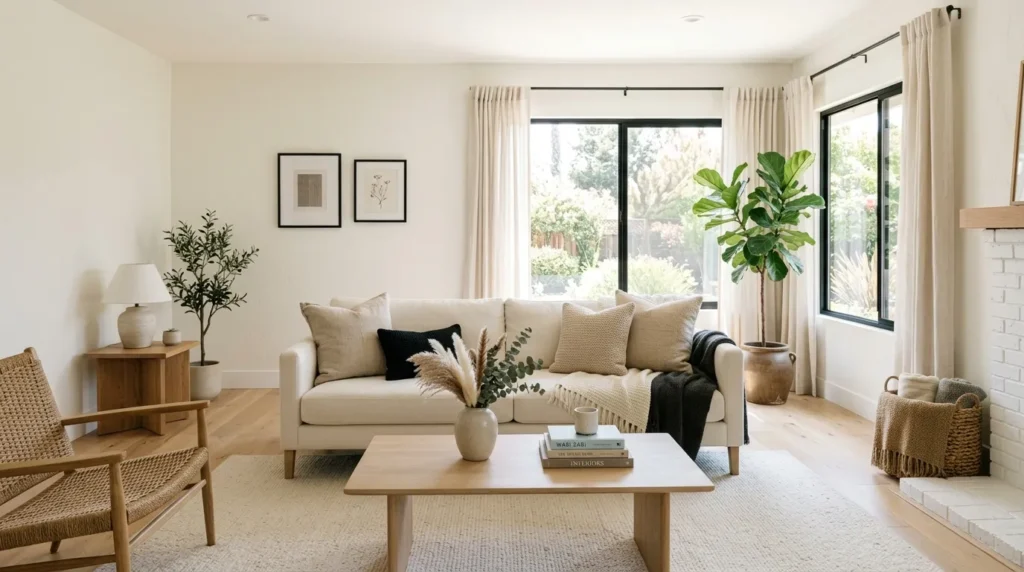
Natural light is often the most valuable design feature in a living room, yet furniture and window treatments can easily interfere with it. A beautiful room can feel darker simply because a tall cabinet blocks part of a window or heavy curtains cover the glass throughout the day.
The goal is not necessarily to add more windows. It is to help the available light move through the space. Light-colored walls, pale furnishings, open pathways, and strategically placed reflective surfaces can all contribute to this effect.
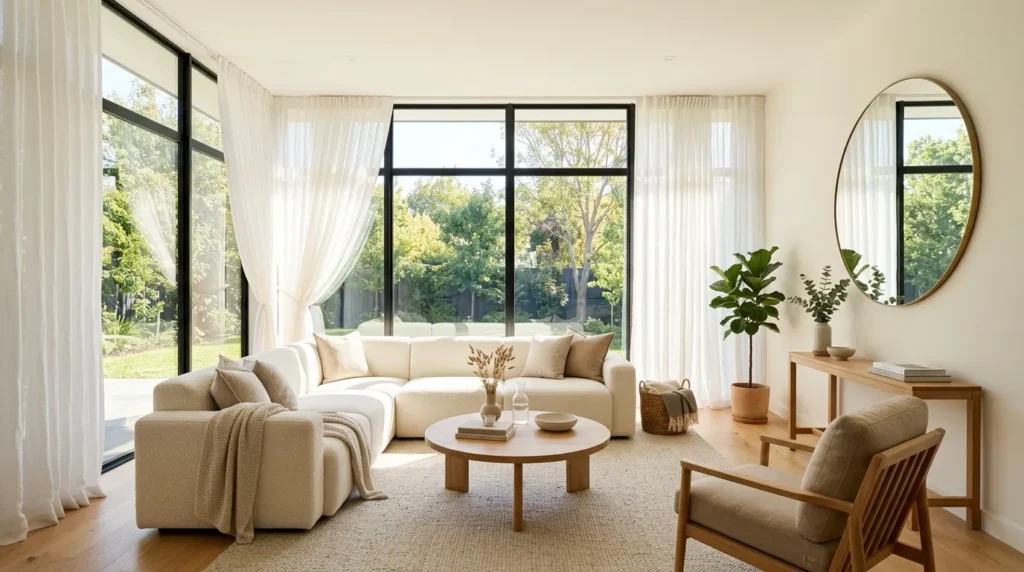
A mistake many homeowners make is treating curtains as purely decorative. Their position matters. Curtains hung wider and slightly higher than the window can make the window feel larger while allowing more glass to remain visible when the curtains are open.
Mirrors can also help visually distribute daylight. A large mirror positioned across from or adjacent to a window can brighten a darker area while adding depth.
How To Style It
Begin by keeping the area directly around windows relatively open. Choose furniture that does not unnecessarily block the lower portion of the glass, particularly in smaller rooms.
Use sheer or lightweight curtains when privacy requirements allow. Linen-look panels in white, ivory, or oatmeal can soften strong daylight while keeping the room visually bright.
Place a large mirror where it can catch daylight rather than simply hanging it wherever there is empty wall space. A simple rounded or rectangular frame fits naturally into modern interiors.
Keep window sills relatively uncluttered. A few carefully chosen objects can look beautiful, but too many decorative pieces create visual weight around the brightest part of the room.
During the day, open curtains fully and let the room’s natural light become part of the design.
3. Light Wood Accents
Quick Benefits
- Adds warmth to pale interiors
- Creates natural visual contrast
- Prevents a room from feeling sterile
- Works with modern and organic styles
- Introduces texture through natural grain
Why It Works
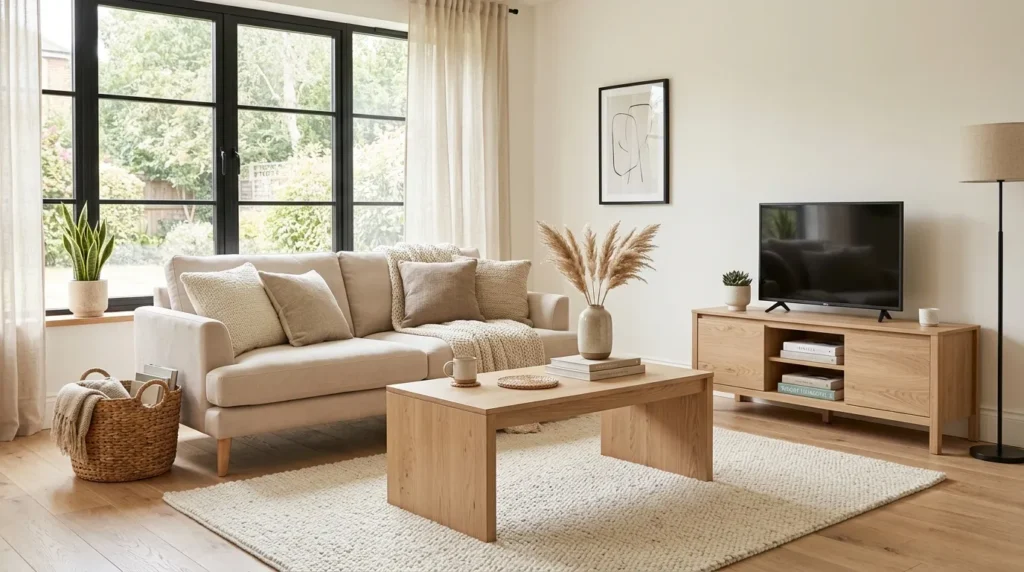
Bright interiors can sometimes become too cool when every surface is white, gray, glass, or metal. Light wood solves that problem beautifully. Pale oak, ash, maple, and other naturally light finishes bring warmth without making the room visually heavy.
Wood also introduces organic variation. Unlike a perfectly smooth painted surface, natural grain creates subtle movement that makes a simple room feel more collected.
The best modern rooms often balance clean lines with natural materials. A streamlined sofa beside a light wood coffee table can feel much warmer than the same sofa paired entirely with glossy white furniture.
You do not need to use wood everywhere. In fact, limiting it to a few meaningful pieces often creates a more sophisticated result. The goal is contrast, not a complete wood-themed room.
How To Style It
A light wood coffee table is an easy starting point. Choose a design with simple legs and an uncomplicated silhouette for a modern appearance.
You can repeat the finish elsewhere through a media console, side table, floating shelf, or decorative tray. Repeating a material two or three times helps the room feel intentional.
For a softer look, combine pale wood with cream upholstery and woven accessories. Add a black metal lamp or dark picture frame for definition.
Avoid choosing several competing wood tones unless the differences are deliberate. When using multiple finishes, keep the overall undertones compatible.
A light oak console paired with an ivory rug, warm white walls, and soft beige upholstery creates a fresh palette that feels comfortable rather than stark.
4. Airy Furniture
Quick Benefits
- Makes floor space more visible
- Helps small rooms feel less crowded
- Creates easier walking paths
- Keeps the modern look streamlined
- Makes cleaning and everyday movement easier
Why It Works
Furniture has a major effect on how spacious a living room feels. A large sectional, bulky storage unit, oversized coffee table, and heavy accent chairs can consume visual space even when the actual room is reasonably sized.
Airy furniture does not mean uncomfortable furniture. It means choosing pieces with proportions and silhouettes that allow the room around them to remain visible.
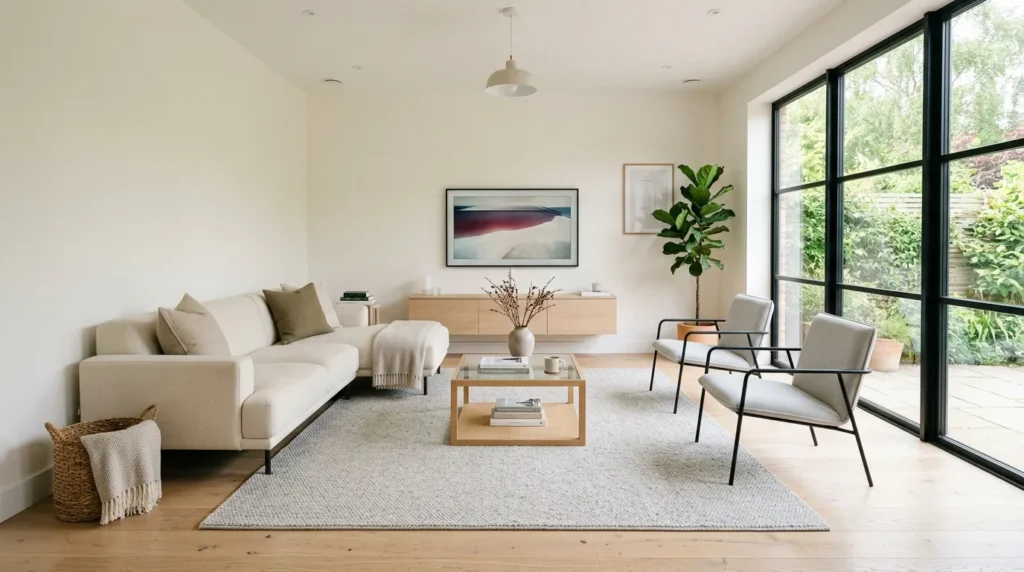
Furniture raised slightly from the floor can create an especially light appearance. A sofa with exposed legs, a console with a slim base, or a coffee table with an open lower structure allows more flooring to remain visible.
This principle is particularly useful in apartments, smaller family rooms, and open-concept spaces. When more of the floor can be seen, the eye reads the room as less crowded.
How To Style It
Begin with the sofa because it usually occupies the largest visual footprint. Look for clean lines, moderate depth, and proportions appropriate to the room.
Instead of pushing every piece against the walls, create a defined conversation area. A sofa paired with one or two lighter chairs can provide seating without creating a solid wall of furniture.
Choose a coffee table that leaves comfortable circulation around it. Rounded tables can work particularly well when several walking paths intersect the seating area.
For storage, consider a low-profile media console rather than a tall cabinet. The lower visual line keeps more wall area open.
If you have a small living room, avoid filling every corner simply because there is space for another chair or table. Empty space is part of the design.
5. Layered Textures
Quick Benefits
- Adds warmth to a simple palette
- Prevents neutral rooms from feeling flat
- Creates a comfortable atmosphere
- Adds visual depth without strong colors
- Works well across different decorating styles
Why It Works
A bright living room does not have to rely on bold colors for personality. Texture can provide much of the visual interest instead.
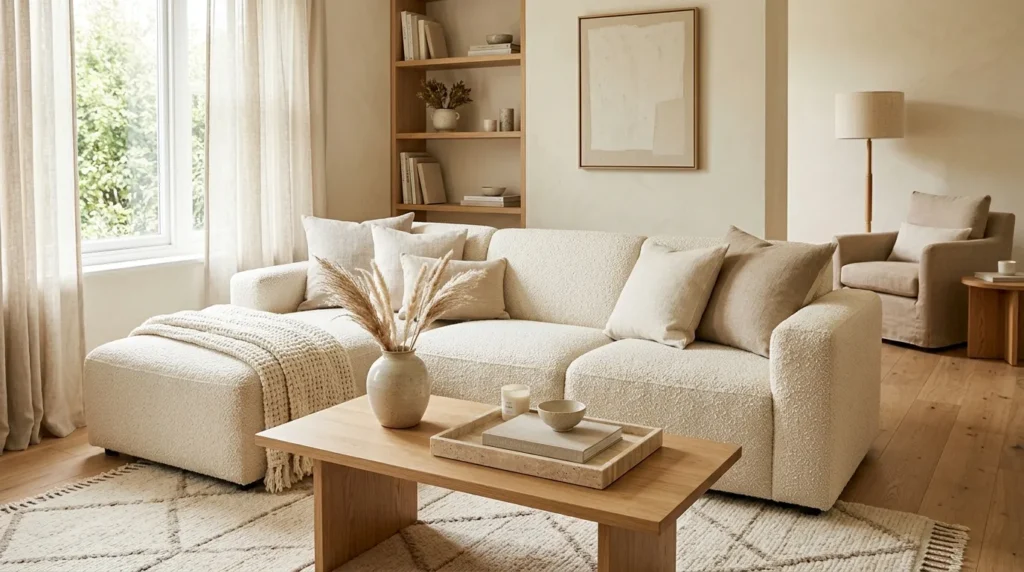
Imagine an ivory sofa with a chunky woven throw, a linen-look pillow, a softly patterned rug, a smooth ceramic vase, and a natural wood table. The color palette remains restrained, but the room does not feel boring because each material catches light differently.
This approach is especially useful for homeowners who love neutral interiors but worry that their rooms look too plain. Instead of introducing several new colors, change the surfaces.
Texture also contributes to comfort. Soft textiles make a clean-lined modern room feel more relaxed and approachable.
How To Style It
Start with the largest textile, usually the area rug. A subtle geometric, organic, or tonal pattern can provide structure without overpowering the room.
Layer pillows using different fabrics rather than buying several versions of the same material. Try linen, boucle-inspired fabric, cotton, or a softly woven textile.
Add one substantial throw to the sofa instead of several small blankets. Drape it casually over an arm or fold it across one corner.
Then bring in hard materials such as ceramic, stone, wood, or glass. The contrast between soft upholstery and smooth decorative surfaces creates balance.
Keep the color palette connected. Different textures look more sophisticated when they share related tones.
6. Greenery Moments
Quick Benefits
- Adds a fresh natural element
- Introduces organic shapes
- Softens modern furniture
- Adds subtle color
- Creates visual interest in empty corners
Why It Works
Plants can make a modern living room feel more alive without disrupting a clean design. Their organic shapes contrast beautifully with straight furniture lines, rectangular windows, and structured shelving.
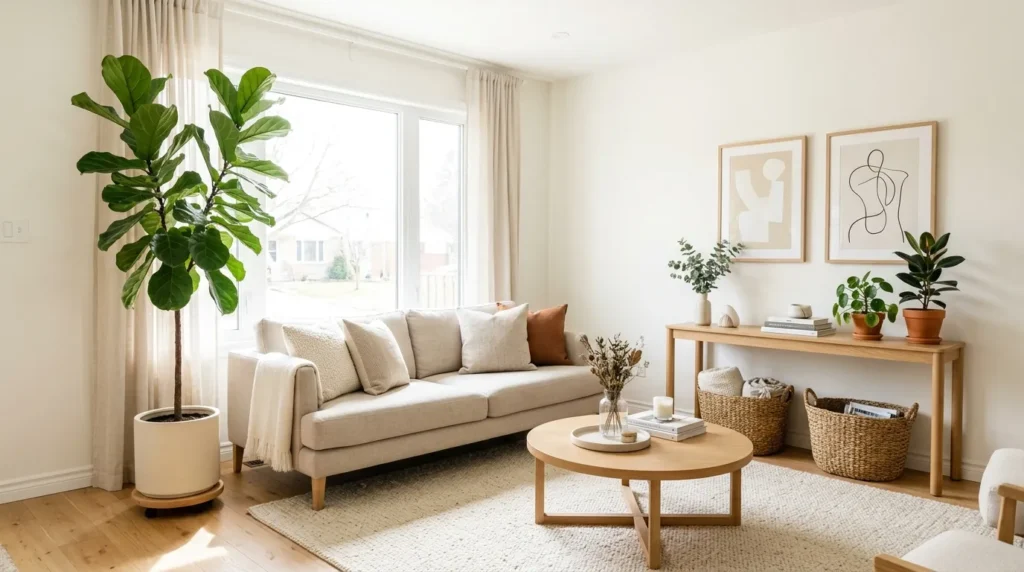
Greenery also works particularly well in neutral rooms because the leaves introduce color without requiring a complete palette change. A single large plant can become a focal point, while several smaller plants can create a quieter layered effect.
The important thing is choosing greenery that suits the available light and your ability to care for it. A beautiful plant that cannot thrive in the room quickly becomes more work than decoration.
For a low-maintenance approach, use a few carefully selected plants rather than turning every surface into a plant display.
How To Style It
A tall floor plant works well beside a sofa, reading chair, or empty corner. Choose a simple planter in ceramic, stone-look material, or a natural woven finish.
For shelves, use smaller plants to break up books, framed art, and decorative objects. Let some leaves extend beyond the edge of a shelf to soften its silhouette.
A large planter can also anchor an otherwise unused corner. Keep the surrounding area relatively simple so the greenery remains noticeable.
If your room receives limited daylight, select plants based on their actual light requirements. Artificial greenery can also be used sparingly when maintaining live plants is impractical.
The most polished approach is intentional placement. One beautiful plant in the right location often has more impact than several scattered around the room.
7. Soft Color Accents
Quick Benefits
- Adds personality to neutral rooms
- Keeps the space visually fresh
- Makes seasonal updates easy
- Creates focal points
- Allows experimentation without major changes
Why It Works
Modern living rooms do not have to be completely neutral. Soft color can bring personality while maintaining the bright atmosphere.
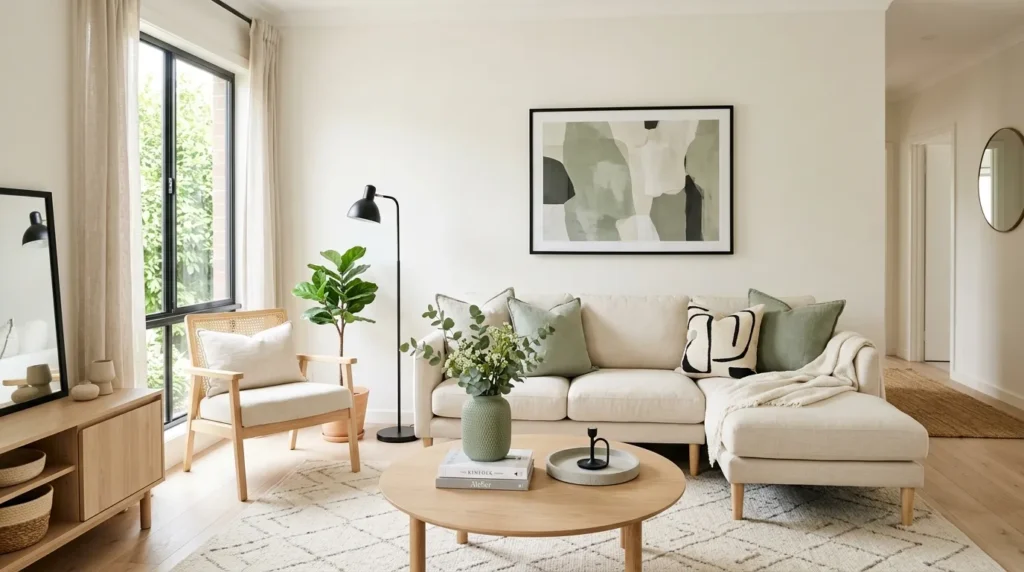
The trick is controlling the intensity. Instead of covering the room in saturated colors, choose muted shades such as dusty blue, sage, soft terracotta, pale olive, muted blush, or warm caramel.
These colors work particularly well when the foundation is cream, white, beige, or light gray. They create enough contrast to keep the room interesting without overpowering the architecture.
Accent colors are also easy to change. A homeowner can update pillows, throws, artwork, or decorative objects without replacing large furniture pieces.
How To Style It
Choose one main accent color and repeat it in several small places. For example, a soft sage pillow can connect with a small piece of artwork and a ceramic vase.
If you prefer blue, try dusty blue or muted denim against warm white upholstery. For earthy interiors, muted terracotta can add warmth without making the room feel dark.
Avoid scattering too many unrelated accent colors throughout the room. A restrained palette usually looks more cohesive.
Artwork provides another opportunity. A large abstract print with subtle shades can introduce several colors while still supporting the overall neutral design.
Keep the largest surfaces calm and use color mainly on movable or smaller elements. This makes future updates much easier.
8. Modern Lighting
Quick Benefits
- Keeps the room inviting after dark
- Adds visual layers
- Highlights architectural features
- Creates a warmer evening atmosphere
- Gives flexibility for different activities
Why It Works
A room that looks beautiful in daylight can feel completely different after sunset. That’s why lighting deserves the same attention as furniture and color.
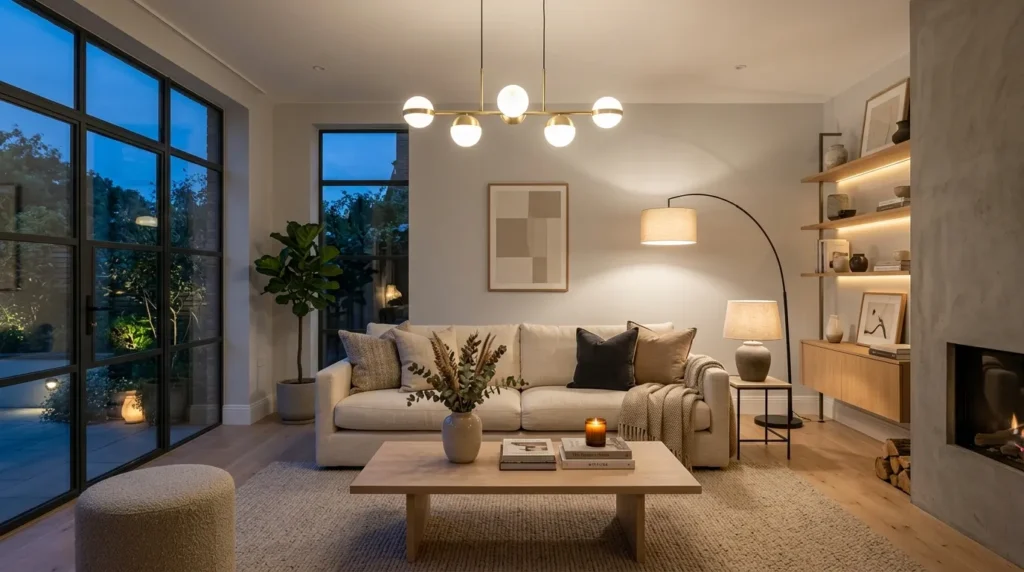
The most comfortable living rooms generally use more than one light source. Instead of relying entirely on a single overhead fixture, combine ceiling lighting with floor lamps, table lamps, wall lighting, or accent lighting.
Different heights create visual depth. A ceiling fixture illuminates the room broadly, while a floor lamp can brighten a reading corner and a table lamp can create a softer pool of light near the sofa.
Warm-toned bulbs generally create a more relaxed evening environment than very cool lighting. The exact choice depends on the atmosphere and the fixtures, but consistency across the room helps the space feel cohesive.
How To Style It
Begin with the room’s primary ceiling fixture. A simple pendant or modern chandelier can become a design feature without overwhelming the space.
Add a floor lamp beside a chair or sofa for practical reading light. Look for an arched or slim profile when floor space is limited.
Place a table lamp on a console or side table to introduce another level of illumination. Lamps with linen or fabric shades can soften the overall appearance.
Accent lighting can highlight artwork, shelving, or architectural details. Even a small amount can make the room feel more layered at night.
Use dimmable lighting whenever practical. The ability to adjust brightness makes one room work for reading, entertaining, relaxing, and watching television.
9. Open Floor Space
Quick Benefits
- Makes the room feel larger
- Improves movement
- Reduces visual clutter
- Creates a calmer atmosphere
- Helps furniture feel intentionally placed
Why It Works
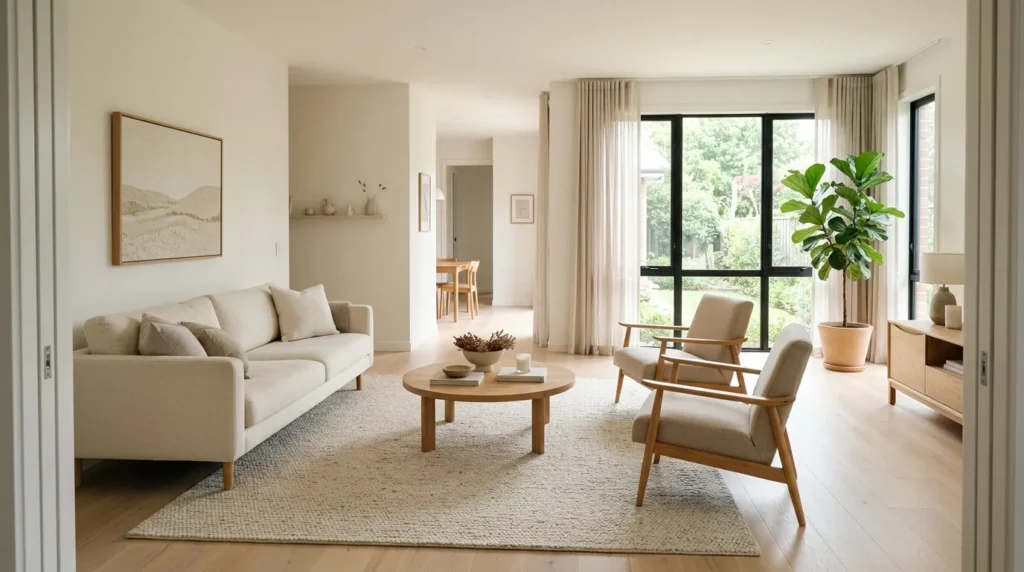
One of the simplest ways to make a living room feel fresh is to give the furniture more breathing room. Open floor space is not wasted space. It helps define circulation and gives the eye somewhere to rest.
A common decorating mistake is adding furniture until every empty area has been filled. This can make a room technically functional but visually crowded.
Modern design often depends on restraint. A few well-proportioned pieces can create a stronger impression than many smaller ones.
Open space is especially important around doorways, walkways, and frequently used furniture. When people can move naturally through the room, the entire space feels more comfortable.
The arrangement also affects conversation. Furniture that faces toward each other creates a more inviting social zone than pieces scattered around the perimeter.
How To Style It
Start by identifying the main path through the room. Keep that route clear and avoid placing small tables, stools, or decorative objects where people naturally walk.
Create one clear seating arrangement rather than several disconnected furniture islands.
Use a rug to visually group the seating area. Ideally, the rug relates to the scale of the furniture instead of floating as a tiny island in the middle of the room.
Leave enough space around tables for people to sit comfortably and move between seating pieces.
If the room feels crowded, remove one small piece before buying anything new. Often, the simplest refresh is subtraction.
10. Minimal Gallery Walls
Quick Benefits
- Adds personality without heavy furniture
- Creates a visual focal point
- Makes blank walls more interesting
- Works with neutral interiors
- Allows personal artwork and photography
Why It Works
A bright modern living room still needs personality. Without artwork or meaningful objects, a neutral space can start to feel more like a showroom than a home.
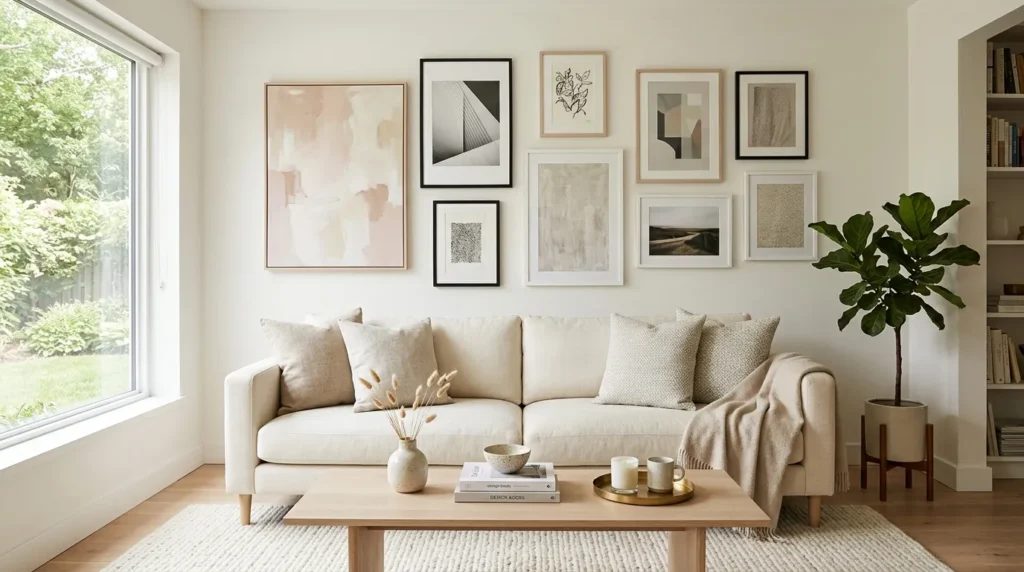
A carefully edited gallery wall adds character while maintaining the clean atmosphere. The emphasis is on editing rather than filling every inch.
Modern gallery walls can include abstract prints, photography, line drawings, typography, botanical artwork, or personal pieces. The frames can be coordinated for a polished appearance or intentionally mixed for a more collected look.
Scale matters. A small collection placed above a large sofa can appear lost, while an oversized arrangement can dominate a smaller room.
How To Style It
Start by choosing the wall that naturally draws attention, often the wall behind the sofa or a prominent side wall.
Select artwork that shares at least one visual connection. Similar colors, related subject matter, or consistent framing can tie different pieces together.
For a very clean modern look, use matching frames and generous spacing. For a more relaxed approach, mix frame finishes while keeping the artwork palette cohesive.
Before hanging everything, arrange the pieces on the floor. Adjust the spacing and balance until the composition feels intentional.
Keep the surrounding decor simple. If the gallery wall is the focal point, avoid placing numerous competing objects directly beneath it.
A few larger pieces can often create more impact than a collection of tiny prints.
Frequently Asked Questions
How can I make a modern living room feel brighter?
Start by maximizing natural light and using a light, warm neutral palette. Keep window areas open, choose lightweight curtains, and avoid placing bulky furniture in front of windows. Pale rugs, cream upholstery, light wood, mirrors, and layered lighting can also increase the room’s visual brightness. Reducing unnecessary furniture often makes a surprisingly noticeable difference.
What colors make a living room look fresh?
Warm white, ivory, cream, pale beige, soft greige, muted sage, dusty blue, and light natural wood tones all work well in a fresh modern living room. The best combination depends on the room’s natural light. Rather than using many colors, choose a calm base and introduce one or two restrained accent shades.
How do I make a small living room look modern and spacious?
Choose furniture with appropriate proportions, maintain clear walking paths, and keep the visual palette light. Sofas with exposed legs, low-profile storage, mirrors, lightweight curtains, and multifunctional furniture can help. Avoid filling every corner. Leaving some floor and wall space open allows the room to feel less crowded.
How do I add warmth to a bright living room?
Natural wood, woven materials, warm neutrals, textured textiles, and soft lighting are effective ways to add warmth. A pale wood coffee table, linen-look curtains, woven basket, textured rug, and warm-toned lamp can make an otherwise white room feel comfortable without making it darker.
Can a modern living room have cozy decor?
Absolutely. Modern design and cozy decorating work especially well together when clean furniture is balanced with soft textures. Add comfortable throws, layered pillows, rugs, natural materials, plants, and warm lighting. The key is editing the number of accessories so the room remains visually calm.
What type of curtains make a living room look brighter?
Lightweight curtains in white, ivory, cream, or soft beige generally keep a room feeling airy. Hanging panels higher and wider than the window can create the impression of a larger opening while allowing more daylight into the room. Linen-look or sheer fabrics are particularly useful when privacy and natural light both matter.
How can I decorate a neutral living room without making it boring?
Use texture, shape, artwork, plants, and natural materials rather than relying only on additional colors. Combine smooth ceramic with woven textiles, natural wood with soft upholstery, and rounded accessories with clean architectural lines. A restrained accent color can also provide just enough contrast to keep the room interesting.
Conclusion
Creating a fresh and bright living room is less about following one decorating formula and more about understanding how the elements of the room work together. Light colors can reflect daylight, but furniture placement determines how that light moves. Natural wood adds warmth, while textured textiles keep a neutral palette from feeling flat. Plants introduce organic shapes, and thoughtful lighting keeps the room welcoming after sunset.
You also do not have to redesign everything at once. Start with the area that feels most difficult. If the room looks dark, focus on the windows and lighting. If it feels crowded, rethink the furniture arrangement. If it feels cold, introduce natural wood and softer textures. If it feels unfinished, artwork and greenery may be enough to give it personality.
The most successful modern living rooms balance visual simplicity with everyday comfort. They leave enough open space to breathe while still including the things that make a home feel personal.
Choose one or two ideas that fit your existing space and build from there. A lighter rug, a new lamp, a few natural textures, or a better furniture arrangement can create a noticeable change without requiring a complete makeover.
Related Articles
- 10 Small Living Room Ideas with Modern Comfort
- 10 Modern Bedroom Ideas with Elegant Simplicity
- 10 Neutral Home Decor Ideas for a Calm Interior
- 10 DIY Wall Art Ideas That Elevate Empty Walls
- How to Decorate a Living Room with Stylish Accessories