

10 Relaxing Aesthetic Bedroom Ideas
A bedroom can be beautiful without feeling overly decorated. The most relaxing spaces usually combine a few thoughtful elements: soft colors, comfortable bedding, gentle lighting, natural textures, and enough open space to let the room breathe.
An aesthetic bedroom is not simply about following a particular decorating trend. It is about creating a visual atmosphere that feels good when you walk through the door. For some people, that means warm neutrals and natural wood. For others, it may mean soft pastels, layered textiles, vintage accents, or a darker palette that feels cozy in the evening.
The most successful bedroom designs also consider everyday comfort. A beautiful bed is less useful if the lighting is harsh or the nightstand is too crowded. A gorgeous color palette can lose its impact when storage is overflowing. Small practical decisions often make the biggest difference.
In my experience, the easiest way to create a relaxing aesthetic is to choose a simple foundation first. Start with the bed, walls, flooring, and larger furniture. Then introduce texture through bedding, curtains, rugs, and cushions. Finally, add a few decorative pieces that reflect your personality.
You do not need to completely remodel your bedroom to create a peaceful retreat. Changing the bedding, adjusting the lighting, adding a rug, rearranging furniture, or introducing greenery can noticeably shift the atmosphere.
These ten ideas combine aesthetic appeal with practical comfort. Whether your bedroom is large, small, modern, traditional, or somewhere in between, each approach can be adapted to suit your existing space.
Table of Contents
1. Warm Neutral Layers
Create a peaceful bedroom with creamy neutrals and layered textures.
2. Soft Natural Textures
Use linen, wood, woven fibers, and tactile fabrics for warmth.
3. Earthy Green Palette
Bring a calm botanical feeling into the bedroom with muted greens.
4. Cozy Ambient Lighting
Layer gentle lighting to make the room feel softer at night.
5. Minimal Bed Styling
Keep the bed visually simple while making it feel exceptionally comfortable.
6. Romantic Vintage Details
Combine delicate textiles and vintage-inspired accents for timeless charm.
7. Calm Japandi Elements
Blend simple forms, natural materials, and restrained decoration.
8. Soft Pastel Accents
Introduce subtle pastel colors without making the bedroom feel overly sweet.
9. Cozy Reading Corner
Turn an unused bedroom corner into a peaceful personal retreat.
10. Clutter-Free Styling
Create visual calm by giving every essential item a purposeful place.
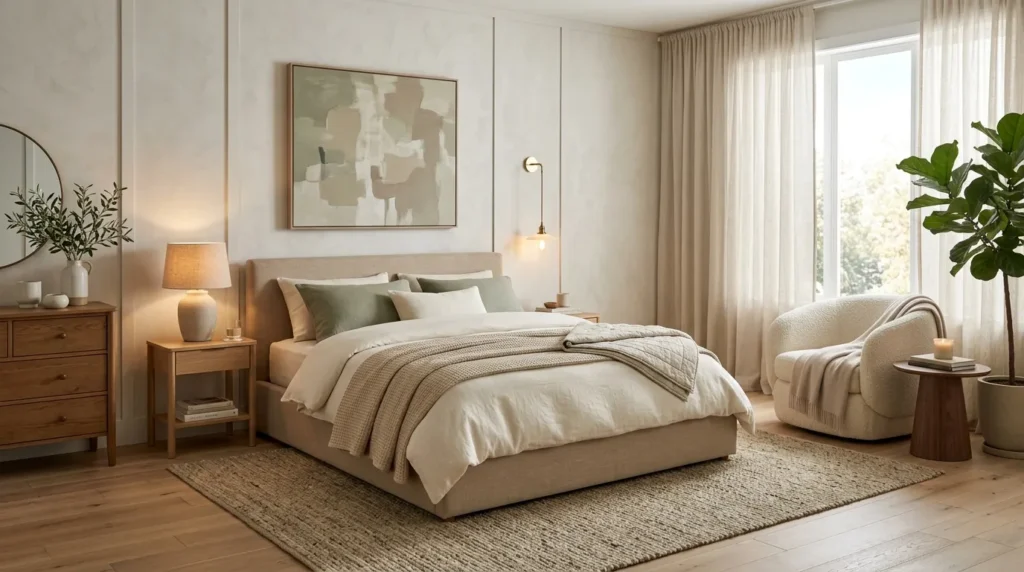
1. Warm Neutral Layers
Quick Benefits
- Creates a calm visual foundation
- Makes the bedroom feel warm
- Works with many decorating styles
- Makes layering easy
- Ages gracefully over time
Why It Works
Warm neutrals create one of the easiest foundations for a relaxing bedroom because they reduce visual contrast without making the room feel flat.
Instead of relying on one shade of beige, layer several related tones. Cream, oatmeal, warm white, sand, taupe, and light brown can create subtle depth while maintaining a cohesive appearance.
The texture becomes especially important in a neutral room. Without it, pale colors can appear plain. Linen bedding, boucle cushions, woven baskets, wood furniture, and a soft rug introduce visual interest without requiring strong patterns.
Natural daylight also works beautifully with warm neutrals. During the evening, warm-toned lamps maintain the same comfortable atmosphere.
How To Style It
Start with warm white or creamy walls if you are able to paint.
Choose bedding in ivory, oatmeal, or soft beige.
Layer a lightweight throw across the bottom of the bed and add two or three textured pillows.
Use natural wood nightstands or a simple upholstered headboard.
Add a woven basket for blankets or laundry.
Finish with a soft neutral rug underneath or beside the bed.
Keep decorative accessories limited. A ceramic vase, framed artwork, and small plant can provide enough personality without disturbing the calm palette.
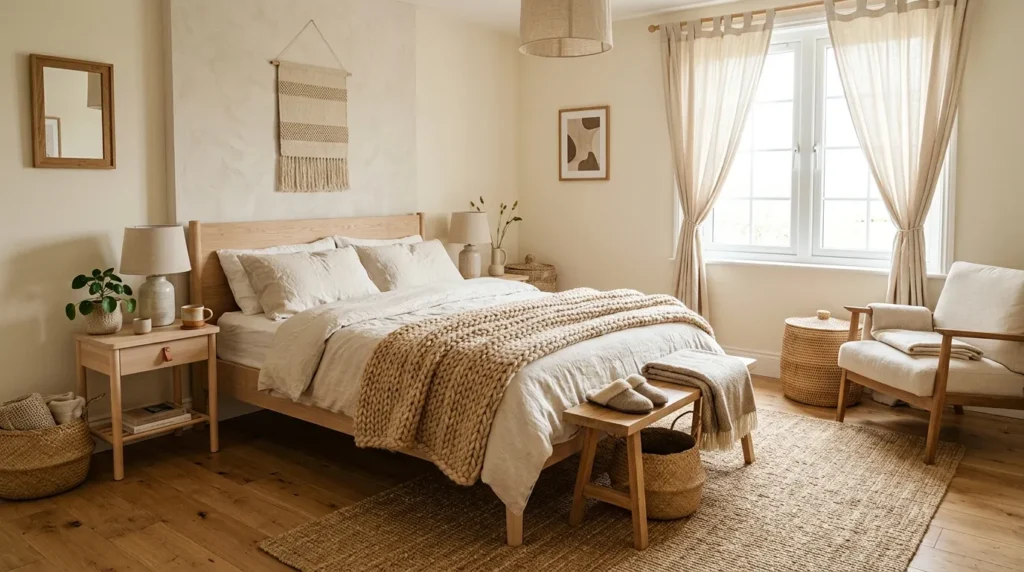
2. Soft Natural Textures
Quick Benefits
- Adds depth without bold colors
- Makes the bedroom feel comfortable
- Creates visual warmth
- Works with neutral palettes
- Supports a relaxed atmosphere
Why It Works
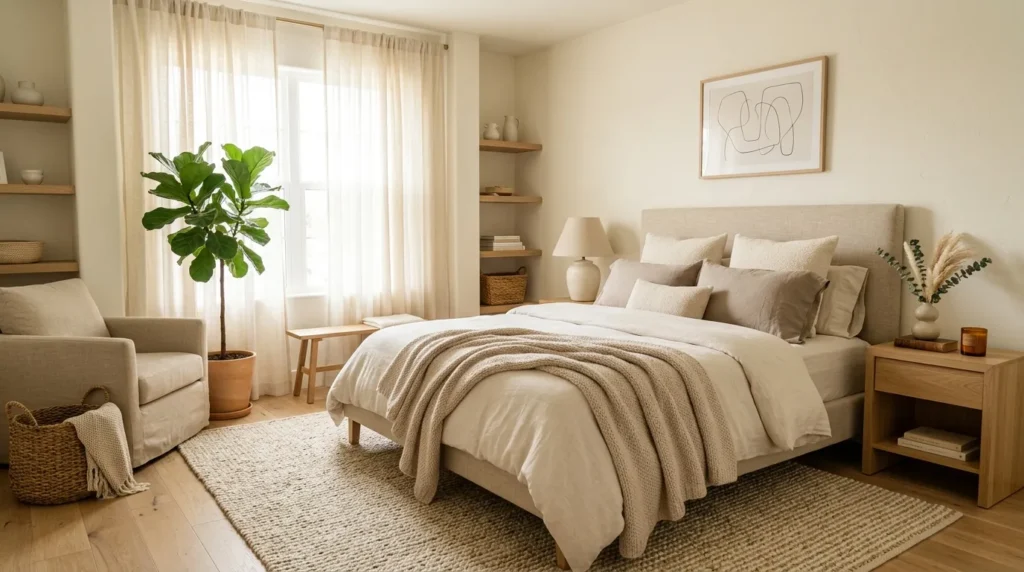
Texture can transform a simple bedroom without changing its color scheme.
A room filled with smooth surfaces may feel visually cold, even when the colors are attractive. Introducing natural and tactile materials creates variation that the eye can appreciate.
Think linen, cotton, wool, rattan, cane, unfinished or lightly finished wood, woven baskets, and textured ceramics.
The goal is not to use every texture at once. A few complementary materials are more effective than a room filled with competing surfaces.
Natural materials also pair well with modern and traditional furniture, making this approach highly adaptable.
How To Style It
Begin with cotton or linen bedding.
Add a woven throw or textured blanket.
Choose a natural wood headboard or nightstand.
Place a jute or wool-look rug near the bed.
Use a woven basket beside a dresser or chair.
Introduce ceramic accessories with subtle handmade variations.
Keep the color palette relatively restrained so the textures become the main source of visual interest.
A simple combination of linen, wood, woven fibers, and cotton can make the room feel warm without looking heavily decorated.
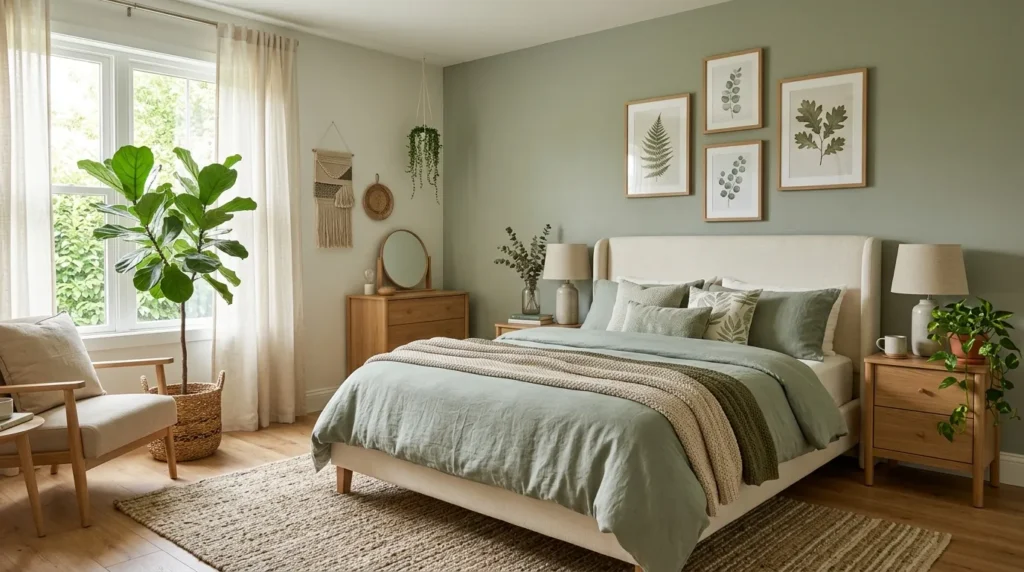
3. Earthy Green Palette
Quick Benefits
- Adds a connection to nature
- Creates a soothing color story
- Works with warm neutrals
- Complements natural materials
- Provides subtle visual interest
Why It Works
Muted green can bring a quiet botanical quality to the bedroom without overwhelming the space.
Instead of highly saturated greens, consider sage, olive, eucalyptus, moss, or soft gray-green.
These shades pair naturally with cream, beige, tan, and warm wood. They can be introduced through paint, bedding, curtains, artwork, or plants.
Green also provides enough contrast to prevent a neutral bedroom from feeling monotonous.
The most relaxing version of this palette usually keeps the green slightly muted and repeats it in several small places rather than using one intense statement color.
How To Style It
Use warm white or pale beige as the foundation.
Add sage bedding or a muted green accent wall.
Bring in natural wood furniture.
Use botanical artwork with soft, understated colors.
Add one or two healthy plants suited to the room’s available light.
Repeat the green through small accessories such as a cushion, vase, or throw.
Keep metallic finishes understated. Aged brass or matte black can work, but the overall palette remains grounded in natural materials.
4. Cozy Ambient Lighting
Quick Benefits
- Changes the nighttime atmosphere
- Makes the bedroom feel softer
- Creates visual warmth
- Adds decorative interest
- Improves nighttime functionality
Why It Works
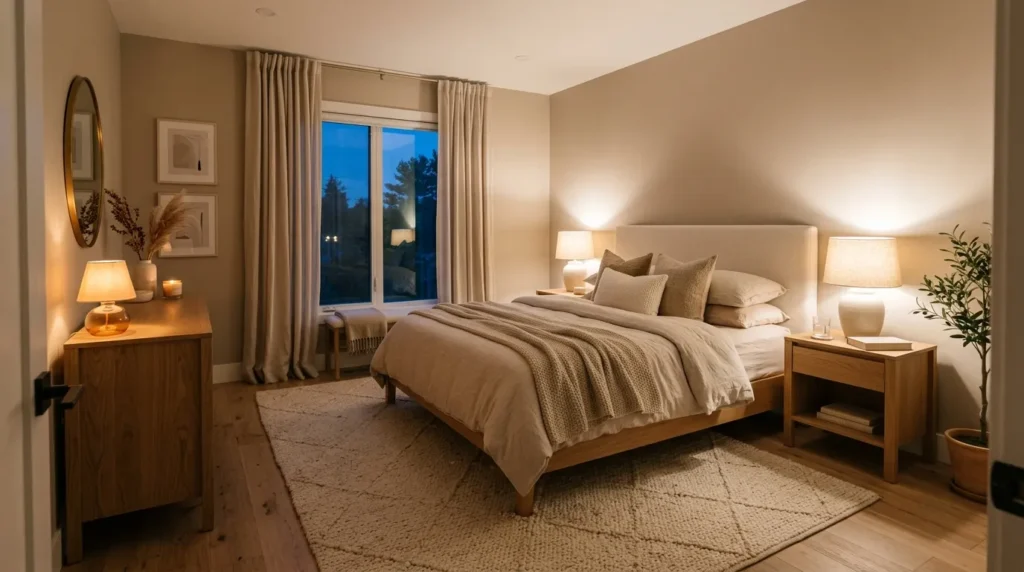
Lighting can completely change how a bedroom feels after sunset.
A single overhead light often creates strong shadows and a less relaxing atmosphere. Multiple softer sources allow you to adjust the room depending on the activity.
Bedside lamps provide useful reading light. Wall sconces can save nightstand space. A small decorative lamp can illuminate a dresser or corner. Suitable accent lighting can highlight artwork or architectural details.
The key is creating layers rather than relying on one source.
How To Style It
Place matching or complementary lamps on the nightstands.
Choose warm-toned bulbs with brightness appropriate for the room and activity.
If possible, add a dimmer to the main bedroom lighting.
Use a small lamp on a dresser or console to create another low-level glow.
Keep exposed bulbs and fixtures visually simple.
Avoid making every light source equally bright.
At night, turn on only the lights needed for the activity. A bedside lamp and small accent light can create a much softer atmosphere than the main ceiling fixture.
5. Minimal Bed Styling
Quick Benefits
- Creates a clear focal point
- Makes the room feel organized
- Keeps bedding visually calm
- Simplifies morning cleanup
- Works in small bedrooms
Why It Works
The bed is usually the largest visual element in a bedroom, so its styling strongly influences the entire space.
An overloaded bed can make the room feel busy. Too few layers can make it appear unfinished.
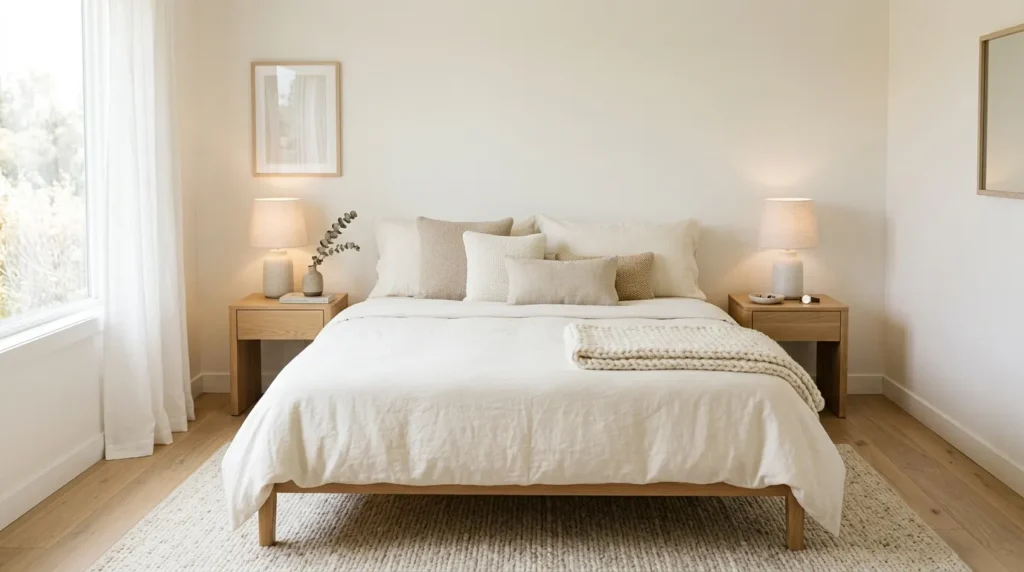
A balanced approach uses a comfortable duvet or quilt, a few supportive pillows, and one decorative layer such as a throw.
The goal is comfort first, followed by visual simplicity.
A restrained bed also makes the surrounding furniture and artwork easier to appreciate.
How To Style It
Choose bedding in one main neutral or muted color.
Use two standard sleeping pillows per person if comfortable for your household.
Add one or two decorative cushions.
Fold a textured throw at the foot of the bed.
Choose a simple headboard that complements the room.
Keep the nightstands relatively clear.
A small lamp, book, and one decorative object can be enough.
For a more luxurious appearance, focus on quality-looking texture and layered fabrics rather than adding a large number of pillows.
6. Romantic Vintage Details
Quick Benefits
- Adds personality
- Creates timeless charm
- Softens modern furniture
- Makes the room feel collected
- Works with feminine or traditional styles
Why It Works
Vintage-inspired details can make a bedroom feel personal rather than overly coordinated.
The trick is using a few distinctive pieces rather than turning the room into a themed space.
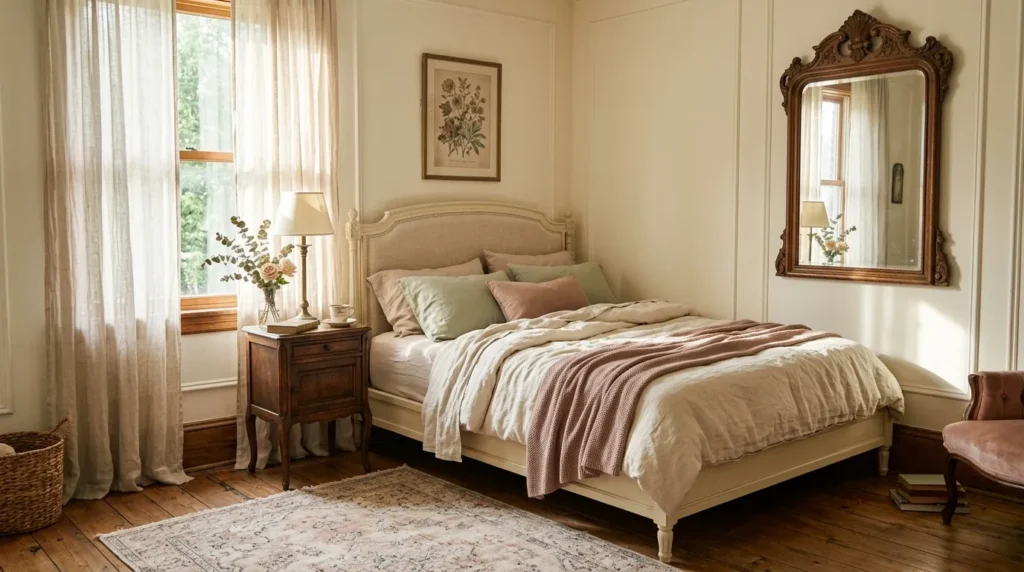
An antique-style mirror, curved bedside table, floral artwork, vintage lamp, embroidered pillow, or delicate framed print can introduce character.
Pairing these details with contemporary bedding and simple furniture prevents the room from feeling dated.
A little imperfection can also make the space feel more authentic.
How To Style It
Begin with a soft neutral foundation.
Choose one vintage-inspired focal piece, such as an ornate mirror or wooden nightstand.
Add delicate floral or botanical artwork.
Use linen curtains or lightly patterned bedding.
Introduce aged brass through a lamp or small hardware detail.
Keep the rest of the room relatively simple.
For a softer romantic appearance, use dusty rose, muted cream, pale sage, and warm beige rather than intense pinks or highly saturated colors.
7. Calm Japandi Elements
Quick Benefits
- Creates visual simplicity
- Emphasizes natural materials
- Works well in smaller rooms
- Reduces decorative clutter
- Feels modern and timeless
Why It Works
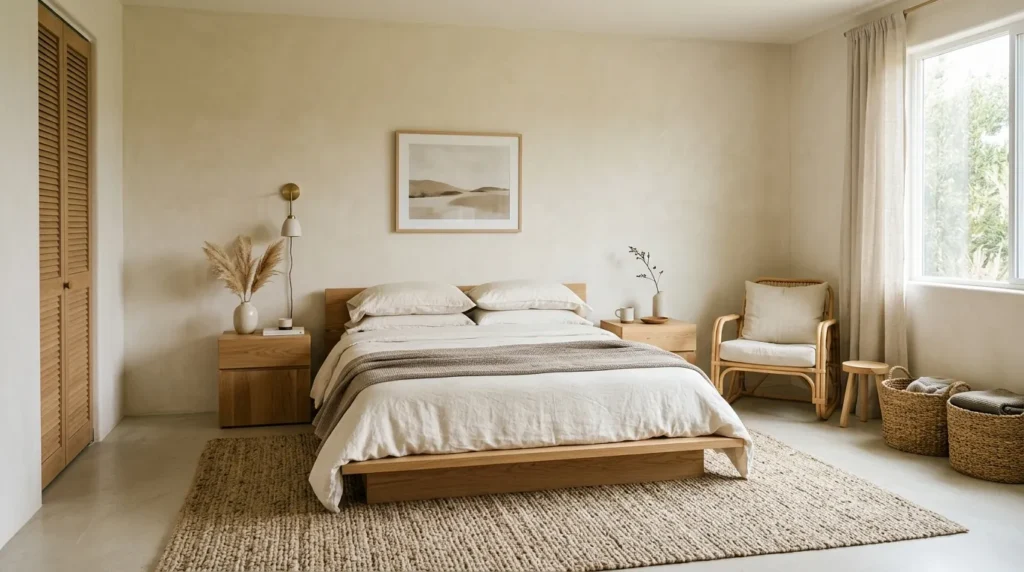
Japandi-inspired interiors combine restrained Japanese aesthetics with the warmth of Scandinavian design.
The style works especially well in bedrooms because it emphasizes simplicity, natural materials, functional furniture, and calm colors.
Furniture tends to have clean lines without looking overly severe. Wood becomes an important element, while textiles provide softness.
The room does not need to be completely empty. The key is giving each visible object enough breathing room.
How To Style It
Choose simple wooden furniture with clean silhouettes.
Use cream, warm white, taupe, beige, and muted brown.
Keep bedding relaxed rather than heavily layered.
Add one large piece of understated artwork instead of many small frames.
Use woven baskets for practical storage.
Introduce a small branch arrangement, simple plant, or natural ceramic.
Leave some surfaces intentionally empty.
This negative space helps the room feel peaceful and makes the selected pieces more noticeable.
8. Soft Pastel Accents
Quick Benefits
- Adds gentle color
- Keeps the room feeling light
- Works with neutral foundations
- Creates personality
- Easy to change seasonally
Why It Works
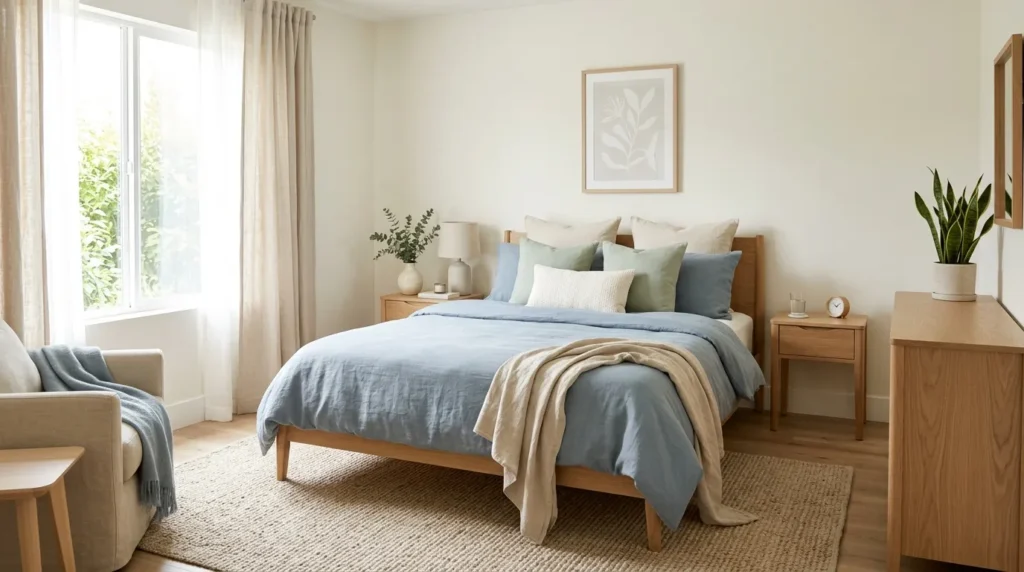
Pastels can make a bedroom feel fresh without creating the visual intensity of stronger colors.
The most sophisticated approach uses pastels as accents rather than covering every surface in color.
Dusty blue, pale sage, muted blush, soft lavender, and creamy peach can all work when paired with warm neutrals.
The undertone matters. Slightly muted colors generally feel more restful than extremely bright pastels.
How To Style It
Keep the walls and larger furniture neutral.
Choose one pastel accent color.
Introduce it through bedding, cushions, artwork, or a throw.
Repeat the color in two or three locations.
Balance it with natural wood or woven textures.
For example, a cream bedroom with dusty blue bedding, light oak furniture, and a woven rug can feel fresh without becoming overly colorful.
If you enjoy changing your decor, keep the pastel accents removable so the room can easily transition between seasons.
9. Cozy Reading Corner
Quick Benefits
- Makes use of unused space
- Creates a dedicated relaxation area
- Adds functionality
- Makes the bedroom feel personalized
- Works in larger and smaller rooms
Why It Works
A bedroom becomes more functional when it offers more than one comfortable place to relax.
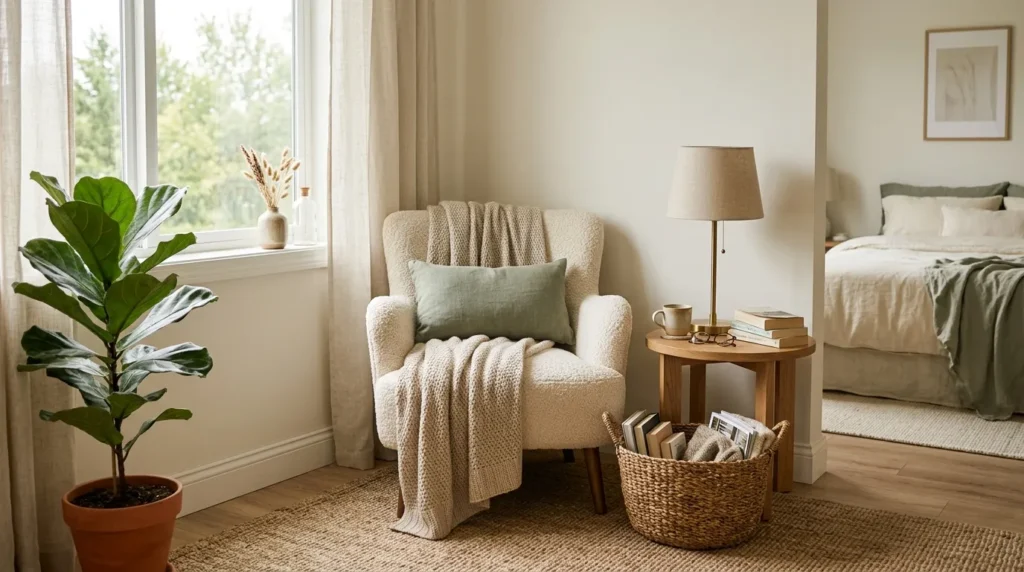
A small reading corner can occupy an otherwise awkward area near a window, dresser, or empty wall.
You do not need a large chair. A compact upholstered chair, small accent chair, or comfortable bench can work depending on the room.
The most important elements are comfortable seating, appropriate lighting, and a small surface for a book or drink.
How To Style It
Choose a chair that fits comfortably without obstructing the main walkway.
Add a small side table.
Place a reading lamp nearby.
Use a soft cushion or throw.
Add a small plant if the light conditions suit it.
A narrow bookshelf can provide additional storage if the room has space.
Keep the corner visually connected to the rest of the bedroom by repeating one or two colors from the bedding.
10. Clutter-Free Styling
Quick Benefits
- Creates visual calm
- Makes cleaning easier
- Helps decorative pieces stand out
- Improves bedroom functionality
- Makes small rooms feel more open
Why It Works
A relaxing bedroom is difficult to create when every surface is occupied.
The eye needs some empty space to distinguish the things that matter.
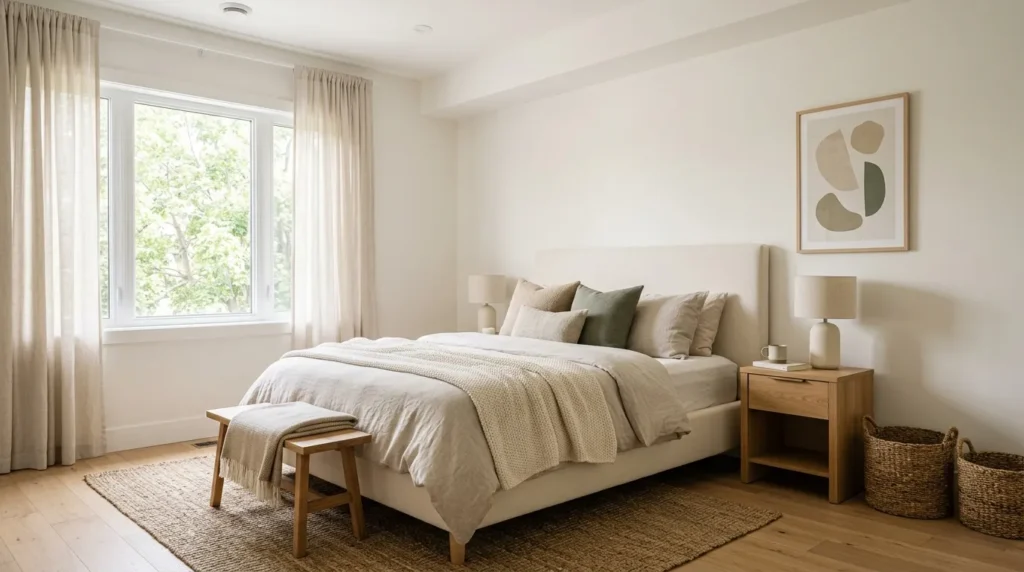
This does not mean removing all personality. Instead, display fewer pieces and give them more visual room.
A nightstand covered with chargers, cosmetics, books, cups, and decorative objects can quickly feel chaotic. Moving some items into drawers or designated storage immediately changes the appearance.
The same applies to floors. Keeping walking paths open can make even a modest bedroom feel more spacious.
How To Style It
Begin with the nightstands.
Keep only the items you use regularly.
Clear the floor around the bed.
Use baskets for blankets, laundry, or accessories.
Keep dresser surfaces intentionally edited.
Choose one focal point for artwork.
Hide cords where practical.
Before adding another decorative piece, look at the room from the doorway.
If the space already feels balanced, stop there.
The most relaxing aesthetic often comes from knowing when enough is enough.
Frequently Asked Questions
How do I make my bedroom feel more relaxing?
Start with the elements that have the greatest visual and sensory impact: bedding, lighting, color, and clutter. Choose soft or muted colors, layer comfortable fabrics, use gentle lighting in the evening, and keep surfaces relatively clear. Natural materials such as wood, linen, cotton, and woven fibers can add warmth without making the room feel busy.
What colors are best for a relaxing bedroom?
Warm neutrals, muted greens, dusty blues, soft taupes, creamy whites, and understated pastels are popular choices for peaceful bedrooms. The best color depends on the atmosphere you enjoy and the room’s natural light. Softer, less saturated shades generally create a quieter visual effect than very bright or highly contrasting colors.
How can I make my bedroom look aesthetic without spending a lot?
Focus on high-impact changes rather than replacing everything. Fresh bedding, rearranging furniture, decluttering surfaces, adding a textured throw, changing lampshades, introducing greenery, and creating a cohesive color palette can make a noticeable difference. You can also move artwork or accessories from other rooms to create a new arrangement without buying additional decor.
How do I make a small bedroom feel relaxing?
Keep furniture proportional to the room and preserve clear walking paths. Use a limited color palette, light or medium-toned finishes, simple bedding, and vertical storage where appropriate. Avoid filling every wall and surface with decor. A small bedroom can feel especially peaceful when the visual composition remains simple and intentional.
What makes a bedroom look luxurious and cozy?
Luxury comes more from proportion, texture, lighting, and quality-looking finishes than from having many decorative objects. Layer comfortable bedding, use warm ambient lighting, add natural or tactile materials, and keep the room visually organized. A restrained palette with thoughtful details often creates a more sophisticated result than excessive decoration.
How many pillows should I put on my bed?
There is no fixed number. Use enough pillows to make the bed comfortable and visually balanced without making it difficult to use. A practical arrangement might include sleeping pillows plus a small number of decorative cushions. A single textured lumbar pillow can also provide a finished appearance without creating a crowded bed.
Should a relaxing bedroom have plants?
Plants can add color, texture, and a natural element to a bedroom, but they are optional. Choose varieties that suit the room’s light and your ability to care for them. If live plants are not practical, botanical artwork or natural materials can provide a similar visual connection to nature.
Conclusion
Creating a relaxing aesthetic bedroom does not require a complete makeover. The atmosphere usually comes from a combination of smaller decisions that work together.
Start with the foundation. Choose a color palette that feels naturally comfortable, then build around the bed because it is usually the room’s strongest visual feature. Add texture through linen, cotton, wool, wood, woven fibers, and soft rugs.
Lighting deserves just as much attention. A few warm, layered sources can make the bedroom feel dramatically different after sunset. Keep the brighter overhead light for practical tasks and use softer lamps when winding down.
Then edit the room. Remove objects that create unnecessary visual noise and give everyday belongings practical homes. Leave some surfaces open so your favorite artwork, plants, and accessories have room to stand out.
Most importantly, choose an aesthetic that supports your real life. A beautiful bedroom is much more enjoyable when the bed is comfortable, the lighting is practical, the storage works, and the room is easy to maintain.
You can begin with one change tonight. Replace overly busy bedding, clear a nightstand, add a warm lamp, or move a chair into an unused corner.
Over time, these small changes can turn your bedroom into a space that feels softer, calmer, and more personal every time you enter it.
Related Articles
- 10 Modern Bedroom Ideas with Elegant Simplicity
- 10 Elegant Neutral Bedroom Ideas
- 10 Modern Bedroom Ideas with Hotel-Inspired Comfort
- 10 Bedroom Wall Decor Ideas That Add Elegant Texture
- How to Decorate a Bedroom with Elegant Decor