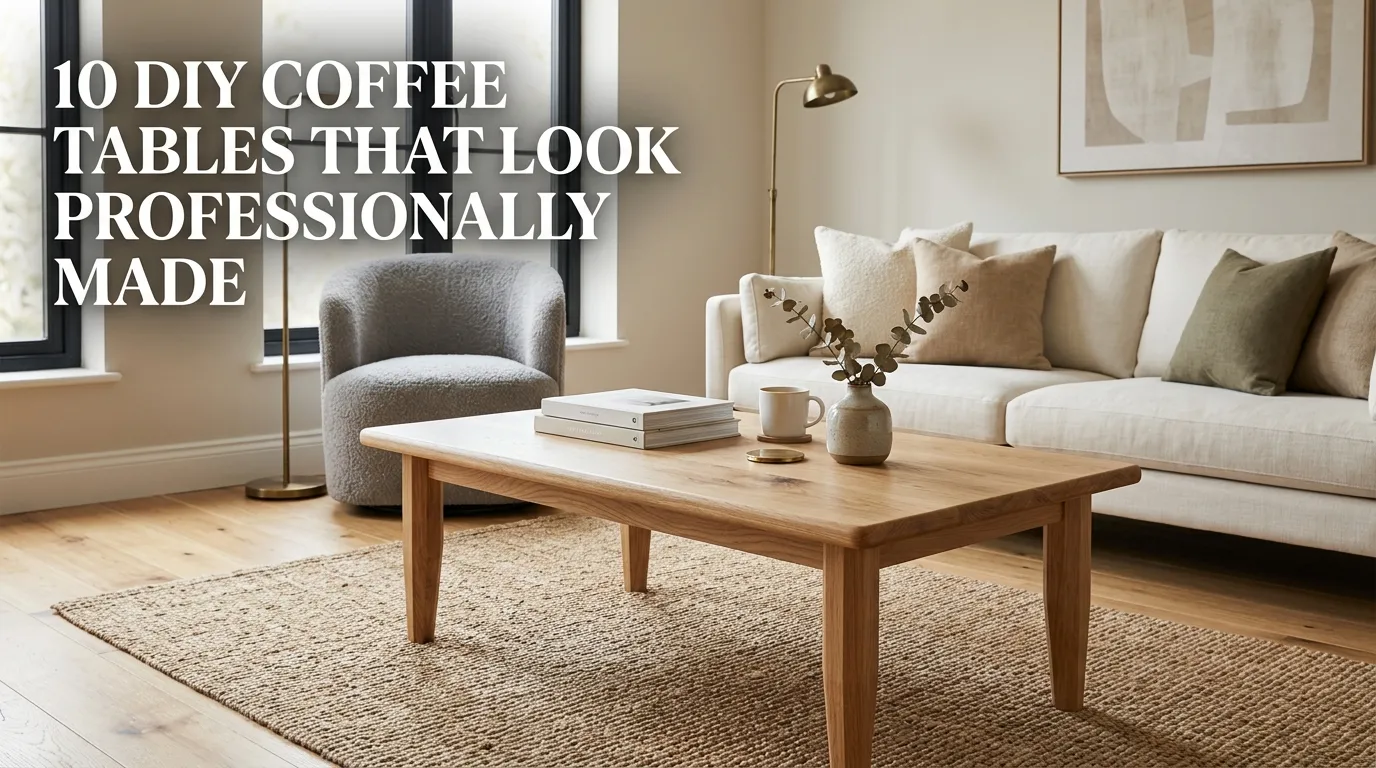
10 DIY Coffee Tables That Look Professionally Made
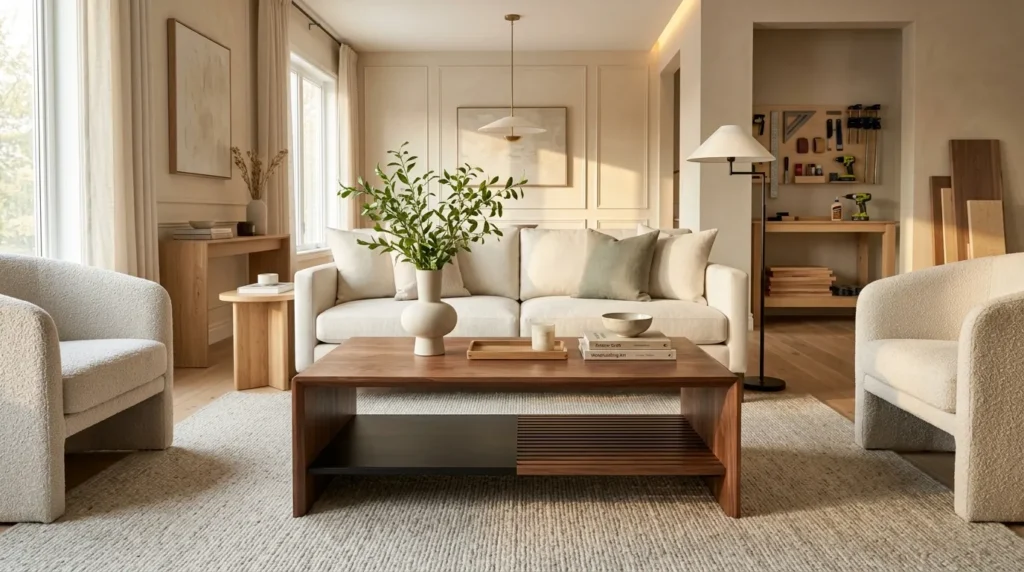
A coffee table can completely change the way a living room feels. It sits at the center of the seating area, so even a simple design becomes one of the first pieces people notice. The good news is that you don’t have to spend a fortune on a designer table to get that polished, custom look.
The right DIY coffee table project can give you control over the size, finish, shape, and materials. That’s especially useful if your living room has an awkward layout or if standard furniture dimensions don’t quite work for your space.
I’ve noticed that the difference between a DIY table that looks homemade and one that looks professionally designed often comes down to a few details: clean proportions, careful sanding, consistent finishes, sturdy construction, and thoughtful styling. You don’t necessarily need advanced woodworking skills. You need a design that matches your ability level and enough patience to finish the details properly.
Another advantage is flexibility. You can build a narrow table for a small apartment, a substantial wood table for a large family room, or a storage-friendly design for a busy household. Materials can range from affordable lumber and plywood to reclaimed wood, furniture-grade panels, or ready-made components.
Before starting, think about the height of your sofa, the amount of walking space around the table, and how you actually use your living room. A beautiful table that blocks circulation or sits awkwardly low can become frustrating very quickly.
The ideas below focus on DIY coffee tables that combine practical construction with design details that make them look far more expensive than they are.
Table of Contents
1. Chunky Wood Table
Create a substantial solid-wood look with simple geometric construction.
2. Modern Slat Table
Use repeated wood slats to create a clean architectural design.
3. Hairpin Leg Table
Combine a simple wood top with slim metal legs for an airy modern look.
4. Lift Top Table
Add hidden functionality with a tabletop that rises for working or dining.
5. Rustic Farmhouse Table
Build a warm, textured table with traditional farmhouse character.
6. Rounded Edge Table
Soften a living room with a tabletop featuring curved edges and corners.
7. Storage Cube Table
Combine a simple tabletop with open compartments for practical storage.
8. Faux Marble Table
Create an elegant stone-inspired surface without building an extremely heavy table.
9. X Frame Wood Table
Add architectural interest with crossed wooden supports and a substantial top.
10. Minimalist Platform Table
Create a sophisticated low-profile design using clean lines and simple materials.
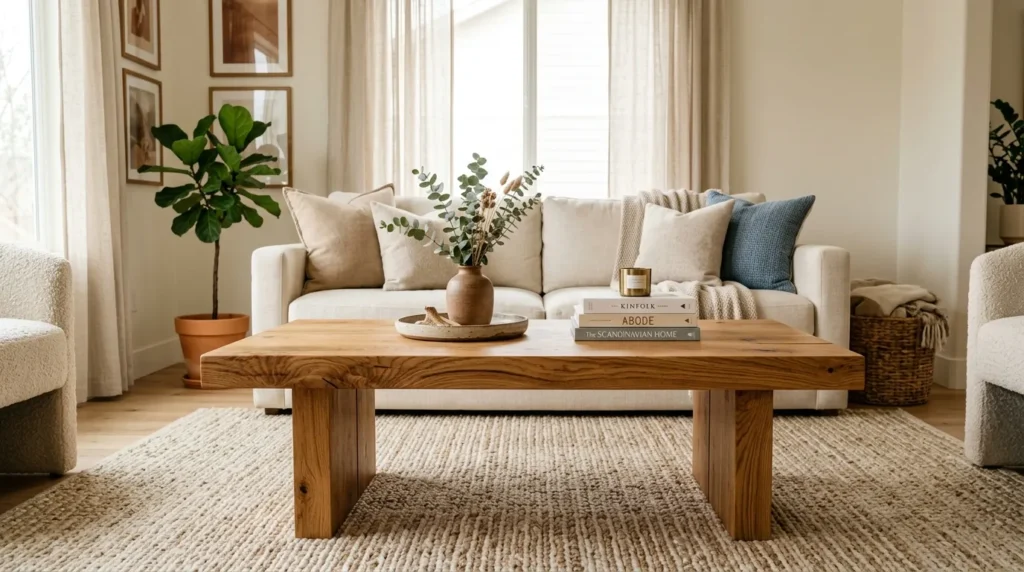
1. Chunky Wood Table
Quick Benefits
- Creates a substantial focal point
- Works with many decorating styles
- Easy to customize
- Provides a high-end furniture feel
- Can be finished in different wood tones
Why It Works
A chunky wood coffee table has the visual weight of expensive solid furniture without requiring a complicated design. Thick-looking legs and a substantial tabletop give the piece a confident presence, which works especially well in larger living rooms.
The secret is proportion. A tabletop that is too thin paired with oversized legs can look unbalanced, while a heavy top with delicate supports may feel unstable visually.
A simple rectangular design is also forgiving. You can adapt the length and width to your sofa while keeping the overall construction straightforward.
Natural wood is particularly attractive because the grain provides enough texture without requiring elaborate decorative details.
How To Style It
Choose straight, quality lumber or furniture-grade panels suitable for your construction method. Sand all visible surfaces thoroughly before applying stain, paint, or a clear protective finish.
For a professional appearance, pay close attention to the corners and edges. Slightly softened edges can make the table look more refined.
Use a medium or natural wood stain for a classic appearance, or choose a clear finish if you want the natural grain to remain prominent.
Style the finished table with a shallow tray, a coffee-table book, a ceramic bowl, and one small decorative object. Avoid covering the entire surface.
2. Modern Slat Table
Quick Benefits
- Creates architectural detail
- Looks custom-made
- Uses repetition effectively
- Works with modern interiors
- Provides interesting light and shadow
Why It Works
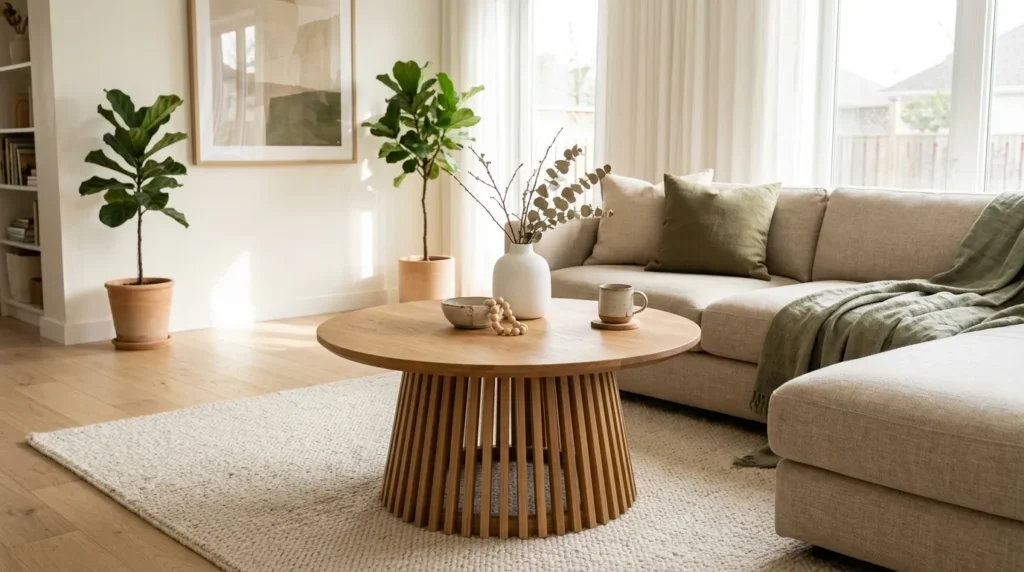
Slatted furniture often looks more complicated than it actually is. Repeating narrow wood pieces can create a strong geometric pattern that gives a simple coffee table a designer appearance.
The repeated lines add rhythm while maintaining a minimalist aesthetic.
This design works particularly well in modern, Scandinavian, contemporary, and Japandi-inspired rooms.
Because the visual detail comes from the construction itself, you can keep the finish relatively simple.
How To Style It
Use evenly sized wood pieces and measure carefully so the spacing remains consistent.
Sand each piece before assembly when access will become difficult later.
A clear matte finish or light natural stain can emphasize the wood without overwhelming the pattern.
Pair the table with a neutral sofa, textured rug, simple ceramic accessories, and a few books.
Keep surrounding furniture relatively streamlined so the slat pattern remains the main feature.
3. Hairpin Leg Table
Quick Benefits
- Simple construction
- Lightweight visual appearance
- Works well in small spaces
- Uses inexpensive components
- Easy to customize
Why It Works
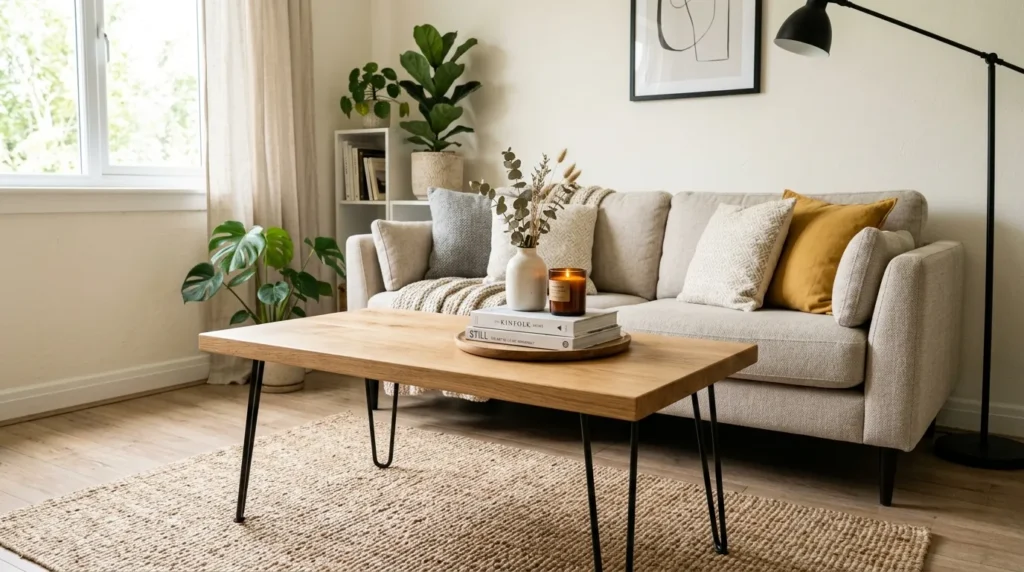
Hairpin legs are a classic DIY shortcut because they allow you to create a furniture-style base without constructing complicated wooden legs.
The thin metal supports create visual openness underneath the table, which can make a small living room feel less crowded.
The tabletop can completely change the character of the piece. Natural oak can feel Scandinavian, darker wood can look industrial, and painted wood can create a more contemporary appearance.
How To Style It
Start with a properly sized wood panel or finished tabletop. Select sturdy hairpin legs rated for the intended load.
Position the legs evenly and use appropriate fasteners for the tabletop material.
Sand and finish the top before attaching the legs.
For a polished appearance, keep the hardware neat and make sure the tabletop is properly supported.
Pair the table with a textured rug and low-profile sofa to emphasize the airy base.
4. Lift Top Table
Quick Benefits
- Provides hidden storage
- Creates a work-friendly surface
- Useful in small homes
- Adds functionality
- Can reduce living room clutter
Why It Works
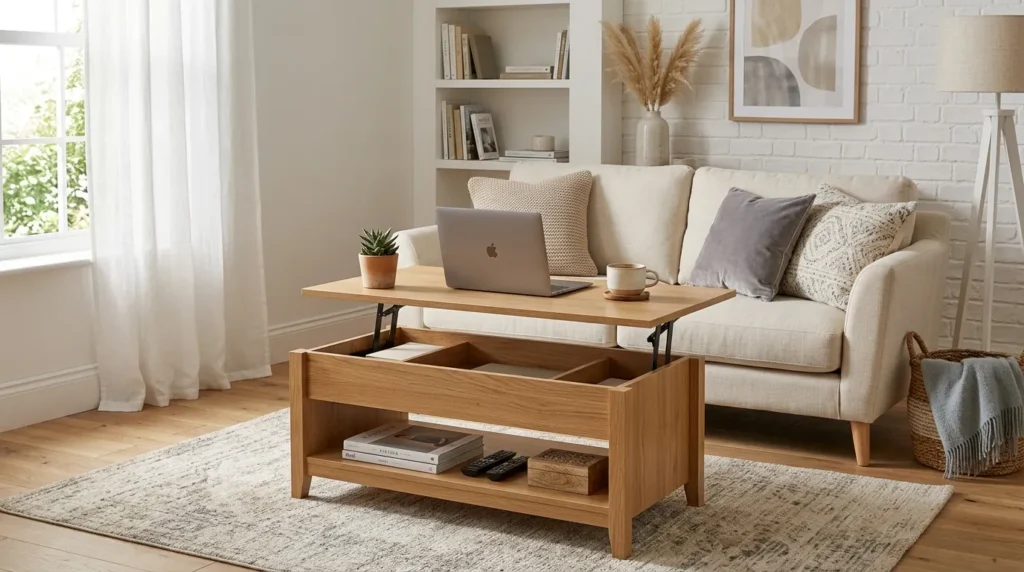
A lift-top coffee table is one of those designs where practicality becomes part of the appeal. The tabletop can rise to create a more comfortable working or dining surface, while the area underneath can provide hidden storage.
This can be especially useful for apartments, family rooms, or multipurpose spaces.
Although the basic table structure can be straightforward, the lifting mechanism requires careful installation. The hardware needs to be compatible with the tabletop size and weight.
How To Style It
Build or purchase a suitable lift-top mechanism rather than improvising the moving components.
Choose a tabletop with enough thickness and strength for the mechanism.
Keep the exterior design simple so the functionality doesn’t dominate the room.
Use the hidden compartment for remotes, notebooks, games, blankets, or other everyday items.
When closed, style the table like any other coffee table with a tray and a few carefully selected objects.
5. Rustic Farmhouse Table
Quick Benefits
- Adds warmth
- Works with casual interiors
- Highlights natural texture
- Can use reclaimed-looking materials
- Creates a welcoming atmosphere
Why It Works
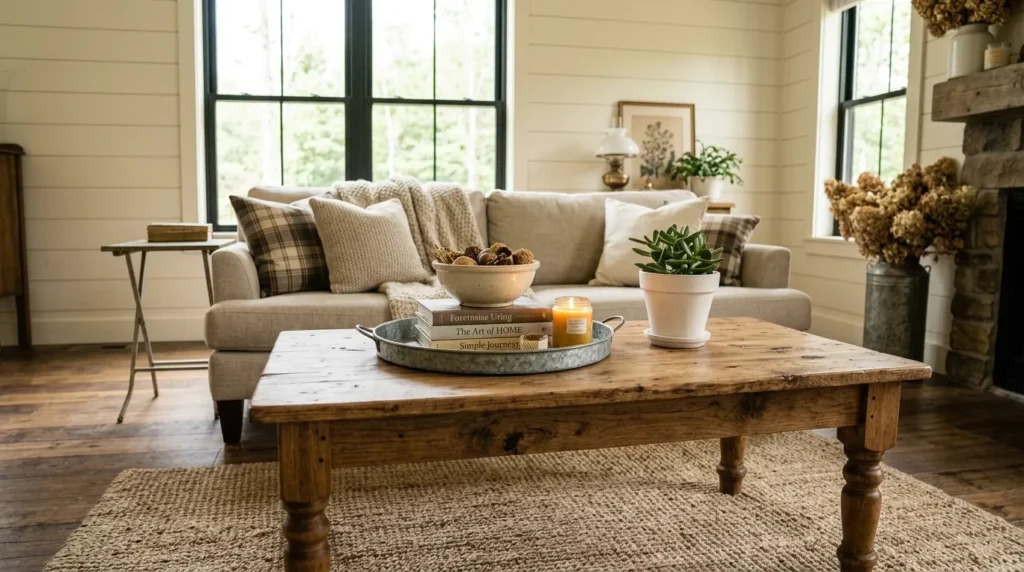
Farmhouse-style furniture tends to feel substantial and approachable. A simple wood coffee table with visible grain, slightly distressed details, and sturdy legs can create that character without requiring elaborate construction.
The key is restraint. Too much artificial distressing can make the table look intentionally aged rather than naturally worn.
A warm wood finish, simple joinery, and classic proportions usually create a more convincing result.
How To Style It
Use wood with visible grain and a warm stain or clear finish.
If you want a weathered look, focus on subtle variations around edges and corners rather than aggressively distressing the entire surface.
Pair the table with a neutral linen sofa, woven basket, textured rug, and ceramic accessories.
A galvanized metal accent or vintage-style tray can reinforce the farmhouse character without turning the room into a theme.
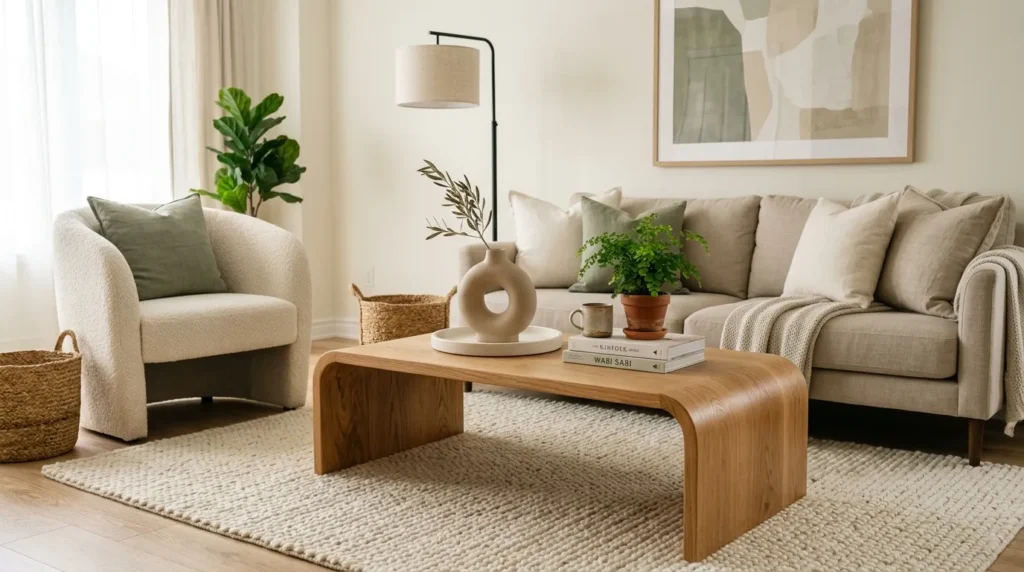
6. Rounded Edge Table
Quick Benefits
- Softens hard furniture lines
- Works well in family rooms
- Creates a contemporary appearance
- Reduces sharp corners
- Can make circulation feel easier
Why It Works
Curved furniture has become increasingly popular because it introduces softness into rooms dominated by rectangular sofas, cabinets, rugs, and windows.
A rounded coffee table can also be practical in homes where people frequently move around the living room.
You don’t need to create a complicated organic shape. Simply rounding the corners of a rectangular tabletop can produce a noticeable design improvement.
The result feels more intentional than a basic square board mounted on legs.
How To Style It
Use a router, appropriate cutting tools, or a carefully planned template to create consistent curves.
Sand the edges thoroughly until they feel smooth to the touch.
For a modern appearance, use a clear natural finish or soft neutral paint.
Pair the rounded table with curved accent chairs or a rounded lamp to repeat the shape elsewhere in the room.
Keep decorative objects centered so the tabletop retains its clean silhouette.
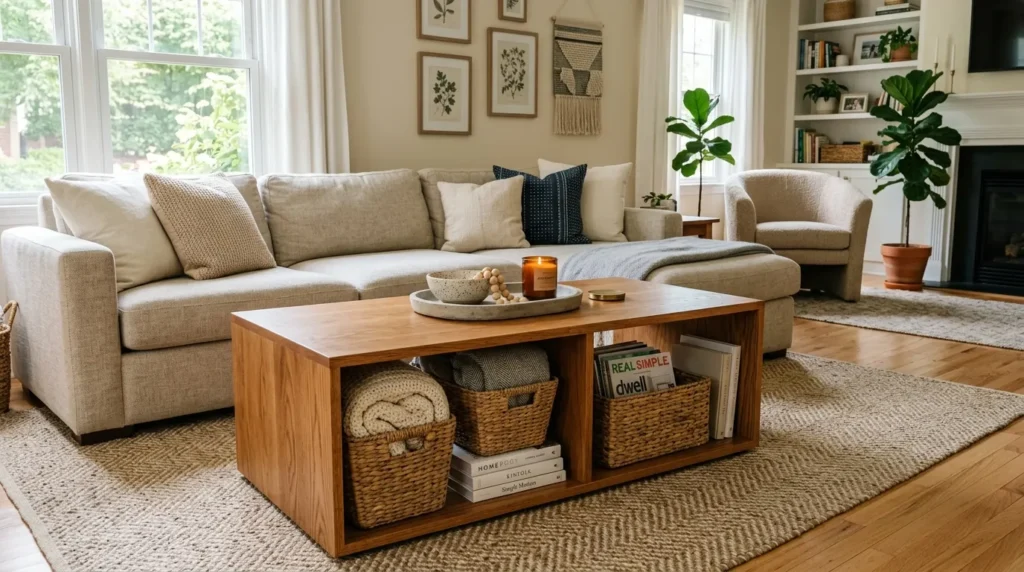
7. Storage Cube Table
Quick Benefits
- Adds practical storage
- Works in family rooms
- Keeps everyday items accessible
- Creates a substantial furniture piece
- Can be customized to your needs
Why It Works
A coffee table with integrated cubbies can solve two problems at once: providing a central surface and giving everyday items a place to live.
Open storage works particularly well for baskets, books, board games, magazines, and blankets.
The key to making the table look professionally made is consistent spacing. Uneven openings or rough edges can immediately make a DIY project look unfinished.
How To Style It
Use plywood or furniture-grade panels with carefully finished edges.
Create symmetrical compartments where possible.
Add baskets that fit neatly inside the openings. Matching or coordinated baskets will create a cleaner appearance.
Keep the tabletop relatively uncluttered.
If you have young children, consider rounded edges and stable construction, and avoid creating sharp protruding corners.
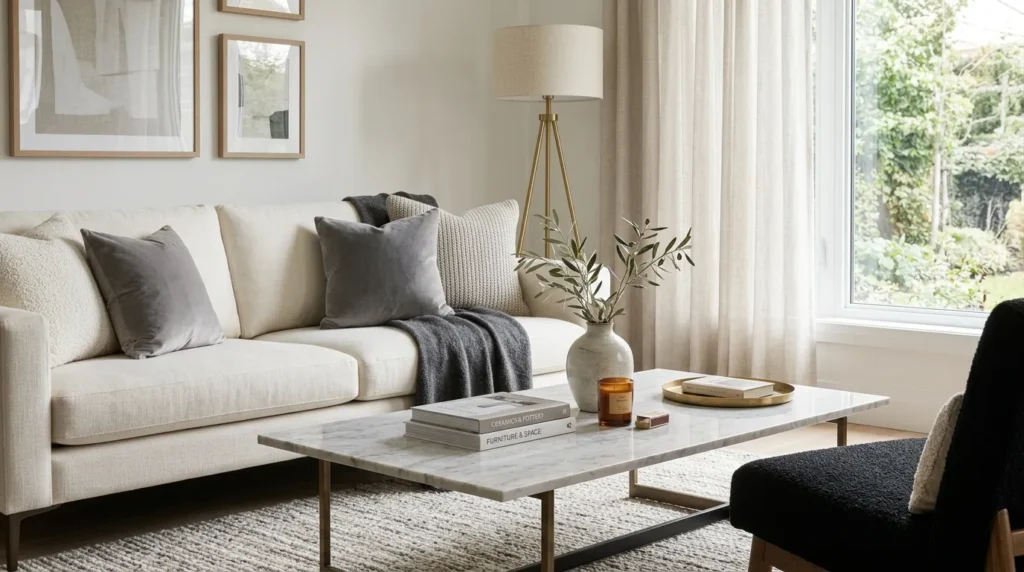
8. Faux Marble Table
Quick Benefits
- Creates an elegant appearance
- Works with modern interiors
- Can be lighter than real stone
- Offers many color possibilities
- Makes a strong focal point
Why It Works
Marble has a timeless visual appeal, but a genuine stone coffee table can be heavy, expensive, and difficult to build.
A faux marble surface can create a similar visual direction using an appropriate furniture surface, laminate, coated panel, or other suitable material.
The quality of the finish matters more than adding lots of decorative elements. A restrained white surface with subtle gray veining tends to look more sophisticated than an overly dramatic pattern.
How To Style It
Choose a realistic marble-inspired surface with restrained veining.
Pair it with a simple wood or metal base.
Keep the surrounding furniture neutral so the tabletop remains the focal point.
Brass accents can add warmth, while black metal can create a contemporary contrast.
Avoid excessive marble patterns elsewhere in the room. One strong surface is usually enough.
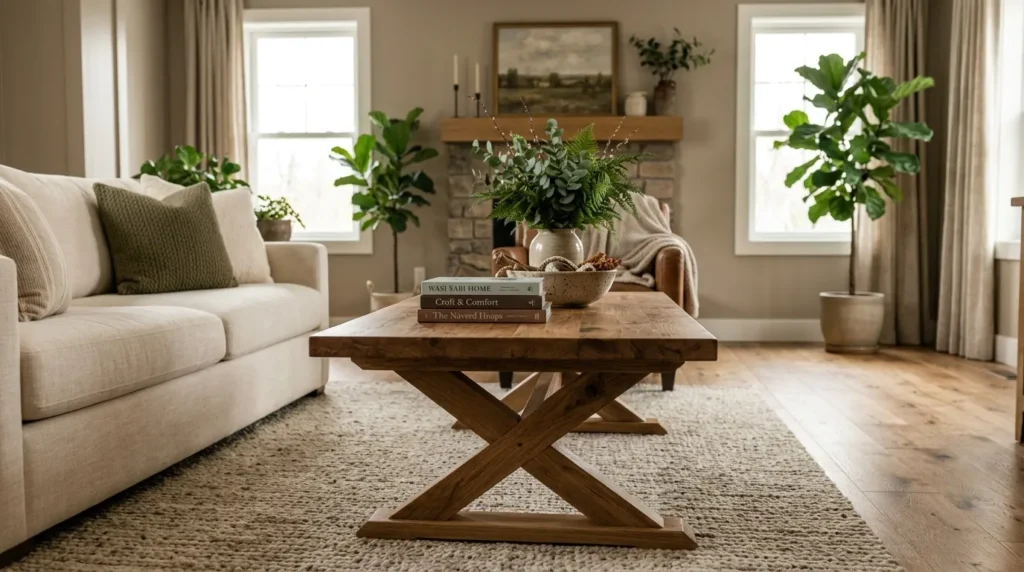
9. X Frame Wood Table
Quick Benefits
- Creates architectural interest
- Looks substantial
- Works with rustic interiors
- Provides sturdy visual support
- Can be customized in size
Why It Works
Crossed wooden supports give a simple coffee table a distinctive silhouette. The X-frame design adds geometry underneath the tabletop without requiring elaborate decorative carving.
It can work particularly well in farmhouse, rustic, industrial, and transitional living rooms.
Because the base becomes a major visual element, careful construction is important. The supports need to meet accurately and provide a stable foundation.
How To Style It
Use a thick-looking wood tabletop with a warm or medium finish.
Cut and assemble the crossed supports carefully, checking alignment throughout the process.
Consider adding subtle metal brackets if your construction method calls for additional reinforcement.
Pair the table with a neutral upholstered sofa, leather accent chair, woven rug, and simple ceramic accessories.
The strong base means the rest of the styling can remain relatively relaxed.
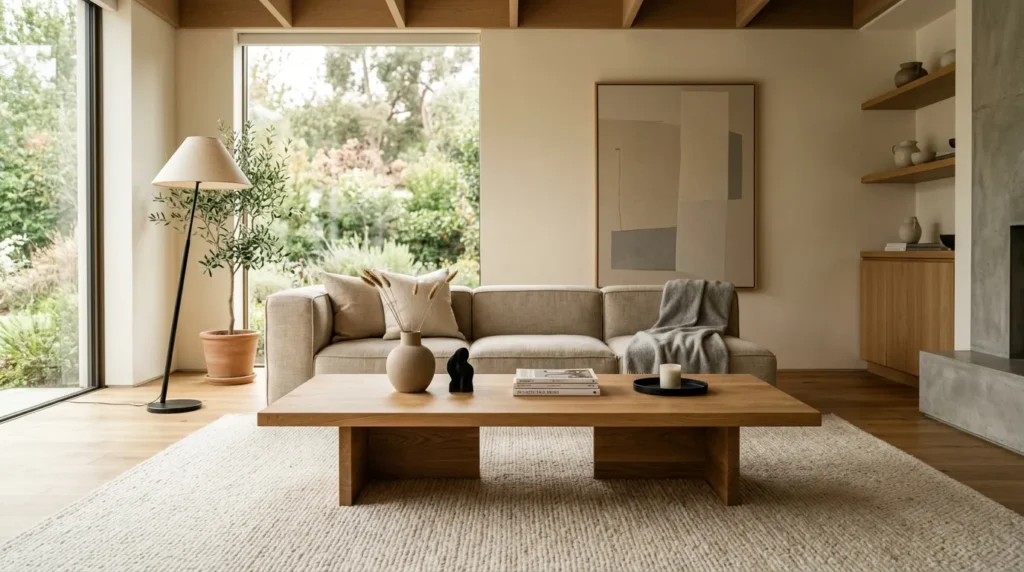
10. Minimalist Platform Table
Quick Benefits
- Creates a high-end appearance
- Uses simple geometry
- Works in modern interiors
- Easy to coordinate
- Emphasizes craftsmanship
Why It Works
Minimalist furniture often looks expensive because there is nowhere for imperfections to hide. Clean lines, carefully finished edges, and balanced proportions become the entire design.
A platform coffee table can use a thick-looking top and broad supports to create a sculptural silhouette.
The design is intentionally simple, but that simplicity makes finishing quality particularly important.
How To Style It
Choose a high-quality tabletop material and focus on perfectly smooth surfaces.
Use a muted natural wood finish, soft black, warm white, or another restrained color that complements your room.
Keep the base visually substantial but proportionate to the tabletop.
Pair it with a low-profile sofa, textured neutral rug, sculptural lamp, and one or two simple accessories.
The more minimal the table, the more important the craftsmanship becomes.
How to Make a DIY Coffee Table Look Expensive
The construction is only part of the project. Finishing details often determine whether a table looks homemade or professionally made.
Sand thoroughly
Start with appropriate grit and progress gradually. Don’t rush this stage.
Soften exposed edges
A tiny amount of edge rounding can make raw lumber look much more refined.
Hide hardware
Use appropriate joinery or position fasteners where they are less visible.
Maintain symmetry
Measure carefully so legs, supports, and compartments line up.
Choose one finish
A consistent stain, paint, or clear coat usually looks more sophisticated than several competing finishes.
Let the material show
If you’re using beautiful wood, don’t cover it with excessive decoration.
Take your time with the final coat
A smooth, even protective finish can make a significant difference to the final appearance.
Choosing the Right Coffee Table Size
A professionally designed-looking table still needs to fit the room.
For many living rooms, a coffee table that sits roughly at or slightly below the sofa seat height is comfortable for everyday use.
Leave enough walking space between the table and surrounding furniture. The exact clearance depends on your layout, but the area should feel easy to navigate rather than cramped.
The table should also relate to the size of your seating arrangement. A tiny table can look lost in front of a large sectional, while an oversized table can overwhelm a compact sofa.
Before cutting wood, use cardboard or painter’s tape to mark the proposed footprint on the floor.
Walk around it for a day if possible.
This simple test can prevent an expensive sizing mistake.
Best Wood for DIY Coffee Tables
Different woods create very different results.
Pine
Affordable and accessible, with a softer surface and prominent grain.
Oak
Durable and versatile, with a classic natural appearance.
Maple
Smooth and relatively light in appearance, making it useful for clean contemporary designs.
Walnut
Rich and sophisticated, especially when finished naturally.
Plywood
A practical option for modern designs when the edges and surface are intentionally incorporated into the aesthetic.
Reclaimed wood
Excellent for rustic character, but inspect, clean, and prepare reclaimed material appropriately before using it indoors.
Choose the material based on your budget, tools, skill level, desired appearance, and expected use.
DIY Coffee Table Styling Tips
Once your table is finished, don’t overcrowd it.
A simple formula is:
Tray + books + decorative object + greenery
A shallow tray keeps smaller items organized.
Two or three coffee-table books add height and visual interest.
A ceramic bowl, candle holder, or sculptural object can create another layer.
A small plant or fresh flowers introduce softness.
If your table has strong wood grain or an interesting geometric base, let that remain visible.
The best styling should make the table look useful, not staged beyond recognition.
FAQ
What is the easiest DIY coffee table to build?
A simple wood tabletop with pre-made legs is generally one of the easiest approaches. Hairpin legs can also simplify construction because they eliminate the need to build a complicated wooden base. The final result can still look polished when the tabletop is properly sanded, finished, and proportioned.
How can I make a DIY coffee table look professional?
Focus on accurate measurements, smooth sanding, consistent edges, concealed or neatly positioned hardware, sturdy construction, and a high-quality finish. Proportion is equally important. A table that fits the sofa and room correctly will usually look more intentional than one with elaborate details but poor scale.
What height should a coffee table be?
A coffee table is commonly positioned around the height of the surrounding sofa seat or slightly lower. Comfort and room layout matter more than following a single exact measurement. Before building, use a temporary cardboard surface or boxes to test the height and footprint in your actual living room.
Is plywood good for making a coffee table?
Yes. Furniture-grade plywood can be an excellent material for modern coffee tables, particularly when the layered edges are intentionally incorporated into the design. It can also be painted, veneered, or finished in different ways. Select an appropriate grade for the intended application and protect the finished surface properly.
What finish should I use on a DIY coffee table?
The best finish depends on the material and how the table will be used. Water-based or oil-based finishes, paint systems, and other furniture coatings can provide different appearances and levels of protection. Follow the product instructions and allow adequate curing time before regular use.
Can I build a coffee table without advanced woodworking skills?
Absolutely. Start with a simple design that uses straight cuts and ready-made components. A tabletop with pre-made legs is much more approachable than a complicated joinery project. As your skills improve, you can move toward designs with storage, curved edges, slats, or more detailed bases.
How much does it cost to build a DIY coffee table?
The cost varies significantly based on lumber, hardware, finish, tools, and table design. A basic project using inexpensive materials can be relatively affordable, while hardwood and specialty hardware can raise the price substantially. Compare the material cost with a similar ready-made table before beginning so you know what you’re saving.
Conclusion
A DIY coffee table doesn’t have to look like a compromise. With careful proportions, good materials, clean construction, and a thoughtful finish, a handmade table can become one of the most attractive pieces in your living room.
Start with the design that matches your skill level. A simple hairpin-leg table or chunky wood table may be enough if you’re new to woodworking. If you’re more experienced, a slatted design, storage table, rounded top, or minimalist platform can give you more room to experiment.
The most important step is planning. Measure your sofa, map out the table’s footprint, choose materials that fit your budget, and think about how the finished piece will be used every day.
Then take your time with the details. Smooth edges, aligned supports, clean finishes, and well-chosen hardware can make a surprisingly large difference.
You don’t need to copy an expensive designer table exactly. Build something that fits your room better, reflects your style, and gives you the satisfaction of creating a piece with your own hands.
Start simple, focus on craftsmanship, and let the finished table become a practical centerpiece your living room can grow around.
Related Articles
- 10 DIY Side Table Ideas for Every Room
- 10 Small Living Room Ideas That Maximize Space
- 10 DIY Wall Decor Ideas for a Stylish Home
- 10 Modern Living Room Ideas with Comfortable Style
- 10 DIY Home Projects You Can Finish in a Weekend