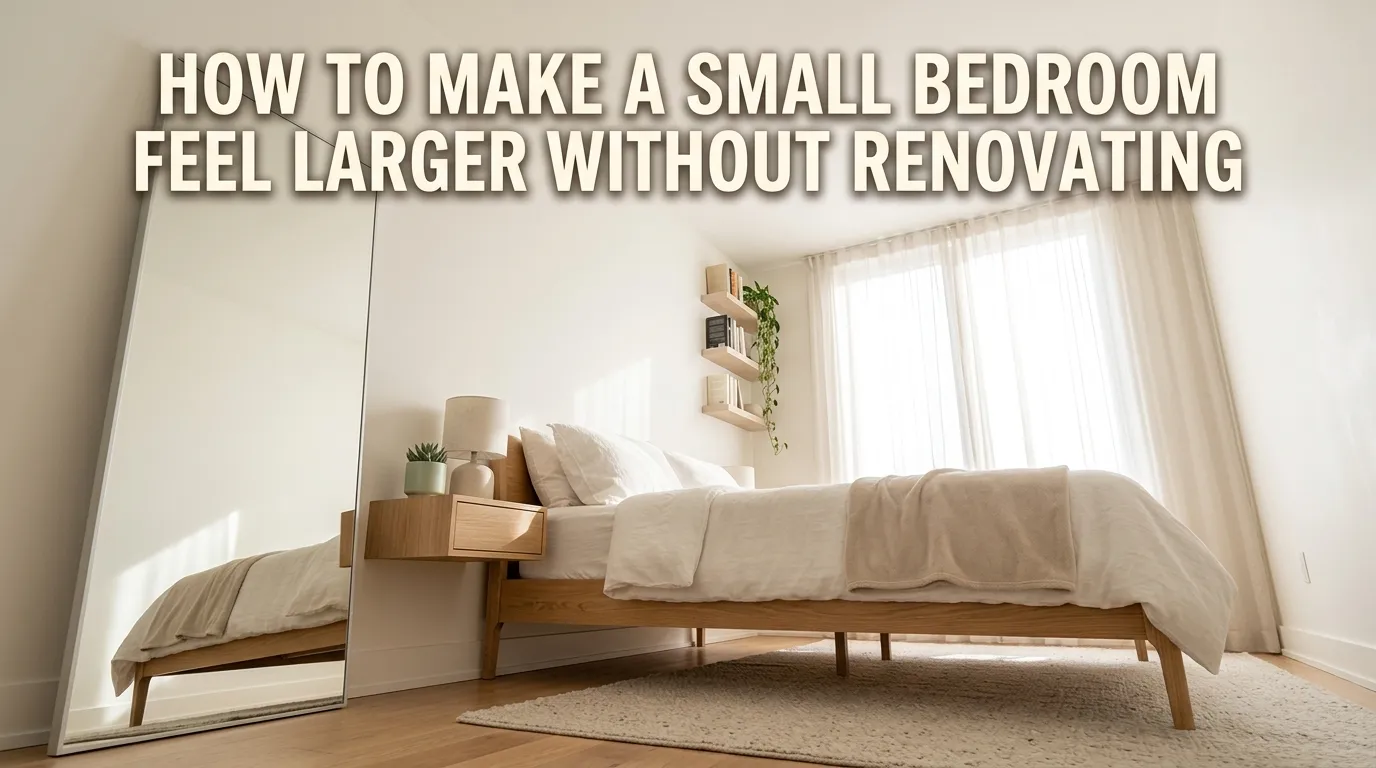
How to Make a Small Bedroom Feel Larger Without Renovating
A small bedroom doesn’t have to feel cramped, dark, or difficult to decorate. Even when you can’t knock down walls, replace flooring, or change the layout dramatically, thoughtful decorating choices can make the room feel noticeably more open.
The trick is to work with what you already have.
Furniture scale, lighting, wall color, window treatments, mirrors, bedding, and even the amount of visible floor space can influence how large a bedroom feels. Sometimes the biggest transformation comes from removing one bulky piece of furniture or simply rearranging the pieces you already own.
I’ve noticed that small bedrooms often feel crowded because too many visual elements compete for attention. A heavy bed frame, oversized nightstands, dark curtains, and cluttered surfaces can make a compact room feel even smaller. On the other hand, a restrained palette and carefully chosen furniture can create breathing room without changing the actual dimensions.
You don’t need to turn the bedroom into a stark minimalist space, either. Soft textures, warm wood, artwork, and personal accessories can still make the room feel inviting. The goal is visual balance rather than having as few possessions as possible.
These ideas are especially useful for renters, apartment dwellers, guest rooms, and homeowners who want an inexpensive refresh. Most can be completed without construction, permanent alterations, or a major furniture purchase.
From making better use of natural light to choosing furniture that visually occupies less space, the following strategies can help your bedroom feel brighter, calmer, and more spacious while keeping the comfortable character that makes it feel like home.
Table of Contents
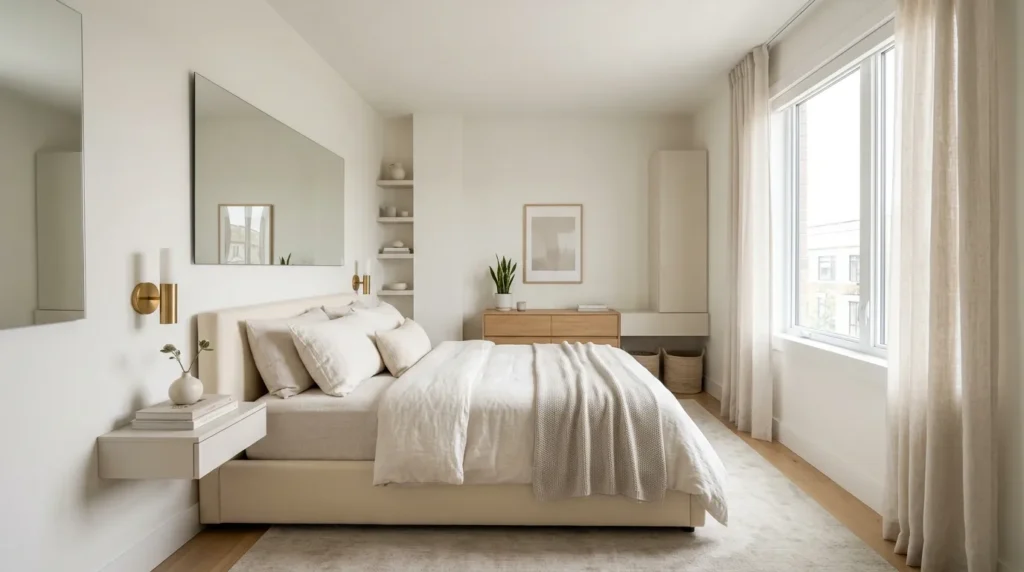
1. Light Wall Colors
Use a soft, reflective palette to create a brighter visual foundation.
2. Strategic Mirrors
Reflect light and create the impression of greater depth.
3. Raised Furniture
Expose more floor area with furniture that sits higher off the ground.
4. Simple Bedding
Create a calm focal point with streamlined layers and coordinated colors.
5. Vertical Curtains
Draw the eye upward with properly positioned window treatments.
6. Clear Floor Space
Reduce visual obstacles to make the room easier to navigate.
7. Slim Nightstands
Choose compact bedside furniture that provides function without bulk.
8. Layered Lighting
Use multiple light sources to brighten darker corners.
9. Consistent Colors
Create visual continuity by repeating a small group of complementary shades.
10. Decluttered Surfaces
Keep visible areas clean so the room feels more open.
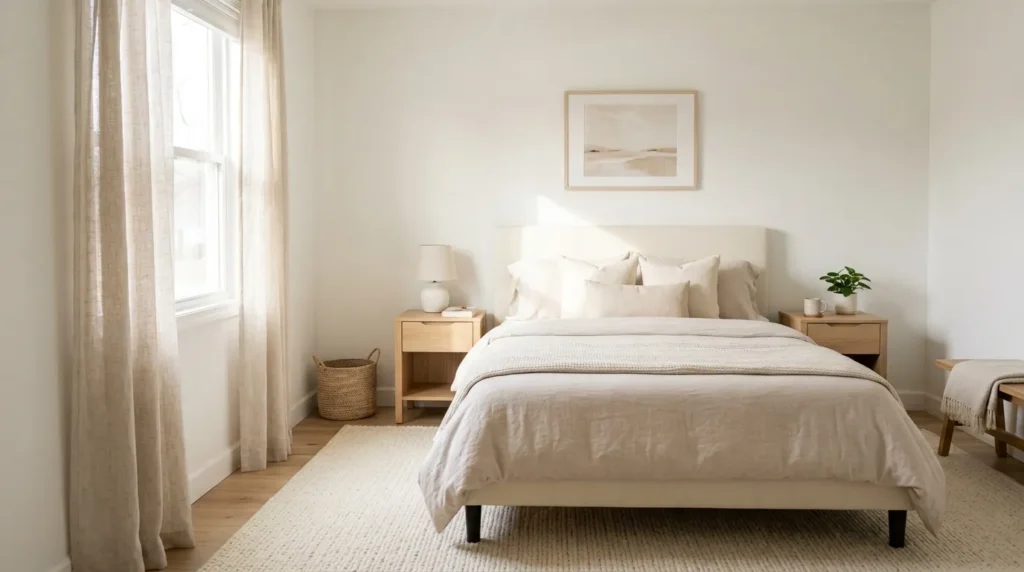
1. Light Wall Colors
Quick Benefits
- Makes the room feel brighter
- Reflects natural light
- Creates a calm backdrop
- Helps furniture stand out
- Works with many decorating styles
Why It Works
Wall color has a significant effect on how a compact bedroom is perceived. Light shades reflect more available light and can make walls appear less visually imposing.
Warm white, soft ivory, pale beige, light greige, and muted pastel shades can all work well.
That doesn’t mean every small bedroom needs to be stark white. In fact, warmer light shades can make the room feel more comfortable while still maintaining an airy appearance.
A consistent wall color also reduces visual breaks. When the walls, trim, and larger furnishings are relatively harmonious, the eye moves more smoothly around the room.
How To Style It
If repainting is allowed, choose a soft light color with an undertone that complements your flooring and furniture.
For renters, focus on light-colored bedding, curtains, rugs, and large textile pieces instead.
Avoid introducing too many competing colors.
Use darker shades as small accents rather than allowing them to dominate the room.
A light wall paired with natural wood and cream textiles creates a particularly welcoming combination.
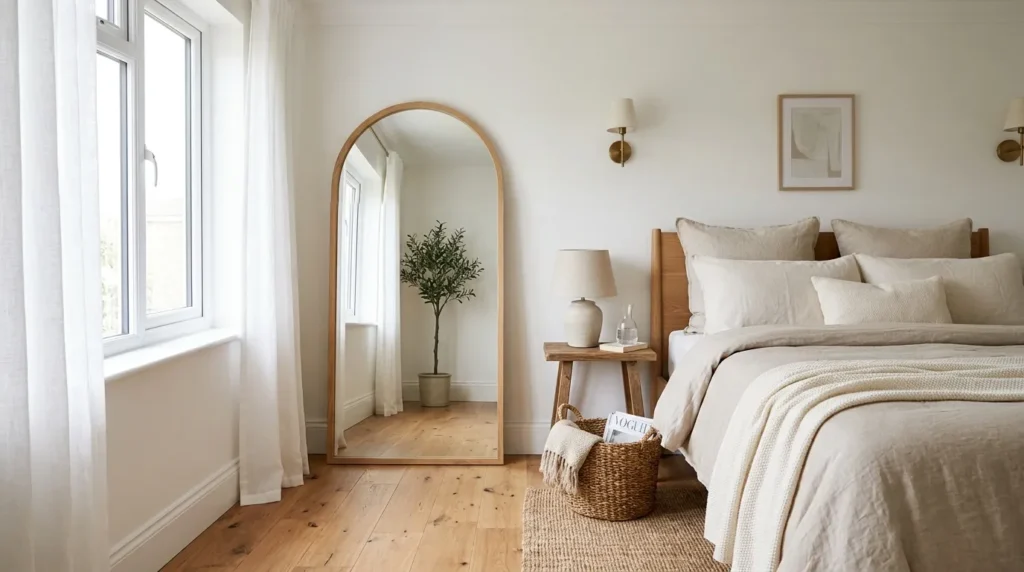
2. Strategic Mirrors
Quick Benefits
- Reflects natural light
- Adds visual depth
- Creates a brighter atmosphere
- Can act as wall decor
- Works without construction
Why It Works
A well-placed mirror can visually expand a bedroom by reflecting light and giving the eye another layer of space to look into.
The placement matters more than simply adding a mirror.
A mirror opposite or near a window can reflect daylight, while a full-length mirror can create a stronger sense of vertical space.
One large mirror can also be more effective than several small ones because it creates a cleaner visual field.
How To Style It
Place a full-length mirror against a wall or use a securely mounted design where appropriate.
Position it so it reflects a window, attractive artwork, or another visually pleasing part of the room.
Choose a simple frame that complements the existing decor.
Avoid placing a mirror where it reflects clutter, piles of clothing, or an overcrowded surface.
The goal is to reflect something that makes the room feel brighter and more intentional.
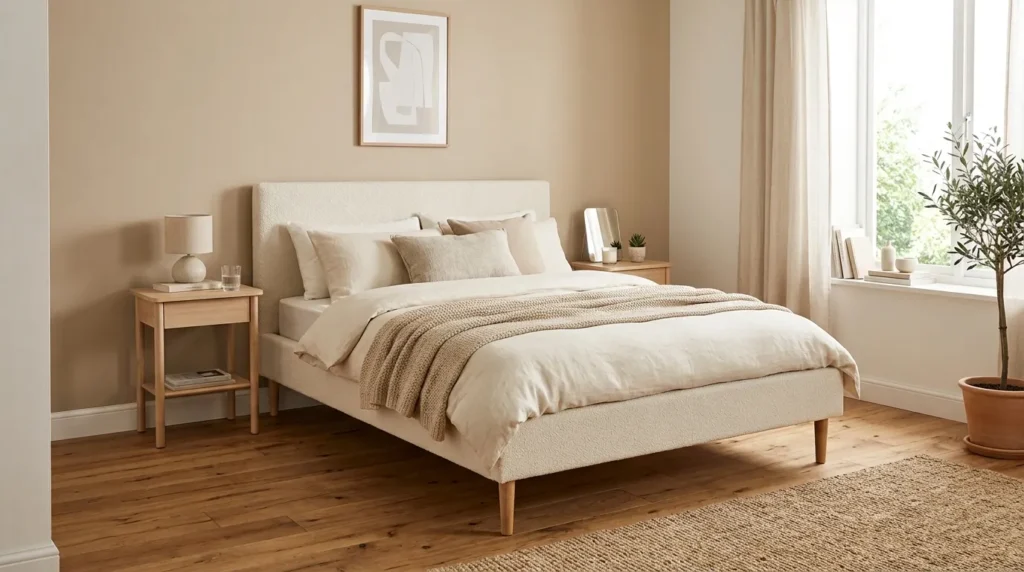
3. Raised Furniture
Quick Benefits
- Reveals more floor
- Creates a lighter appearance
- Improves visual flow
- Makes cleaning easier
- Reduces bulky silhouettes
Why It Works
Furniture that sits directly on the floor can look heavier than pieces with visible legs.
When you can see more flooring beneath a bed, dresser, or nightstand, the eye perceives greater continuity across the room.
This doesn’t mean replacing every piece of furniture.
Even one or two pieces with raised legs can create a lighter visual effect.
How To Style It
If you’re buying new furniture, look for beds, nightstands, and dressers with simple legs.
A platform bed with a slightly elevated base can provide a clean modern appearance.
Avoid extremely bulky storage beds unless the additional storage is necessary.
If you already own heavy furniture, keep surrounding areas particularly clear so the room doesn’t feel overloaded.
Use the exposed floor beneath raised furniture for visual breathing room rather than filling it with unnecessary containers.
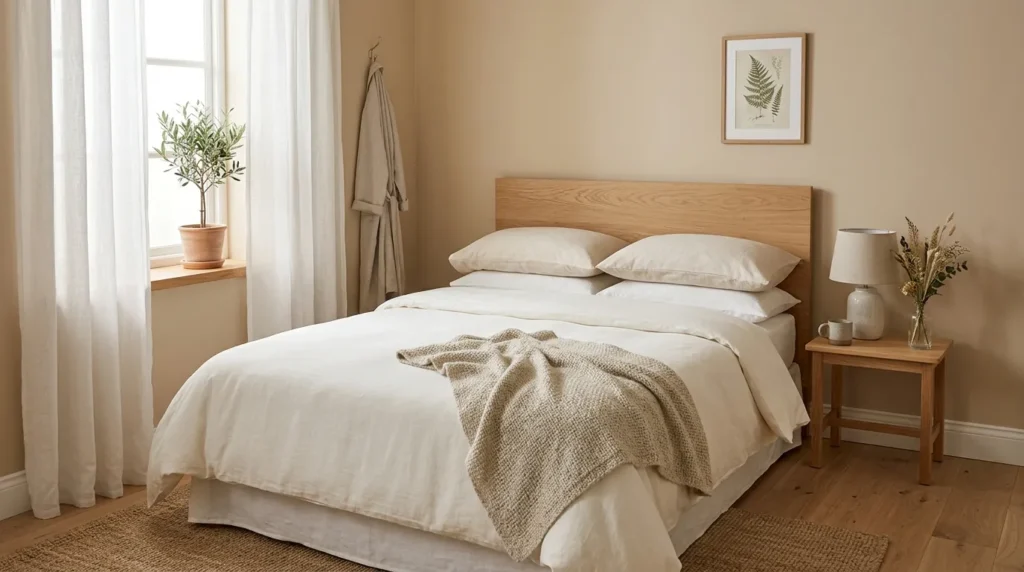
4. Simple Bedding
Quick Benefits
- Creates a calmer focal point
- Reduces visual clutter
- Makes the bed feel lighter
- Works with small spaces
- Easy to update
Why It Works
The bed is usually the largest object in a bedroom, so its appearance has an outsized effect on the entire room.
Busy patterns, too many pillows, and multiple contrasting colors can make the bed feel visually larger.
A simpler bedding arrangement creates a cleaner focal point.
This doesn’t mean sacrificing comfort. Soft layers can still make the bed feel cozy while maintaining visual simplicity.
How To Style It
Choose a coordinated bedding palette using two or three complementary shades.
Cream, white, beige, muted gray, soft blue, and natural green work beautifully in compact bedrooms.
Use one or two textured throws instead of piling on decorative cushions.
Choose a duvet or comforter that fits the bed properly without excessive fabric spilling onto the floor.
Keep the visual center of the room calm.
5. Vertical Curtains
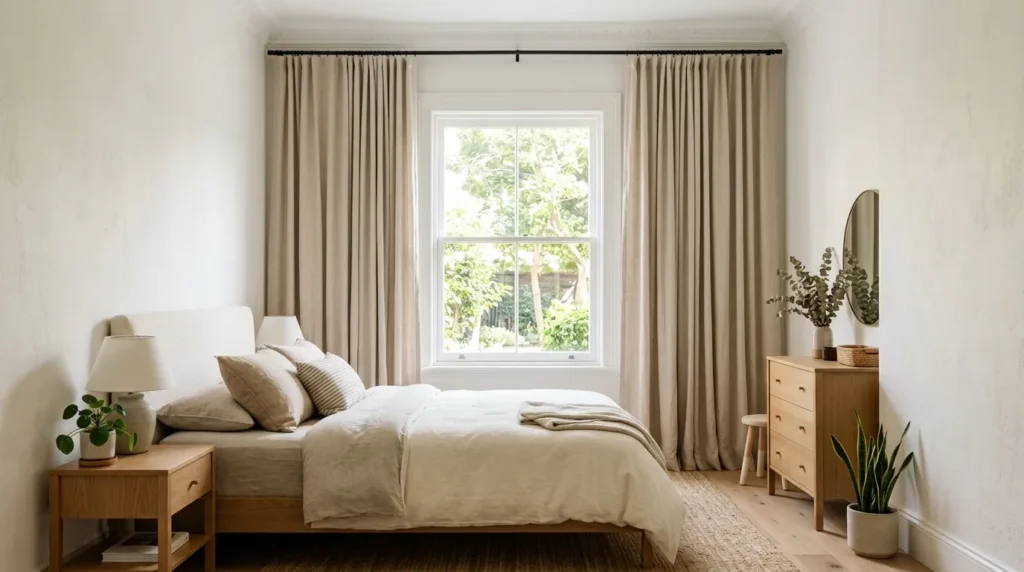
Quick Benefits
- Draws attention upward
- Makes windows feel taller
- Adds softness
- Maximizes natural light
- Creates visual height
Why It Works
Window treatments can dramatically change the proportions of a room.
Mounting curtains closer to the ceiling rather than directly above the window encourages the eye to travel upward, making the room appear taller.
Long curtains can also create a continuous vertical line.
This technique works particularly well when ceiling height is limited but you want to emphasize the height you do have.
How To Style It
Choose curtains that extend from near the ceiling to close to the floor.
Use lightweight fabrics if natural light is important.
Hang the curtain panels wide enough that they don’t block much of the window when open.
Neutral linen, cotton, or linen-look fabrics work well with simple bedroom decor.
Avoid overly heavy curtains in very small rooms unless you specifically need substantial light control.
6. Clear Floor Space
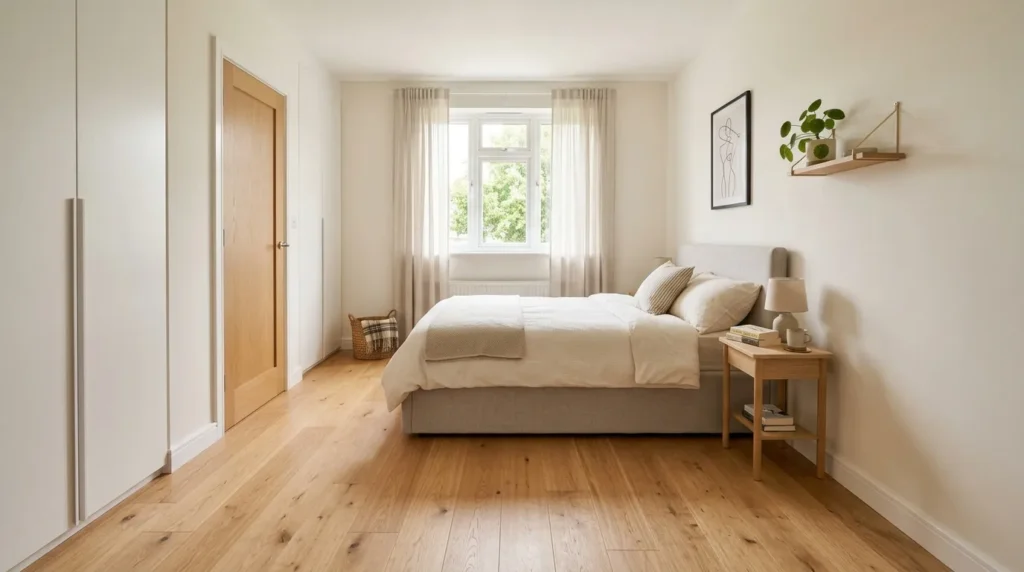
Quick Benefits
- Improves movement
- Makes the room feel larger
- Reduces visual clutter
- Simplifies cleaning
- Creates breathing room
Why It Works
Visible floor area is one of the simplest ways to make a small bedroom feel more spacious.
When bags, baskets, shoes, furniture, and clothing cover the floor, the room’s boundaries become visually fragmented.
Keeping the floor clear creates longer uninterrupted lines.
This is particularly noticeable around the bed and walking paths.
How To Style It
Start by removing anything that doesn’t need to remain on the floor.
Use wall hooks for bags and clothing.
Store shoes in a closet, under-bed container, or appropriate organizer.
Choose a narrow laundry hamper rather than a wide one.
If possible, leave the area around the bed visually open.
A clear floor doesn’t mean an empty room. It means every item has a deliberate place.
7. Slim Nightstands
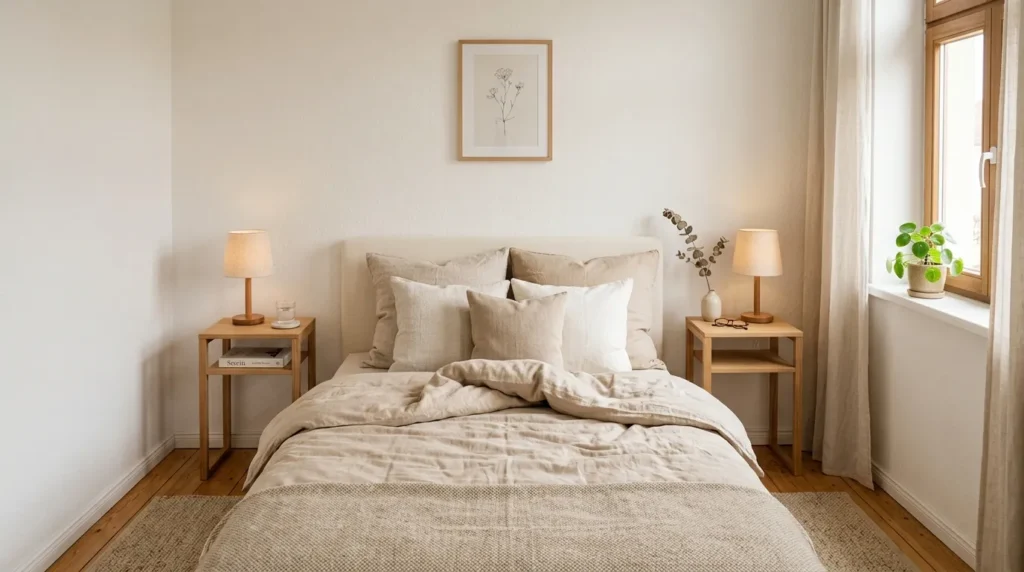
Quick Benefits
- Saves floor space
- Keeps essentials accessible
- Reduces visual weight
- Works beside larger beds
- Provides practical storage
Why It Works
Large nightstands can consume a surprising amount of space in a small bedroom.
If the bedside area is narrow, a slim table can provide everything you actually need without competing with the bed.
The goal is to match the nightstand to the room’s scale rather than automatically choosing a standard-sized piece.
How To Style It
Choose a narrow table, floating nightstand, wall-mounted shelf, or compact cabinet.
Keep only essential items on top: perhaps a lamp, book, and small tray.
If storage is necessary, select a design with one drawer or small cabinet rather than multiple bulky compartments.
Use vertical space when possible.
A wall-mounted bedside shelf can be particularly useful when every inch of floor space matters.
8. Layered Lighting
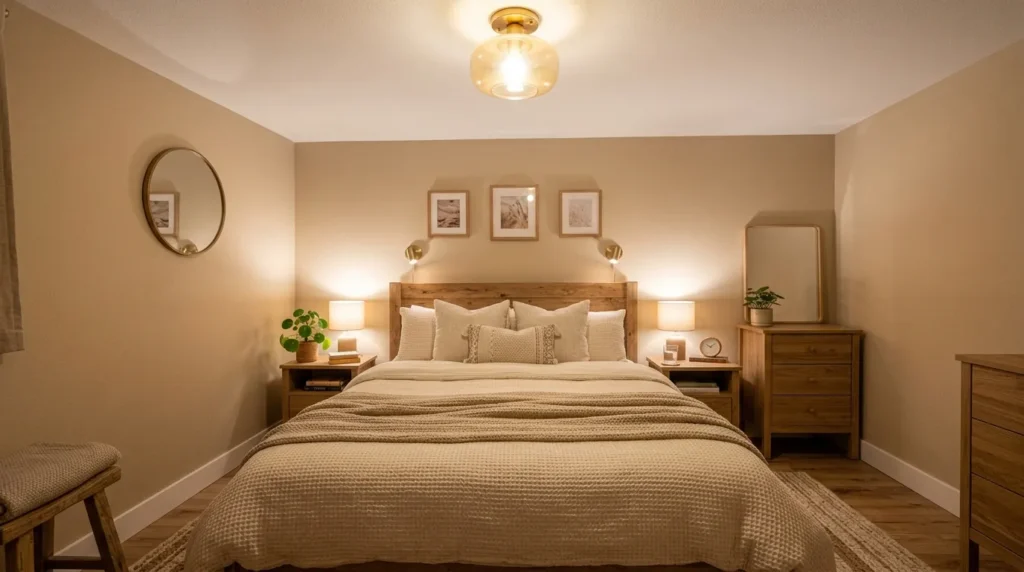
Quick Benefits
- Brightens dark corners
- Creates depth
- Improves nighttime comfort
- Adds warmth
- Makes the room feel more balanced
Why It Works
A small room can still feel dark when its lighting comes from a single central fixture.
Multiple light sources distribute illumination more evenly and prevent corners from disappearing into shadows.
Layered lighting also creates flexibility. Bright light can be useful when getting dressed, while softer bedside lighting creates a relaxing atmosphere in the evening.
How To Style It
Combine overhead lighting with bedside lamps, wall sconces, or a compact floor lamp.
Use warm-toned bulbs for a comfortable bedroom atmosphere.
Place lighting strategically so darker corners receive some illumination.
If bedside tables are very small, consider wall-mounted reading lights.
Keep fixtures visually simple so they don’t add unnecessary clutter.
9. Consistent Colors
Quick Benefits
- Creates visual continuity
- Reduces distraction
- Makes furniture blend together
- Supports a calm atmosphere
- Makes decorating easier
Why It Works
Too many unrelated colors can make a small bedroom feel visually fragmented.
A limited palette creates continuity, allowing the eye to move smoothly from one element to another.
This doesn’t mean everything has to match perfectly.
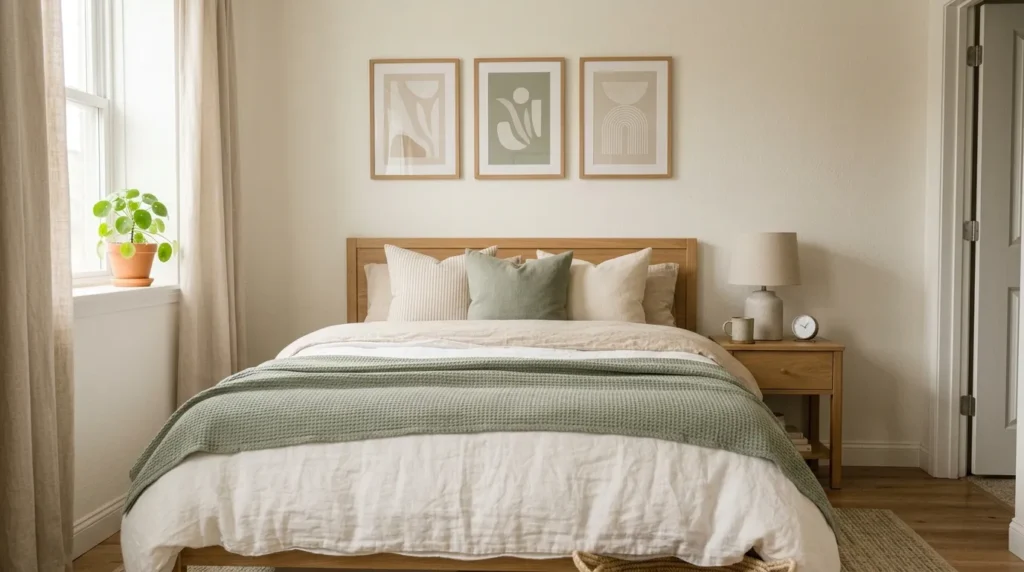
Instead, repeat a few colors across bedding, curtains, rugs, artwork, and accessories.
How To Style It
Choose a base color, a secondary shade, and one subtle accent.
For example, warm white can serve as the foundation, beige can provide depth, and muted sage can add personality.
Repeat those shades throughout the room.
If your furniture has different wood finishes, use textiles and accessories to visually connect them.
Avoid adding a new color every time you introduce a decorative object.
10. Decluttered Surfaces
Quick Benefits
- Creates visual breathing room
- Makes cleaning easier
- Highlights favorite decor
- Reduces distractions
- Makes furniture feel less bulky
Why It Works
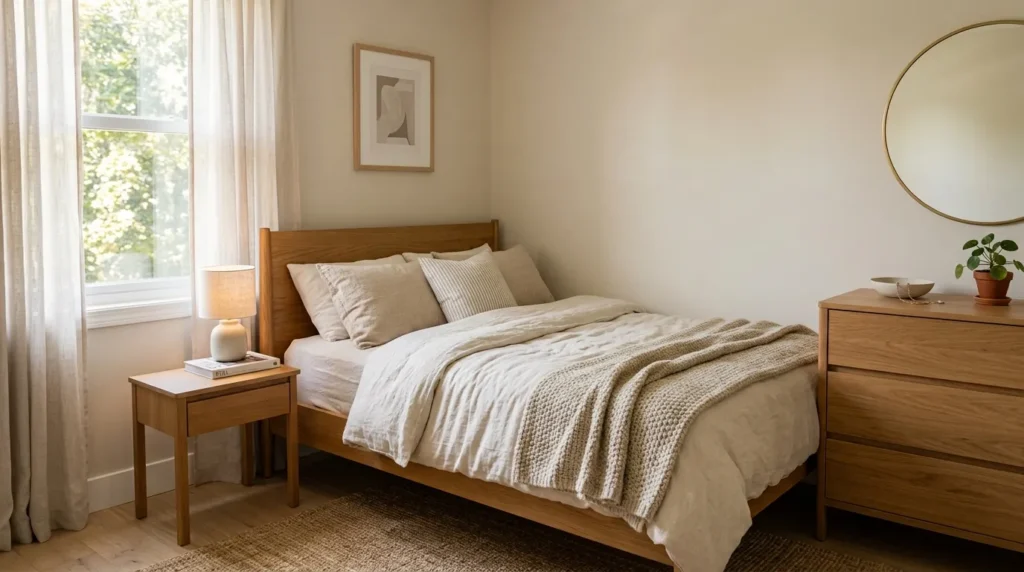
A small room can feel crowded even when its floor is clear if dressers, shelves, and nightstands are covered with belongings.
Visible clutter gives the eye too many places to stop.
Clearer surfaces create larger uninterrupted areas, which helps the room feel calmer.
A few intentional objects often have more impact than dozens of small accessories.
How To Style It
Start with the nightstand and dresser.
Remove anything you don’t use regularly.
Group small items inside trays or decorative boxes.
Leave some empty surface area.
Choose one meaningful decorative piece rather than several unrelated objects.
At the end of each day, return clothing, accessories, and personal items to their designated storage locations.
How to Make a Small Bedroom Look Bigger on a Budget
You don’t need to purchase new furniture to change the visual proportions of your room.
Start by rearranging what you already own.
Move bulky furniture away from the main walking path. Remove unnecessary pieces and create as much uninterrupted floor space as possible.
Next, simplify the bedding and visible surfaces.
Use matching or coordinated textiles to create visual continuity.
Then look at your window treatments. Opening curtains fully during the day can immediately increase the amount of natural light in the room.
Mirrors can also provide a relatively inexpensive way to reflect light.
Finally, focus on lighting. A small lamp or wall light in a dark corner can make the entire room feel more balanced.
The best budget changes are often the ones that reduce visual weight rather than add more decor.
What Makes a Small Bedroom Feel Smaller?
Several common decorating choices can unintentionally make a compact bedroom feel cramped.
Oversized furniture: Large pieces can dominate the room and restrict movement.
Too many patterns: Competing patterns create visual noise.
Dark window treatments: Heavy curtains can reduce natural light and make windows feel smaller.
Cluttered floors: Shoes, bags, baskets, and clothing interrupt visual flow.
Too much furniture: Every piece should serve a practical purpose.
Poor lighting: Dark corners can make the room feel enclosed.
Overdecorated surfaces: Too many small objects make the room feel busy.
Inconsistent colors: Too many unrelated shades can break up the visual space.
Removing even one or two of these problems can make a noticeable difference.
A Simple Small Bedroom Reset
If your room needs a quick refresh, use this simple sequence:
1. Clear the floor
Put away shoes, clothing, bags, and loose items.
2. Clear the nightstand
Keep only the essentials.
3. Simplify the bed
Remove unnecessary decorative pillows and heavy layers.
4. Open the windows
Let natural light become the room’s primary illumination during the day.
5. Adjust the curtains
Position them to maximize the visible window.
6. Check the furniture layout
Make sure pathways remain easy to use.
7. Remove one unnecessary item
A chair, small table, basket, or decorative piece may be taking up more visual space than it contributes.
8. Add one reflective element
A mirror or reflective surface can help bounce light through the room.
9. Improve one lighting area
Add a lamp to a dark corner or replace an overly harsh bulb.
10. Maintain the changes
Spend a few minutes each evening returning items to their proper locations.
FAQ
How can I make a small bedroom look bigger without renovating?
Focus on visual changes rather than construction. Use lighter colors, strategically placed mirrors, simple bedding, clear floor space, vertical curtains, and layered lighting. Reducing bulky furniture and keeping visible surfaces organized can also make a significant difference without changing the room itself.
What color makes a small bedroom look bigger?
Light colors such as warm white, ivory, pale beige, light greige, and soft pastels can help a room feel brighter and more open. The best choice depends on the room’s natural light and existing finishes. A warm light neutral is often more inviting than a stark white.
Where should I put a mirror in a small bedroom?
Place a mirror where it can reflect natural light or another attractive part of the room. A mirror near or opposite a window can help brighten the space. Avoid positioning it where it reflects clutter, because that can make the room feel busier rather than larger.
Does a low bed make a small bedroom look bigger?
A low-profile bed can reduce visual bulk, but a bed with slightly raised legs can also make the room feel more open because more flooring remains visible underneath. The best choice depends on the room and the amount of storage you require.
Should curtains touch the floor in a small bedroom?
Floor-length curtains can help emphasize vertical height. Hanging the curtain rod closer to the ceiling and allowing the panels to extend toward the floor creates a longer visual line. Choose lightweight fabric if you want to preserve as much natural light as possible.
How do I make a small bedroom feel less cluttered?
Start by removing items you don’t use and keeping the floor clear. Use closed storage for loose belongings, simplify surfaces, coordinate colors, and avoid overcrowding furniture. A small number of intentional decorative pieces usually works better than many small accessories.
Can mirrors really make a bedroom look larger?
Mirrors don’t physically increase the room’s dimensions, but they can reflect light and create visual depth. A large, well-positioned mirror can make a compact room feel brighter and more open.
Conclusion
Making a small bedroom feel larger doesn’t require knocking down walls or starting an expensive renovation. The most effective changes often involve how you use light, color, furniture, and empty space.
Start with the basics: clear the floor, simplify the bed, remove unnecessary furniture, and keep surfaces organized. Then introduce visual tricks such as a strategically positioned mirror, floor-length curtains, lighter textiles, and layered lighting.
Pay attention to scale as well. Slim nightstands, raised furniture, and simple silhouettes can help preserve the feeling of openness while still providing the comfort and storage you need.
You don’t have to eliminate personality from the room. Keep the artwork, textiles, plants, and meaningful objects that make the bedroom feel like yours. Just give those pieces enough space to breathe.
A small bedroom can be cozy without feeling cramped. With a few thoughtful adjustments, you can create a brighter, calmer space that feels more comfortable every day—without changing the room’s actual dimensions.
Related Articles
- How to Organize a Small Bedroom with Easy Storage Hacks
- 10 Small Bedroom Ideas That Make the Most of Every Inch
- How to Decorate a Small Bedroom Without Spending a Fortune
- 10 Cozy Neutral Bedroom Ideas for a Calm Retreat
- 10 Bedroom Layout Ideas for Small Spaces