10 Garden Decor Ideas with Simple DIY Touches
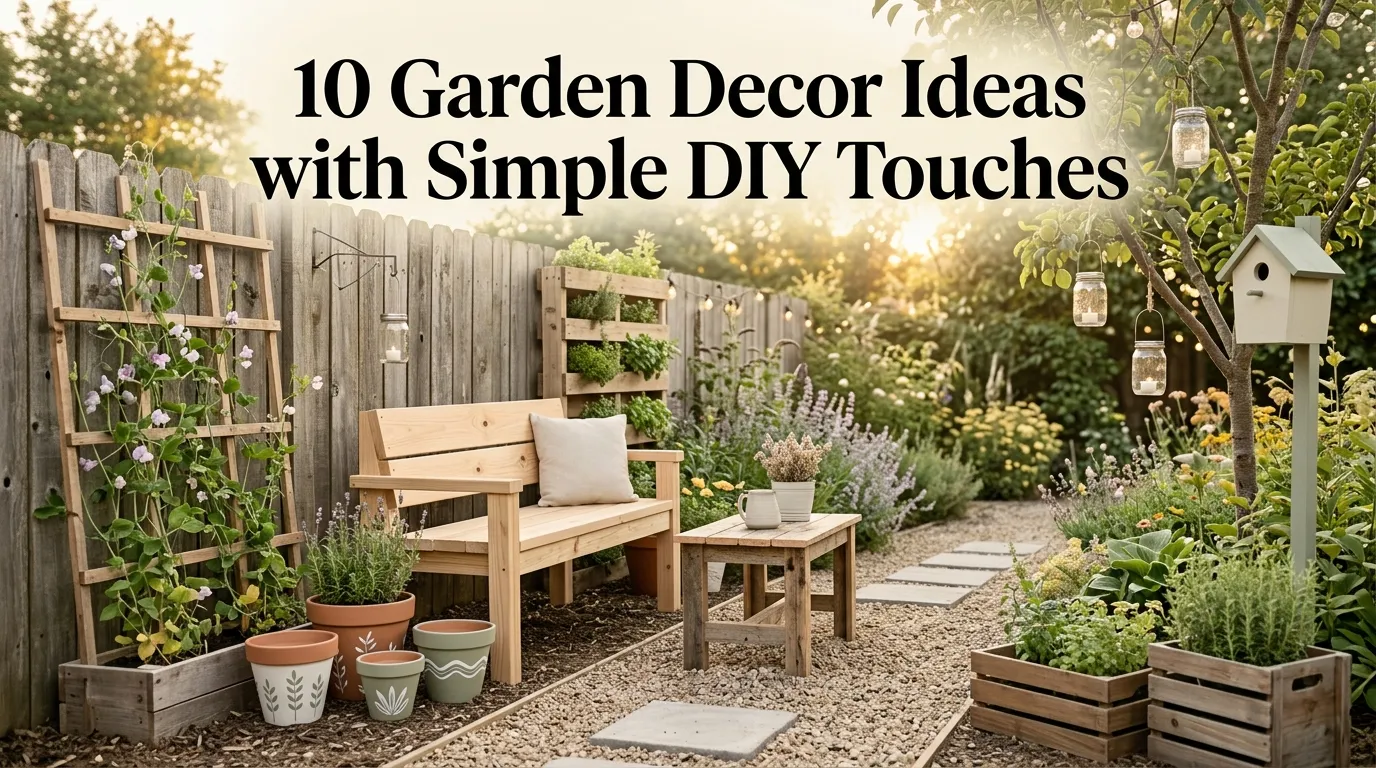
A beautiful garden does not have to look professionally designed to feel special. Some of the most charming outdoor spaces are built gradually with simple materials, personal touches, and a little creativity. A painted planter, handmade garden sign, repurposed container, or simple seating area can give an ordinary backyard a much more inviting personality.
DIY garden decor is especially useful because it allows you to work with what you already have. An old wooden crate can become a plant stand. A collection of mismatched pots can become a colorful container garden. Even a small corner beside a patio can become a cozy retreat with a chair, a few plants, and warm lighting.
In my experience, the most successful garden projects are the ones that balance beauty with practicality. Outdoor decor has to handle sunlight, moisture, temperature changes, and regular use. Choosing durable materials and keeping maintenance realistic makes a project much more enjoyable.
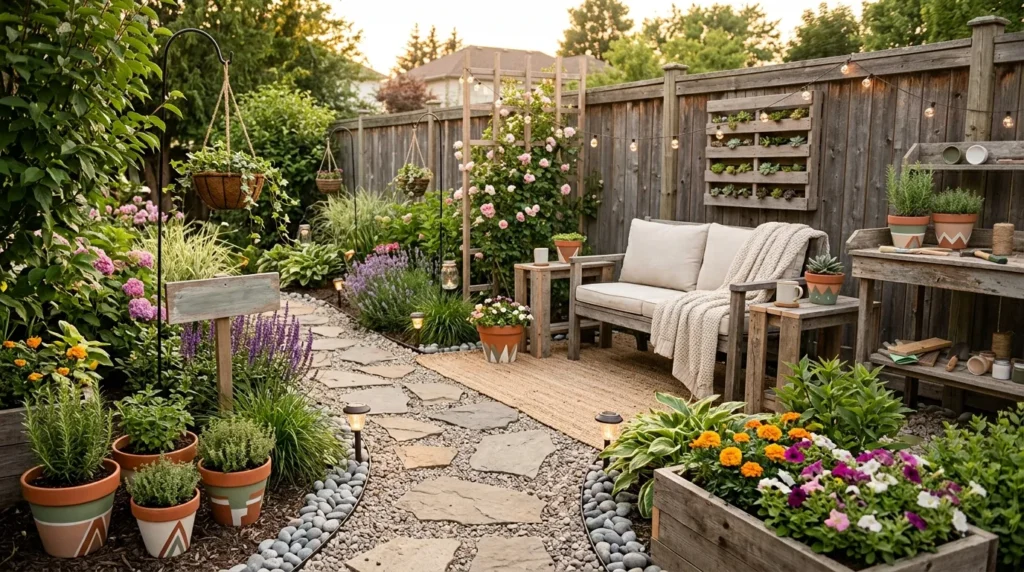
You also do not need a large yard. Small balconies, patios, front gardens, side yards, and compact outdoor areas can all benefit from thoughtful decorating. The key is to define what you want the space to do, then use decor to support that purpose.
The ideas below focus on simple projects that add personality without making the garden feel crowded. Some require basic crafting skills, while others involve little more than rearranging existing pieces. Use one idea as a weekend project or combine several to create an outdoor space that feels personal, welcoming, and distinctly yours.
Table of Contents
1. Painted Terracotta Pots
Refresh ordinary planters with simple colors, patterns, and hand-painted details.
2. DIY Wooden Plant Stand
Create vertical interest by elevating potted plants on a simple wooden stand.
3. Upcycled Garden Signs
Add personality and direction with handmade signs from reclaimed or inexpensive materials.
4. Cozy Garden Seating
Turn an unused corner into a comfortable outdoor retreat with simple furniture and textiles.
5. Hanging Planter Display
Use vertical space to create an attractive collection of plants without taking up ground area.
6. DIY Garden Lanterns
Add gentle evening atmosphere with simple handmade lantern arrangements.
7. Repurposed Container Garden
Give old containers a second life by turning them into distinctive plant displays.
8. Simple Stone Path
Create a charming garden walkway that connects planting areas and outdoor living spaces.
9. DIY Trellis Corner
Add height and structure with a simple trellis for climbing plants and flowers.
10. Handmade Garden Art
Bring personality to empty spaces with simple outdoor-friendly decorative pieces.
1. Painted Terracotta Pots
Quick Benefits
- Refreshes inexpensive planters
- Adds color and personality
- Creates visual consistency
- Works in small and large gardens
- Makes an easy weekend project
Why It Works
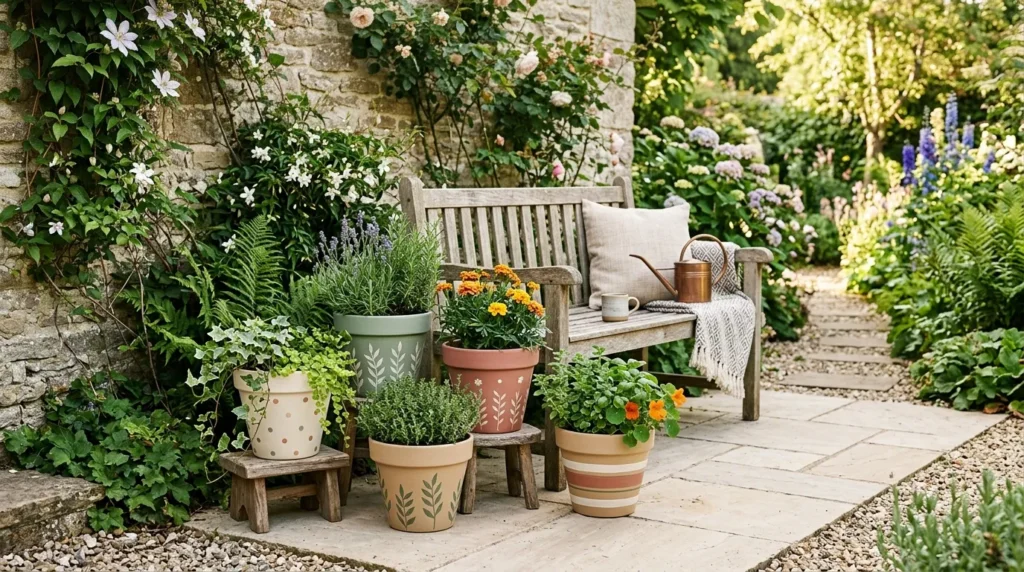
Terracotta pots have a timeless appearance, but a few simple painted details can make them feel completely different. This is one of the easiest ways to introduce personality into a garden without changing the plants themselves.
The beauty of painted pots is their flexibility. You can use a soft neutral palette for a modern garden, earthy tones for a natural landscape, or brighter colors for a playful backyard.
Painting several pots in coordinated shades also helps create a visual connection between different parts of the garden. Even if the containers have different shapes, a shared color palette can make the collection feel intentional.
One thing that works especially well is keeping the pattern simple. Broad stripes, arches, dots, color blocks, and hand-painted borders are usually easier to maintain than highly detailed designs.
How To Style It
Start with clean, dry terracotta pots. Remove loose dirt and allow the surface to dry completely before painting.
Choose an outdoor-appropriate paint suitable for the material and intended conditions. Neutral shades such as cream, sage, warm beige, charcoal, and muted terracotta work beautifully with greenery.
For a modern look, paint only the rim or create a simple geometric block. For a more playful appearance, use two or three related colors.
Group painted pots at different heights near a patio, entryway, or garden seating area.
Keep the plants relatively simple so the containers remain part of the overall design rather than competing with the foliage.
2. DIY Wooden Plant Stand
Quick Benefits
- Adds vertical dimension
- Displays plants at different heights
- Makes small gardens feel fuller
- Creates a handmade focal point
- Uses relatively simple materials
Why It Works
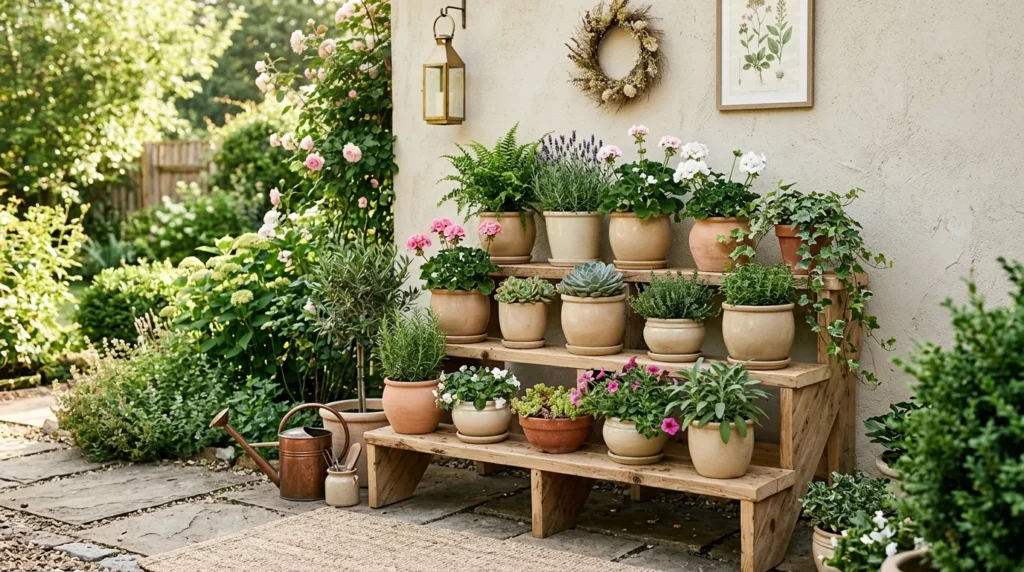
Plants naturally grow at different heights, but container gardens can sometimes look flat when every pot sits directly on the ground. A simple wooden plant stand solves that problem by creating multiple levels.
Vertical arrangements also make excellent use of limited space. A patio, balcony, porch, or small garden corner can hold several plants without requiring a large footprint.
Wood adds warmth and works naturally with greenery. A simple unfinished design can blend into a cottage-style garden, while a painted stand can support a more modern or colorful look.
The goal is not to build a complicated structure. A straightforward tiered stand can provide plenty of visual impact.
How To Style It
Use weather-appropriate wood and make sure the stand is stable on the intended surface.
Create two or three levels so plants receive enough light and are easy to access for watering.
Place trailing plants toward the edges and taller plants toward the back. This creates a layered appearance while keeping each plant visible.
For a natural look, leave the wood unfinished or use an outdoor finish that preserves its character.
For a modern garden, paint the stand a muted neutral such as charcoal, cream, or soft green.
Position the finished stand beside a patio wall, garden entrance, or seating area where its vertical structure can become part of the landscape.
3. Upcycled Garden Signs
Quick Benefits
- Adds personality to outdoor spaces
- Reuses inexpensive materials
- Creates a handmade appearance
- Works for gardens of many styles
- Can identify herbs, flowers, or areas
Why It Works
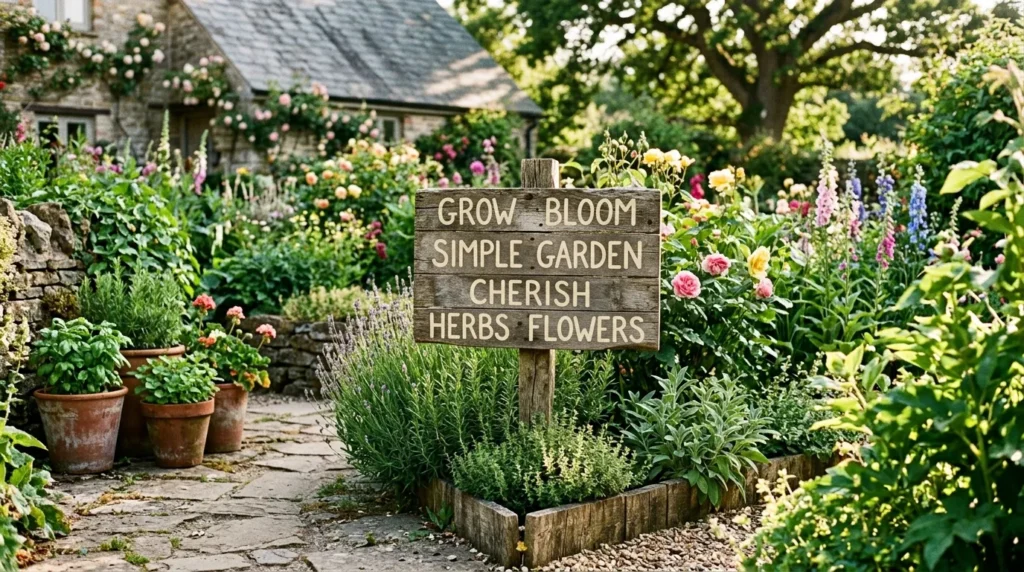
Garden signs can be decorative, practical, or both. They give an outdoor space a sense of personality and can make different garden areas feel more intentional.
Reclaimed wood, old boards, leftover fence pieces, and other sturdy materials can become simple signs with a little sanding and outdoor-friendly paint.
Instead of creating signs covered with excessive text, consider using a short word or phrase. Labels such as “Herbs,” “Garden,” or “Bloom” can be enough.
Handmade signs also work particularly well in cottage, farmhouse, rustic, and casual gardens because slight imperfections contribute to their charm.
How To Style It
Choose a piece of wood with a shape that suits your garden. Sand rough edges so the sign is comfortable to handle.
Use exterior paint or another finish appropriate for outdoor exposure. Keep the lettering simple and easy to read.
For a natural garden, use neutral lettering on stained or lightly finished wood. For a colorful space, choose a painted background with contrasting lettering.
Mount the sign on a simple stake or attach it to an existing fence or wall.
Place signs where they feel natural rather than adding one to every garden section. One or two well-positioned signs usually create more impact.
4. Cozy Garden Seating
Quick Benefits
- Turns the garden into a usable retreat
- Encourages outdoor relaxation
- Creates a clear focal point
- Works in small spaces
- Makes decor feel purposeful
Why It Works
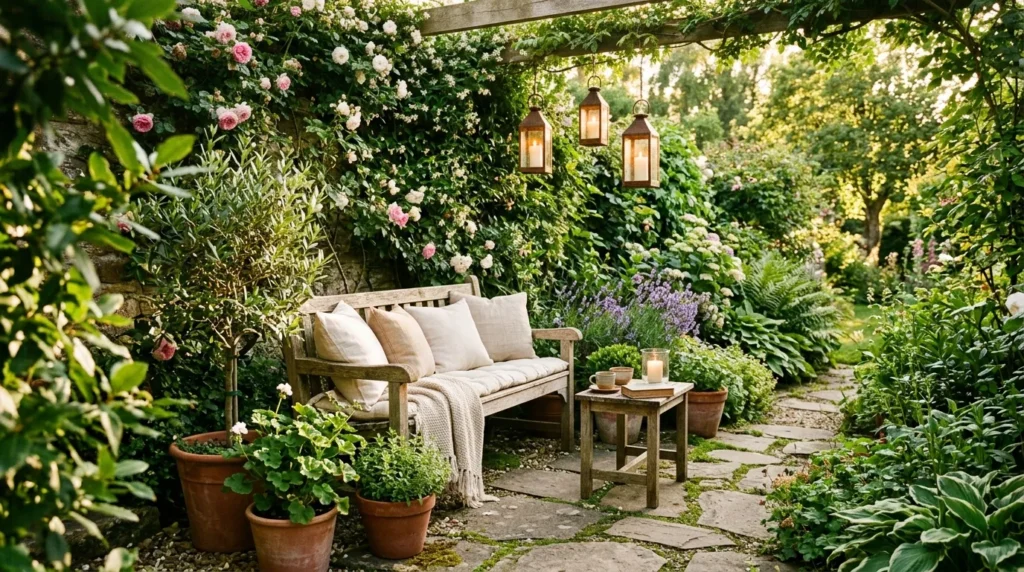
Garden decor becomes more valuable when it encourages people to spend time outdoors. A simple seating area can transform an unused corner into a place for morning coffee, reading, conversation, or evening relaxation.
You do not need a large outdoor furniture collection. One comfortable chair, a small bench, or two compact chairs can establish a complete seating zone.
The surrounding plants and decor then become part of the experience. A few pots, a small side table, outdoor cushions, and soft lighting can make the area feel like an extension of the home.
If you’re anything like me, a garden becomes much more enjoyable when there is a comfortable place to actually sit and look at it.
How To Style It
Choose seating that fits the available space and outdoor conditions. A wooden bench can work well along a fence, while a compact bistro-style arrangement suits patios and balconies.
Add weather-appropriate cushions in neutral or botanical-inspired colors.
Place a small table nearby for drinks, books, or gardening tools.
Surround the seating area with plants rather than filling the entire space with furniture.
Add a simple outdoor rug if the surface and weather conditions allow. This can visually define the seating zone.
Finish with a few lanterns or subtle string lights for evening use.
5. Hanging Planter Display
Quick Benefits
- Uses vertical space
- Works well in compact gardens
- Adds plants at eye level
- Creates a layered appearance
- Can decorate fences and walls
Why It Works
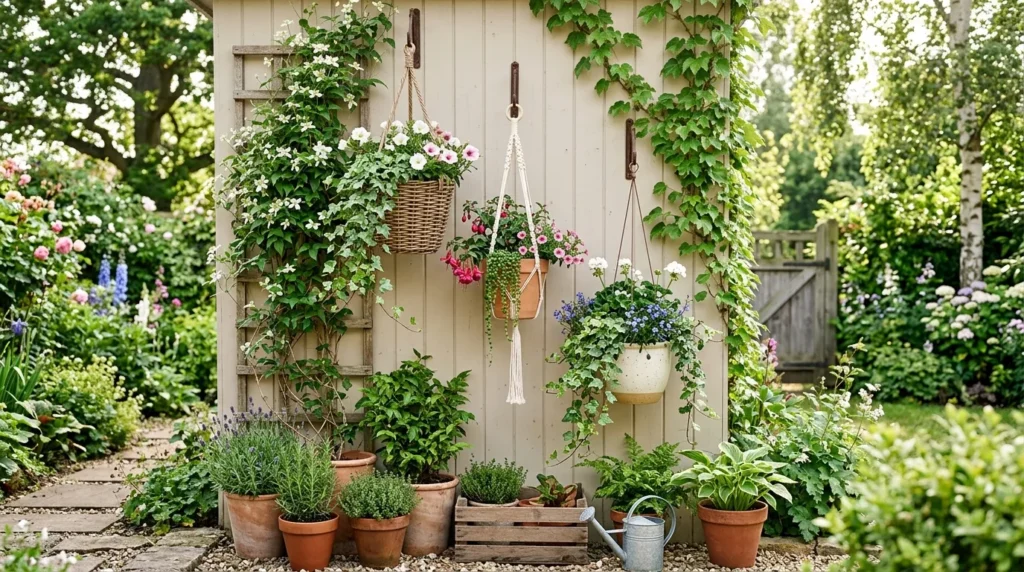
When ground space is limited, look upward. Hanging planters turn walls, fences, pergolas, and covered structures into additional growing and decorating areas.
They also change the visual rhythm of a garden. Plants are no longer concentrated at ground level; instead, foliage can appear at several heights.
Trailing plants are particularly effective because their leaves and stems naturally soften hard architectural lines.
A hanging display can be as simple as three matching planters or as eclectic as a collection of different containers. The style depends on the surrounding garden.
How To Style It
Choose lightweight containers that are appropriate for hanging use and secure them properly.
Use plants with growth habits suited to the location. Trailing greenery works beautifully where you want foliage to cascade downward.
For a modern arrangement, use matching containers in cream, charcoal, or terracotta.
For a cottage-style garden, mix several natural materials while keeping the overall palette coordinated.
Space the planters so the display feels balanced rather than crowded.
Hang them at different heights if the structure allows, creating a gentle vertical rhythm.
6. DIY Garden Lanterns
Quick Benefits
- Creates evening ambiance
- Adds decorative light
- Makes patios feel inviting
- Can use simple materials
- Works well for entertaining areas
Why It Works
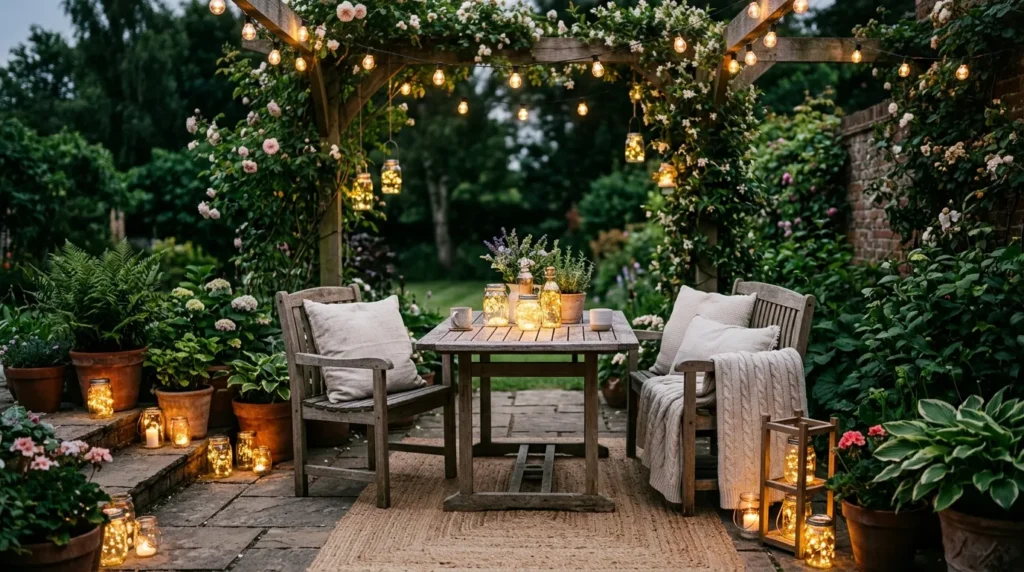
Outdoor lighting can make a garden feel completely different after sunset. Lanterns create small pools of light that add warmth without flooding the entire yard with brightness.
DIY lantern projects also offer an easy way to reuse containers. Glass jars, simple metal holders, or other suitable vessels can become decorative light features when paired with appropriate outdoor-rated lighting.
The important consideration is safety. Choose lighting specifically designed for outdoor use and follow the manufacturer’s instructions. Avoid improvised flames or materials that can overheat.
How To Style It
Group several lanterns around a seating area, along a garden path, or on a sturdy outdoor table.
For a clean modern look, use matching containers. For a relaxed garden, combine several sizes.
Battery-powered or solar outdoor lights can be convenient options when you want to avoid extension cords.
Place lanterns at different heights using safe, stable surfaces.
Keep the surrounding decor relatively simple so the light becomes the main feature after dark.
Warm-toned illumination generally complements greenery, wood, stone, and neutral outdoor textiles particularly well.
7. Repurposed Container Garden
Quick Benefits
- Gives old objects a new purpose
- Creates unique planters
- Adds character to the garden
- Can reduce decorating costs
- Works across different garden styles
Why It Works
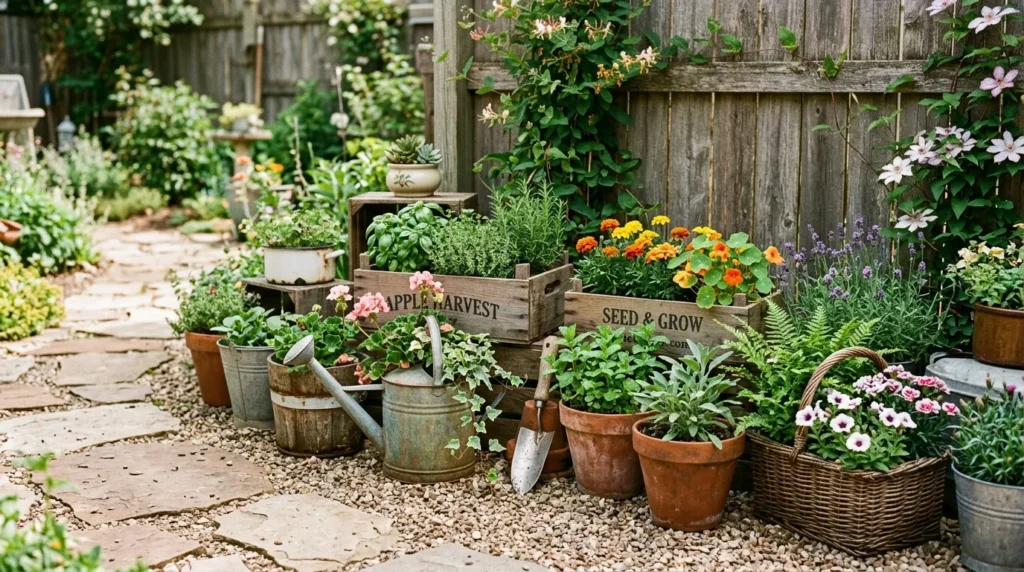
Some of the most memorable garden containers are not traditional planters. Old buckets, wooden crates, baskets, metal containers, and other suitable objects can become distinctive homes for plants.
Repurposing adds visual history. A container that looks slightly different from everything else can become an interesting focal point.
This approach also helps create a more collected garden rather than one where every item came from the same store.
The most important factor is making sure the container is suitable for outdoor use and appropriate for the plant. Drainage is particularly important.
How To Style It
Choose containers with interesting shapes, textures, or finishes.
Make sure they can drain properly. If necessary, adapt the container carefully using an appropriate drainage method.
Use larger repurposed pieces for statement plants and smaller containers for herbs or seasonal flowers.
Keep the plant and container visually balanced. A delicate plant can disappear in an oversized container, while a large plant may overwhelm a tiny vessel.
Group two or three repurposed containers together to create a cohesive display.
Place them near patios, steps, garden entrances, or seating areas where their unique character can be appreciated.
8. Simple Stone Path
Quick Benefits
- Defines movement through the garden
- Connects different areas
- Adds natural texture
- Creates structure
- Makes planting beds feel intentional
Why It Works
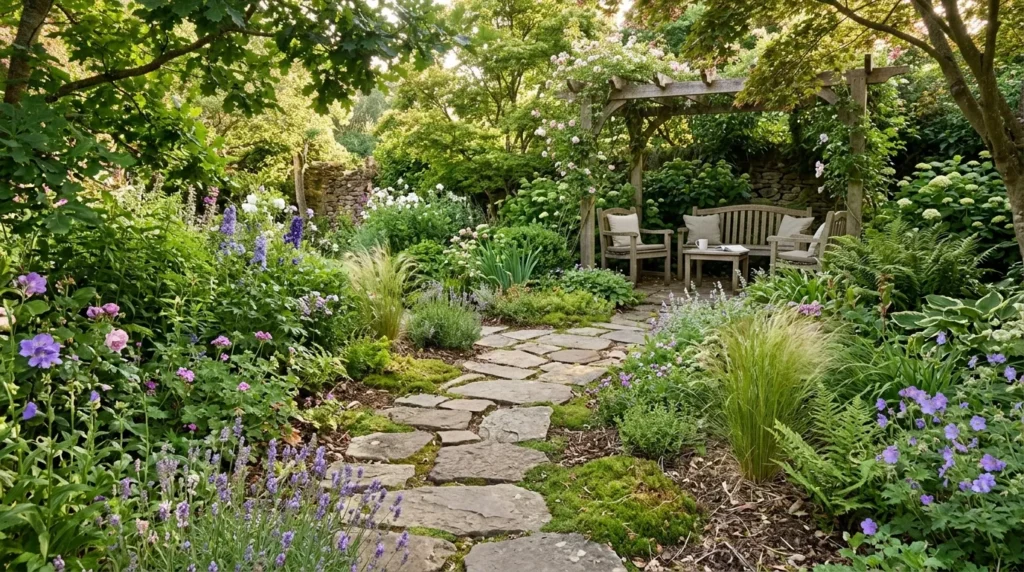
A garden path is both decorative and functional. It tells people where to walk while creating a visual connection between the house, seating areas, planting beds, and other outdoor zones.
Stone provides a natural material that works beautifully with greenery. Its irregular shapes can make a garden feel relaxed and organic, while clean-cut pavers can create a more modern appearance.
A path also gives the eye a direction to follow. This can make a small garden feel deeper because the space is divided into visual layers.
How To Style It
Choose a path material that relates to the architecture of the home and other outdoor surfaces.
For a natural garden, irregular stone or gravel can create a relaxed appearance. For a contemporary yard, large rectangular pavers can provide cleaner lines.
Keep the path wide enough for comfortable everyday use.
Soften the edges with low-growing plants, mulch, or gravel depending on the design.
Avoid making the path unnecessarily complicated. A simple route from the patio to a seating area or garden gate can be enough.
Add small solar path lights if additional nighttime visibility is useful.
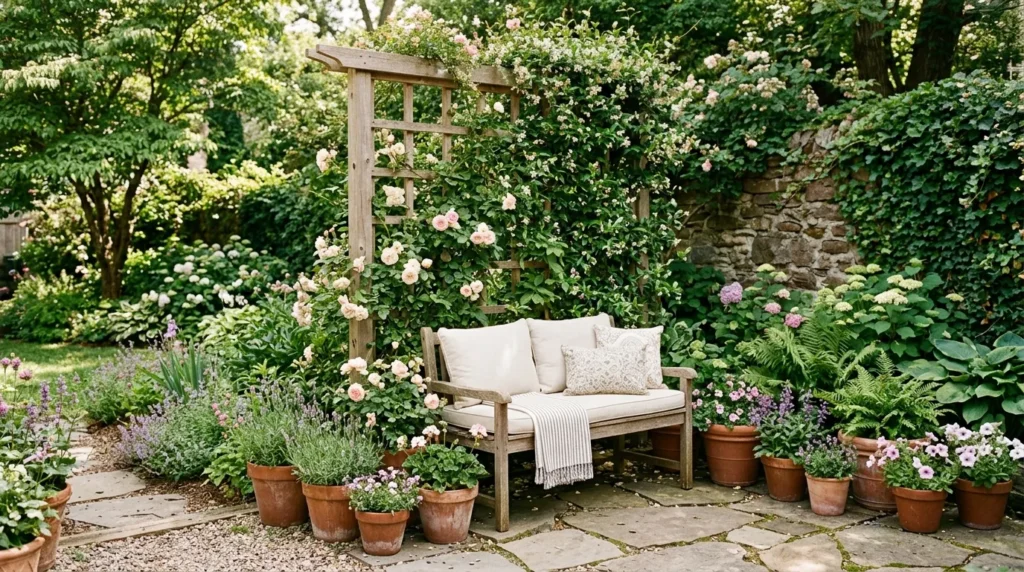
9. DIY Trellis Corner
Quick Benefits
- Adds vertical interest
- Supports climbing plants
- Creates privacy
- Makes empty walls more useful
- Adds structure to planting areas
Why It Works
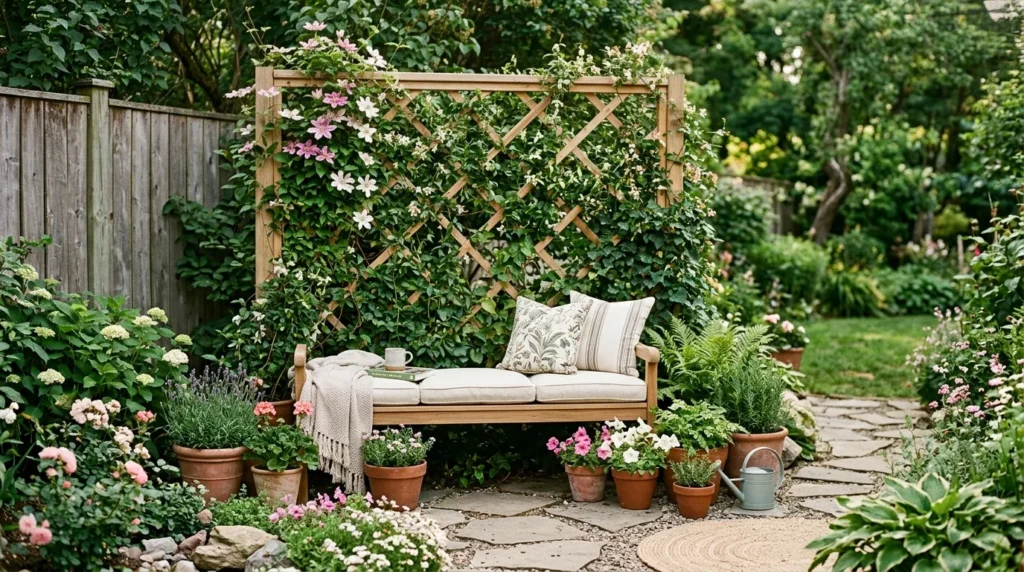
A trellis is one of the simplest ways to add height to a garden. Instead of keeping all plants at ground level, climbing plants can use the structure to grow upward.
This makes a trellis particularly useful in small gardens where horizontal space is limited. It can also help define a seating area or soften an unattractive fence.
The structure itself can become decorative even before the plants fully cover it.
A wooden trellis suits cottage and traditional gardens, while simple metal or geometric designs can work beautifully in modern landscapes.
How To Style It
Position the trellis where it receives appropriate light for the climbing plant you choose.
Use sturdy, outdoor-appropriate materials and anchor the structure securely.
Train vines gradually as they grow rather than allowing them to become tangled.
For a romantic garden, use flowering climbers where appropriate for the climate. For a practical garden, consider edible climbing plants.
Keep the surrounding planting slightly lower so the trellis remains visible and creates a clear vertical focal point.
Place it behind a bench or beside a patio to combine structure with function.
10. Handmade Garden Art
Quick Benefits
- Adds personal character
- Fills awkward empty areas
- Creates conversation pieces
- Can reuse household materials
- Makes the garden feel unique
Why It Works
A garden becomes more personal when it contains something that reflects the people who use it. Handmade art can be as simple as painted stones, decorative wood pieces, mosaic-style elements, or a small outdoor sculpture.
The goal is not to fill the garden with objects. One thoughtfully placed piece can provide enough personality.
Garden art also helps transition between hardscape and planting areas. A decorative object placed among greenery can create a focal point where the eye naturally pauses.
Outdoor art needs to be chosen with the environment in mind. Materials exposed to weather require appropriate finishes and maintenance.
How To Style It
Choose one location that feels visually empty or lacks a clear focal point.
Create a piece that connects with the garden’s existing colors and materials. For example, a painted wooden panel can echo the colors of nearby flowers, while a stone sculpture can complement a natural path.
Place art where it can be seen from a seating area or through a window.
Avoid scattering small objects throughout every planting bed.
For a modern garden, choose one sculptural piece with a simple silhouette. For a cottage garden, handmade signs, painted stones, or whimsical details can add charm.
Frequently Asked Questions
What are easy DIY garden decor ideas for beginners?
Painted terracotta pots, simple garden signs, hanging planters, handmade lantern arrangements, and repurposed containers are excellent beginner-friendly projects. They require relatively simple materials and can often be completed in a short amount of time. Start with one small project and choose materials suitable for outdoor exposure so the finished decor remains useful and attractive.
How can I decorate a garden without spending much money?
Reuse containers, leftover wood, existing furniture, stones, baskets, and other suitable materials before purchasing new decor. Rearranging plants and furniture can also change the appearance of a garden. Simple projects such as painted pots, DIY signs, and homemade plant stands can create visual interest while keeping the overall decorating approach affordable.
How do I make a small garden look more attractive?
Use vertical space, define a seating area, and avoid filling every available surface with decor. Hanging planters, trellises, wall-mounted containers, and tiered plant stands create height without consuming much ground space. A small rug, chair, lanterns, and a few carefully selected plants can turn even a compact patio or garden corner into a welcoming retreat.
What materials work best for DIY outdoor decor?
Outdoor-suitable wood, weather-resistant metal, terracotta, stone, ceramic, and materials specifically labeled for exterior use are practical choices. Finishes matter too. Paints, sealants, adhesives, and hardware should be appropriate for outdoor conditions. Always consider exposure to rain, sunlight, temperature changes, and moisture before using a material.
How can I make my garden look more cozy?
Create a dedicated seating area and surround it with greenery, textured containers, outdoor cushions, and warm lighting. A small bench or chair can become a focal point when paired with a side table and a few plants. Lanterns or appropriate outdoor-rated lights can make the space feel especially inviting in the evening.
How do I make DIY garden decor last longer?
Use materials designed for outdoor exposure and apply suitable protective finishes when necessary. Keep wooden pieces properly sealed, choose weather-resistant fabrics, and inspect hanging structures regularly. Move vulnerable decorative objects to protected areas during severe weather. Good maintenance can significantly extend the useful life of handmade garden projects.
Can DIY garden decor work in a modern garden?
Yes. The key is simplicity. Use clean-lined planters, neutral painted pots, geometric trellises, streamlined seating, large stones, and minimal handmade art. Limit the number of decorative elements and repeat materials such as wood, stone, metal, and ceramic. A restrained color palette can make simple DIY projects feel polished rather than overly rustic.
Conclusion
A garden does not need a large budget or complicated landscaping project to feel beautiful. Simple DIY touches can add personality while making the space more functional and enjoyable.
Painted pots can bring color to a patio. A wooden plant stand can create vertical interest. A handmade sign can add character to a planting bed, while a comfortable chair can turn an unused corner into a favorite outdoor retreat. Other projects, such as trellises, paths, lanterns, and repurposed containers, combine decoration with practical value.
The best approach is to begin with the areas that feel unfinished. Look at an empty corner, plain fence, unused container, or lack of seating and ask how one simple project could improve it.
You also do not need to complete everything at once. A garden often looks more natural when it develops gradually. Add one piece, watch how it works with the plants and architecture, and build from there.
Most importantly, choose projects that fit your lifestyle. Beautiful garden decor is far more valuable when it makes the outdoor space easier to enjoy, whether that means a comfortable morning coffee spot, a practical herb area, or a welcoming place for friends and family.
Start small, use materials thoughtfully, and let your garden reflect your own creativity.
Related Articles
- 10 DIY Garden Projects That Increase Curb Appeal
- 10 Small Garden Ideas for Beautiful Outdoor Spaces
- 10 Backyard Landscape Design Ideas with Beautiful Greenery
- 10 DIY Fire Pit Ideas for Backyard Gatherings
- 10 Small Balcony Ideas with Cozy Outdoor Decor